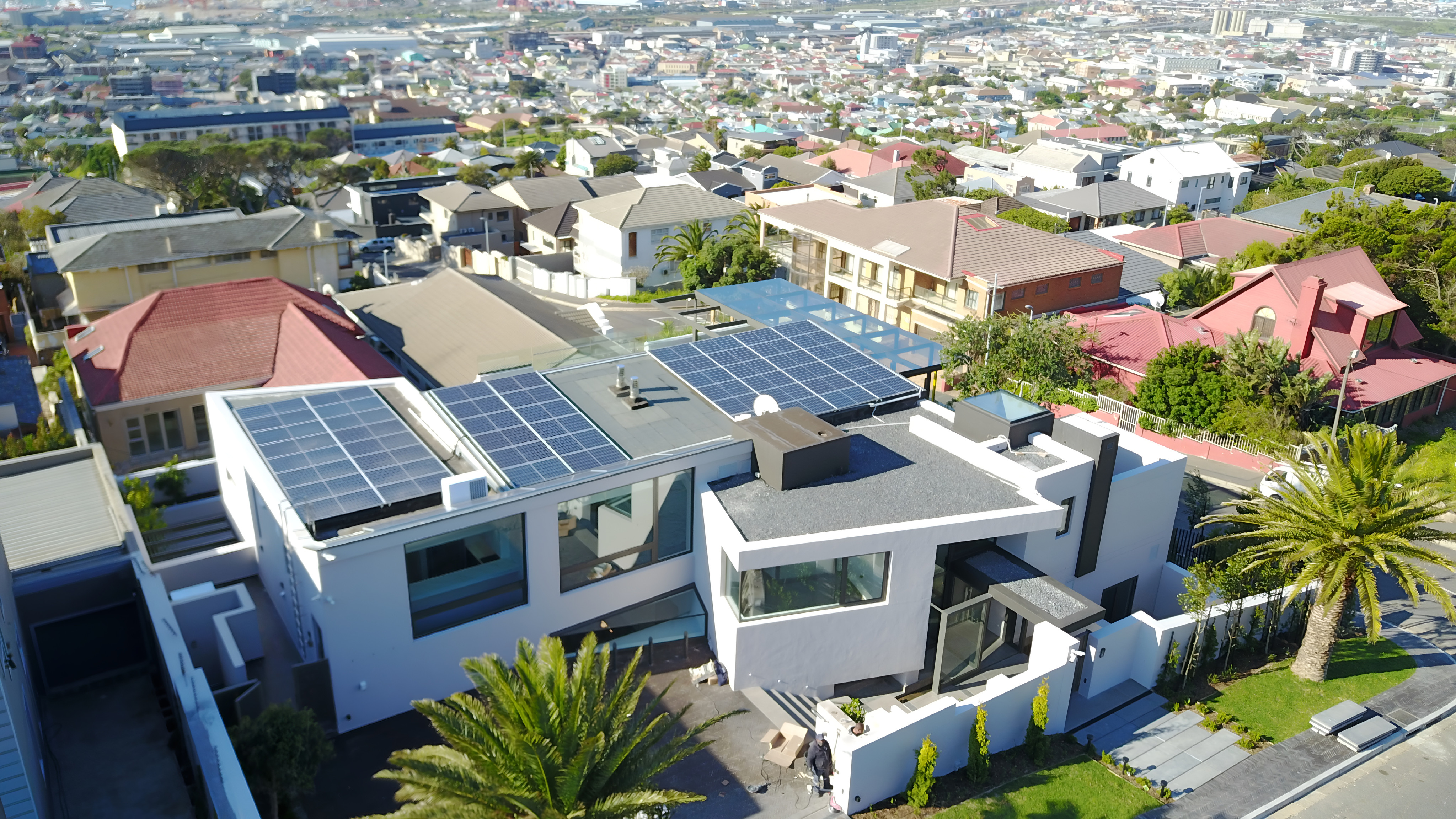
Solar power has emerged as one of the most compelling solutions to South Africa's energy challenges, offering businesses and property owners a viable path towards energy independence and cost reduction. As load shedding continues to disrupt operations and electricity tariffs escalate year after year, understanding the pros of solar power has become essential for strategic planning. The renewable energy sector has matured significantly, with proven technologies and financing models that make solar installations accessible across commercial, industrial, agricultural, and residential applications throughout Southern Africa.
Economic Benefits and Cost Reduction
The most immediate advantage of solar power lies in its ability to dramatically reduce electricity expenses. South African businesses face some of the highest electricity tariff increases globally, with Eskom implementing double-digit percentage increases annually over the past decade. Solar photovoltaic systems provide a hedge against these escalating costs by generating electricity at a fixed, predictable rate over their 25-year operational lifespan.
Key financial advantages include:
- Immediate reduction in monthly electricity bills, often by 30-70% depending on system size and consumption patterns
- Protection from future tariff increases through locked-in generation costs
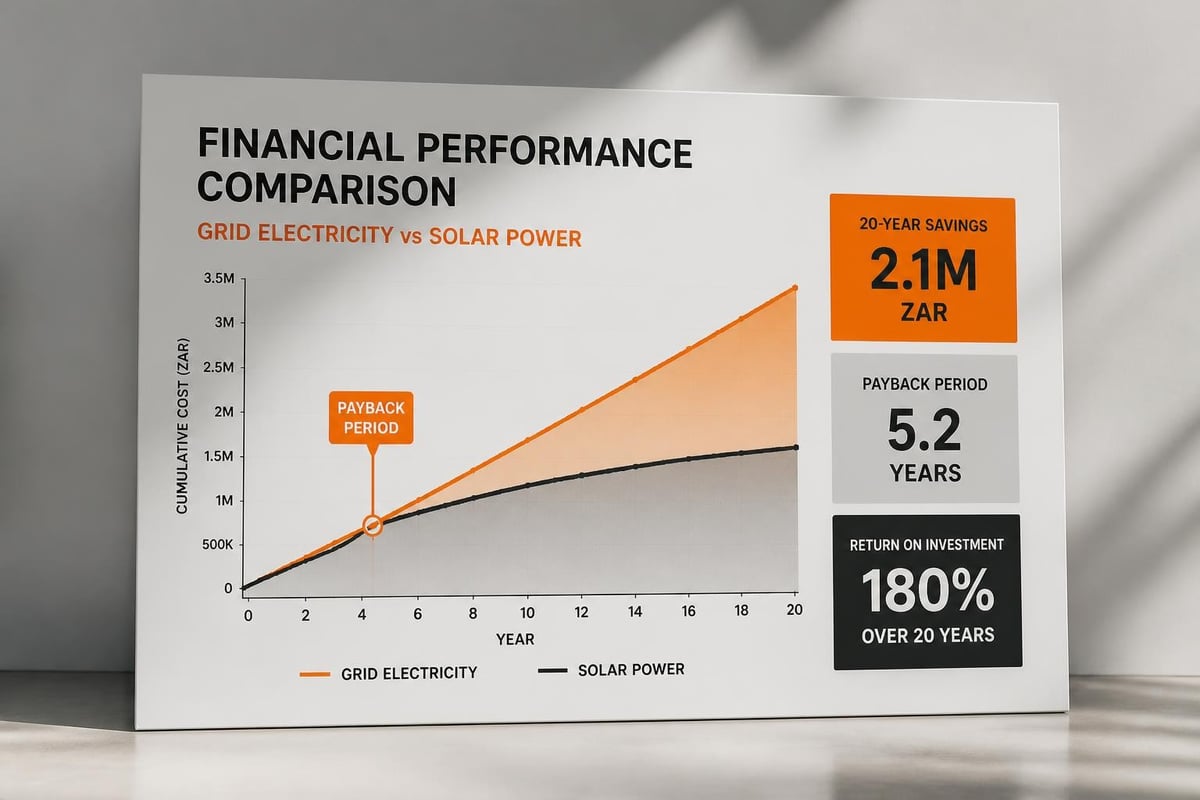
- Accelerated payback periods, typically between 3-6 years for commercial installations
- Improved cash flow through reduced operational expenses
- Enhanced property values for buildings equipped with solar infrastructure
The declining cost of solar technology has transformed the investment landscape. Over the past decade, the price of solar panels has decreased by more than 80%, whilst efficiency has improved substantially. This combination means businesses can generate more power per square metre at a lower capital cost than ever before.
Return on Investment Considerations
Modern solar installations deliver impressive returns on investment when properly designed and maintained. A typical commercial solar system in Gauteng or the Western Cape generates electricity at approximately ZAR 0.80 to ZAR 1.20 per kilowatt-hour over its lifetime, compared to municipal tariffs exceeding ZAR 2.50 per kilowatt-hour for many commercial users.
| Investment Metric | Typical Range |
|---|---|
| Payback Period | 3-6 years |
| Internal Rate of Return (IRR) | 18-25% |
| Net Present Value (25 years) | 300-450% of initial investment |
| Annual Savings | 15-35% of electricity costs |
These figures demonstrate why the pros of solar power extend beyond environmental considerations into sound financial strategy. For energy-intensive industries such as manufacturing, cold storage, or agriculture, the savings can be even more pronounced.
Energy Independence and Resilience
Load shedding has fundamentally altered how South African businesses approach energy planning. The pros of solar power become particularly evident during power outages, especially when combined with battery energy storage systems. Companies that have invested in solar installations report significant operational advantages beyond pure cost savings.
Solar power systems provide several resilience benefits:
- Continued operations during load shedding when paired with appropriate storage solutions
- Reduced dependence on unreliable grid infrastructure that protects productivity
- Backup power without the noise, emissions, or fuel costs associated with diesel generators
- Scalable solutions that can grow with business energy requirements
- Protection against grid failures and voltage fluctuations that damage sensitive equipment
The ability to maintain operations during scheduled or unscheduled outages translates directly to competitive advantage. Retailers, healthcare facilities, data centres, and manufacturing operations cannot afford downtime, making solar-plus-storage systems a business continuity imperative rather than merely an environmental choice.
Grid Independence Strategies
Businesses pursuing energy resilience typically follow a phased approach. Initial solar installations reduce grid dependence during daylight hours, whilst subsequent battery energy storage integration extends this independence into evening peak periods and provides backup during outages. This hybrid approach optimises both economic returns and operational security.
Advanced systems incorporate intelligent energy management that automatically shifts loads, charges batteries during optimal periods, and seamlessly transitions between grid, solar, and battery power sources. These capabilities transform energy from a vulnerability into a managed resource.
Environmental and Sustainability Advantages
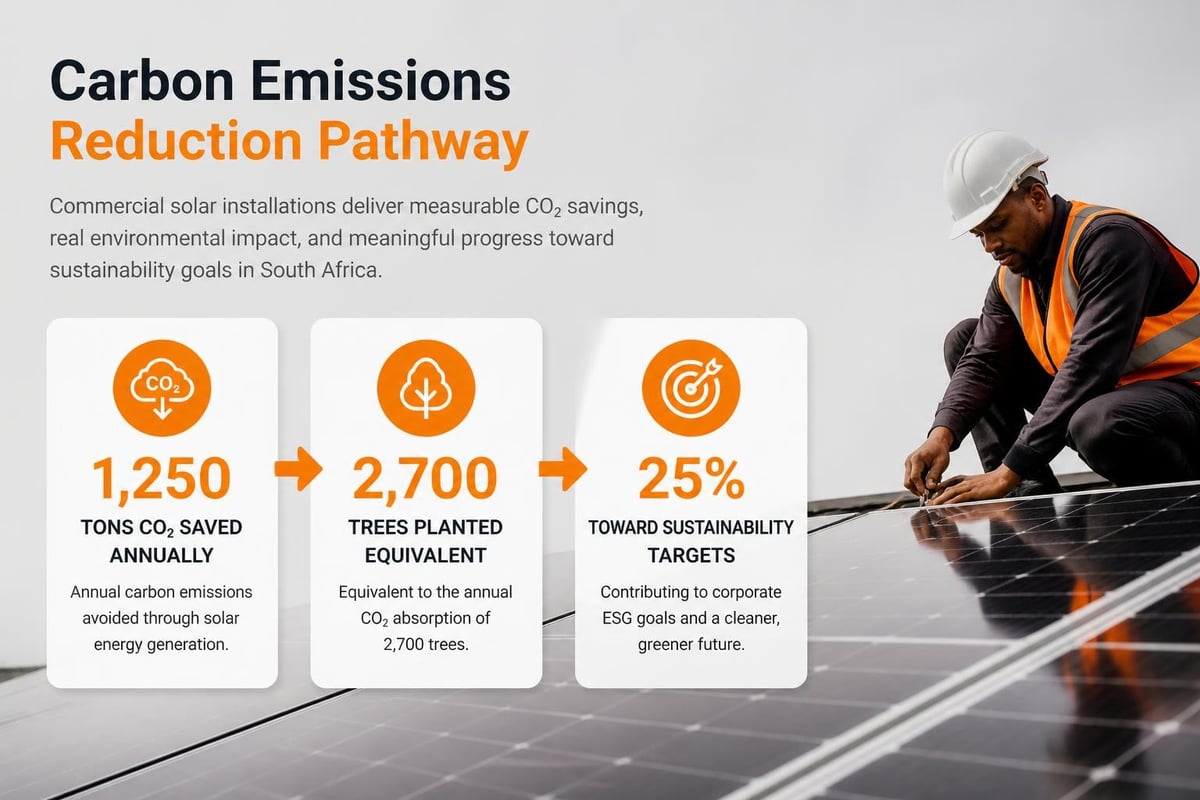
Corporate environmental responsibility has evolved from a marketing consideration to a business imperative. Investors, customers, and regulatory frameworks increasingly demand measurable progress towards carbon reduction and sustainability targets. The pros of solar power align perfectly with these requirements, offering quantifiable environmental benefits that support ESG reporting and Net Zero commitments.
A single megawatt of solar capacity prevents approximately 1,500 tonnes of CO₂ emissions annually compared to coal-based electricity generation. For a medium-sized commercial installation of 100 kilowatts, this translates to roughly 150 tonnes of avoided emissions each year, equivalent to removing 32 passenger vehicles from South African roads.
Environmental benefits include:
- Zero direct emissions during electricity generation
- Significant reduction in carbon footprint that supports climate commitments
- Decreased reliance on fossil fuels and coal-fired power generation
- Minimal water consumption compared to conventional power plants in water-scarce Southern Africa
- Reduced air pollution contributing to improved public health outcomes
According to the U.S. Department of Energy, solar energy represents one of the most abundant and accessible renewable resources available, with the potential to meet global energy needs many times over.
Corporate Sustainability Integration
Modern businesses incorporate solar installations into comprehensive sustainability strategies. The measurable impact of solar power generation provides concrete data for annual sustainability reports, investor communications, and carbon disclosure platforms. This transparency supports corporate reputation whilst meeting increasing stakeholder expectations around environmental performance.
National Grid highlights that solar energy installations contribute to broader environmental benefits beyond carbon reduction, including decreased dependence on finite resources and reduced environmental degradation from fossil fuel extraction.
Operational and Maintenance Advantages
One of the frequently overlooked pros of solar power involves the minimal operational requirements compared to conventional power generation. Solar photovoltaic systems contain no moving parts, requiring only periodic cleaning and routine inspections to maintain peak performance. This simplicity translates to low ongoing costs and high system reliability.
Maintenance Requirements
| Maintenance Activity | Frequency | Typical Cost (ZAR) |
|---|---|---|
| Panel cleaning | Quarterly | 1,500-3,500 |
| System inspection | Bi-annual | 2,500-5,000 |
| Inverter servicing | Annual | 3,000-6,000 |
| Performance monitoring | Continuous | Included in monitoring fees |
Modern solar installations incorporate remote monitoring systems that track performance in real-time, alerting operators to any degradation or faults before they impact generation. This proactive approach maximises uptime and ensures systems deliver expected returns throughout their operational life.
The longevity of solar components further enhances the value proposition. Quality solar panels typically carry 25-year performance warranties, whilst inverters are warrantied for 10-15 years with replacement costs representing only a fraction of the original investment. This durability means solar systems continue generating value long after the initial payback period.
Scalability and Flexibility
Solar power systems offer unmatched flexibility in deployment and expansion. Unlike conventional power infrastructure that requires substantial upfront investment in centralised generation capacity, solar installations can be sized precisely to match current requirements and expanded incrementally as needs grow.
Businesses can begin with smaller systems targeting specific loads or buildings, then add capacity as capital becomes available or energy requirements increase. This modular approach reduces financial risk whilst providing immediate benefits. A warehouse might start with a rooftop system serving lighting and HVAC, then expand to cover refrigeration loads, and eventually integrate storage for complete energy independence.
Deployment options include:
- Rooftop installations maximising unused building space
- Ground-mounted arrays for properties with available land
- Carport structures providing both shade and power generation
- Building-integrated photovoltaics (BIPV) for new construction
- Hybrid configurations combining solar with existing diesel generators or grid connections
The versatility extends to different connection types. Grid-tied systems reduce electricity costs whilst maintaining grid backup, off-grid solutions serve remote locations, and hybrid systems with storage optimise independence and reliability. Each configuration can be tailored to specific operational requirements, financial constraints, and risk tolerance.
According to Enel Group, the versatility of solar energy makes it suitable for diverse applications from small residential installations to utility-scale power plants, demonstrating its adaptability across different scales and contexts.
Technological Advancement and Future-Proofing
The solar industry continues to evolve rapidly, with ongoing improvements in panel efficiency, inverter technology, and system integration capabilities. Businesses investing in solar power today position themselves to benefit from these advancements whilst establishing the infrastructure foundation for future energy technologies.
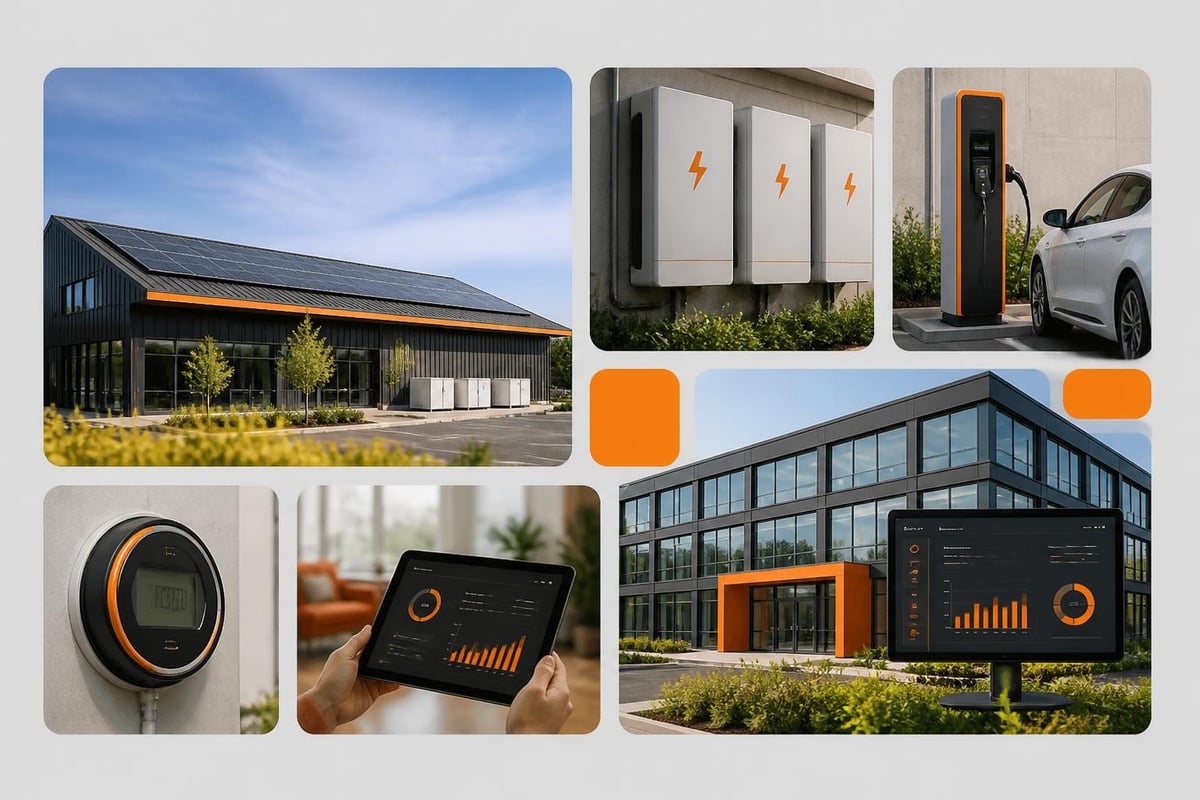
Modern solar installations increasingly incorporate artificial intelligence and machine learning for optimised performance. These systems analyse weather patterns, consumption data, and grid conditions to maximise generation and minimise costs. Integration with building management systems, electric vehicle charging infrastructure, and smart metering creates comprehensive energy ecosystems that deliver compound benefits.
Technology Integration Opportunities
- Energy storage systems that extend solar benefits beyond daylight hours
- Electric vehicle charging powered by clean, self-generated electricity
- Demand response programmes that generate additional revenue streams
- Smart building integration optimising total energy consumption
- Peer-to-peer energy trading in emerging distributed energy markets
The pros of solar power extend into enabling these complementary technologies. A robust solar installation provides the foundation for comprehensive energy transformation that addresses multiple business objectives simultaneously. As Constellation Energy notes, solar energy's compatibility with emerging technologies positions it as a cornerstone of modern energy systems.
Regulatory Compliance and Incentive Benefits
South Africa's regulatory environment increasingly favours renewable energy adoption. Recent amendments to Schedule 2 of the Electricity Regulation Act allow facilities to generate up to 100 megawatts without requiring generation licenses, removing previous barriers for larger commercial installations. This regulatory shift acknowledges the critical role that distributed generation plays in addressing the country's energy crisis.
Businesses investing in solar power may access various financial incentives and programmes:
- Section 12B tax allowance permitting accelerated depreciation on renewable energy assets
- Carbon tax credits offsetting the R134 per tonne CO₂ levy through verified emission reductions
- Municipal feed-in programmes in progressive cities enabling revenue from excess generation
- Green building certifications requiring renewable energy components
- Preferential financing from development finance institutions supporting renewable projects
Understanding and leveraging these mechanisms enhances the already compelling economics of solar investments. Professional energy partners navigate the regulatory landscape, ensuring projects comply with grid codes, municipal requirements, and relevant standards whilst maximising available benefits.
Professional Implementation and Performance Assurance
Realising the full pros of solar power requires professional design, installation, and ongoing management. Poorly executed systems underperform, create safety risks, and fail to deliver projected returns. The complexity of modern solar installations, particularly hybrid systems with storage and grid interaction, demands specialised expertise.
EnergySage research emphasises the importance of proper system design and installation quality in achieving optimal performance and longevity from solar investments.
Quality solar implementations incorporate several critical elements:
- Comprehensive energy audits establishing actual consumption patterns and system requirements
- Load studies ensuring infrastructure can support the installation
- Financial modelling providing accurate projections of savings and returns
- Professional engineering design optimising generation for specific site conditions
- Certified installation teams following manufacturer specifications and safety standards
- Commissioning procedures verifying performance before handover
- Ongoing monitoring identifying and addressing performance issues proactively
- Preventative maintenance protecting the long-term investment
INFOLED's solar engineering services demonstrate the comprehensive approach required for successful renewable energy projects, from initial feasibility through ongoing operations and maintenance.
Reputable providers offer performance guarantees and service level agreements that protect clients' investments. These commitments ensure systems deliver expected generation and savings, with remedial action when performance falls short. Such assurances transform solar from a capital purchase into a predictable, managed service.
Business Continuity and Competitive Advantage
Beyond the direct financial and environmental benefits, solar power provides strategic advantages that strengthen market position. In an economy where electricity reliability directly impacts competitiveness, businesses with assured power supply gain measurable advantages over competitors subject to grid disruptions.
Manufacturing facilities with solar-plus-storage maintain production schedules regardless of load shedding, meeting delivery commitments that grid-dependent competitors cannot match. Retailers with uninterrupted operations capture sales during outages when competitors stand idle. Data centres and professional services firms guarantee uptime to clients, differentiating their offerings in competitive markets.
As Earth.org highlights, the renewable nature of solar energy ensures long-term availability independent of geopolitical factors or resource depletion that affect conventional energy sources.
The pros of solar power increasingly include market differentiation and brand value. Consumers and commercial clients favour businesses demonstrating environmental responsibility. Solar installations provide visible evidence of sustainability commitment whilst delivering the operational benefits that strengthen service delivery and cost competitiveness.
Long-Term Value Creation
Solar investments create value that extends well beyond monthly electricity bill reductions. Property values increase for buildings with quality solar installations, providing returns even if the business relocates. The transferability of solar benefits to new tenants or owners protects the investment whilst enhancing asset marketability.
Financial institutions increasingly recognise solar assets in lending and valuation decisions. Properties with solar installations may qualify for better financing terms, reflecting reduced operational risk and improved cash flow stability. This recognition acknowledges that solar power transforms buildings from energy consumers into energy producers with quantifiable ongoing value.
SolarReviews analysis confirms that solar installations typically increase property values by amounts exceeding the installation cost, whilst also providing ongoing utility savings.
For businesses planning long-term occupancy, solar power represents perhaps the most effective single investment in operational infrastructure. The combination of immediate operational benefits, long-term cost savings, environmental impact, and strategic advantages creates compound value across multiple business dimensions.
The pros of solar power extend from immediate cost reduction through to long-term strategic positioning, environmental responsibility, and operational resilience. For South African businesses facing escalating electricity costs and unreliable grid supply, solar installations deliver measurable returns whilst addressing multiple business objectives simultaneously. INFOLED specialises in designing, financing, installing, and maintaining comprehensive renewable energy solutions tailored to commercial, industrial, agricultural, and residential applications across Southern Africa, transforming energy from a cost centre and risk factor into a managed asset supporting business growth and sustainability objectives.
Next Step
Need help with your energy strategy?
Speak to INFOLED about solar, storage, EV charging, service agreements or system performance.