

Understanding the financial implications of renewable energy investments requires careful analysis of multiple cost factors. Solar costs have evolved dramatically over the past decade, with substantial reductions making photovoltaic technology increasingly accessible to businesses and homeowners throughout Southern Africa. Today's solar investments represent not merely an environmental commitment but a strategic financial decision that directly impacts operational expenditure, energy resilience and competitive positioning. This comprehensive guide examines the components of solar expenditure, regional variations, and the critical factors that influence pricing structures across commercial, industrial and residential installations.
Understanding Solar Installation Cost Components
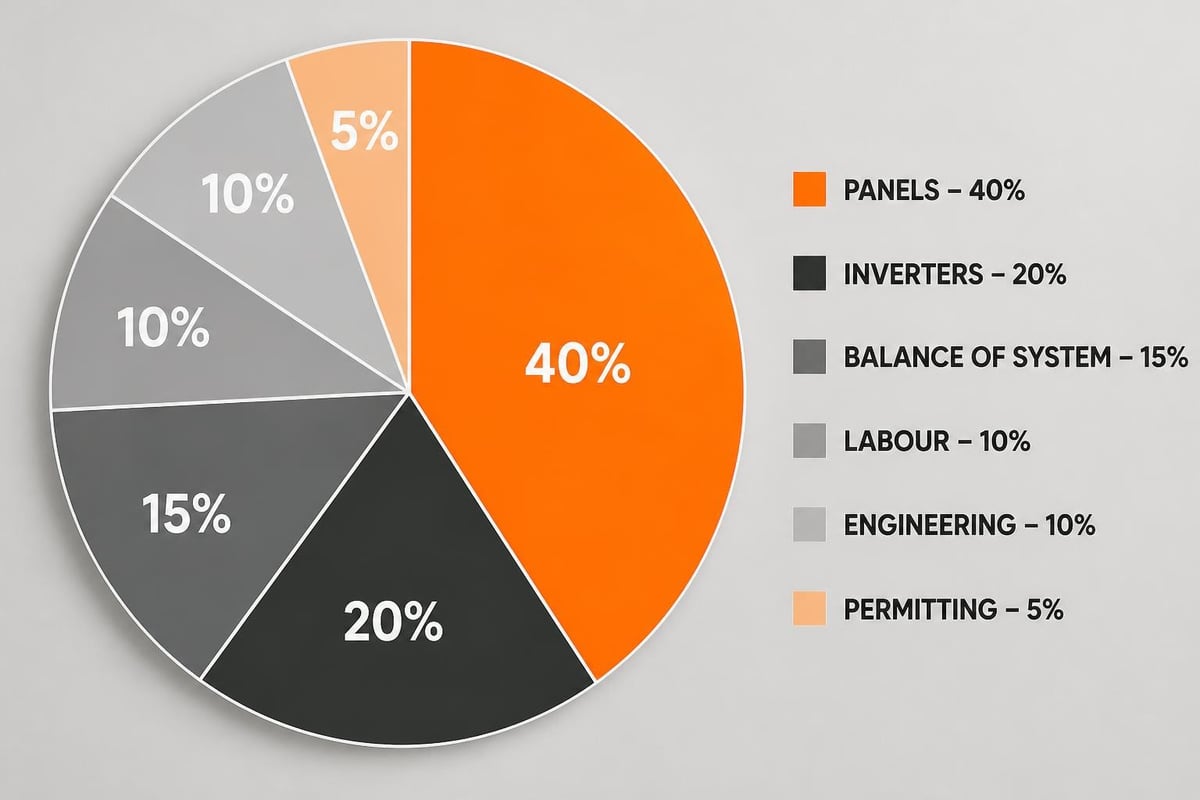
Solar costs comprise several distinct elements that collectively determine the total investment required for a functional photovoltaic system. The most significant component remains the solar panels themselves, which account for approximately 25-30% of the overall system expense. Module quality, efficiency ratings and manufacturer warranties directly influence panel pricing, with premium products commanding higher initial costs but delivering superior long-term performance.
Inverter technology represents the second major cost centre, typically comprising 10-15% of total expenditure. Modern installations increasingly favour hybrid inverters that integrate battery storage capabilities, offering enhanced functionality at marginally higher prices compared to traditional grid-tied models.
Electrical balance of system costs include:
- Mounting structures and racking systems
- Cabling, connectors and combiner boxes
- Switchgear and protection devices
- Monitoring equipment and communication systems
- Grid connection infrastructure
Labour and installation services constitute 15-20% of solar costs, with variations based on roof complexity, system size and accessibility challenges. Ground-mounted installations generally incur higher structural costs but may reduce labour complexity compared to certain rooftop configurations.
Professional engineering services ensure compliance with electrical regulations, grid connection requirements and building codes. These services encompass load studies, electrical designs, structural assessments and grid application submissions, typically adding 5-10% to total project costs whilst mitigating risks of non-compliance and performance issues.
Commercial and Industrial Solar Costs
Commercial solar installations exhibit economies of scale that substantially reduce per-watt pricing compared to residential systems. Businesses installing systems between 50kW and 500kW typically achieve costs ranging from R11,000 to R14,000 per installed kilowatt, whilst larger industrial installations exceeding 1MW frequently secure pricing below R10,000 per kW through bulk procurement and streamlined installation processes.
System scale directly impacts unit costs through several mechanisms. Larger projects distribute fixed costs such as engineering, project management and grid applications across more installed capacity, reducing the proportional burden of these expenses. Procurement advantages emerge as equipment suppliers offer volume discounts, and installation teams achieve greater efficiency working on expansive roof areas or dedicated ground-mounted facilities.
| System Size | Typical Cost per kW | Total Investment (Indicative) | Installation Timeframe |
|---|---|---|---|
| 50-100 kW | R13,000-R14,000 | R650,000-R1,400,000 | 4-8 weeks |
| 100-250 kW | R12,000-R13,000 | R1,200,000-R3,250,000 | 6-12 weeks |
| 250-500 kW | R11,000-R12,500 | R2,750,000-R6,250,000 | 8-16 weeks |
| 500 kW-1 MW | R10,500-R11,500 | R5,250,000-R11,500,000 | 12-20 weeks |
| 1 MW+ | R9,500-R10,500 | R9,500,000+ | 16-32 weeks |
Commercial installations incorporating battery energy storage systems experience elevated initial solar costs but unlock additional value through peak demand management and enhanced load-shedding resilience. Hybrid energy systems combining solar generation with strategically sized battery capacity enable businesses to optimise tariff structures, reducing demand charges and shifting consumption away from expensive peak periods.
Financial structuring options significantly influence the effective cost of commercial solar investments. Power purchase agreements eliminate upfront capital requirements, allowing businesses to procure solar electricity at predetermined rates whilst service providers retain ownership and maintenance responsibilities. Lease arrangements similarly reduce initial barriers whilst building equity over contract periods.
Industrial Energy Cost Reduction Strategies
Industrial facilities with substantial daytime energy consumption achieve optimal returns from solar investments, with generation profiles closely matching operational demand patterns. Manufacturing operations, processing plants and warehousing facilities typically realise payback periods between 3-5 years, depending on electricity tariff structures and consumption volumes.
Detailed energy audits identify consumption patterns and inform optimal system sizing that maximises self-consumption whilst minimising excess generation. Industrial solar costs must be evaluated against operational expenditure savings, capacity charge reductions and production continuity benefits during grid instability.
Advanced monitoring systems track performance metrics and identify maintenance requirements before they impact generation capacity. These intelligent platforms integrate with building management systems, enabling sophisticated demand response strategies that further amplify solar investment returns.
Residential Solar Costs and Considerations
Residential photovoltaic systems in Southern Africa typically range from 3kW to 15kW capacity, with corresponding solar costs spanning R45,000 to R200,000 depending on system specifications and complexity. Homeowners face higher per-watt pricing than commercial installations due to smaller economies of scale, yet domestic systems deliver substantial electricity bill reductions and property value appreciation.
Standard residential installations averaging 5-8kW capacity generally cost between R80,000 and R120,000 for quality equipment and professional installation. These systems generate approximately 20-35 kWh daily, sufficient to offset 60-80% of typical household consumption in regions with favourable solar resources.
Key residential cost factors include:
- Roof type and condition requiring structural reinforcement
- Electrical panel upgrades for solar integration
- Aesthetic considerations such as black-on-black panels
- Battery storage requirements for evening consumption
- Municipal approval processes and connection fees
Single-storey homes with accessible, unshaded north-facing roofs minimise installation labour and mounting costs. Multi-storey properties, tiled roofs or complex architectural features increase labour hours and may require specialised mounting solutions that elevate total solar costs.
Battery integration substantially increases initial investment, with lithium-ion storage systems adding R60,000 to R180,000 depending on capacity and brand selection. However, storage-enabled systems deliver complete energy independence, eliminating exposure to load-shedding whilst maximising solar utilisation through evening consumption of daytime generation.
Regional Solar Cost Variations
Geographic location influences solar costs through multiple mechanisms including installation competition, logistics expenses and regional incentive programmes. Gauteng and Western Cape provinces benefit from concentrated installer presence, fostering competitive pricing environments and reducing mobilisation costs for equipment and labour.
Remote or rural installations incur additional logistics charges as equipment and installation teams travel extended distances. However, these areas often experience superior solar resources, generating higher energy yields that partially offset elevated installation expenses through improved production economics.
Municipal connection requirements vary substantially across jurisdictions, with some municipalities imposing significant fees for grid-tied solar approvals whilst others maintain streamlined, cost-effective processes. These regulatory inconsistencies create regional cost disparities independent of actual installation expenses.
Solar resource availability directly impacts system sizing requirements to achieve specific energy production targets. Regions receiving average solar irradiation exceeding 5.5 kWh/m²/day require smaller installed capacities to generate equivalent electricity compared to areas with lower insolation levels, effectively reducing solar costs per kilowatt-hour produced.
Financing Options and Effective Costs
Capital acquisition methods fundamentally alter the effective solar costs borne by system owners. Cash purchases deliver the lowest lifetime expenditure, enabling owners to capture full financial benefits including all tax incentives, electricity savings and asset appreciation without interest burdens.
Loan financing distributes capital requirements across extended periods, improving cash flow management whilst accruing interest costs that increase total system expenditure. Current commercial lending rates for renewable energy projects range from prime to prime plus 3%, with loan terms spanning 5-10 years depending on system value and borrower creditworthiness.
Financial comparison for 100kW commercial system:
| Financing Method | Initial Capital | Monthly Cost | Total 10-Year Cost | Ownership |
|---|---|---|---|---|
| Cash Purchase | R1,300,000 | R0 | R1,300,000 | Immediate |
| Bank Loan (Prime + 2%) | R130,000 | R18,500 | R2,350,000 | Immediate |
| PPA Agreement | R0 | R32,000 | R3,840,000 | After 10-15 years |
| Operating Lease | R0 | R25,000 | R3,000,000 | Optional buyout |
Power purchase agreements eliminate upfront solar costs entirely, substituting capital investment with operational expenditure at predetermined electricity rates. Whilst total lifetime costs exceed ownership alternatives, PPAs provide immediate electricity savings without balance sheet impact or technical risk assumption.
Operational Costs and Long-Term Financial Planning
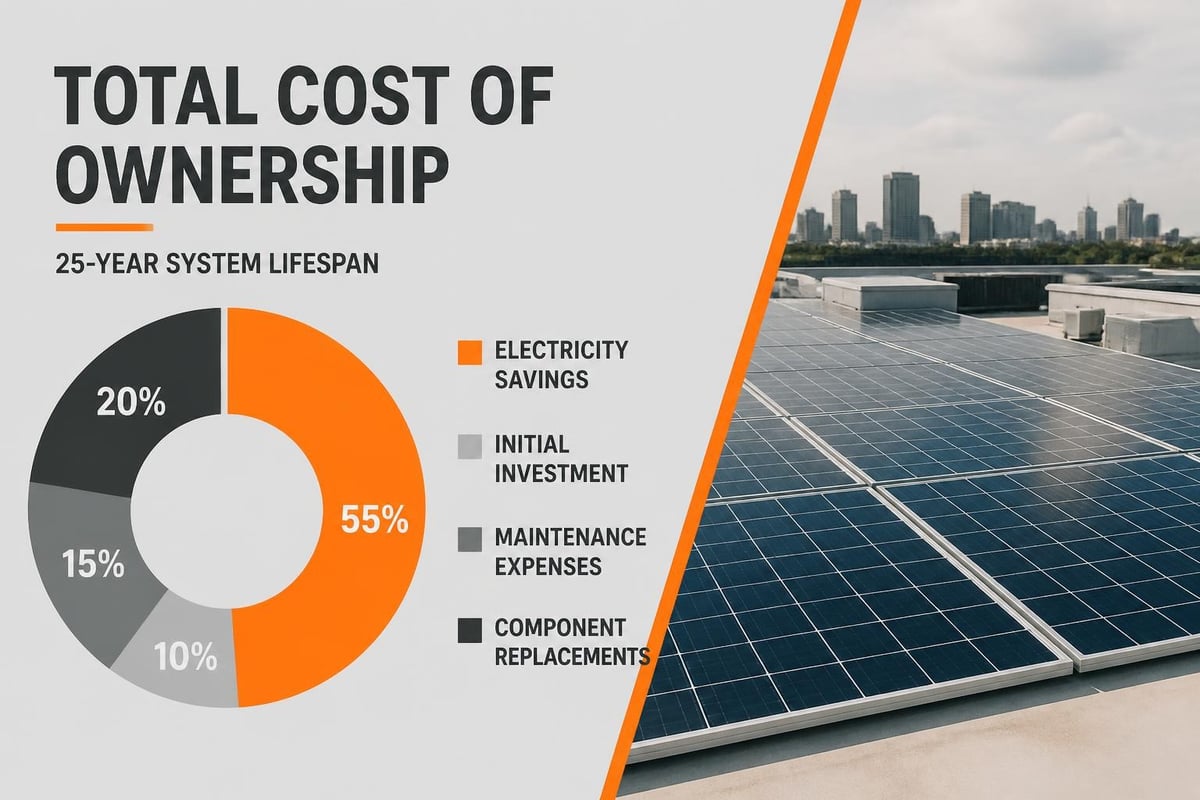
Ongoing operational expenditure remains modest compared to initial capital investment, yet these recurring costs influence total lifecycle economics. Professional operations and maintenance services typically cost 0.5-1.5% of initial system value annually, encompassing preventative maintenance, performance monitoring, cleaning services and corrective repairs.
Inverter replacement represents the most significant mid-life expense, with these components generally requiring replacement after 10-15 years of operation. Modern inverters cost R15,000-R45,000 depending on capacity and functionality, whilst premium models with extended warranties may eliminate this expense through the system's operational lifetime.
Panel degradation gradually reduces generation capacity at rates of 0.3-0.5% annually for quality modules, requiring modest oversizing during initial design to maintain target production levels throughout 25-30 year operational periods. This degradation factor influences effective solar costs by marginally increasing required installed capacity.
Insurance coverage protects against theft, weather damage and liability exposure, adding R3,000-R8,000 annually for typical commercial installations. Comprehensive policies covering business interruption losses provide additional value by compensating for production losses during repair periods following insured events.
Performance Monitoring and Optimisation
Advanced monitoring platforms track generation, consumption and system health metrics in real-time, enabling rapid identification and resolution of performance anomalies. These systems prevent minor issues from escalating into major failures whilst providing verifiable production data for warranty claims and performance guarantees.
Remote diagnostics reduce maintenance response times and minimise site visit requirements, containing operational costs whilst maximising system availability. String-level monitoring identifies underperforming panels or failed optimisers, enabling targeted interventions rather than system-wide investigations.
Predictive analytics leverage historical performance data and weather forecasting to anticipate generation patterns, facilitating sophisticated demand management strategies that amplify financial returns. These intelligent systems optimise battery charging schedules, pre-cool buildings during peak generation periods and adjust operational schedules to maximise solar utilisation.
Hidden Costs and Budget Contingencies
Comprehensive solar cost planning accounts for potential expenses beyond standard equipment and installation charges. Roof repairs or structural reinforcement may prove necessary before solar installation commences, particularly for older buildings or structures not designed for additional loading from panel arrays and mounting systems.
Electrical infrastructure upgrades ensure compatibility between solar systems and existing building electrical installations. Older distribution boards, undersized cabling or inadequate earthing systems require rectification before solar connection, potentially adding R15,000-R50,000 to project budgets depending on upgrade scope.
Planning and compliance costs vary based on municipal requirements, with some jurisdictions demanding comprehensive structural assessments, electrical compliance certificates and occupancy certificate amendments before approving solar installations. These professional services add R8,000-R25,000 to total solar costs whilst ensuring regulatory compliance and avoiding enforcement actions.
Tree trimming or removal eliminates shading that substantially diminishes solar production. Comprehensive site assessments identify shading obstacles during design phases, enabling informed decisions regarding vegetation management costs versus alternative panel placement strategies.
Tax Incentives and Effective Cost Reduction
Section 12B of the Income Tax Act allows businesses to claim accelerated depreciation on renewable energy assets, providing substantial tax relief that reduces effective solar costs. Qualifying systems enable 50% first-year depreciation with remaining value written off over subsequent years, creating immediate tax benefits that improve project economics.
The renewable energy tax incentive applies to systems up to 1MW capacity per site, providing deductions equal to the installed asset value. For businesses with adequate taxable income, this incentive delivers tax savings approximating 27% of system costs, substantially improving payback periods and internal rates of return.
Carbon tax credits offer additional financial benefits as businesses reduce Scope 2 emissions through solar generation. Whilst carbon credit markets remain relatively immature in Southern Africa, evolving regulatory frameworks and corporate sustainability commitments increasingly monetise emission reductions, creating supplementary value streams beyond direct electricity savings.
Enhanced capital allowances specifically target energy efficiency and renewable energy investments, providing accelerated depreciation schedules that improve cash flow timing and reduce effective financing costs. These mechanisms enable businesses to recover solar costs more rapidly through tax savings whilst simultaneously reducing electricity expenses.
Return on Investment Calculations
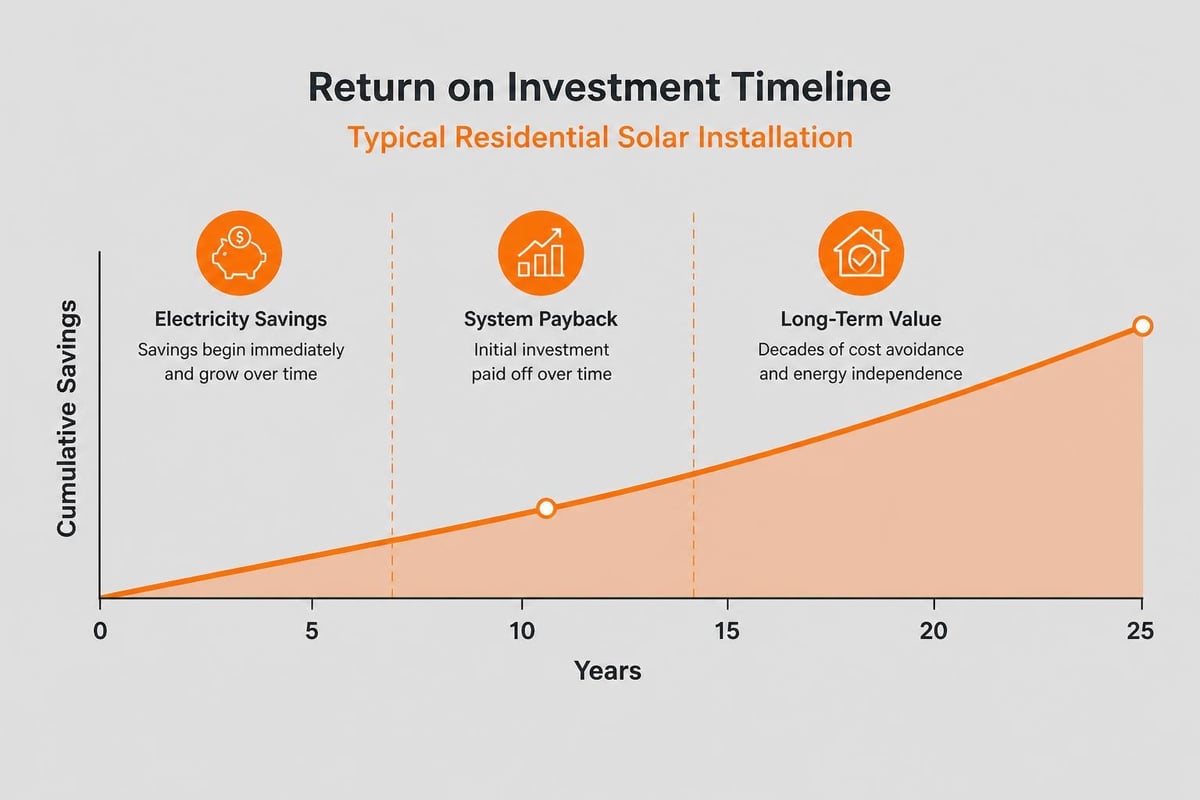
Accurate ROI analysis incorporates all cost components including initial capital, financing charges, operational expenses and component replacements whilst accounting for electricity tariff escalation, degradation factors and tax benefits. Detailed financial modelling reveals payback periods typically ranging from 3-7 years for commercial installations depending on consumption patterns and tariff structures.
Internal rate of return calculations demonstrate that quality commercial solar installations frequently deliver 15-25% returns over system lifetimes, substantially exceeding traditional investment alternatives whilst providing tangible operational benefits including price certainty and supply security.
Net present value analysis accounts for the time value of money, discounting future electricity savings to present-day equivalents. These calculations reveal that despite significant initial solar costs, the cumulative value of avoided electricity purchases substantially exceeds capital investment when evaluated over 20-25 year horizons.
System Sizing and Cost Optimisation
Appropriate system sizing balances generation capacity against consumption requirements, maximising financial returns whilst avoiding excess capacity that generates limited value. Undersized systems fail to capture available roof space and economies of scale, whilst oversized installations produce surplus electricity that returns minimal value under current feed-in tariff structures.
Consumption profile analysis identifies optimal system capacity by examining hourly and seasonal demand patterns. Facilities with consistent daytime consumption achieve superior returns from solar investments compared to operations with predominantly evening demand requiring expensive battery storage for solar utilisation.
Sizing optimisation factors:
- Average daily consumption (kWh)
- Peak demand periods and magnitude
- Load profile consistency and predictability
- Available installation area and orientation
- Budget constraints and financing availability
- Grid connection capacity and limitations
- Future expansion plans and consumption growth
Modular design approaches enable phased implementation, allowing organisations to deploy initial capacity within current budget constraints whilst planning systematic expansion as capital availability and consumption requirements evolve. This strategy maintains cost efficiency whilst providing operational experience before committing to full-scale installations.
Future-proofing considerations influence initial system design, ensuring adequate inverter capacity, electrical infrastructure and structural provisions support planned expansions without requiring expensive retrofits. These forward-looking design elements marginally increase initial solar costs whilst substantially reducing future expansion expenses.
Quality Considerations and Long-Term Value
Equipment quality profoundly influences both immediate solar costs and lifecycle economics. Premium panels with superior degradation warranties, higher efficiency ratings and proven reliability command 15-25% price premiums over budget alternatives, yet deliver substantially greater long-term value through enhanced production and reduced failure rates.
Tier 1 manufacturers provide comprehensive warranties, established service networks and financial stability that ensures warranty honouring throughout 25-30 year operational periods. These considerations prove critical given that warranty claims against defunct manufacturers provide zero value regardless of contractual terms.
Inverter selection balances initial costs against efficiency ratings, warranty coverage and technological capabilities. String inverters offer cost advantages for straightforward installations, whilst microinverters and power optimisers command premium pricing but deliver superior performance in partially shaded conditions or complex roof configurations.
Installation quality determines system longevity, safety and performance consistency. Professional installers following manufacturer specifications and electrical regulations deliver reliable systems that operate safely throughout their design lives, whilst substandard installations create safety hazards, void warranties and generate disappointing returns that undermine solar investment rationale.
Environmental and Social Return Considerations
Beyond direct financial metrics, solar costs must be evaluated against broader environmental and social benefits that create stakeholder value. Carbon emission reductions contribute to corporate sustainability objectives, enhance ESG credentials and demonstrate environmental leadership that resonates with customers, employees and investors.
Energy independence mitigates supply chain vulnerabilities and operational disruptions during grid instability. Businesses maintaining production during load-shedding events protect revenue streams, preserve customer relationships and avoid the substantial indirect costs of forced shutdowns including spoiled inventory and idle labour.
Brand differentiation opportunities emerge as consumers increasingly favour environmentally responsible businesses. Solar installations provide visible evidence of sustainability commitments whilst generating marketing content and stakeholder engagement opportunities that amplify brand value beyond quantifiable electricity savings.
Community impact extends solar benefits beyond direct system owners, creating employment during installation phases and demonstrating technological pathways toward decentralised, sustainable energy systems. These broader societal benefits, whilst difficult to quantify in traditional ROI calculations, create meaningful value for organisations with community-focused missions.
Understanding solar costs requires comprehensive analysis of initial investment, operational expenses, financing structures and long-term value creation across both financial and non-financial dimensions. Strategic system design, quality equipment selection and professional installation practices ensure that solar investments deliver optimal returns whilst supporting broader sustainability objectives. INFOLED provides comprehensive renewable energy solutions including design, financing, installation and maintenance services that transform solar costs into strategic investments delivering measurable electricity savings, enhanced energy resilience and meaningful progress toward Net Zero targets across Southern Africa.
Next Step
Need help with your energy strategy?
Speak to INFOLED about solar, storage, EV charging, service agreements or system performance.