
The energy landscape has reached a critical juncture where the decision to switch to renewable energy is no longer merely an environmental consideration but a strategic business imperative. As we progress through 2026, organisations across Southern Africa face mounting pressure from escalating electricity costs, grid instability, and increasingly stringent environmental regulations. The convergence of technological advancement, cost reduction, and policy support has transformed renewable energy from an aspirational goal into an economically compelling reality. Companies that embrace this transition position themselves not only to reduce operational expenses but also to enhance energy security, meet sustainability commitments, and maintain competitive advantage in an evolving marketplace.
Understanding the Business Case for Renewable Energy
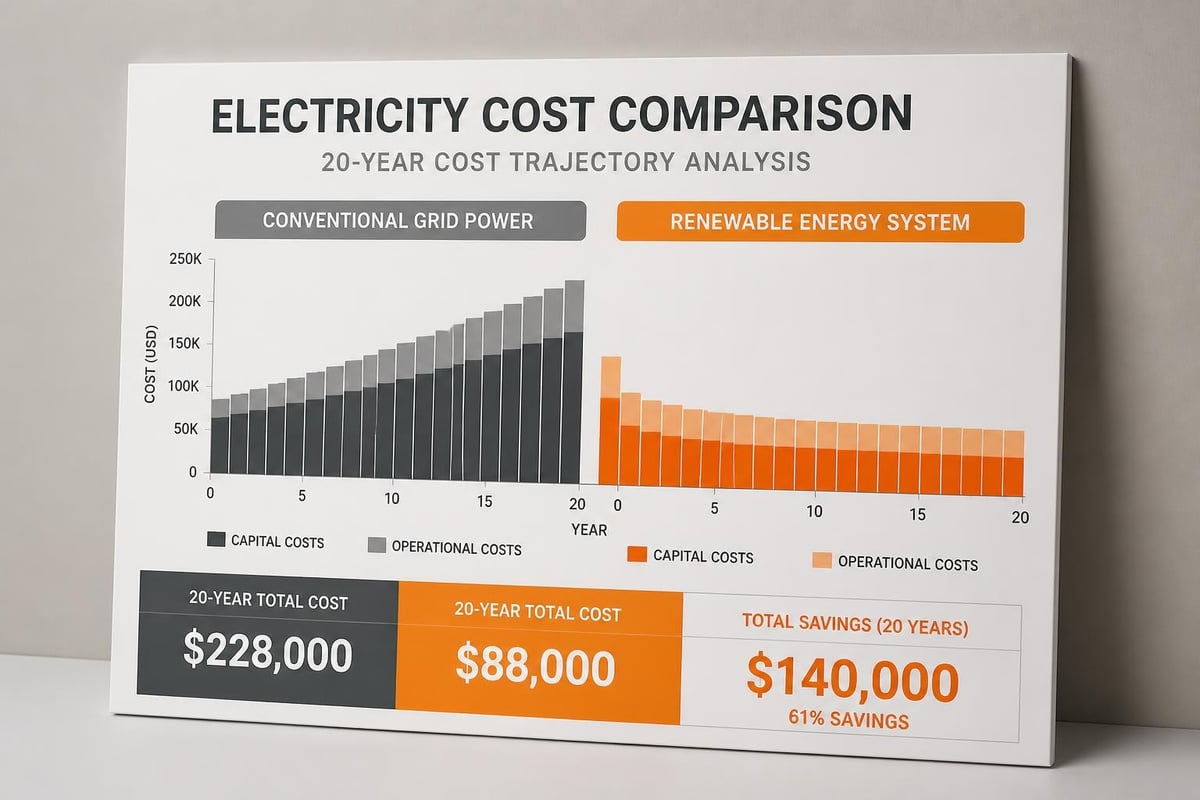
The financial landscape surrounding renewable energy has fundamentally shifted over the past decade. Solar photovoltaic technology costs have declined by more than 85% since 2010, whilst battery energy storage systems have experienced similar cost trajectories. This dramatic reduction, combined with rising conventional electricity tariffs, has created unprecedented economic opportunities for businesses willing to switch to renewable energy.
Key financial drivers include:
- Immediate reduction in electricity costs, often by 30-50% for commercial facilities
- Protection against future tariff escalation through fixed-cost energy generation
- Enhanced property values and improved asset performance metrics
- Access to green financing instruments with favourable terms
The return on investment for renewable energy installations has improved substantially. Commercial solar installations in Southern Africa typically achieve payback periods between three and six years, with systems designed to operate efficiently for 25 years or more. When coupled with battery storage solutions, facilities can maximise self-consumption and further reduce grid dependency.
Regulatory and Environmental Considerations
Organisations face increasing pressure from multiple stakeholders to demonstrate environmental responsibility. The rapid growth of renewable energy adoption reflects global recognition of climate imperatives and regulatory requirements. Southern African businesses must navigate evolving carbon tax frameworks, environmental reporting obligations, and stakeholder expectations regarding sustainability performance.
| Regulatory Driver | Impact on Business | Timeline |
|---|---|---|
| Carbon tax expansion | Increased operating costs for high-emission facilities | 2026-2028 |
| ESG reporting requirements | Mandatory disclosure of energy and emissions data | Current |
| Net Zero commitments | Industry-specific reduction targets | 2030-2050 |
| Grid compliance standards | Technical requirements for distributed generation | Ongoing |
Corporate environmental, social, and governance (ESG) frameworks now integrate renewable energy adoption as a critical performance indicator. Investment decisions, credit ratings, and stakeholder confidence increasingly depend on demonstrable progress towards sustainability objectives.
Technical Pathways to Switch to Renewable Energy
Multiple technological solutions enable organisations to transition away from conventional energy sources. The optimal approach depends on facility characteristics, energy consumption patterns, budget constraints, and operational requirements. Most commercial and industrial installations benefit from integrated systems that combine multiple technologies.
Solar Photovoltaic Systems
Solar energy represents the most accessible entry point for organisations seeking to switch to renewable energy. Modern solar installations deliver reliable, maintenance-minimal electricity generation with proven performance across diverse applications. Commercial rooftop systems, ground-mounted arrays, and carport installations each offer distinct advantages depending on site constraints and energy requirements.
System design considerations:
- Available installation area and structural capacity
- Energy consumption profiles and load timing
- Grid connection requirements and limitations
- Shading analysis and orientation optimisation
- Integration with existing electrical infrastructure
- Future expansion capacity and scalability
The shift towards commercial solar PV design has accelerated as businesses recognise the multiple benefits beyond simple cost reduction. Peak generation from solar installations often aligns well with commercial operational hours, maximising immediate consumption and reducing expensive peak-period grid purchases.
Battery Energy Storage Integration
Battery energy storage systems (BESS) transform solar installations from daytime-only generators into comprehensive energy solutions. Storage technology enables facilities to capture excess solar production, shift consumption to optimise tariff structures, and maintain operations during grid outages. The decision to switch to renewable energy increasingly involves battery integration as a fundamental component rather than an optional addition.
Modern lithium-ion battery systems offer exceptional performance characteristics with minimal maintenance requirements. Intelligent battery management systems optimise charge and discharge cycles, extend equipment lifespan, and integrate seamlessly with solar generation and grid supply. For facilities experiencing frequent load-shedding or grid instability, battery storage provides essential operational continuity.
Implementation Strategy and Planning
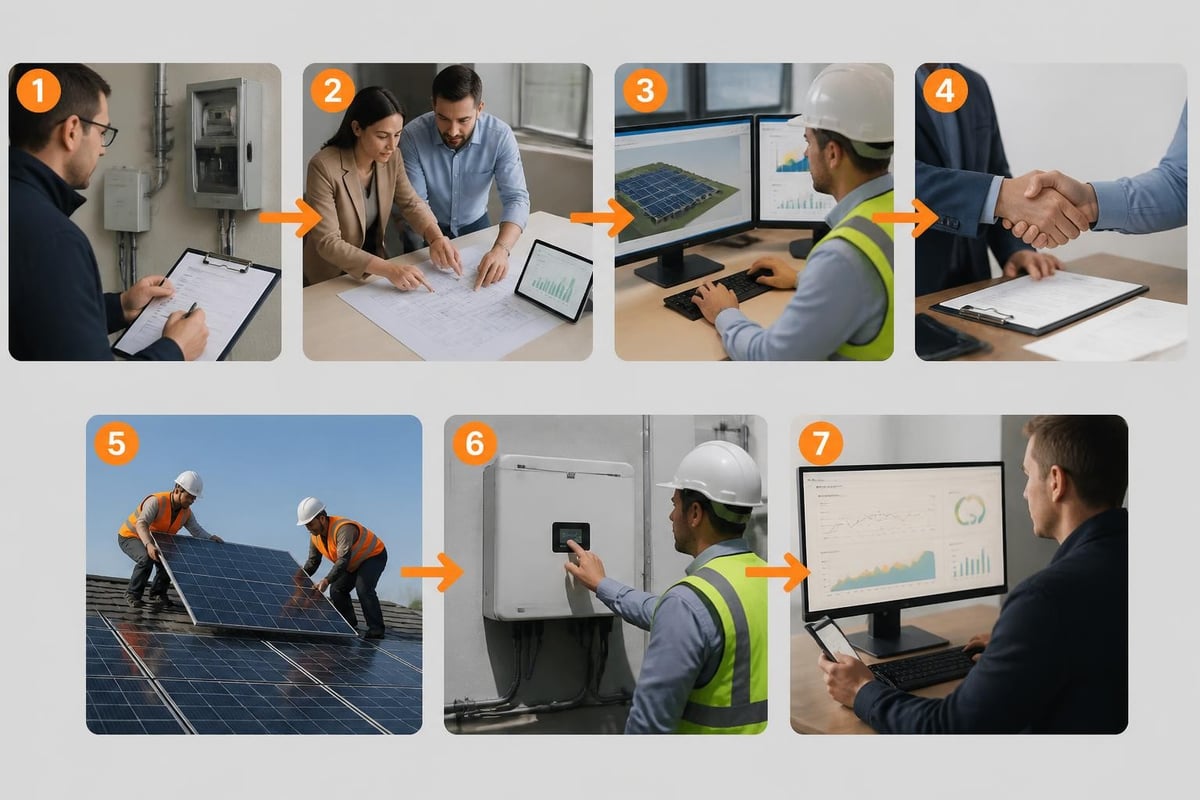
Successfully transitioning to renewable energy requires methodical planning and expert execution. Organisations that approach the switch strategically achieve superior outcomes compared to those implementing ad-hoc solutions. The implementation process typically spans several months from initial assessment through commissioning and optimisation.
Energy Audit and Feasibility Assessment
The foundation of any successful renewable energy project begins with comprehensive understanding of current energy consumption. Detailed energy audits identify consumption patterns, peak demand periods, power quality issues, and inefficiencies that may be addressed prior to or concurrent with renewable energy installation. This analysis informs system sizing, technology selection, and financial modelling.
Professional feasibility studies examine technical constraints, regulatory requirements, grid connection processes, and financial viability. These assessments provide decision-makers with accurate projections of costs, savings, payback periods, and return on investment. The EPA's guidance on reducing environmental impact emphasises the importance of thorough planning before implementing renewable energy solutions.
System Design and Engineering
Once feasibility is established, detailed engineering design translates energy requirements into specific equipment specifications and installation plans. This phase addresses electrical integration, structural considerations, safety systems, monitoring infrastructure, and compliance requirements. Professional engineering ensures systems meet regulatory standards whilst optimising performance and reliability.
Critical design elements include:
- Solar array configuration and inverter selection
- Battery capacity and discharge rate specifications
- Grid connection protection and synchronisation
- Monitoring and control system architecture
- Safety disconnects and emergency procedures
- Expansion provisions for future capacity increases
Financing Options and Economic Models
The capital requirement to switch to renewable energy represents the primary barrier for many organisations. However, diverse financing mechanisms have emerged to address this challenge, enabling businesses to proceed with installations without substantial upfront capital expenditure. Understanding available options allows organisations to structure transactions that align with financial policies and cash flow requirements.
Capital Purchase versus Operating Leases
Traditional capital purchase provides immediate asset ownership, accelerated depreciation benefits, and maximum long-term savings. Organisations with available capital and tax liability often prefer this approach to capture full financial benefits. However, operating lease structures and power purchase agreements offer alternatives that preserve capital whilst delivering immediate cost reduction.
| Financing Model | Capital Requirement | Ownership | Tax Benefits | Typical Term |
|---|---|---|---|---|
| Cash purchase | Full upfront cost | Immediate | Full depreciation | N/A |
| Asset finance | 10-30% deposit | At term end | Partial | 3-7 years |
| Operating lease | Minimal | Lessor retains | None | 5-15 years |
| Power purchase agreement | None | Third party | None | 10-20 years |
Power purchase agreements (PPAs) have gained particular traction in the commercial sector. Under PPA structures, third-party investors fund, install, and maintain renewable energy systems whilst selling generated electricity to the host facility at pre-agreed rates below grid tariffs. This arrangement enables organisations to switch to renewable energy with zero capital investment whilst immediately reducing electricity costs.
Green Financing Instruments
Financial institutions increasingly offer specialised green financing products with favourable terms for renewable energy projects. These instruments recognise the reduced risk profile of renewable energy investments and support organisations' sustainability objectives. Interest rates, loan terms, and collateral requirements often prove more advantageous than conventional commercial lending.
Ongoing Operations and Performance Optimisation
The decision to switch to renewable energy extends beyond installation to encompass ongoing operations, maintenance, and performance management. Properly maintained systems deliver consistent performance throughout their 25-year operational life, whilst neglected installations experience degraded output and premature component failures. Establishing robust operational protocols maximises return on investment and ensures projected savings materialise.
Monitoring and Analytics
Modern renewable energy installations incorporate sophisticated monitoring systems that track generation, consumption, system health, and financial performance in real-time. These platforms provide facility managers with granular visibility into energy flows, enabling informed decisions about consumption timing and operational adjustments. Advanced analytics identify performance anomalies, predict maintenance requirements, and optimise system parameters.
The federal approach to renewable energy monitoring demonstrates best practices for tracking renewable energy performance and ensuring systems deliver projected benefits. Commercial facilities benefit from similar rigorous monitoring protocols.
Essential monitoring metrics include:
- Real-time generation versus forecast
- Self-consumption percentage and grid interaction
- System efficiency and performance ratio
- Battery state of charge and cycling patterns
- Financial savings versus projections
- Equipment health indicators and alerts
Preventative Maintenance Requirements
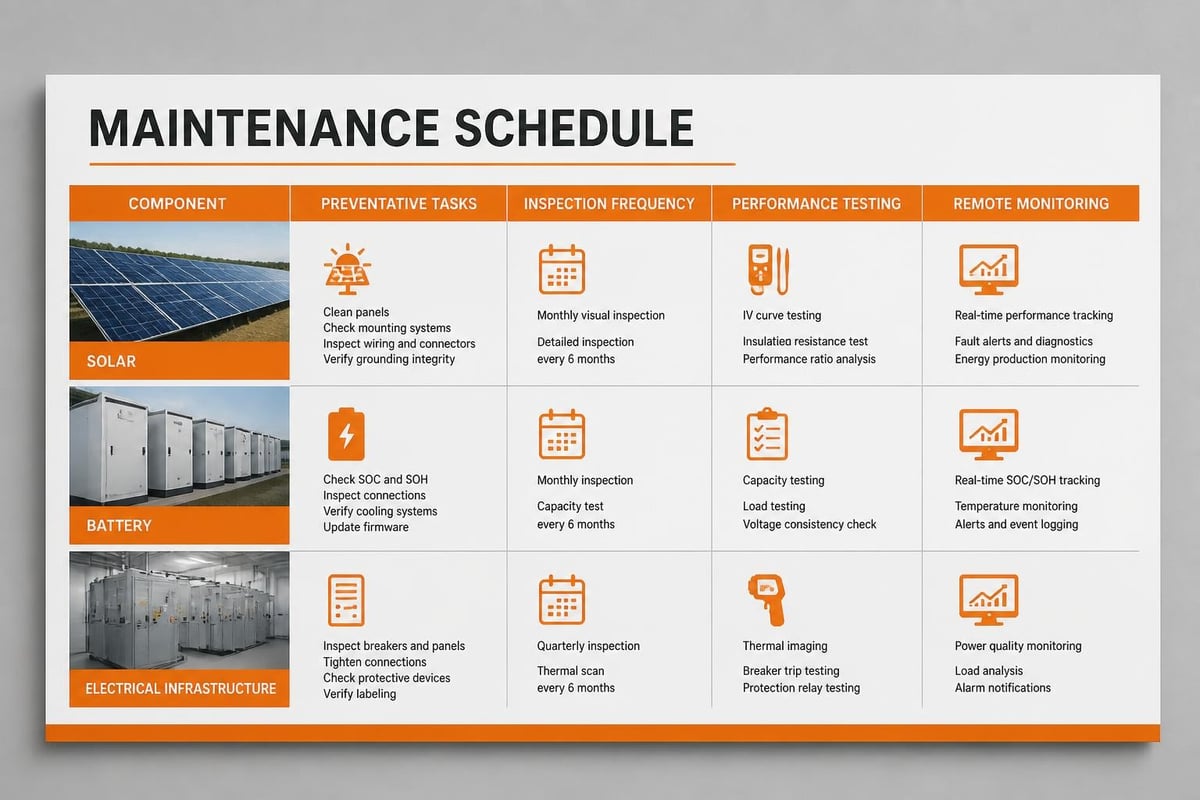
Whilst renewable energy systems require minimal maintenance compared to conventional generation equipment, establishing regular service protocols ensures optimal performance. Professional renewable energy operations and maintenance programmes combine preventative inspections, performance testing, cleaning services, and corrective interventions to maximise system uptime and generation capacity.
Solar panel cleaning, inverter servicing, battery health assessments, and electrical connection inspections form the core of effective maintenance programmes. Thermal imaging and drone inspections identify issues invisible to ground-level observation, enabling early intervention before minor problems escalate into costly failures.
Integration with Broader Sustainability Strategies
The decision to switch to renewable energy rarely occurs in isolation from wider organisational sustainability initiatives. Forward-thinking businesses recognise renewable energy as one component within comprehensive environmental programmes addressing carbon reduction, resource efficiency, waste management, and sustainable procurement. This integrated approach delivers synergistic benefits and demonstrates genuine commitment to environmental stewardship.
Carbon Accounting and Net Zero Pathways
Renewable energy installations directly reduce Scope 2 emissions by displacing grid electricity consumption. For organisations with Net Zero commitments, on-site renewable generation represents one of the most effective intervention strategies. Accurate carbon accounting quantifies emission reductions and provides verifiable evidence of progress towards reduction targets.
The EPA's resources on state renewable energy highlight how renewable energy integration supports broader climate objectives whilst delivering economic benefits. Organisations must ensure renewable energy deployment aligns with science-based targets and recognised accounting frameworks.
Stakeholder Communication and Reporting
Successfully transitioning to renewable energy creates valuable communication opportunities with customers, investors, employees, and community stakeholders. Transparent reporting on renewable energy performance demonstrates accountability and leadership whilst enhancing corporate reputation. Many organisations leverage renewable energy installations as visible symbols of environmental commitment, using system data in marketing materials and sustainability reports.
Overcoming Common Implementation Challenges
Despite compelling benefits, organisations often encounter obstacles when attempting to switch to renewable energy. Recognising these challenges and developing mitigation strategies increases implementation success rates and ensures projects deliver anticipated outcomes. Most barriers prove surmountable with proper planning and expert guidance.
Technical and Regulatory Complexity
Renewable energy projects involve numerous technical disciplines including electrical engineering, structural engineering, grid integration, and regulatory compliance. Organisations lacking internal expertise often struggle to navigate application processes, design requirements, and technical standards. Engaging experienced engineering partners streamlines implementation and ensures systems meet performance and compliance requirements.
Grid connection applications, environmental assessments, building permits, and utility notifications require careful management. Professional project management coordinates these workstreams whilst maintaining timeline and budget discipline.
Common regulatory requirements include:
- Electrical compliance certificates and municipal approvals
- Grid connection applications and network studies
- Environmental impact assessments where applicable
- Building plan approvals for structural modifications
- Fire safety system integration and emergency planning
- Insurance policy updates and asset registration
Organisational Change Management
Switching to renewable energy affects multiple organisational functions beyond facilities management. Finance teams require new processes for monitoring energy savings and managing financing arrangements. Procurement functions must establish vendor relationships and spare parts inventories. Operations staff need training on monitoring systems and emergency procedures.
The leadership impact of renewable energy adoption extends throughout organisations, requiring coordinated change management to realise full benefits. Executive sponsorship and cross-functional collaboration ensure smooth transitions and sustained engagement.
Future-Proofing Energy Infrastructure
The renewable energy landscape continues evolving rapidly with emerging technologies, declining costs, and expanding capabilities. Organisations that switch to renewable energy in 2026 should design systems with future enhancement in mind. Modular architectures, scalable inverter platforms, and expansion-ready electrical infrastructure enable cost-effective capacity additions as energy requirements grow or technologies advance.
Emerging Technologies and Capabilities
Vehicle-to-grid integration, hydrogen production, advanced battery chemistries, and artificial intelligence optimisation represent near-term developments that will enhance renewable energy system capabilities. Facilities planning renewable energy installations should consider potential integration with these emerging technologies, even if immediate implementation is not required.
The technical planning platforms for high-renewable systems demonstrate sophisticated approaches to integrating diverse renewable technologies whilst optimising performance and costs. Commercial facilities benefit from similar forward-looking design philosophies that accommodate technology evolution.
Future-ready design considerations:
- Inverter oversizing to accommodate additional solar capacity
- Battery management systems compatible with second-life batteries
- Electrical infrastructure sized for electric vehicle charging integration
- Monitoring platforms supporting third-party technology integration
- Physical space allocation for future battery or generation expansion
Grid Evolution and Market Participation
Electricity grids are transitioning from centralised, unidirectional systems to distributed, bidirectional networks where commercial facilities both consume and contribute energy. Forward-thinking organisations position renewable energy installations to participate in emerging grid services markets, ancillary services, and demand response programmes. These opportunities create additional revenue streams beyond simple electricity cost reduction.
The benefits of local renewable energy extend beyond individual facilities to support grid stability and community resilience. As regulatory frameworks mature, facilities with sophisticated energy management capabilities can monetise flexibility and storage capacity through market participation.
The transition to renewable energy represents one of the most significant strategic decisions organisations will make in 2026 and beyond, delivering immediate cost savings whilst positioning businesses for long-term success in an evolving energy landscape. Whether your facility requires solar generation, battery storage integration, or comprehensive energy management solutions, INFOLED provides the engineering expertise, technology platforms, and operational support to ensure successful implementation and sustained performance across Southern Africa.
Next Step
Need help with your energy strategy?
Speak to INFOLED about solar, storage, EV charging, service agreements or system performance.