
South Africa's agricultural sector faces mounting pressures: rising electricity costs, water scarcity, climate volatility, and the imperative to maintain food security whilst reducing carbon emissions. Agricultural solar, also known as agrivoltaics or dual-use solar, offers a transformative solution that addresses these challenges simultaneously. By integrating photovoltaic systems with active farming operations, this approach enables landowners to generate renewable energy whilst maintaining or even enhancing agricultural productivity. From the Eastern Cape's livestock farms to the Western Cape's fruit orchards and Limpopo's vegetable operations, agricultural solar represents a paradigm shift in how we think about land use, energy generation, and sustainable food production.
Understanding Agricultural Solar Systems
Agricultural solar represents a deliberate co-location of photovoltaic panels with crop cultivation, livestock grazing, or other agricultural activities on the same land parcel. Unlike traditional ground-mounted solar farms that exclude agricultural use, these systems are specifically designed to allow both energy generation and farming to occur simultaneously.
The fundamental principle centres on optimising land use efficiency. Rather than forcing a choice between food production and energy generation, agricultural solar creates a symbiotic relationship where both activities complement each other. Solar panels provide partial shade that can reduce water evaporation, moderate soil temperatures, and protect sensitive crops from harsh sun exposure, whilst the agricultural activity beneath helps maintain ground cover and prevents soil degradation.
System Design Configurations
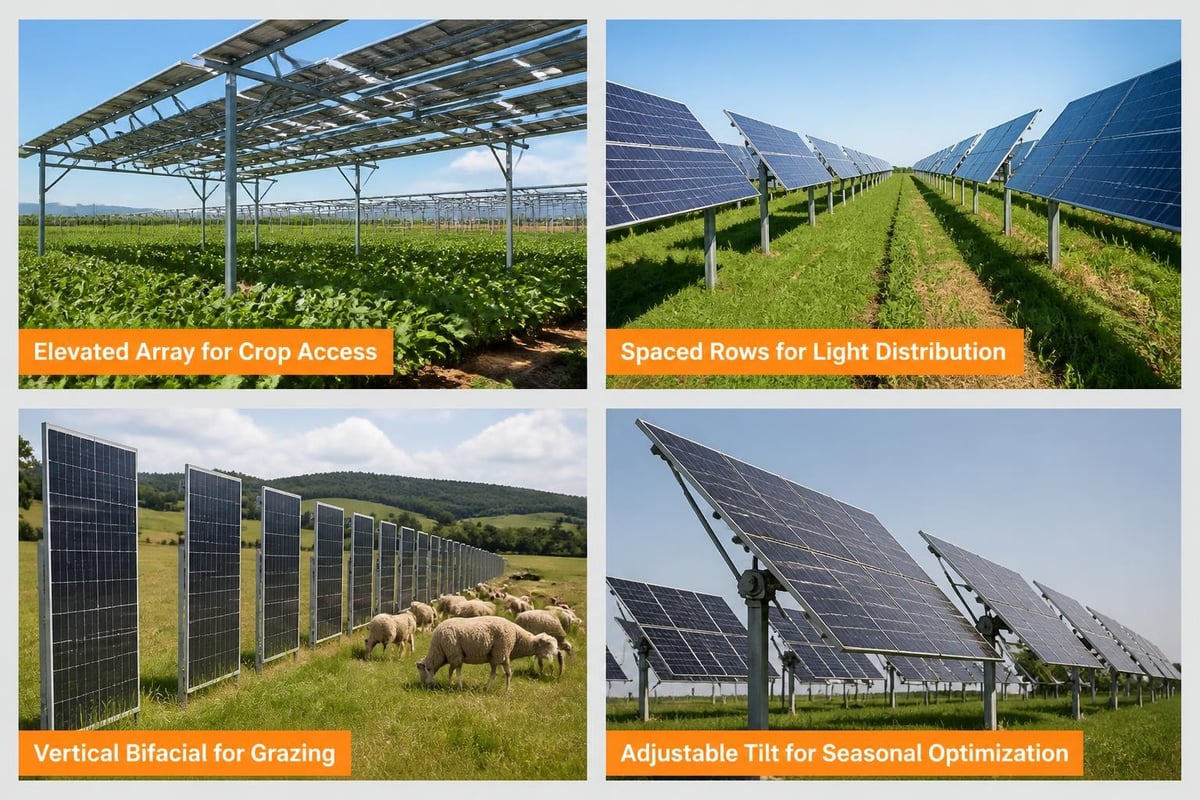
Several design approaches exist, each suited to different agricultural contexts:
- Elevated arrays with panels mounted 2.5 to 5 metres above ground, allowing space for crops and farm equipment
- Spaced-row designs with wider gaps between panel rows to optimise light distribution for crops
- Vertical bifacial installations particularly effective for grazing operations and row crops
- Adjustable-tilt systems that can be seasonally repositioned to maximise either energy or crop performance
- Greenhouse-integrated photovoltaics combining protected cropping with power generation
| Configuration Type | Best Agricultural Use | Typical Height | Light Transmission |
|---|---|---|---|
| Elevated Fixed Tilt | Row crops, vegetables | 3.5-5m | 40-60% |
| Spaced Rows | Grazing, hay production | 2.5-3m | 55-70% |
| Vertical Bifacial | Livestock, pasture | 1.5-2m | 65-80% |
| Tracking Systems | Speciality crops | 4-6m | Variable 30-85% |
The IEA PVPS trends report highlights growing global adoption, with countries establishing dedicated agrivoltaics research programmes and policy frameworks. South Africa has the opportunity to learn from these international examples whilst developing solutions tailored to local conditions and crop types.
Financial Benefits for South African Farmers
The economic case for agricultural solar rests on multiple revenue and cost-saving streams that compound over the system's operational lifetime.
Energy cost reduction represents the most immediate benefit. Commercial electricity tariffs in South Africa have increased substantially over the past decade, with agricultural users facing rates exceeding R2.50 per kWh during peak periods in many municipalities. A well-designed agricultural solar installation can offset 60-90% of a farm's daytime electricity consumption, translating to annual savings of R150,000 to R500,000 for medium-sized operations.
Revenue Generation Opportunities
Beyond cost savings, agricultural solar creates new income streams:
Direct energy sales: Farms with grid-tied systems can sell excess generation back to the grid through wheeling agreements or power purchase arrangements. Recent regulatory changes have simplified this process, though navigating municipal requirements remains complex.
Agricultural productivity gains: Research demonstrates that certain crops actually perform better under partial shade. Studies in arid climates show yield increases of 15-35% for leafy greens, tomatoes, and peppers grown beneath solar arrays, primarily due to reduced water stress and heat damage.
Water efficiency savings: Reduced evaporation beneath panels can decrease irrigation requirements by 20-40% depending on climate and crop type. In water-stressed regions like the Northern Cape and Free State, this represents substantial operational savings.
Carbon credit potential: Agricultural solar projects may qualify for carbon credits through international and domestic programmes, creating additional revenue as South Africa develops its carbon trading infrastructure.
When evaluating commercial solar PV design for agricultural applications, comprehensive financial modelling must account for both energy and agricultural revenue streams. Payback periods typically range from 6 to 10 years, with internal rates of return frequently exceeding 14-18% when agricultural productivity benefits are included.
Crop Selection and Management Strategies
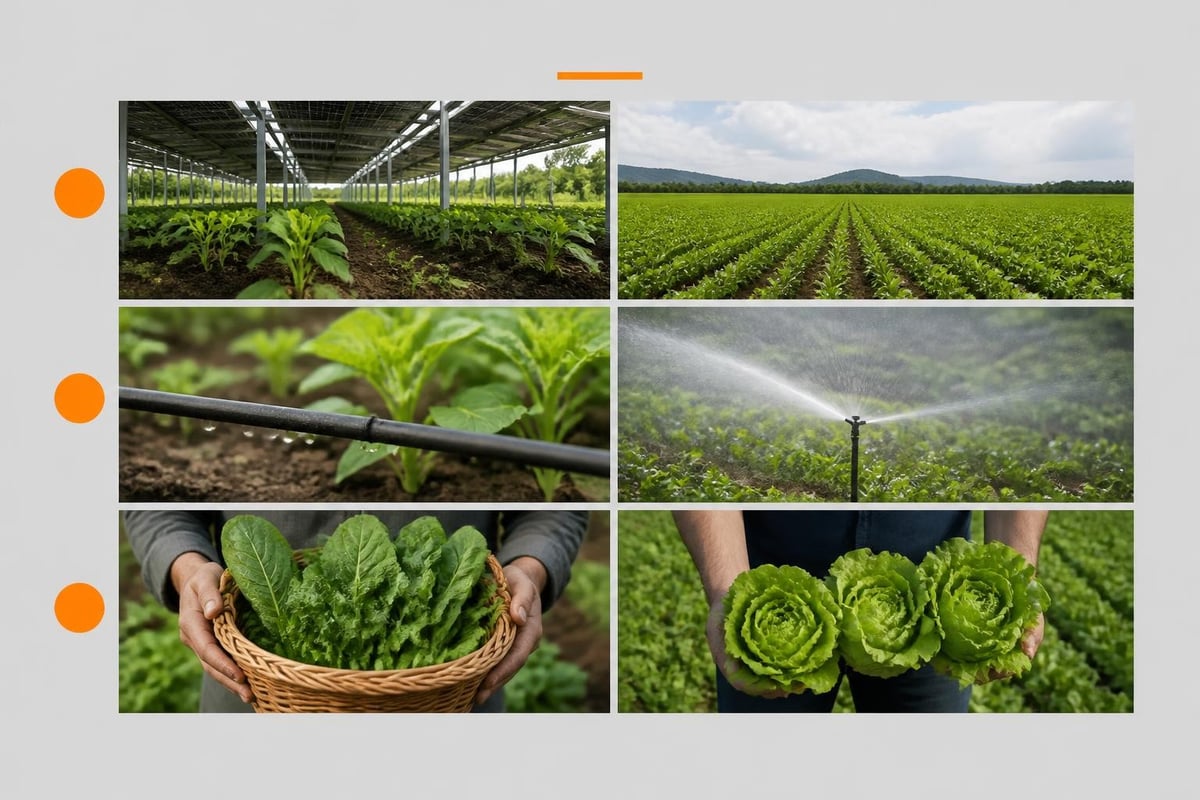
Success with agricultural solar depends heavily on matching crop selection to the light conditions created by panel placement. Not all crops respond equally to partial shade, making agronomic planning essential.
Shade-tolerant crops that thrive in agricultural solar environments include:
- Leafy greens (lettuce, spinach, kale, chard)
- Root vegetables (radishes, beetroot, carrots)
- Herbs (parsley, coriander, basil, mint)
- Berries (strawberries, raspberries, blueberries)
- Legumes (beans, peas)
- Brassicas (cabbage, broccoli, cauliflower)
Western Cape wine farms have begun exploring grape cultivation beneath elevated solar arrays, with preliminary results suggesting that certain varietals benefit from the moderated temperature swings and reduced sun exposure during extreme heat events.
Livestock Integration
Grazing operations present particularly strong opportunities for agricultural solar implementation. Sheep and cattle farming can continue largely unchanged beneath elevated or vertical panel arrays, with several additional benefits:
- Panels provide shade and shelter for livestock, improving animal welfare during extreme weather
- Reduced heat stress can improve weight gain and milk production in dairy operations
- Livestock naturally control vegetation growth around panels, reducing maintenance costs
- Panel washing runoff can be directed to troughs or irrigation systems
KwaZulu-Natal and Eastern Cape livestock farmers have reported improved lambing success rates and better weight gain in cattle grazing beneath solar installations, attributed to improved microclimate conditions and reduced heat stress during summer months.
The U.S. Department of Energy's guidance on agrivoltaics provides frameworks for evaluating compatibility between different farming operations and solar configurations, principles that translate well to South African conditions.
Environmental and Climate Resilience Advantages
Agricultural solar delivers measurable environmental benefits beyond carbon emission reductions. Field research, including studies published in Nature Communications, demonstrates that properly designed systems can maintain or enhance ecosystem health.
Water conservation emerges as particularly valuable in South Africa's semi-arid climate. Reduced evapotranspiration beneath panels translates to 25-35% lower irrigation requirements for many crop types. In regions facing water allocation restrictions, this efficiency gain can determine operational viability.
Soil health improvements result from several mechanisms. The shade provided by panels reduces soil temperature extremes, protecting beneficial microorganisms. Reduced wind speeds beneath arrays decrease soil erosion. Organic matter decomposes more slowly in the cooler, moister conditions, improving soil carbon sequestration.
Biodiversity outcomes depend heavily on implementation approach. Well-managed agricultural solar installations can support pollinator populations by maintaining flowering plants beneath and around arrays. This contrasts sharply with conventional ground-mount solar farms that typically remove all vegetation.
Climate Adaptation Benefits
As climate change intensifies, agricultural solar provides tangible resilience:
- Protection from hail damage for high-value crops
- Reduced crop failure during heat waves and drought
- Maintained productivity during load-shedding events through battery-coupled systems
- Diversified income reduces vulnerability to agricultural commodity price fluctuations
- Enhanced frost protection in certain configurations
Mpumalanga vegetable producers have reported that crops beneath solar panels suffered significantly less damage during the severe hailstorms that affected the region in 2025, with panels absorbing impacts that would otherwise have destroyed entire plantings.
Technical Design Considerations for Southern Africa
Implementing agricultural solar in South Africa requires careful attention to local conditions, equipment standards, and regulatory requirements. The engineering approach differs substantially from conventional solar farms.
Structural requirements must account for agricultural equipment clearance. Tractors, harvesters, and spray rigs typically require 3.5 to 4.5 metres of vertical clearance, dictating minimum panel heights. This increases foundation and structural costs by 30-45% compared to standard ground-mount systems.
Panel selection impacts both energy and agricultural performance. Bifacial modules capture reflected light from crops and soil, increasing energy yield by 8-15%. Semi-transparent panels allow more light transmission but generate less power per unit area, requiring careful optimisation based on crop light requirements.
Grid Connection and Energy Storage
Most agricultural operations benefit from hybrid system designs that combine grid connection with battery storage. This configuration provides:
- Load-shedding protection for critical irrigation and cooling systems
- Peak demand shaving to reduce municipal tariff charges
- Export capability for excess generation
- Time-of-use optimisation to maximise financial returns
Renewable energy engineering services prove essential for navigating the complex technical and regulatory landscape, particularly regarding grid applications, compliance requirements, and optimal system sizing that balances agricultural and energy objectives.
Electrical infrastructure must accommodate variable loads from irrigation pumps, cold storage, processing equipment, and farm buildings. Proper load profiling ensures the solar installation meets actual demand patterns rather than theoretical calculations.
Policy Landscape and Regulatory Considerations
South Africa's renewable energy policy environment continues to evolve, with implications for agricultural solar implementation. The Electricity Regulation Act amendments allow embedded generation up to 100 MW without licensing, opening substantial opportunities for commercial agricultural operations.
Municipal requirements vary considerably across jurisdictions. Some municipalities actively encourage agricultural solar through streamlined permitting, whilst others impose restrictive conditions or lengthy approval processes. Gauteng and Western Cape municipalities generally demonstrate more supportive frameworks than rural authorities in other provinces.
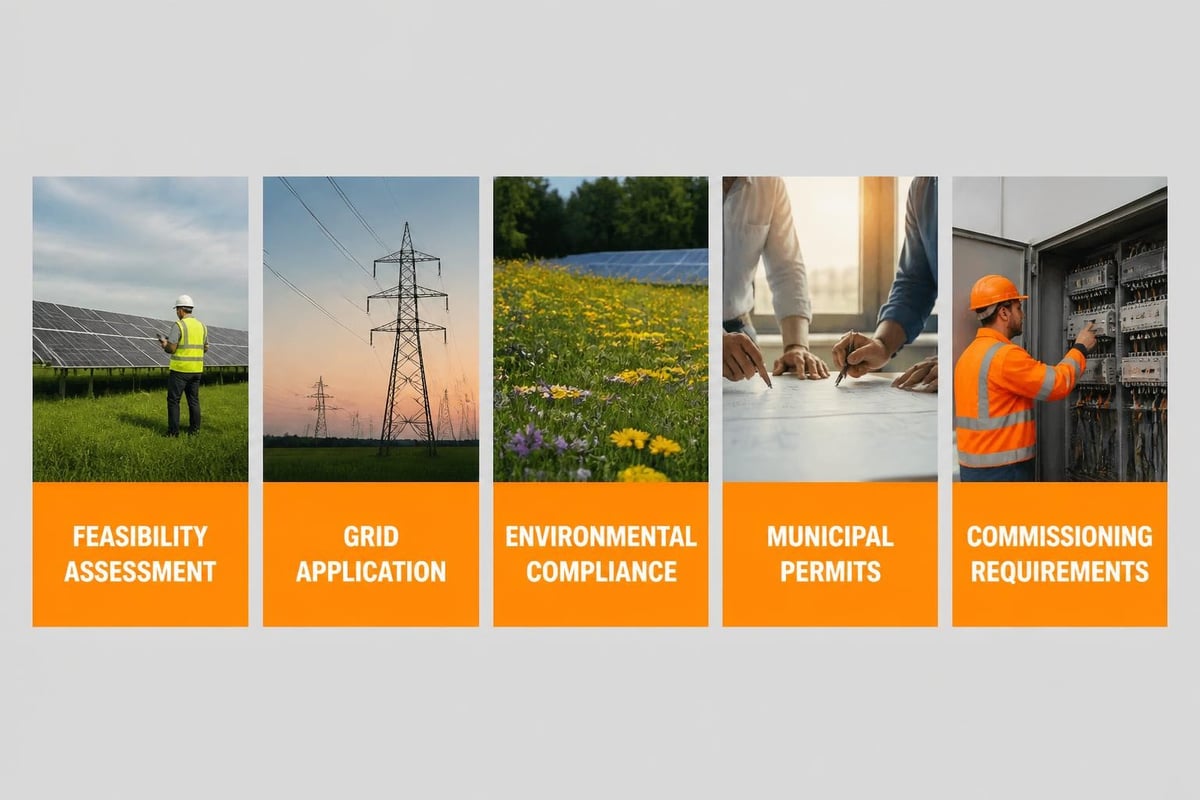
Environmental authorisation requirements depend on project size and location. Most agricultural solar installations below 20 MW on already-transformed agricultural land qualify for Basic Assessment rather than full Environmental Impact Assessment, significantly reducing approval timelines and costs.
The Agrisolar Clearinghouse policy recommendations offer insights into policy approaches that balance agricultural preservation with renewable energy development, frameworks that could inform South African provincial and local planning.
Incentive Programmes and Financing
Section 12B of the Income Tax Act allows businesses to claim accelerated depreciation on renewable energy assets, improving project economics. Additionally, various development finance institutions offer preferential lending rates for agricultural sustainability projects.
International climate finance mechanisms increasingly recognise agricultural solar's dual benefits, with projects qualifying for funding under programmes that might exclude conventional energy or agriculture projects independently. The Global Environment Facility and Green Climate Fund have both supported agrivoltaic initiatives in developing economies.
Implementation Roadmap for South African Farms
Successful agricultural solar deployment follows a structured process that integrates agronomic, engineering, and financial considerations.
Phase 1: Feasibility and Planning (2-4 months)
- Comprehensive energy audit and load profiling
- Agricultural productivity assessment and crop suitability analysis
- Preliminary system design and layout optimisation
- Financial modelling including all revenue streams
- Stakeholder consultation and securing internal buy-in
Phase 2: Detailed Design and Approvals (3-6 months)
- Engineering design and equipment specification
- Grid connection application and utility coordination
- Environmental compliance and municipal approvals
- Financing arrangement finalisation
- Procurement and contracting
Phase 3: Construction and Commissioning (2-5 months depending on scale)
- Site preparation and foundation installation
- Structural mounting and panel installation
- Electrical reticulation and grid connection
- Agricultural infrastructure integration
- Testing, commissioning, and handover
Phase 4: Operations and Optimisation (ongoing)
- Performance monitoring and analytics
- Preventative maintenance scheduling
- Agricultural production tracking
- Financial performance review
- Continuous optimisation of both energy and crop yields
Early engagement with experienced renewable energy partners proves critical. The technical complexity of integrating electrical infrastructure with active farming operations requires expertise beyond conventional solar installation capabilities. For comprehensive support spanning feasibility studies through to operational monitoring, partnering with specialists ensures both energy and agricultural objectives are met.
Case Studies from Southern African Context
Real-world implementations demonstrate agricultural solar's viability across diverse farming contexts in the region.
A 750 kW installation at a Limpopo citrus operation exemplifies successful integration. Elevated panels span 4.2 hectares of irrigation infrastructure, generating 1,350 MWh annually whilst maintaining full citrus production beneath. The farm reports 22% reduction in irrigation water consumption and elimination of R340,000 in annual electricity costs, achieving payback in 7.2 years.
In the Free State, a mixed livestock and grain operation installed 450 kW of vertical bifacial panels across grazing land. Sheep continue grazing around and beneath panels, with farmers noting improved animal condition during summer months. The installation offset diesel generator costs previously required during load-shedding events, with annual savings exceeding R280,000.
A Western Cape vegetable farm pioneered greenhouse-integrated photovoltaics, installing semi-transparent panels on new tunnel structures. The 120 kW system provides power for irrigation pumps and cold storage whilst the filtered light improved lettuce and herb production quality, reducing bolting during high-temperature periods.
| Project Type | Province | Capacity | Agricultural Use | Key Outcome |
|---|---|---|---|---|
| Elevated Array | Limpopo | 750 kW | Citrus orchards | 22% water saving |
| Vertical Bifacial | Free State | 450 kW | Sheep grazing | Improved animal welfare |
| Greenhouse PV | Western Cape | 120 kW | Vegetable production | Reduced crop bolting |
| Tracking System | Mpumalanga | 600 kW | Berry cultivation | 28% yield increase |
These examples demonstrate that agricultural solar succeeds when designed specifically for each farm's unique combination of energy needs, crop types, operational practices, and financial constraints.
Future Outlook and Innovation Trajectory
Agricultural solar technology continues advancing rapidly, with innovations emerging that will further enhance performance and economics over the coming years.
Smart systems incorporating artificial intelligence and machine learning optimise both energy generation and agricultural outcomes simultaneously. Sensors monitor soil moisture, crop health, and panel performance, with algorithms adjusting irrigation scheduling and in some cases panel tilt to balance competing objectives.
Advanced materials development focuses on photovoltaic films with customised spectral transmission characteristics. These next-generation panels can selectively transmit wavelengths most beneficial for photosynthesis whilst capturing others for electricity generation, potentially eliminating the energy-agriculture trade-off entirely.
Research into potential agrivoltaic applications continues expanding globally, with South Africa well-positioned to contribute valuable research given its diverse agricultural systems and high solar irradiation levels.
Integrated system approaches combining solar with other renewable technologies offer compelling advantages. Agricultural solar paired with water treatment systems powered by solar pumps creates closed-loop resource management. Integration with biogas digesters allows organic waste valorisation alongside renewable electricity generation.
The trajectory points toward agricultural solar becoming standard practice rather than experimental innovation. As technology costs decline and climate pressures intensify, the question shifts from whether agricultural solar makes sense to how quickly it can be deployed at scale across South Africa's farming sector.
Agricultural solar represents far more than a novel approach to renewable energy deployment; it embodies a fundamental rethinking of resource optimisation, demonstrating that apparent trade-offs between food security and energy transition can become mutually reinforcing opportunities. For South African farmers facing escalating input costs, climate uncertainty, and pressure to reduce environmental impacts, agricultural solar delivers measurable financial returns whilst building operational resilience and contributing to national decarbonisation objectives. INFOLED brings comprehensive renewable energy engineering expertise to help agricultural operations across Southern Africa evaluate, design, and implement intelligent solar solutions that optimise both energy generation and agricultural productivity, supported by ongoing monitoring and maintenance to ensure sustained performance across both dimensions.
Next Step
Need help with your energy strategy?
Speak to INFOLED about solar, storage, EV charging, service agreements or system performance.