
The concept of bright renewables represents more than just clean energy generation. It embodies a comprehensive approach to intelligent, integrated renewable energy systems that combine advanced technologies with strategic deployment to deliver measurable economic and environmental benefits. As South Africa navigates its energy transition amidst persistent challenges with grid reliability and escalating electricity costs, bright renewables offer a pathway to energy independence, cost reduction, and sustainable growth across commercial, industrial, and residential sectors.
Understanding the Bright Renewables Revolution
Bright renewables encompass the full spectrum of modern renewable energy technologies deployed with intelligence and integration at their core. Unlike standalone solar installations or isolated battery systems, this approach combines multiple technologies into cohesive energy ecosystems that maximize efficiency, reliability, and return on investment.
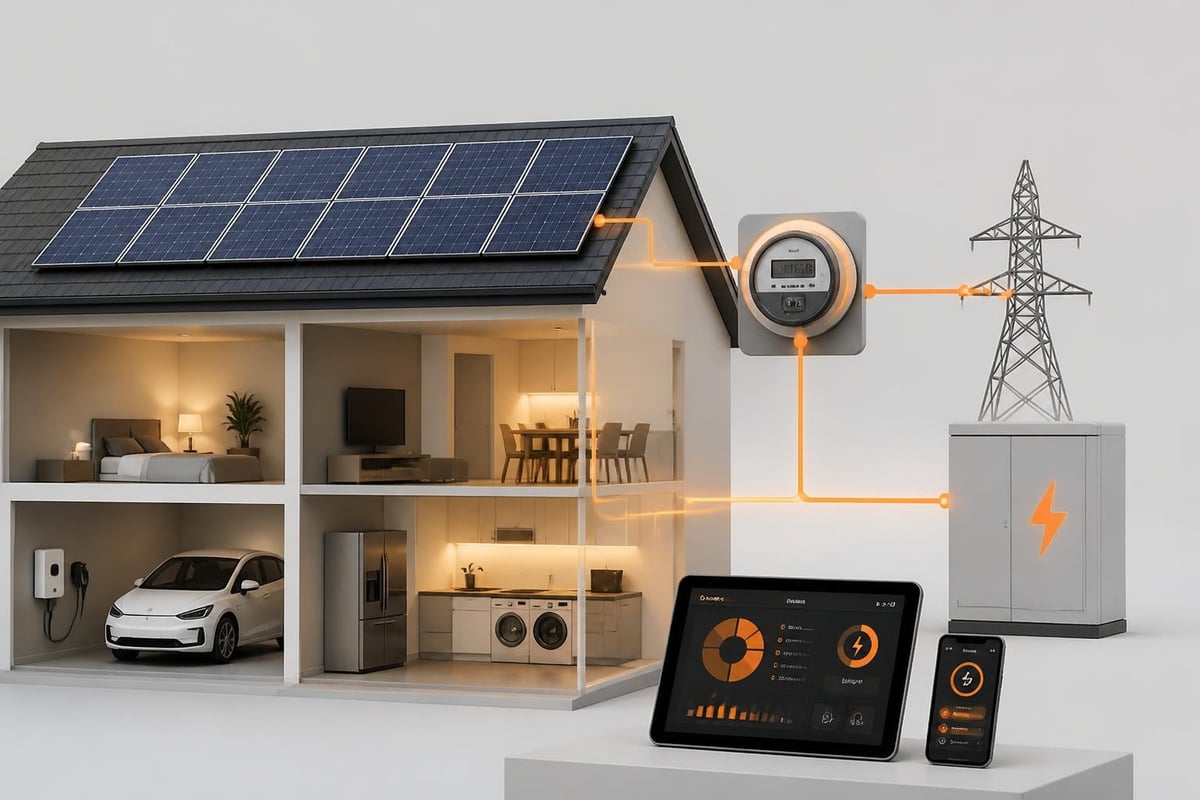
The foundation of bright renewables rests on four pillars: renewable generation, energy storage, intelligent monitoring, and demand management. Each component plays a distinct role, yet their true value emerges through seamless integration. Solar photovoltaic systems generate clean electricity during daylight hours, battery energy storage systems shift that energy to periods of peak demand or grid outages, smart metering provides granular visibility into consumption patterns, and AI-driven analytics optimize the entire system for maximum performance.
The South African Context for Energy Innovation
South Africa's energy landscape presents unique opportunities and challenges that make bright renewables particularly relevant. Eskom's ongoing capacity constraints, coupled with some of the highest solar irradiation levels globally, create ideal conditions for renewable energy adoption. Gauteng, KwaZulu-Natal, and the Western Cape have witnessed exponential growth in commercial solar installations, with businesses seeking to reduce their exposure to load shedding and escalating municipal tariffs.
According to Deloitte's renewable energy outlook, global renewable capacity continues to expand rapidly, with developing markets showing particularly strong adoption rates. This trend aligns perfectly with South Africa's energy reality, where businesses cannot afford grid unreliability and households seek protection from electricity price increases that consistently outpace inflation.
The financial case for bright renewables has strengthened considerably. Commercial electricity tariffs in major metros now exceed R2.50 per kWh during peak periods, whilst solar energy with storage can deliver electricity at lifecycle costs below R1.50 per kWh. This fundamental economic shift drives adoption across manufacturing facilities in Durban, shopping centres in Johannesburg, agricultural operations in the Free State, and residential estates in Cape Town.
Technology Components Driving Bright Renewables
Modern bright renewables systems integrate multiple technologies that work in concert to deliver comprehensive energy solutions. Understanding each component's role helps organizations design systems that meet their specific requirements.
Solar Photovoltaic Systems
Solar PV technology has evolved dramatically, with module efficiencies now exceeding 22% for commercial applications and 24% for premium residential installations. Bifacial modules capture reflected light from both sides, increasing energy yield by 10-20% in suitable installations. String inverters, microinverters, and power optimizers each offer distinct advantages depending on roof geometry, shading profiles, and budget constraints.
South African solar resources rank among the world's best, with the Northern Cape receiving over 2,800 peak sun hours annually. Even in less optimal regions like the Eastern Cape coast, solar installations typically achieve capacity factors above 20%, making them economically viable across the entire country. Recent developments in solar panel manufacturing and installation techniques have reduced costs whilst improving reliability and performance warranties.
| System Component | Typical Lifespan | Performance Warranty | Key Benefit |
|---|---|---|---|
| PV Modules | 30+ years | 25-30 years at 80%+ output | Long-term energy generation |
| Inverters | 10-15 years | 5-10 years standard | DC to AC conversion efficiency |
| Mounting Structures | 30+ years | 10-25 years | System stability and protection |
| Monitoring Systems | 10+ years | 5-10 years | Performance visibility |
Battery Energy Storage Systems
Battery technology represents the second pillar of bright renewables, enabling energy time-shifting, backup power during outages, and demand charge reduction. Lithium iron phosphate (LiFePO4) batteries dominate commercial and industrial installations due to their safety profile, cycle life exceeding 6,000 cycles, and stable performance across temperature ranges.
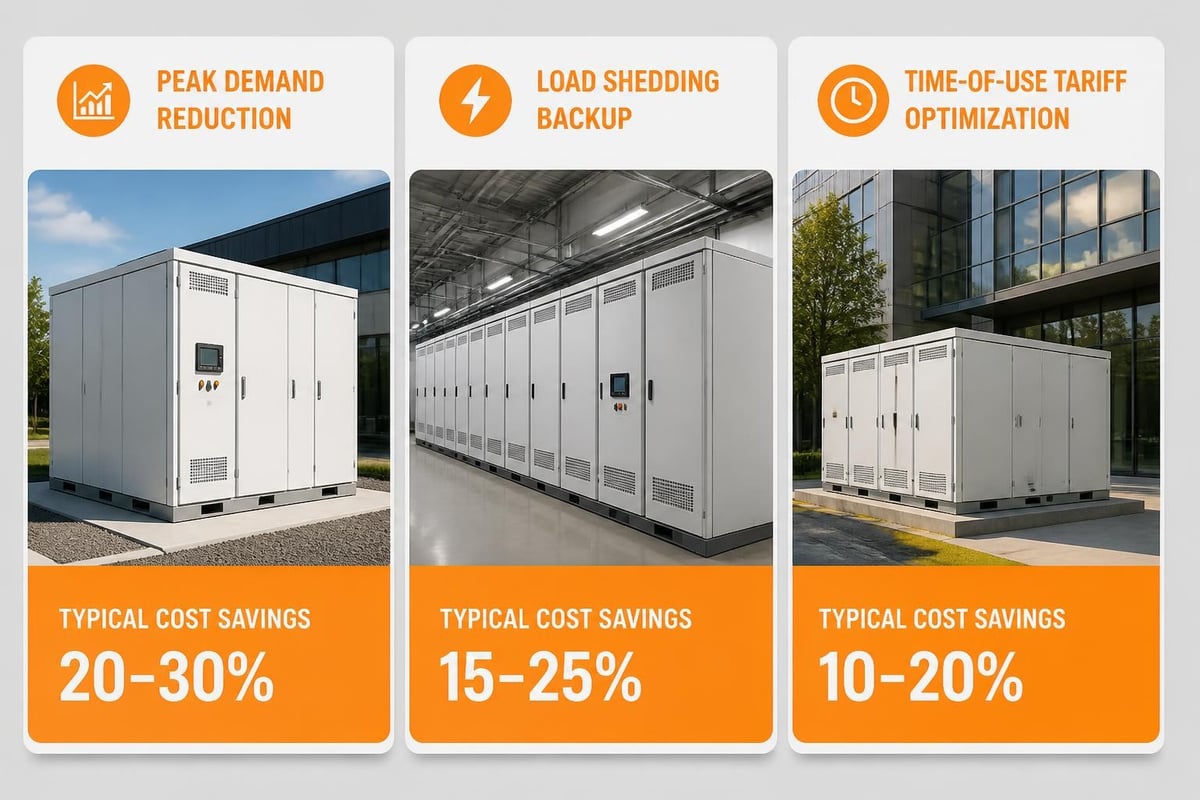
For businesses, BESS deployment strategies vary based on specific objectives. Peak shaving reduces maximum demand charges by discharging batteries during high-consumption periods, potentially saving 30-40% on commercial electricity bills. Load shedding protection maintains critical operations during grid outages, protecting revenue and preventing data loss. Time-of-use optimization charges batteries during off-peak periods and discharges during peak tariff windows, exploiting municipal rate structures.
Residential applications increasingly favour hybrid inverter systems that integrate solar generation, battery storage, and grid connectivity in single units. These systems automatically prioritize solar self-consumption, store excess energy for evening use, and seamlessly transition to battery backup during load shedding stages.
Smart Metering and Energy Intelligence
The "bright" in bright renewables comes largely from intelligent monitoring and analytics that transform raw data into actionable insights. Smart metering systems measure consumption at granular intervals, identifying inefficiencies, verifying savings, and enabling sophisticated energy management strategies.
Real-time energy monitoring and analytics allow facility managers to understand exactly where and when energy is consumed, revealing opportunities for behavioral changes, equipment upgrades, and operational improvements. Machine learning algorithms detect anomalies, predict maintenance requirements, and optimize system performance automatically.
Multi-tenant buildings particularly benefit from smart metering for accurate tenant billing based on actual consumption rather than estimated allocations. This transparency encourages conservation whilst ensuring fair cost distribution, particularly important in office parks, industrial estates, and mixed-use developments.
Financial Models and Return on Investment
Understanding the economics of bright renewables requires examining multiple value streams and considering both immediate and long-term benefits. Unlike pure operating expenses, renewable energy investments create assets that generate returns over decades.
Capital Investment Structures
Commercial solar installations in South Africa typically cost between R12,000 and R18,000 per installed kW, depending on system size, mounting complexity, and equipment specifications. A 100 kW rooftop system for a Johannesburg warehouse might require R1.4 million capital investment, whilst a 1 MW ground-mount installation for a Free State agricultural operation could exceed R13 million.
Battery storage adds R8,000 to R15,000 per kWh of capacity, influenced by chemistry selection, inverter integration, and installation requirements. A 200 kWh commercial BESS might cost R2 million fully installed, providing 4-6 hours of backup power for critical loads or enabling sophisticated demand management strategies.
Several financing mechanisms reduce upfront capital barriers:
- Power Purchase Agreements (PPAs): Third-party investors own the system, selling electricity to the host at fixed rates below municipal tariffs
- Lease structures: Organizations lease equipment over 10-15 year terms, preserving capital for core business activities
- Asset finance: Banks and specialized lenders provide loans secured against the renewable energy installation
- Operating leases: Monthly payments with maintenance included, treating renewable energy as an operational expense
Calculating True Returns
Simple payback periods for bright renewables in South Africa now range from 3-6 years for commercial applications, but this metric understates true value creation. Comprehensive financial analysis must include:
- Direct electricity cost savings measured against escalating municipal tariffs
- Demand charge reduction from peak shaving with battery storage
- Backup power value quantified by avoided revenue loss during load shedding
- Asset appreciation as the system creates a revenue-generating asset
- Carbon credit potential as markets develop for verified emissions reductions
A manufacturing facility in Durban consuming 500,000 kWh monthly at an average R2.20 per kWh spends R1.1 million monthly on electricity. A 500 kW solar installation with 300 kWh battery storage might reduce this by 40%, saving R440,000 monthly or R5.3 million annually. With total investment of R9 million, the simple payback reaches 20 months, whilst the 25-year net present value can exceed R80 million at conservative discount rates.
Implementation and Integration Strategies
Successful bright renewables deployment requires careful planning, professional design, and expert execution. Organizations moving from concept to commissioning navigate multiple phases, each critical to long-term performance.
Energy Audits and Feasibility Studies
Comprehensive energy audits form the foundation of effective system design. Renewable energy engineering services including load studies, consumption profiling, and financial modeling identify optimal system configurations aligned with specific operational requirements and budget parameters.
Professional audits analyze:
- Historical consumption patterns across different time periods and operational conditions
- Tariff structures and rate schedules from municipal suppliers
- Roof or land availability, orientation, structural capacity, and shading profiles
- Critical load requirements and backup power priorities
- Future growth projections and capacity expansion needs
These insights drive system sizing decisions, technology selections, and configuration choices that maximize return on investment whilst meeting reliability requirements.
System Design and Engineering
Bright renewables system design balances multiple competing objectives including cost minimization, performance maximization, aesthetic considerations, and regulatory compliance. Electrical engineering expertise ensures systems meet SANS 10142-1 wiring standards, grid connection requirements, and Occupational Health and Safety Act provisions.
Design considerations include:
- String configuration optimizing series and parallel connections for voltage and current requirements
- Inverter selection matching capacity, efficiency curves, and monitoring capabilities to application needs
- Mounting systems engineered for wind loading, structural integration, and accessibility
- Protection devices including surge protection, isolation switches, and safety disconnects
- Monitoring architecture providing visibility from individual panels to system-wide performance
Recent research on renewable energy integration challenges highlights the importance of proper system design in ensuring grid stability and maximizing clean energy utilization, particularly relevant as South Africa's renewable energy penetration increases.
Installation and Commissioning
Professional installation transforms engineering designs into operating systems. Qualified teams execute mounting structure installation, module assembly, electrical connections, and system integration following manufacturer specifications and safety protocols. The complexity of bright renewables systems, combining generation, storage, and intelligent controls, demands coordinated expertise across multiple disciplines.
Commissioning validates that installed systems perform according to design specifications. This process includes:
- Electrical testing verifying voltage, current, insulation resistance, and earthing
- Performance verification confirming energy generation meets modeled expectations
- Safety validation ensuring all protection systems operate correctly
- Grid synchronization testing interconnection protocols and anti-islanding functions
- Monitoring activation confirming data collection and reporting accuracy
Ongoing Operations and Performance Management
The transition from commissioning to operation marks the beginning of bright renewables' value generation phase. Proper maintenance and monitoring ensure systems deliver expected returns over their 25-30 year operational lifetimes.

Preventative Maintenance Programmes
Proactive maintenance schedules preserve system performance and extend equipment lifespan. Solar modules require periodic cleaning, particularly in dusty regions like the Northern Cape or near coastal areas where salt accumulation degrades output. Professional cleaning services typically restore 5-15% lost capacity, with quarterly cleaning recommended for most commercial installations.
Inverter maintenance includes firmware updates, connection inspections, and cooling system verification. Battery storage systems benefit from quarterly capacity testing, thermal management validation, and state-of-health monitoring. String-level monitoring identifies underperforming modules before they significantly impact total system output.
Performance Monitoring and Analytics
Continuous monitoring forms the intelligence layer that makes bright renewables truly "bright." Real-time dashboards display generation, consumption, storage state-of-charge, and grid interaction, whilst historical analytics identify trends, benchmark performance, and verify savings.
Advanced analytics platforms employ machine learning to detect anomalies indicating potential failures, optimize charge-discharge schedules based on weather forecasts and demand predictions, and provide automated reporting for sustainability disclosures and ESG compliance. These capabilities transform passive renewable energy installations into active, self-optimizing systems that continuously improve performance.
Regulatory Framework and Grid Interaction
South Africa's regulatory environment for bright renewables continues evolving, with municipalities adopting varying approaches to embedded generation, wheeling, and feed-in arrangements. Understanding local requirements proves essential for compliant, optimized installations.
SSEG Registration and Approvals
Small-Scale Embedded Generation (SSEG) regulations govern systems connected to municipal grids. Each metro maintains specific application processes, technical requirements, and approval timelines. Johannesburg, Cape Town, and eThekwini have streamlined procedures, whilst smaller municipalities often lack established frameworks.
Registration typically requires:
- Single-line diagrams and electrical designs stamped by professional engineers
- Proof of liability insurance covering grid interaction risks
- Inverter compliance certificates demonstrating adherence to NRS 097-2-1 standards
- Signed installation certificates from qualified installers
- Bi-directional metering agreements for systems exporting to the grid
Grid Connection Standards
Technical requirements for grid-connected bright renewables ensure safety and stability. The NRS 097-2-1 standard specifies inverter behavior during grid disturbances, anti-islanding protection, and power quality parameters. Compliance prevents situations where renewable energy systems energize isolated grid sections during maintenance, protecting utility workers.
Voltage rise concerns limit export capacity in areas with high renewable energy penetration and weak grid infrastructure. Solutions include export limitation settings, battery storage to absorb excess generation, and grid infrastructure upgrades through developer contributions.
Environmental and Social Impact
Beyond economic returns, bright renewables deliver measurable environmental and social benefits that strengthen corporate responsibility profiles and support national climate commitments.
Carbon Footprint Reduction
Each kWh generated from bright renewables displaces grid electricity with a carbon intensity exceeding 0.9 kg CO2e per kWh in South Africa's coal-dominated generation mix. A 100 kW commercial solar installation producing 150,000 kWh annually prevents approximately 135 tonnes of CO2e emissions, equivalent to removing 30 passenger vehicles from roads.
Organizations tracking Scope 2 emissions under the Greenhouse Gas Protocol directly reduce their carbon footprint through on-site renewable generation. As South Africa progresses toward its Net Zero commitments, verified emissions reductions may generate carbon credit revenues through voluntary markets or future compliance mechanisms.
Energy Resilience and Economic Development
Bright renewables enhance energy security at facility, community, and national levels. Businesses with solar-plus-storage maintain operations during load shedding, protecting employment and economic activity. Communities with distributed renewable energy reduce strain on constrained grid infrastructure, whilst national generation capacity expands through private sector investment requiring no public funding.
The renewable energy sector creates employment across engineering, manufacturing, installation, and maintenance disciplines. Every MW of solar capacity generates approximately 20 direct and indirect jobs during construction and 0.5 permanent positions for ongoing operations. As South Africa's installed renewable capacity grows, so does skills development in future-oriented energy technologies.
Future Trends Shaping Bright Renewables
The bright renewables sector continues evolving rapidly, with emerging technologies and business models reshaping what's possible in distributed energy systems.
Artificial Intelligence and Predictive Analytics
AI applications in renewable energy range from weather forecasting improving generation predictions to machine learning algorithms optimizing battery dispatch schedules. Predictive maintenance reduces unplanned downtime by identifying failing components before breakdown occurs, whilst demand forecasting enables sophisticated energy trading strategies.
Future systems will autonomously optimize across multiple variables including weather forecasts, electricity tariffs, grid conditions, and carbon pricing, continuously adjusting operations to maximize value generation without human intervention.
Vehicle-to-Grid Integration
Electric vehicles represent mobile energy storage that can interact with building energy systems. Workplace charging infrastructure during daylight hours absorbs excess solar generation, whilst vehicle batteries potentially discharge to buildings during peak evening demand. Bidirectional charging standards currently under development will enable these vehicle-to-grid and vehicle-to-building scenarios.
Virtual Power Plants and Energy Trading
Aggregating multiple distributed bright renewables installations creates virtual power plants capable of providing grid services including frequency regulation, voltage support, and peak capacity. Energy trading platforms allow prosumers to sell excess generation to neighbors or businesses, creating peer-to-peer energy markets that maximize local renewable energy utilization.
Municipal wheeling frameworks, where generators sell electricity to off-site consumers through municipal grids, expand renewable energy access beyond property boundaries. These arrangements enable organizations to secure renewable energy without suitable on-site installation locations.
Sector-Specific Applications
Different industries and sectors derive unique value from bright renewables tailored to their operational characteristics, consumption patterns, and business objectives.
| Sector | Typical System Size | Primary Benefits | Implementation Considerations |
|---|---|---|---|
| Manufacturing | 500 kW - 5 MW | Demand charge reduction, production continuity | Three-shift operations maximize utilization |
| Retail | 100 kW - 500 kW | Peak shaving, ESG credentials | Rooftop space often limited, carports viable |
| Agriculture | 50 kW - 1 MW | Irrigation cost reduction, cold storage backup | Ground-mount and water pumping applications |
| Healthcare | 200 kW - 1 MW | Critical backup power, cost management | Reliability paramount, oversized storage typical |
| Education | 100 kW - 500 kW | Operating cost reduction, educational value | Seasonal consumption patterns, monitoring showcases |
Agricultural applications particularly benefit from bright renewables, with renewable energy integration in farming operations enabling cost-effective irrigation, cold storage, and processing. Solar-powered water pumping eliminates diesel costs whilst improving reliability in remote locations.
Risk Mitigation and Quality Assurance
Protecting investments in bright renewables requires attention to quality, warranties, insurance, and ongoing support arrangements.
Equipment Selection and Warranties
Tier 1 manufacturers with proven track records, bankability ratings, and comprehensive warranty programs reduce technology risk. Solar module warranties typically include 12-25 year product warranties covering manufacturing defects and 25-30 year performance warranties guaranteeing minimum output levels. Inverter warranties range from 5-10 years, with extended warranty options available.
Battery warranties specify throughput limits (total energy cycled) and calendar periods, with quality systems offering 10 years or 6,000+ cycles. Reading warranty terms carefully prevents surprises, as exclusions for improper installation, environmental extremes, or unauthorized modifications can void coverage.
Performance Guarantees and Insurance
Professional installers often provide performance guarantees ensuring systems achieve minimum energy generation thresholds based on actual irradiation conditions. These guarantees protect against design errors, installation defects, or equipment underperformance.
Comprehensive insurance coverage addresses multiple risk categories including property damage to panels and equipment, liability for grid interaction issues, business interruption during repairs, and performance shortfalls. Specialized renewable energy insurance products understand sector-specific risks better than general commercial policies.
Bright renewables represent the convergence of proven clean energy technologies with intelligent systems that optimize performance, reduce costs, and enhance reliability. As South Africa accelerates its energy transition driven by grid constraints, economic pressures, and environmental commitments, integrated renewable energy solutions deliver measurable value across commercial, industrial, and residential applications. Organizations seeking to reduce electricity costs, improve energy resilience, and advance sustainability objectives will find INFOLED offers comprehensive renewable energy engineering and technology services spanning design, financing, installation, monitoring, and maintenance throughout Southern Africa.
Next Step
Need help with your energy strategy?
Speak to INFOLED about solar, storage, EV charging, service agreements or system performance.