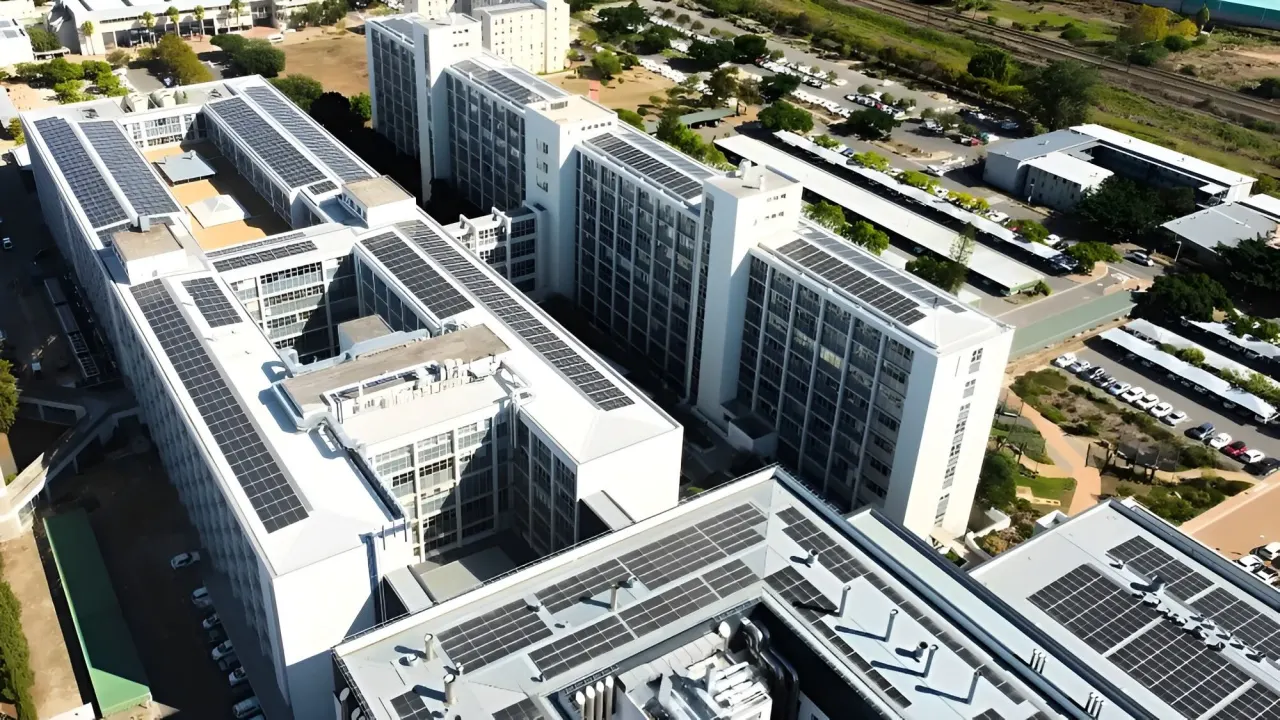
The transition towards renewable energy has accelerated dramatically across Southern Africa, with commercial solar panel installations emerging as a cornerstone of sustainable business operations. As electricity tariffs continue rising and load shedding remains a persistent challenge, organisations throughout South Africa are recognising that solar photovoltaic systems represent not merely an environmental commitment but a strategic financial investment. Understanding the complexities of commercial solar installations enables businesses to make informed decisions that enhance energy resilience, reduce operational costs, and support corporate sustainability objectives whilst navigating the unique regulatory landscape of the South African energy sector.
Understanding Commercial Solar Panel Installations
Commercial solar panel installations differ substantially from residential systems in scale, complexity, and regulatory requirements. These installations typically range from 100kW to several megawatts, serving office buildings, manufacturing facilities, agricultural operations, retail centres, and industrial complexes across provinces from Gauteng to the Western Cape.
The technical architecture of commercial systems involves sophisticated design considerations including structural load assessments, electrical integration with existing infrastructure, and compliance with municipal regulations. Unlike smaller residential arrays, commercial solar panel installations require detailed engineering studies to evaluate roof integrity, optimal panel orientation, shading analysis, and grid connection parameters.
System Types and Configurations
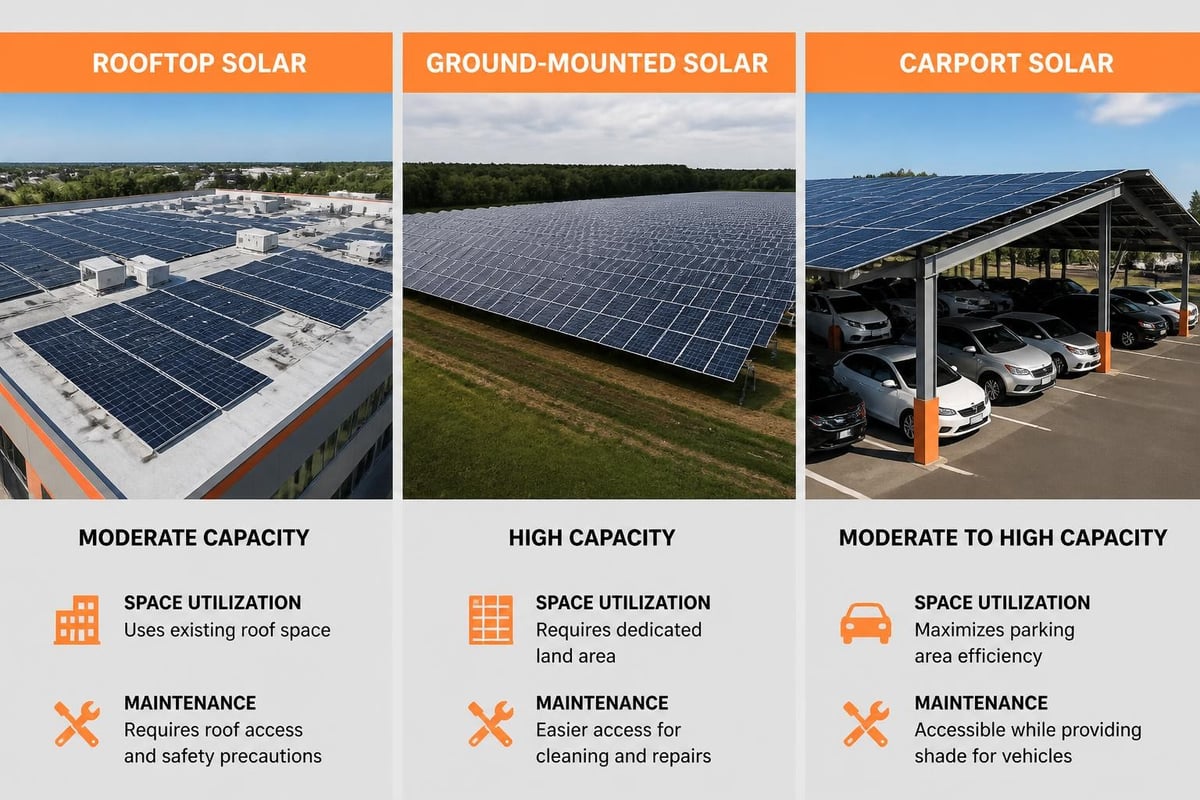
Businesses can select from several installation configurations based on their operational requirements and site characteristics:
- Rooftop installations that utilise existing building surfaces without additional land requirements
- Ground-mounted arrays offering flexibility for larger capacity and easier maintenance access
- Carport solar structures providing dual functionality through vehicle shade and energy generation
- Hybrid systems integrating solar with battery storage and backup generators
- Grid-tied configurations enabling feed-in to the municipal grid where permitted
Each configuration presents distinct advantages regarding installation costs, maintenance accessibility, and energy production optimisation. Ground-mounted systems, for instance, allow precise angle adjustments for maximum solar exposure but require dedicated land allocation, whilst rooftop installations maximise space efficiency in urban environments where property costs are substantial.
Financial Considerations and Return on Investment
The financial case for commercial solar panel installations in South Africa has strengthened considerably as equipment costs have declined whilst electricity tariffs have escalated. Current commercial installations typically cost between R12,000 and R16,000 per installed kilowatt, with economies of scale favouring larger systems.
Investment analysis must incorporate multiple financial variables including capital expenditure, operational savings, tax incentives, and long-term electricity price projections. The U.S. Department of Energy offers detailed benchmarks that provide comparative context for system costs, though South African businesses must adjust for local market conditions, import duties, and installation labour rates.
Cost Components and Pricing Structure
| Cost Element | Percentage of Total | Typical Range (ZAR/kW) |
|---|---|---|
| Solar Panels | 30-35% | R3,600 - R5,600 |
| Inverters & Electronics | 15-20% | R1,800 - R3,200 |
| Mounting & Racking | 10-15% | R1,200 - R2,400 |
| Installation Labour | 15-20% | R1,800 - R3,200 |
| Design & Engineering | 8-12% | R960 - R1,920 |
| Permits & Grid Connection | 5-8% | R600 - R1,280 |
Return on investment calculations for South African businesses typically demonstrate payback periods between four and seven years, depending on consumption patterns, system size, and financing arrangements. Facilities with high daytime electricity consumption achieve the most favourable economics, as solar generation aligns directly with operational demand, eliminating the need for expensive battery storage.
Technical Design and Engineering Requirements
Successful commercial solar panel installations begin with comprehensive engineering services that evaluate site suitability, energy consumption patterns, and optimal system specifications. Professional energy audits examine historical electricity usage, identify consumption peaks, and model solar production profiles against actual demand.
Load studies form the foundation of system design, analysing when and how facilities consume electricity throughout operating hours. Manufacturing plants with consistent daytime operations present ideal candidates for solar integration, whilst operations with significant evening or weekend consumption may require hybrid configurations incorporating battery storage.
Key Engineering Considerations
Structural assessments verify that existing roofs can support the additional weight of solar arrays, mounting hardware, and potential snow loads in higher altitude regions. Commercial roofs in Johannesburg or Pretoria, for example, must accommodate both panel weight and wind uplift forces specific to the Highveld environment.
Electrical engineering integration examines:
- Existing transformer capacity and upgrade requirements
- Three-phase load balancing across solar inverter outputs
- Protection systems and disconnect mechanisms
- Compliance with municipal electrical codes and SANS standards
- Grid connection protocols where applicable
Shading analysis utilises sophisticated software to model solar production throughout the year, accounting for neighbouring buildings, trees, and roof-mounted equipment. Even partial shading can significantly impact system performance, making this analysis critical for accurate production forecasting and financial modelling.
Regulatory Compliance and Grid Connection
Navigating South African energy regulations represents a significant consideration for commercial solar panel installations. The regulatory environment varies substantially between municipalities, with different requirements in Cape Town, Johannesburg, Durban, and smaller metros.
NERSA registration becomes mandatory for systems exceeding 1MW, whilst most commercial installations below this threshold follow municipal approval processes. Grid connection applications, where businesses intend to feed excess generation back to the municipality, involve detailed technical submissions and compliance with specific grid codes.
The Electricity Regulation Act and subsequent amendments have progressively simplified licensing requirements for embedded generation, enabling businesses to install larger systems without onerous regulatory burdens. However, each municipality maintains its own application procedures, timelines, and technical requirements for grid interconnection.
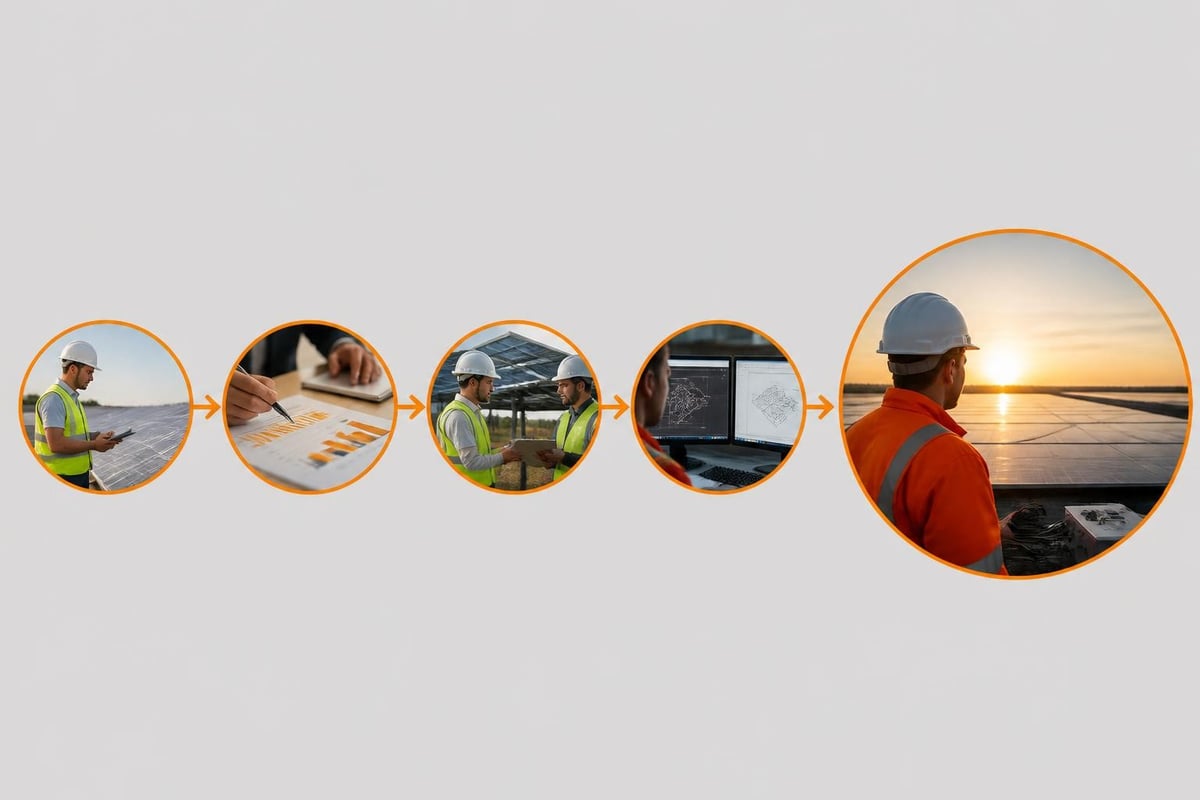
Permitting and Approval Timeline
- Initial site assessment and feasibility study (2-4 weeks)
- Detailed engineering design and documentation (3-6 weeks)
- Municipal building plan approval (6-12 weeks, varies significantly)
- Electrical compliance certification preparation (2-3 weeks)
- Grid connection application where applicable (8-16 weeks)
- Installation and commissioning (4-8 weeks depending on system size)
- Final electrical inspection and approval (2-4 weeks)
Understanding these timelines enables businesses to plan appropriately and avoid project delays that could impact anticipated savings commencement. Experienced installation partners familiar with local regulatory requirements can substantially accelerate approval processes through established municipal relationships and comprehensive documentation.
Installation Process and Project Management
Professional project management ensures commercial solar panel installations proceed efficiently from design approval through final commissioning. The installation phase involves coordinated activities across multiple trades including structural engineers, electricians, and specialised solar technicians.
Site preparation begins with roof inspections, structural reinforcements where necessary, and staging areas for equipment. Large commercial projects may require crane access for panel delivery and mounting frame installation, necessitating coordination with building operations to minimise business disruption.
Electrical work encompasses:
- AC and DC cabling installation with appropriate conduit protection
- Inverter mounting and configuration in suitable environmental conditions
- Integration with existing electrical distribution boards
- Installation of monitoring systems and communication infrastructure
- Testing and commissioning of all electrical components
Quality installations prioritise cable management, weatherproofing, and accessibility for future maintenance. ConsumerAffairs discusses various types of commercial installations and the importance of professional workmanship in ensuring long-term system reliability and performance.
Performance Monitoring and Maintenance
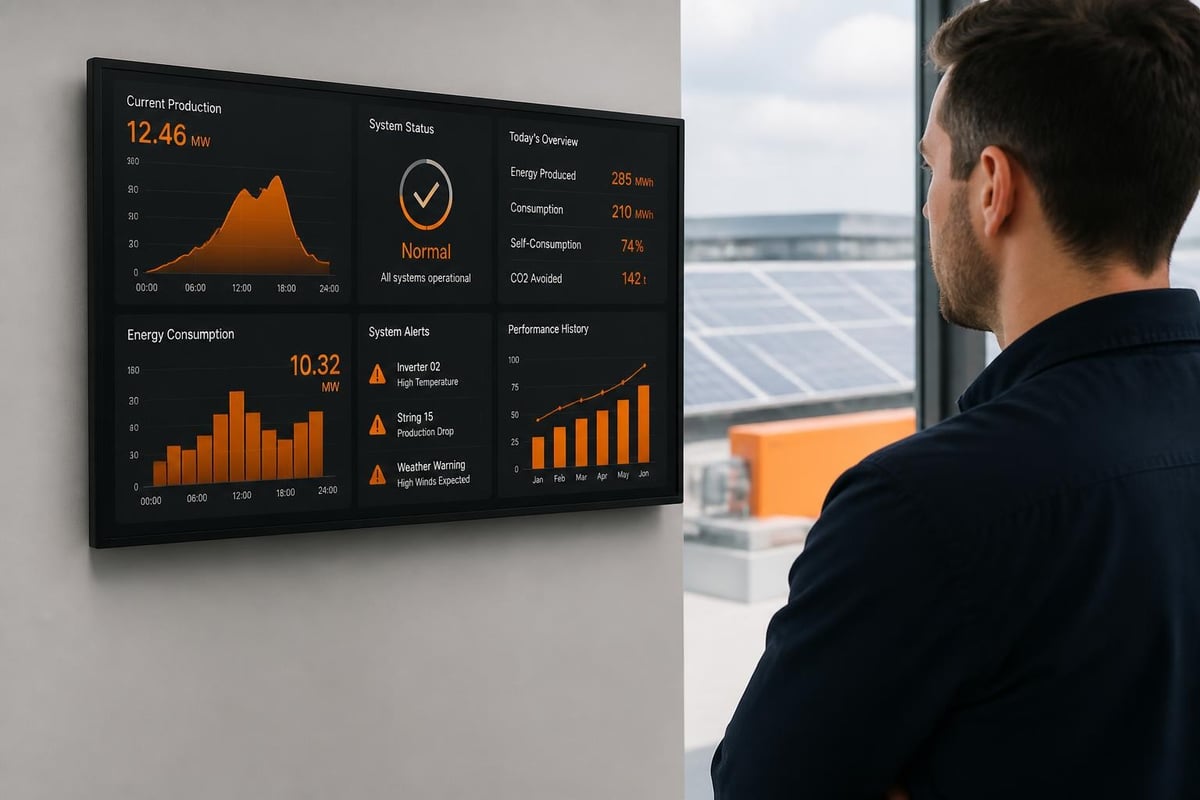
Ongoing performance monitoring distinguishes successful commercial solar panel installations from underperforming systems. Modern monitoring platforms provide real-time visibility into energy production, consumption patterns, and system health, enabling rapid identification of performance anomalies.
Advanced monitoring systems track:
- Individual panel and string performance
- Inverter efficiency and operating parameters
- Environmental conditions including irradiation and temperature
- Grid connection status and power quality metrics
- Historical production data and trend analysis
Preventative maintenance programmes ensure systems maintain optimal performance throughout their 25-year operational lifespan. Regular activities include panel cleaning to remove dust and debris that reduce output, electrical connection inspections, inverter performance verification, and structural integrity assessments. Renewable Energy Operations and Maintenance services provide comprehensive support including remote monitoring, thermal imaging inspections, and performance guarantees that protect investment returns.
| Maintenance Activity | Frequency | Impact on Performance |
|---|---|---|
| Panel Cleaning | Quarterly | 5-15% production improvement |
| Electrical Inspections | Bi-annually | Prevents degradation and failures |
| Inverter Servicing | Annually | Maintains efficiency ratings |
| Structural Assessments | Annually | Ensures safety and longevity |
| Performance Audits | Annually | Identifies optimisation opportunities |
Integration With Energy Storage and Smart Systems
Modern commercial solar panel installations increasingly incorporate battery energy storage systems (BESS) to maximise energy independence and financial returns. Battery integration enables businesses to store excess daytime solar production for evening consumption, reducing reliance on expensive municipal electricity during peak tariff periods.
Hybrid solar-battery systems provide multiple value streams including load shifting, demand charge reduction, and backup power during grid outages or load shedding events. Sophisticated energy management systems optimise charging and discharging cycles based on electricity tariffs, weather forecasts, and operational requirements.
Benefits of Integrated Energy Systems
Integration with smart metering and building management systems creates comprehensive energy optimisation platforms. These systems coordinate solar generation, battery storage, and consumption in real-time, automatically adjusting operations to minimise costs whilst maintaining operational requirements.
Advanced installations may incorporate:
- Predictive algorithms that forecast production and consumption patterns
- Automated load shedding to prioritise critical operations during supply constraints
- Grid services participation where regulatory frameworks permit
- Electric vehicle charging integration for fleet operations
- Demand response capabilities that adjust consumption based on grid conditions
The synergy between solar, storage, and intelligent controls represents the evolution of commercial energy management, transforming businesses from passive electricity consumers into active participants in energy markets.
Financing Options and Investment Structures
Access to appropriate financing substantially influences commercial solar panel installations adoption. South African businesses can select from various funding mechanisms including capital purchases, power purchase agreements, operating leases, and structured finance arrangements.
Capital purchases provide immediate asset ownership and maximum long-term savings but require upfront investment that may strain cash flow. Power purchase agreements (PPAs) enable solar adoption without capital expenditure, with businesses purchasing electricity from third-party owners at predetermined rates typically below municipal tariffs.
Operating leases offer tax advantages through rental deductions whilst avoiding balance sheet impacts, making them attractive for businesses prioritising financial statement management. Energy-as-a-service models combine installation, maintenance, and monitoring into comprehensive packages with predictable monthly costs.
Comparative Financing Analysis
| Financing Option | Capital Required | Tax Benefits | Ownership | Typical Term |
|---|---|---|---|---|
| Cash Purchase | 100% upfront | Section 12B allowance | Immediate | N/A |
| Debt Financing | 20-30% deposit | Depreciation + interest | Immediate | 5-7 years |
| Operating Lease | Minimal | Rental deduction | End of term | 7-10 years |
| Power Purchase Agreement | None | None | Never/option | 15-20 years |
Section 12B of the Income Tax Act provides accelerated depreciation for renewable energy assets, enabling businesses to deduct 50% of qualifying costs in year one and remaining amounts over subsequent years. This tax incentive significantly improves investment returns for companies with taxable income.
Environmental and Corporate Benefits
Beyond financial returns, commercial solar panel installations support corporate environmental, social, and governance (ESG) objectives that increasingly influence stakeholder perceptions and business valuations. Renewable energy adoption demonstrates tangible commitment to carbon reduction, enabling credible sustainability reporting and stakeholder engagement.
Businesses pursuing Net Zero commitments require substantial reductions in Scope 2 emissions from purchased electricity. On-site solar generation directly addresses these emissions whilst improving energy security and cost predictability. Many organisations find that visible solar installations enhance brand reputation, employee satisfaction, and customer perceptions of corporate responsibility.
Carbon footprint reductions from solar installations can be quantified and verified, supporting participation in carbon disclosure programmes, sustainable finance applications, and preferential procurement opportunities. Government departments and large corporations increasingly favour suppliers demonstrating environmental credentials, creating competitive advantages for solar-powered businesses.
Industry-Specific Applications and Case Studies
Different commercial sectors leverage solar technology in unique ways aligned with their operational patterns and energy requirements. INFOLED's project portfolio demonstrates diverse applications across Southern African industries, showcasing the versatility of commercial solar panel installations.
Manufacturing facilities with consistent daytime operations achieve exceptional solar economics, often experiencing payback periods under five years. Agricultural operations benefit from solar-powered irrigation, cold storage, and processing equipment, reducing dependence on unreliable rural grid supply.
Sector-Specific Considerations
Retail centres and office parks utilise solar to reduce common area electricity costs whilst enhancing tenant appeal through green building certifications. Warehouse and distribution facilities with expansive roof areas represent ideal solar candidates, frequently installing megawatt-scale systems that supply substantial portions of operational demand.
Educational institutions invest in solar to manage budget constraints whilst creating learning opportunities around renewable technology. Healthcare facilities prioritise energy resilience, combining solar with battery backup to maintain critical services during grid interruptions.
The hospitality industry embraces solar to reduce operating costs and appeal to environmentally conscious travellers. Hotels and lodges in remote locations particularly benefit from solar-diesel hybrid systems that reduce fuel consumption and generator maintenance whilst improving guest experience through quieter operations.
Commercial solar panel installations represent a strategic investment that delivers financial returns, operational resilience, and environmental benefits for South African businesses navigating an evolving energy landscape. By understanding technical requirements, regulatory frameworks, and financing options, organisations can successfully implement solar solutions tailored to their specific operational needs and sustainability objectives. INFOLED provides comprehensive renewable energy solutions across Southern Africa, from initial feasibility studies and engineering design through installation, monitoring, and ongoing maintenance, supporting businesses in their transition to intelligent, cost-effective energy systems that reduce electricity costs whilst advancing ESG and Net Zero strategies.
Next Step
Need help with your energy strategy?
Speak to INFOLED about solar, storage, EV charging, service agreements or system performance.