
Concentrated solar power represents a distinct approach to harnessing solar energy, using mirrors or lenses to focus sunlight onto a receiver where it generates intense heat. Unlike photovoltaic panels that convert sunlight directly to electricity, this thermal technology stores energy as heat, enabling power generation even after sunset. For Southern African businesses exploring large-scale renewable energy solutions, understanding concentrated solar power's capabilities, limitations, and economic viability has become increasingly relevant as the region seeks energy security and carbon reduction pathways.
Understanding Concentrated Solar Power Technology
Concentrated solar power systems operate on a fundamentally different principle than conventional solar panels. These installations use reflective surfaces to concentrate sunlight hundreds of times onto a central receiver, generating temperatures exceeding 500°C. This intense heat produces steam that drives turbines, converting thermal energy into electricity through conventional power generation cycles.
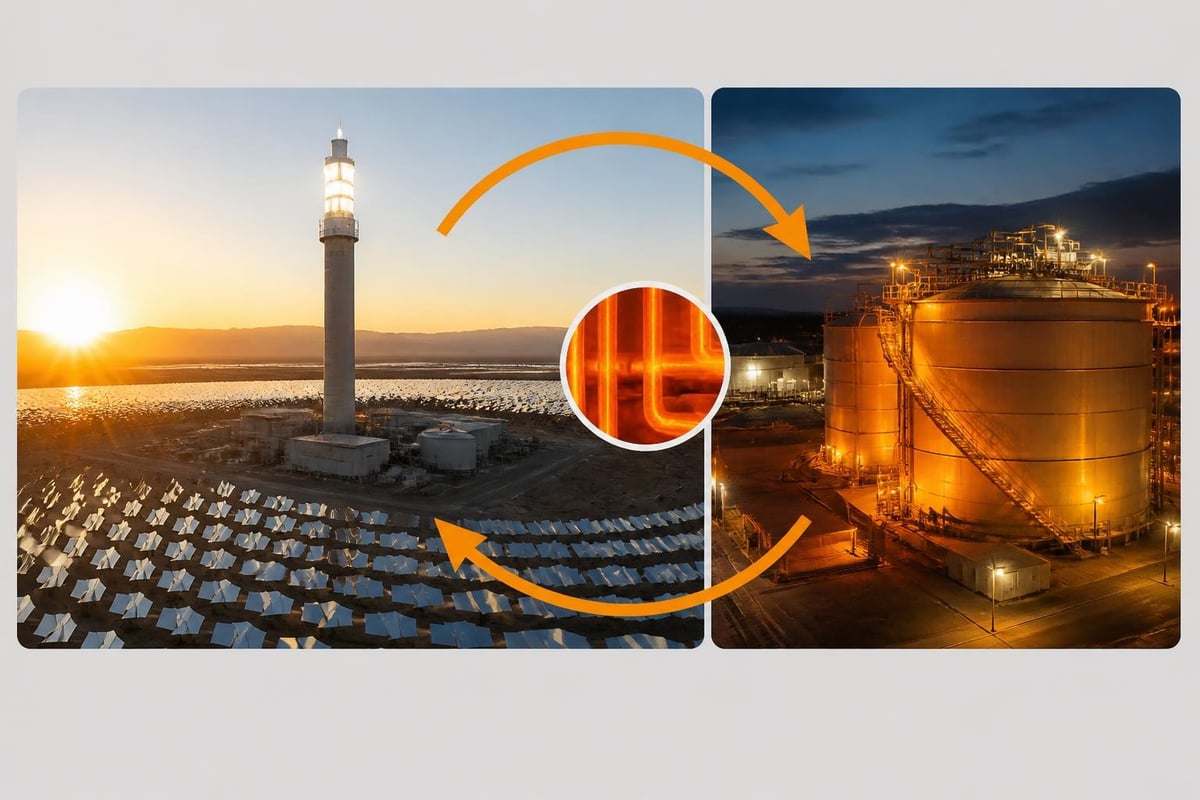
The technology offers a unique advantage: thermal energy storage. By storing heat in molten salt or other media, concentrated solar power plants can dispatch electricity during evening peak demand periods, addressing one of renewable energy's most persistent challenges. This dispatchability makes the technology particularly valuable for grid stability and reliability.
Core System Components
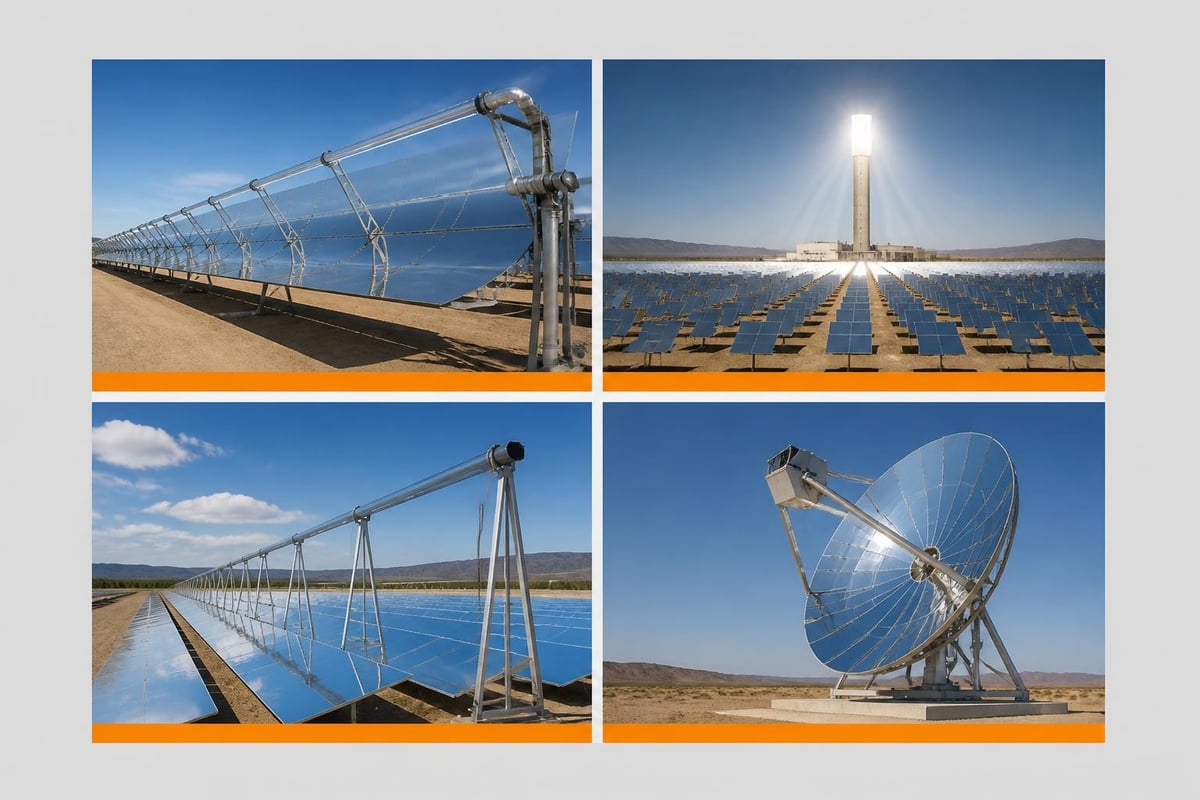
Four distinct concentrated solar power configurations have emerged globally:
- Parabolic trough systems use curved mirrors to focus sunlight onto receiver tubes containing heat transfer fluid
- Power tower systems employ thousands of tracking mirrors (heliostats) that reflect sunlight onto a central receiver
- Linear Fresnel reflectors utilise flat or slightly curved mirrors positioned beneath a fixed receiver
- Parabolic dish systems concentrate sunlight onto a receiver positioned at the focal point of a dish-shaped reflector
Each configuration presents different efficiency profiles, capital costs, and land requirements. Power tower systems currently dominate new installations due to their superior efficiency and storage integration capabilities.
Economic Considerations for Southern African Deployment
The capital intensity of concentrated solar power projects significantly exceeds that of photovoltaic installations. Current global costs range between R50,000 and R85,000 per kilowatt of installed capacity, compared to R12,000 to R18,000 per kilowatt for commercial solar PV systems. These figures reflect the complex engineering, precision manufacturing, and extensive infrastructure required for thermal power generation.
However, research from the World Resources Institute demonstrates that concentrated solar power's ability to provide firm, dispatchable capacity creates value beyond simple levelised cost comparisons. When thermal storage is incorporated, these plants can deliver electricity during high-value periods, potentially justifying the premium investment in specific market contexts.
Comparative Analysis: CSP vs Traditional Solar
| Factor | Concentrated Solar Power | Photovoltaic Solar |
|---|---|---|
| Capital cost (per kW) | R50,000 - R85,000 | R12,000 - R18,000 |
| Energy storage | Integrated thermal storage | Requires separate batteries |
| Dispatchability | High (6-15 hours storage) | Limited without batteries |
| Land requirement | 2-4 hectares per MW | 1-2 hectares per MW |
| Water consumption | Moderate to high | Minimal |
| Maintenance complexity | High | Low to moderate |
South Africa's Northern Cape province possesses exceptional direct normal irradiance (DNI) levels exceeding 2,800 kWh/m²/year, among the world's highest. This solar resource quality directly translates to concentrated solar power efficiency, as the technology requires direct beam radiation rather than diffuse light. However, water scarcity in these optimal solar regions presents a significant constraint, as traditional wet-cooling systems consume substantial water resources.
Technical Performance and Operational Requirements
The U.S. Department of Energy's overview highlights that concentrated solar power systems require precise solar tracking and regular maintenance to sustain performance. Mirror cleanliness directly impacts system efficiency, with dust accumulation reducing output by 0.5% to 1% daily in arid environments. This maintenance burden differs substantially from photovoltaic systems, requiring specialised cleaning protocols and personnel.
Modern concentrated solar power plants achieve capacity factors between 25% and 75%, depending on thermal storage integration. A 100 MW facility with 10 hours of molten salt storage can deliver electricity reliably during evening peak periods, functioning as a dispatchable renewable resource that complements variable wind and solar PV generation.
Thermal Storage Integration
Molten salt storage systems represent concentrated solar power's most compelling technical advantage. The two-tank indirect system stores solar energy as sensible heat in a mixture of sodium and potassium nitrate salts, maintaining temperatures between 290°C and 565°C. This stored thermal energy can generate electricity for 6 to 15 hours after sunset, depending on tank sizing.
The storage capacity scales cost-effectively compared to electrochemical batteries. Adding storage to a concentrated solar power plant costs approximately R800 to R1,200 per kilowatt-hour of capacity, whilst lithium-ion battery systems installed for commercial applications currently range from R2,500 to R4,500 per kilowatt-hour including inverters and installation.
Southern African Application Potential
South Africa's Renewable Energy Independent Power Producer Procurement Programme (REIPPP) has supported several concentrated solar power projects, including facilities in the Northern Cape. These installations demonstrate the technology's viability whilst highlighting challenges related to project financing, construction timelines, and operational complexities in the Southern African context.
The technology suits specific applications particularly well:
- Industrial process heat for mining operations, chemical manufacturing, or food processing requiring sustained high-temperature energy
- Peak power generation complementing baseload renewable sources in integrated energy portfolios
- Grid stabilisation providing synchronous generation characteristics and ancillary services
- Regional energy security delivering dispatchable renewable capacity independent of fuel imports
However, current market conditions favour photovoltaic-plus-battery combinations for most commercial and industrial applications. The rapid cost decline of solar PV and battery storage has compressed the economic window where concentrated solar power presents the optimal solution.
Operational Excellence and Performance Monitoring
Best practices documented by the National Renewable Energy Laboratory emphasise that concentrated solar power plant performance depends heavily on operational discipline and preventative maintenance. Mirror reflectivity, receiver tube integrity, heat transfer fluid quality, and turbine efficiency all require systematic monitoring and management.
Advanced monitoring systems now incorporate thermal imaging and drone inspections to identify performance degradation. Recent research demonstrates how thermal imaging can detect abnormal operations in concentrated solar power facilities, enabling proactive maintenance interventions before minor issues escalate into costly failures.
Maintenance Requirements Overview
Daily operations:
- Mirror cleaning schedules based on local dust conditions
- Heat transfer fluid temperature and pressure monitoring
- Steam cycle parameter verification
- Thermal storage state-of-charge tracking
Periodic maintenance:
- Mirror alignment verification and adjustment (quarterly)
- Receiver tube inspection and replacement (annual)
- Heat transfer fluid sampling and filtration (semi-annual)
- Turbine maintenance following manufacturer schedules
- Thermal storage system integrity testing (annual)
The operational complexity requires skilled technicians and comprehensive training programmes. Renewable energy operations and maintenance services for concentrated solar power installations demand specialised expertise beyond conventional solar PV or battery storage maintenance capabilities.
Integration with Distributed Energy Resources
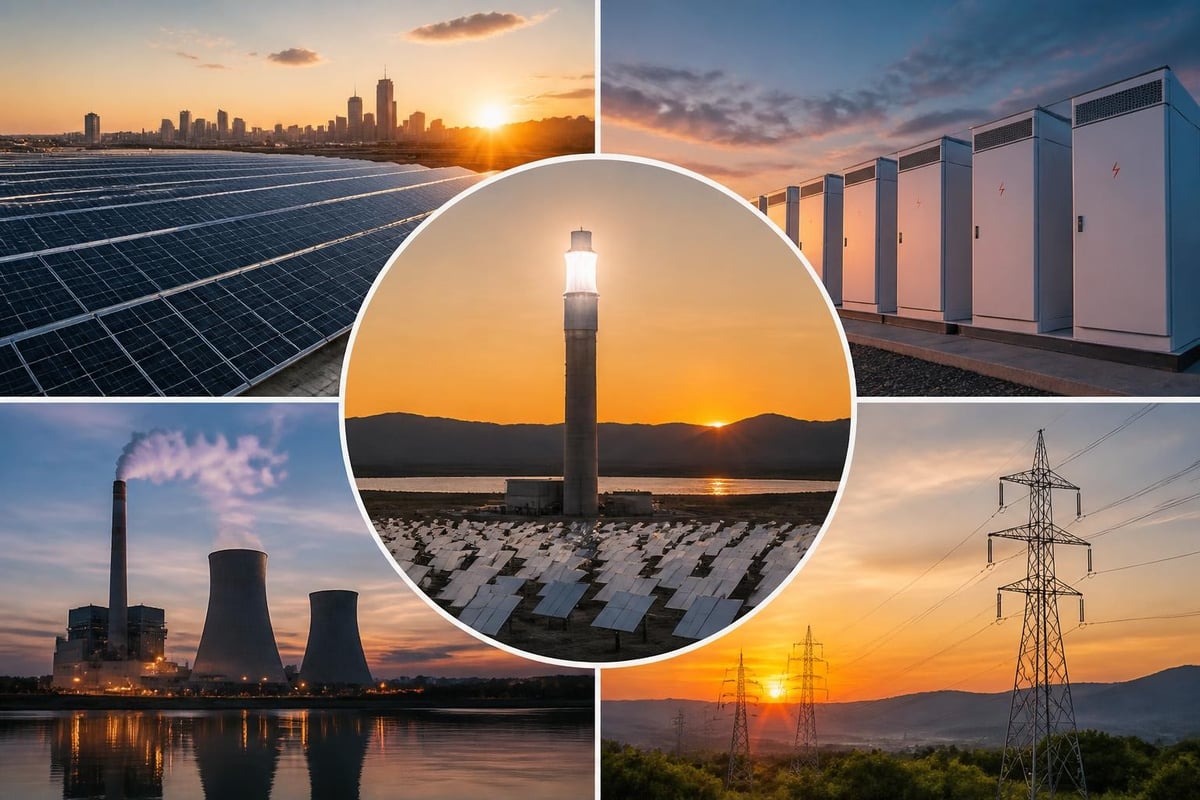
Whilst concentrated solar power technology typically operates at utility scale, understanding its role within broader energy systems benefits commercial and industrial energy planning. Large-scale concentrated solar power plants can provide grid stability that enables higher penetration of distributed photovoltaic installations and intermittent renewables.
For Southern African businesses developing comprehensive energy strategies, the relationship between centralised concentrated solar power generation and distributed renewable assets matters. Grid-connected commercial solar installations benefit from system stability provided by dispatchable generation sources, whether gas-fired plants, hydroelectric facilities, or concentrated solar power stations.
Synergies with Commercial Solar Solutions
Commercial and industrial facilities implementing rooftop solar PV systems operate within an electricity grid increasingly shaped by large-scale renewable generation. Concentrated solar power's dispatchability reduces curtailment risk for distributed solar assets and stabilises grid frequency, creating conditions where businesses can maximise returns from on-site renewable investments.
The technology also demonstrates pathways for industrial decarbonisation beyond electricity generation. Process heat applications at temperatures between 150°C and 400°C represent significant opportunities where concentrated solar power can displace fossil fuel consumption in manufacturing, mining, and agricultural processing operations.
Future Trajectory and Innovation Directions
Current research in Nature Reviews Clean Technology indicates that concentrated solar power technology continues evolving, with innovations targeting cost reduction, efficiency improvement, and operational reliability. Advanced receiver designs, improved heat transfer fluids, and optimised thermal storage media promise to enhance performance and economics.
Supercritical CO₂ power cycles represent one promising development pathway. These systems replace conventional steam turbines with carbon dioxide operating above its critical point, achieving higher thermal efficiencies in more compact equipment. This innovation could reduce both capital costs and plant footprint, improving concentrated solar power's competitive position.
Hybrid configurations integrating concentrated solar power with photovoltaic generation and battery storage offer another development direction. These systems leverage each technology's strengths whilst mitigating individual weaknesses, creating flexible, dispatchable renewable energy platforms.
Risk Management and Reliability
Advanced anomaly detection frameworks now enable concentrated solar power operators to identify potential failures before they impact production. Machine learning algorithms analyse operational data patterns, flagging deviations that warrant investigation whilst minimising false alarms that waste maintenance resources.
For commercial energy buyers considering long-term power purchase agreements with concentrated solar power facilities, understanding reliability metrics and performance guarantees becomes essential. Availability factors, capacity factors, and degradation rates all influence the actual energy delivery and project economics over 25-year operational lifespans.
| Performance Metric | Typical Range | Significance |
|---|---|---|
| Availability factor | 92% - 98% | Percentage of time plant can generate when solar resource available |
| Capacity factor | 25% - 75% | Actual generation vs theoretical maximum (varies with storage) |
| Degradation rate | 0.2% - 0.5% annual | Performance decline over operational life |
| Mirror reflectivity | 88% - 94% | Key efficiency driver requiring active management |
These metrics directly impact financial returns and carbon reduction achievements, making due diligence critical for concentrated solar power project evaluation.
Policy Framework and Market Development
South Africa's Integrated Resource Plan recognises concentrated solar power's role in the energy transition, though recent allocations have favoured lower-cost photovoltaic and wind technologies. The policy environment continues evolving as grid operators balance least-cost procurement with system reliability requirements and renewable energy integration challenges.
Provincial and municipal authorities increasingly recognise that energy security depends on diverse generation portfolios rather than single-technology solutions. This understanding creates opportunities for concentrated solar power where its dispatchability and storage capabilities address specific grid needs that variable renewables cannot satisfy independently.
For businesses engaging with energy planning, monitoring policy developments and grid connection requirements helps identify opportunities where concentrated solar power or complementary technologies deliver strategic advantages. INFOLED's renewable energy engineering services support organisations navigating these complex technical and regulatory considerations.
Climate Impact and Sustainability Considerations
Concentrated solar power systems generate electricity with minimal direct greenhouse gas emissions, contributing to decarbonisation objectives across multiple sectors. However, comprehensive sustainability assessment must consider manufacturing impacts, water consumption, land use, and end-of-life material management.
Water usage presents particular sustainability challenges in South Africa's arid regions where solar resources peak. Dry cooling technologies reduce water consumption by 90% compared to wet cooling but impose efficiency penalties and capital cost increases of 8% to 12%. This trade-off requires careful analysis within regional water availability contexts.
The technology's compatibility with circular economy principles depends on material recovery and recycling infrastructure development. Steel structures, glass mirrors, and thermal fluids all present recycling opportunities, though establishing collection and processing systems requires coordinated industry efforts and supportive regulatory frameworks.
Concentrated solar power technology offers unique capabilities for large-scale renewable energy generation with integrated thermal storage, though its high capital costs and operational complexity limit applications compared to photovoltaic alternatives. For Southern African organisations pursuing comprehensive energy resilience and decarbonisation strategies, understanding how different renewable technologies complement each other enables optimised system design and investment decisions. INFOLED provides integrated renewable energy solutions across solar PV, battery storage, smart metering, and EV charging infrastructure, helping commercial, industrial, and residential clients throughout Southern Africa reduce electricity costs whilst advancing sustainability objectives. Contact our engineering team to explore how intelligent energy solutions can transform your organisation's energy profile and operational resilience.
Next Step
Need help with your energy strategy?
Speak to INFOLED about solar, storage, EV charging, service agreements or system performance.