
Geothermal heating and cooling systems represent one of the most efficient renewable energy technologies available to property owners today. Unlike conventional HVAC systems that generate heat or cold air, geothermal systems leverage the earth's consistent underground temperature to provide year-round climate control. However, the cost of geothermal system installation often stands as the primary consideration for businesses and homeowners evaluating this technology. Understanding the complete financial picture, including upfront investment, operational savings, and long-term return on investment, enables informed decision-making for those seeking sustainable energy solutions in Southern Africa's evolving renewable energy landscape.
Understanding Geothermal System Pricing Structure
The cost of geothermal system installation varies significantly based on multiple interconnected factors. At the core, pricing depends on system capacity, installation complexity, site conditions, and regional labour rates.
For residential applications, typical installations range between £15,000 and £35,000, whilst commercial and industrial projects can exceed £100,000 depending on scale. The comprehensive breakdown of geothermal heating and cooling costs demonstrates how system size directly impacts total investment requirements.
Major Cost Components
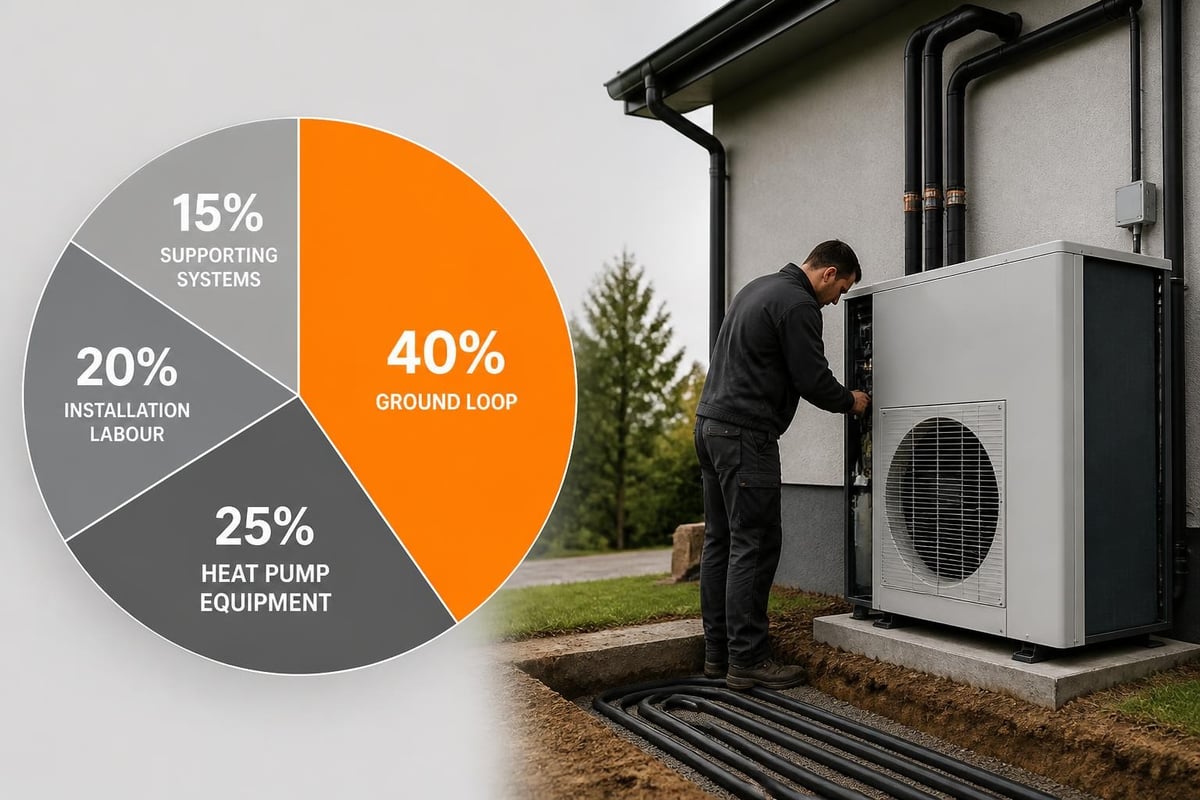
Every geothermal installation comprises distinct elements, each contributing to the overall budget:
- Ground loop system: The underground piping network represents 40-50% of total costs
- Heat pump equipment: High-efficiency units account for 25-30% of the investment
- Installation labour: Professional drilling and installation services comprise 20-25%
- Ancillary equipment: Distribution systems, controls, and integration add 5-10%
The ground loop configuration significantly influences pricing. Vertical closed-loop systems require deep drilling (100-150 metres), creating higher costs but requiring less land area. Horizontal systems demand extensive trenching across larger properties but typically cost 20-30% less than vertical installations.
| System Type | Land Required | Depth/Length | Cost Range (ZAR) |
|---|---|---|---|
| Vertical Loop | Minimal | 100-150m deep | R350,000-R650,000 |
| Horizontal Loop | 0.5-1 acre | 1.5-2m deep | R280,000-R500,000 |
| Pond/Lake Loop | Water access | 3-6m deep | R250,000-R450,000 |
Installation Cost Variables
Multiple site-specific factors influence the final cost of geothermal system implementation. Ground conditions fundamentally affect drilling complexity and duration.
Geological Considerations
Rocky or hard soil conditions increase drilling time and equipment wear, potentially adding 15-40% to baseline costs. Conversely, softer soil compositions reduce installation complexity and associated expenses. Professional geological assessments, whilst adding £1,500-£3,500 to initial costs, prevent unexpected complications during installation.
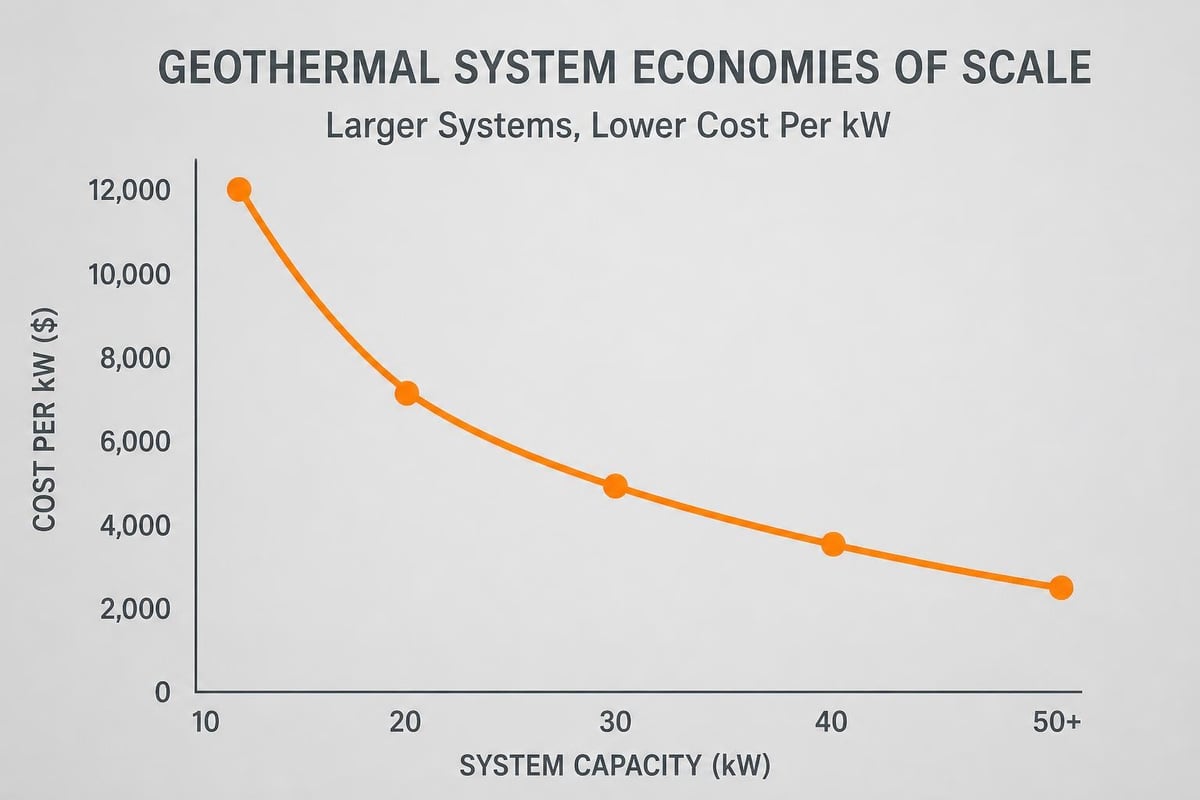
Property size and building characteristics determine system capacity requirements. A 150-square-metre residence typically requires a 12-14 kW system, whilst commercial buildings of 500-1,000 square metres may need 35-50 kW capacity. The detailed geothermal installation cost analysis reveals how capacity scaling affects per-kilowatt pricing.
Regional factors in Southern Africa include:
- Variable electricity tariffs affecting payback calculations
- Climate zones influencing heating versus cooling demands
- Grid connection costs for hybrid renewable energy systems
- Local drilling contractor availability and competition
- Municipal permitting requirements and fees
System Capacity and Sizing Economics
Accurate system sizing directly impacts both installation costs and long-term operational efficiency. Oversized systems waste capital on unnecessary capacity, whilst undersized installations struggle to meet demand and operate inefficiently.
Professional load calculations account for building insulation, window ratings, occupancy patterns, and local climate data. These engineering assessments typically cost £800-£2,000 but ensure optimal system specification. Experienced renewable energy providers like INFOLED integrate geothermal considerations within comprehensive energy audits, examining how ground-source heat pumps complement solar PV, battery storage, and smart metering technologies for maximum efficiency.
Capacity-Based Pricing Trends
Industry data reveals economies of scale in larger installations:
- Systems under 10 kW: £2,500-£3,200 per kW installed capacity
- Systems 10-25 kW: £2,000-£2,600 per kW installed capacity
- Systems 25-50 kW: £1,700-£2,200 per kW installed capacity
- Systems over 50 kW: £1,400-£1,900 per kW installed capacity
This scaling advantage makes geothermal particularly attractive for commercial and industrial applications where larger capacities distribute fixed costs across more kilowatts. The comprehensive geothermal system cost guide provides detailed pricing matrices for various building types and sizes.
Operational Savings and Payback Analysis
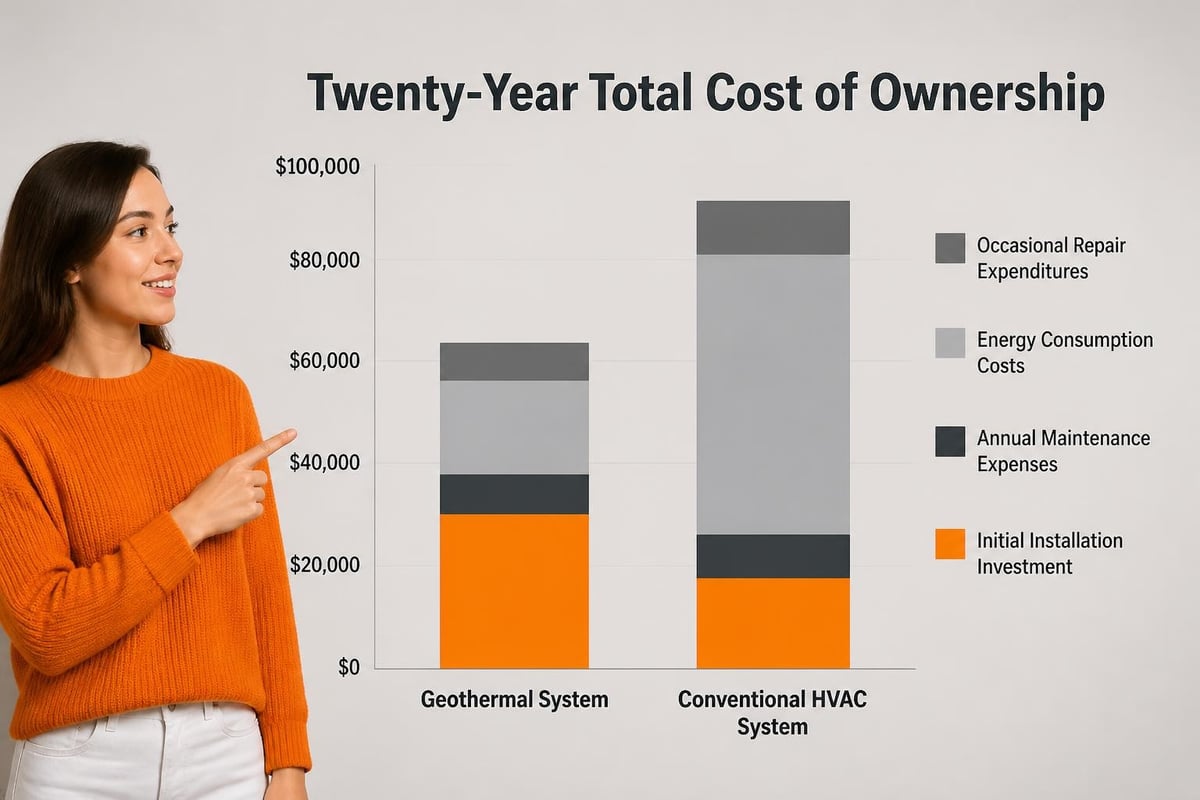
Whilst the upfront cost of geothermal system installation exceeds conventional HVAC alternatives, operational economics tell a compelling long-term story. Geothermal systems consume 25-50% less electricity than air-source heat pumps and 40-70% less than traditional electric heating.
Monthly Operating Cost Comparison
| System Type | 150m² Home Monthly Cost | Annual Energy Cost | 10-Year Total |
|---|---|---|---|
| Geothermal | R450-R650 | R5,400-R7,800 | R54,000-R78,000 |
| Air-Source HP | R750-R1,100 | R9,000-R13,200 | R90,000-R132,000 |
| Electric Resistance | R1,200-R1,800 | R14,400-R21,600 | R144,000-R216,000 |
These figures reflect 2026 Southern African electricity rates averaging R2.20-R2.80 per kWh. The geothermal system cost guide focusing on home size variations demonstrates how savings scale with property dimensions and usage patterns.
Payback periods typically range from 7-12 years for residential installations and 5-9 years for commercial applications with higher utilization rates. After payback, systems continue delivering savings for their 20-25 year operational lifespan.
Financing and Incentive Programmes
The substantial initial cost of geothermal system investment prompts many property owners to explore financing options and available incentives.
Financing mechanisms include:
- Green energy loans with preferential interest rates (8-11% APR)
- Power purchase agreements spreading costs over 10-20 years
- Property-assessed clean energy (PACE) financing tied to property taxes
- Commercial equipment leasing arrangements
Government and utility incentive programmes significantly improve project economics. Whilst specific Southern African programmes vary by jurisdiction, typical incentives include:
- Tax deductions: Accelerated depreciation schedules for commercial renewable energy assets
- Rebate programmes: Municipal utility rebates of R15,000-R50,000 for qualifying installations
- Feed-in tariffs: Excess capacity credits for grid-connected systems
- Carbon credit opportunities: ESG programme participation for commercial installations
The complete geothermal guide examining upfront costs and long-term savings provides frameworks for calculating net present value incorporating available incentives.
Maintenance Costs and Lifecycle Economics
Beyond installation investment, understanding ongoing maintenance expenses completes the total cost of geothermal system ownership. These systems require significantly less maintenance than conventional HVAC equipment due to protected underground components and fewer moving parts.
Annual Maintenance Requirements
Typical yearly maintenance costs range from £250-£500 and include:
- Filter replacement and cleaning
- Thermostat calibration and programming updates
- Refrigerant level inspection
- Pump operation verification
- System performance testing
Ground loop systems carry 50-year warranties on piping, whilst heat pump equipment typically includes 10-year warranties on compressors and 5-year coverage on parts. This durability contrasts favourably with conventional systems requiring replacement every 10-15 years.
Professional renewable energy operations and maintenance services extend system longevity through preventative care, remote monitoring, and performance optimization. These services ensure geothermal installations maintain peak efficiency throughout their operational lifecycle.
| Cost Category | Annual Expense | 20-Year Total |
|---|---|---|
| Maintenance | R3,500-R7,000 | R70,000-R140,000 |
| Electricity | R54,000-R78,000 | R1,080,000-R1,560,000 |
| Repairs | R2,000-R5,000 | R40,000-R100,000 |
| Total 20-Year Ownership | R1,190,000-R1,800,000 |
Integration with Renewable Energy Systems
Modern geothermal installations increasingly function as components within integrated renewable energy ecosystems. When combined with solar photovoltaic arrays, battery energy storage systems, and smart metering technologies, geothermal systems achieve exceptional efficiency and cost-effectiveness.
Solar PV systems generate electricity to power geothermal heat pumps, particularly advantageous in Southern Africa's high-irradiance environment. Battery storage captures excess solar generation for evening and night-time geothermal operation, maximizing renewable energy self-consumption.
Hybrid System Economics
Integrated renewable energy systems demonstrate superior financial performance compared to standalone implementations:
- Geothermal + Solar PV: 15-25% additional operational savings through daytime solar-powered heating/cooling
- Geothermal + BESS: 20-30% reduction in grid dependence through load-shifting capabilities
- Full Integration: 40-60% total energy cost reduction versus conventional systems
The California-focused cost breakdown provides valuable insights into regional integration strategies applicable to similar climates in Southern Africa.
Smart metering and energy management platforms optimize geothermal operation based on real-time electricity pricing, weather forecasts, and occupancy patterns. These intelligent controls add £2,500-£6,000 to installation costs but deliver 8-15% additional efficiency gains.
Commercial and Industrial Applications
Commercial property owners face distinct cost considerations when evaluating geothermal implementations. Larger building envelopes, extended operating hours, and higher cooling loads influence system design and pricing.
Commercial cost drivers include:
- Multi-zone distribution requirements
- Integration with existing building management systems
- Structural modifications for equipment installation
- Peak demand reduction capabilities
- ESG reporting and sustainability certification alignment
Office buildings typically invest £850-£1,400 per square metre for comprehensive geothermal installations. Manufacturing facilities with high process heat demands may achieve superior economics, with payback periods under 6 years. The academic research on automation improving geothermal deployment economics suggests emerging technologies will further reduce commercial installation costs.
Retail centres benefit from consistent heating and cooling across large floor areas, whilst hospitality properties leverage geothermal systems for both space conditioning and water heating. Industrial applications often integrate geothermal with waste heat recovery systems, maximizing energy efficiency.
Site Assessment and Pre-Installation Costs
Before committing to full installation, property owners incur assessment and planning expenses. These preliminary costs typically range from £2,500-£7,500 depending on project complexity.
Pre-Installation Investment Breakdown
| Assessment Type | Purpose | Cost Range (ZAR) |
|---|---|---|
| Geological Survey | Soil composition and drilling feasibility | R8,000-R18,000 |
| Load Calculation | System sizing and capacity determination | R6,000-R15,000 |
| Site Survey | Property layout and installation planning | R4,500-R12,000 |
| Permit Acquisition | Municipal approvals and compliance | R3,500-R10,000 |
The geothermal installation cost guide with equipment and site preparation details emphasizes how thorough upfront assessment prevents costly mid-project complications.
Professional site evaluation identifies potential challenges including underground utilities, bedrock depth, water table levels, and property access constraints. This information enables accurate cost estimation and timeline development, preventing budget overruns during installation.
Future Cost Trends and Market Outlook
The cost of geothermal system technology continues evolving as manufacturing advances, installation techniques improve, and market adoption increases. Industry forecasts suggest 15-25% cost reductions by 2030 driven by several factors.
Standardized installation practices reduce labour time and complexity. Modular equipment designs simplify integration and maintenance. Increased drilling contractor competition in growing markets applies downward pricing pressure. The economic viability study of geothermal production in sedimentary basins identifies technological innovations reducing exploration and development costs.
Advanced monitoring systems enable predictive maintenance, extending equipment lifespan and reducing total ownership costs. Direct exchange systems eliminating the need for separate ground loops show promise for specific applications, potentially reducing installation costs by 20-35%.
Southern Africa's growing renewable energy sector creates opportunities for integrated geothermal deployment. As electricity prices continue rising and grid reliability challenges persist, geothermal systems' value proposition strengthens despite unchanged installation costs.
Regional Considerations for Southern Africa
Southern African market conditions create unique opportunities and challenges for geothermal system deployment. Climate variations across the region influence heating and cooling demand balance, affecting system sizing and economics.
Coastal regions with moderate temperatures favour smaller capacity systems focused on year-round comfort. Interior highveld areas with greater temperature extremes benefit from geothermal's consistent performance across seasons. Water availability for certain loop configurations requires careful consideration in water-scarce regions.
Local drilling expertise and equipment availability significantly impact installation costs. Established markets near major metropolitan areas demonstrate 20-30% lower costs than remote locations requiring equipment and specialist transport. Building relationships with experienced contractors ensures competitive pricing and quality workmanship.
Municipal electricity tariff structures influence payback calculations substantially. Time-of-use pricing creates opportunities for load-shifting strategies when geothermal systems integrate with battery storage. Demand charge structures in commercial tariffs make peak reduction capabilities particularly valuable.
Regional pricing observations:
- Gauteng average installation costs: R320,000-R580,000 (residential)
- Western Cape pricing: R340,000-R620,000 (coastal premium)
- KwaZulu-Natal ranges: R310,000-R560,000 (competitive market)
- Remote locations: Add 25-40% for mobilization and logistics
Understanding these regional dynamics enables realistic budgeting and appropriate vendor selection for geothermal projects across Southern Africa's diverse markets.
Understanding the complete cost of geothermal system investment enables property owners to make informed decisions about this proven renewable energy technology. Whilst upfront costs remain substantial, operational savings, environmental benefits, and long-term reliability deliver compelling value for residential, commercial, and industrial applications. INFOLED specializes in integrated renewable energy solutions across Southern Africa, helping clients evaluate geothermal alongside solar PV, battery storage, and smart energy management to optimize investment returns whilst advancing sustainability objectives. Contact our engineering team to explore how geothermal technology fits within your comprehensive energy strategy.
Next Step
Need help with your energy strategy?
Speak to INFOLED about solar, storage, EV charging, service agreements or system performance.