
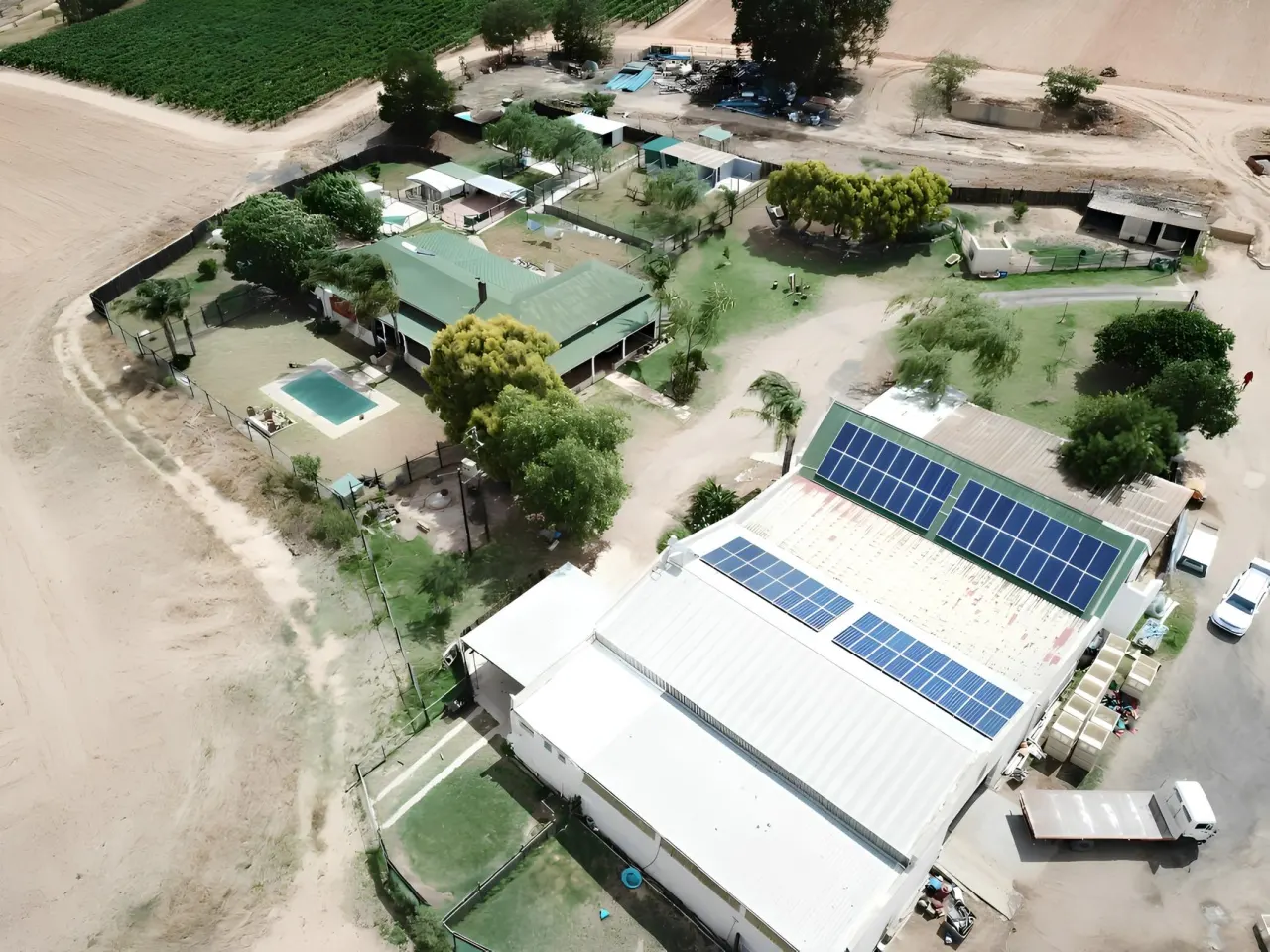
Renewable energy adoption continues to accelerate across South Africa as homeowners seek alternatives to unreliable grid electricity and rising utility costs. While solar photovoltaic systems dominate the residential market, domestic wind turbines represent an often-overlooked opportunity for properties with suitable wind resources. These compact generating systems harness natural air movement to produce clean electricity, offering a complementary or alternative solution to traditional energy sources. For South African households experiencing frequent load shedding and escalating electricity tariffs, understanding the practical considerations, costs, and performance characteristics of domestic wind turbines becomes increasingly relevant to informed energy planning.
Understanding Domestic Wind Turbines
Domestic wind turbines, also known as small wind energy systems, are scaled-down versions of commercial wind farms designed specifically for residential and small-scale applications. These systems typically range from 400 watts to 100 kilowatts in capacity, with most residential installations falling between 5 and 20 kilowatts.
The fundamental operating principle remains consistent across all scales. Wind flowing over aerodynamically designed rotor blades creates lift, causing rotation around a central hub. This mechanical energy transfers through a shaft to a generator, which converts rotational motion into electrical current. Modern domestic systems incorporate sophisticated power electronics to condition this electricity for household use or grid export.
Key Components and System Architecture
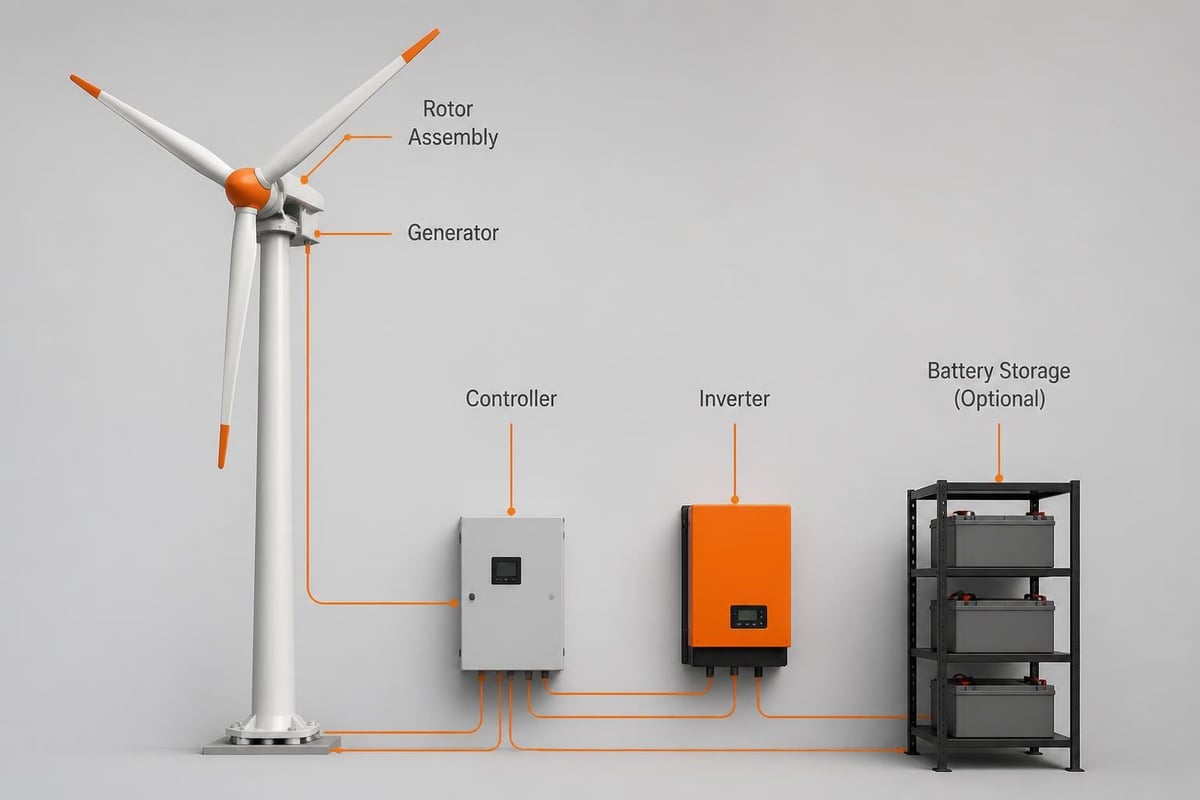
A complete domestic wind turbine installation comprises several integrated components working in harmony:
- Rotor assembly (blades and hub) optimised for specific wind speeds
- Generator converting mechanical rotation to electrical power
- Tower structure elevating the turbine above ground turbulence
- Controller regulating turbine operation and protecting against overspeeding
- Inverter converting DC to AC power and managing grid synchronisation
- Batteries (optional) for energy storage when configured off-grid
The tower height significantly influences performance, as wind speed increases substantially with elevation above ground level. Most effective domestic installations position turbines at least 9 to 12 metres above nearby obstructions within a 100-metre radius.
Wind Resource Assessment for South African Properties
Before investing in domestic wind turbines, conducting a thorough wind resource assessment proves essential. South Africa's wind patterns vary dramatically by region, with coastal areas and elevated inland plateaus generally offering superior wind resources compared to low-lying inland valleys.
The Western Cape, Eastern Cape, and Northern Cape provinces demonstrate particularly promising wind conditions. Cities such as Cape Town, Port Elizabeth, and areas around the Karoo consistently experience higher average wind speeds. Johannesburg and Pretoria, whilst elevated, typically show more variable and lower average wind speeds due to their inland continental location.
Measuring Wind Potential
Professional wind assessment involves installing an anemometer at the proposed turbine height for at least 12 months to capture seasonal variations. However, preliminary evaluations can utilise:
- Local meteorological data from airports and weather stations
- Wind resource maps developed by the Department of Energy
- Neighbouring wind installations providing real-world performance data
- Professional energy audits incorporating site-specific modelling
According to the U.S. Department of Energy's Small Wind Guidebook, properties require average annual wind speeds of at least 4 to 5 metres per second at the proposed turbine height to justify economic investment. Many South African coastal locations comfortably exceed this threshold, whilst inland properties may require careful evaluation.
Financial Considerations and Return on Investment
The economics of domestic wind turbines in South Africa involve substantial upfront capital expenditure balanced against long-term electricity savings and potential grid export revenue.
Installation Costs
| System Size | Equipment Cost (ZAR) | Installation Cost (ZAR) | Total Investment (ZAR) |
|---|---|---|---|
| 5 kW | 75,000 - 120,000 | 30,000 - 50,000 | 105,000 - 170,000 |
| 10 kW | 140,000 - 220,000 | 50,000 - 80,000 | 190,000 - 300,000 |
| 20 kW | 270,000 - 400,000 | 80,000 - 130,000 | 350,000 - 530,000 |
These figures include the turbine, tower, installation labour, electrical components, and basic grid connection. Additional costs arise from:
- Foundation and civil works (particularly for taller towers)
- Planning applications and grid connection approvals
- Remote monitoring systems
- Maintenance contracts and insurance
- Battery storage if configured as a hybrid system
The Pacific Northwest National Laboratory's 2024 Distributed Wind Market Report indicates that installation costs continue to decline as manufacturing processes improve and installer expertise grows.
Payback Periods and Economic Viability
Calculating return on investment requires evaluating multiple variables specific to each installation. A 10 kW domestic wind turbine in a location with good wind resources (average 6 m/s) might generate 15,000 to 20,000 kWh annually. At current South African residential electricity rates averaging ZAR 2.50 to ZAR 3.50 per kWh (depending on municipality and consumption tiers), annual savings could reach ZAR 37,500 to ZAR 70,000.
Based on these figures, payback periods typically range from 8 to 15 years, considerably longer than commercial solar panel installations which often achieve payback within 4 to 7 years. However, properties with exceptional wind resources or limited solar potential may find wind turbines economically competitive.
Technical Performance and Energy Output
Understanding realistic energy production expectations prevents disappointment and enables accurate system sizing. Unlike solar photovoltaic systems with relatively predictable daily and seasonal patterns, wind energy generation varies significantly based on immediate weather conditions.
Power Curves and Operational Characteristics
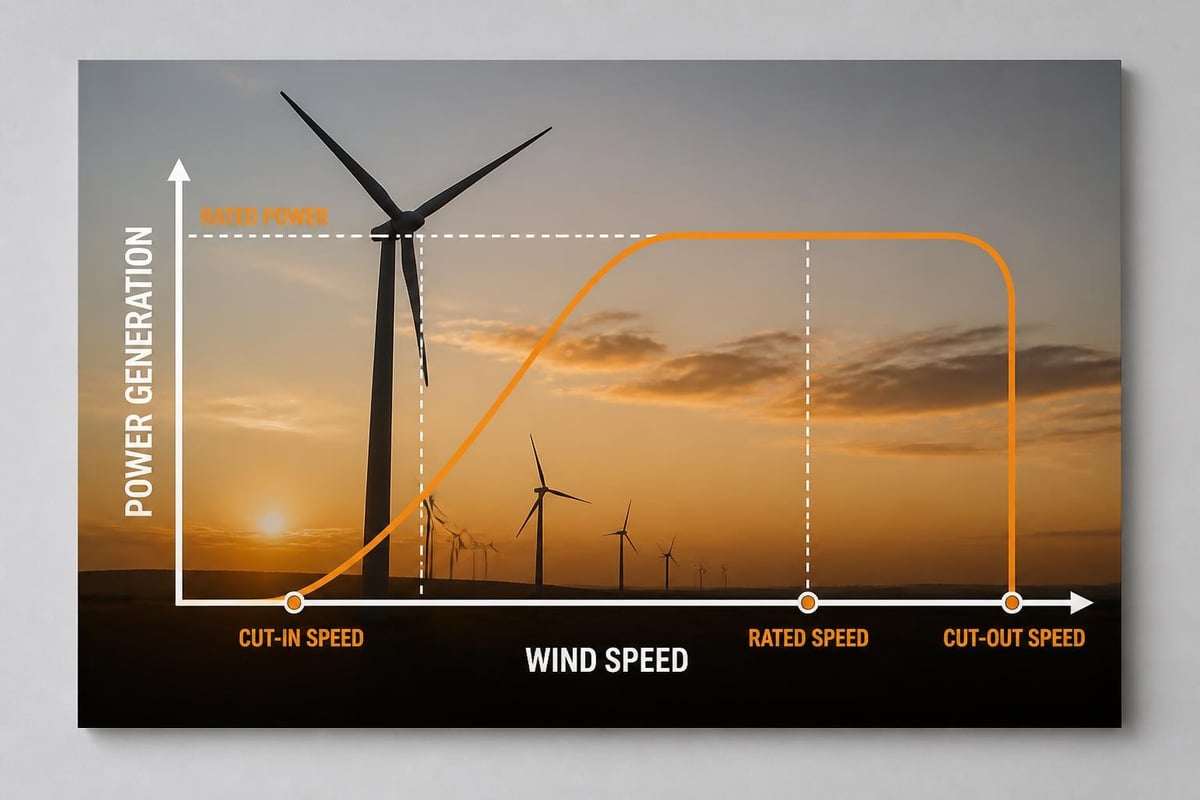
Each domestic wind turbine model exhibits a unique power curve defining electrical output at different wind speeds:
- Cut-in speed (typically 3-4 m/s): Minimum wind speed for electricity generation
- Rated speed (typically 12-14 m/s): Wind speed at which maximum power output occurs
- Cut-out speed (typically 20-25 m/s): Maximum safe operating wind speed before automatic shutdown
Most electricity generation occurs during moderate wind events rather than extreme conditions. A turbine might operate 70-80% of the time but generate at or near maximum capacity only 20-30% of operational hours, depending on location.
Capacity Factors in South African Conditions
Capacity factor measures actual energy production against theoretical maximum if operating continuously at rated power. Well-sited domestic wind turbines in South Africa typically achieve capacity factors between 15% and 30%. Coastal installations with consistent wind patterns reach the higher end of this range, whilst inland sites with variable conditions fall toward the lower end.
For comparison, solar photovoltaic systems in South Africa generally achieve capacity factors of 18-22%, making them broadly competitive in energy yield per installed kilowatt, though with more predictable generation patterns.
Regulatory Framework and Installation Requirements
Navigating South Africa's regulatory landscape for domestic wind turbines requires understanding multiple approval layers. Unlike solar photovoltaic systems which benefit from streamlined residential approval processes, wind installations often face more complex requirements due to height, noise, and visual impact considerations.
Municipal and Planning Approvals
Most municipalities classify domestic wind turbines as structures requiring building plan approval. The application process typically involves:
- Property title verification confirming installation rights
- Site development plans showing turbine location and height
- Structural engineering certification for tower and foundation
- Environmental impact screening (usually simplified for domestic scale)
- Neighbour notification particularly if within 100 metres of boundaries
Approval timelines vary significantly between municipalities, ranging from 6 weeks in efficient metros to 6 months in under-resourced rural councils. The Lawrence Berkeley National Laboratory's renewable energy siting policies report highlights how inconsistent local regulations create barriers to distributed wind adoption globally, a challenge equally applicable to South African jurisdictions.
Grid Connection and Compliance
Properties intending to export excess wind-generated electricity to the municipal grid must navigate additional requirements. South Africa's embedded generation regulations permit residential systems up to 1 MW without National Energy Regulator of South Africa (NERSA) licensing, but municipal grid connection approvals remain mandatory.
The U.S. Department of Energy's Distributed Wind Energy Resource Hub provides valuable international best practices for streamlining these processes, though South African municipalities maintain independent approval frameworks.
Integration with Existing Energy Infrastructure
Modern domestic wind turbines rarely operate in isolation. Most effective residential energy strategies combine multiple technologies to optimise reliability, cost, and environmental performance.
Hybrid Wind-Solar Systems
Combining domestic wind turbines with solar photovoltaic arrays creates complementary generation profiles. Solar production peaks during clear midday hours, whilst wind resources often strengthen during evening and early morning periods. This temporal diversity smooths overall energy availability and reduces storage requirements.
Properties pursuing comprehensive energy independence can integrate Battery Energy Storage Systems (BESS) alongside hybrid generation. Advanced battery systems buffer generation variability, provide backup power during grid failures, and enable time-of-use optimisation by storing low-cost energy for use during peak tariff periods. This integrated approach addresses South Africa's persistent load shedding challenges whilst maximising renewable energy utilisation.
Smart Metering and Energy Management
Sophisticated energy management systems enhance the value proposition of domestic wind turbines by intelligently directing generated electricity. Smart controllers can:
- Prioritise self-consumption over grid export when economically advantageous
- Coordinate wind generation with battery charging and critical loads
- Provide real-time performance monitoring and maintenance alerts
- Integrate weather forecasting to predict generation patterns
- Optimise grid export timing based on time-of-use tariffs
These management capabilities transform domestic wind turbines from simple generation devices into intelligent components of comprehensive home energy ecosystems.
Maintenance Requirements and Operational Lifespan
Domestic wind turbines require regular maintenance to sustain performance and prevent costly failures. Unlike solar photovoltaic systems with minimal moving parts, wind turbines operate in mechanically demanding conditions with continuous rotation, vibration, and weather exposure.
Scheduled Maintenance Activities
| Maintenance Task | Frequency | Typical Cost (ZAR) |
|---|---|---|
| Visual inspection | Quarterly | Self-performed |
| Bolt torque verification | Annual | 1,500 - 3,000 |
| Bearing lubrication | Annual | 2,000 - 4,000 |
| Electrical connection check | Annual | 1,500 - 2,500 |
| Generator brush replacement | 3-5 years | 5,000 - 12,000 |
| Blade inspection and cleaning | Annual | 2,500 - 5,000 |
| Tower structural assessment | 5 years | 8,000 - 15,000 |
Professional maintenance contracts typically cost ZAR 8,000 to ZAR 18,000 annually for domestic-scale systems, depending on turbine size and accessibility. These agreements often include emergency call-out services and priority parts replacement.
Expected Lifespan and Component Replacement
Well-maintained domestic wind turbines generally operate effectively for 20 to 25 years, though major component replacements become necessary throughout this period. Generators, bearings, and control electronics typically require replacement after 10 to 15 years of operation. Blades may need replacement following storm damage or gradual degradation from ultraviolet exposure and environmental stress.
South Africa's variable weather conditions, including intense ultraviolet radiation on the Highveld and coastal salt exposure, can accelerate component degradation compared to temperate climates. Selecting turbines with appropriate environmental ratings and protective coatings extends operational lifespan and reduces maintenance costs.
Environmental Impact and Sustainability Considerations
Whilst domestic wind turbines generate clean electricity without direct carbon emissions, their broader environmental profile merits balanced evaluation. Understanding both benefits and potential impacts enables informed decision-making aligned with genuine sustainability objectives.
Carbon Reduction and Climate Benefits
The U.S. Environmental Protection Agency's distributed generation resource emphasises how on-site renewable electricity reduces grid dependence and associated fossil fuel combustion. A typical 10 kW domestic wind turbine in South Africa offsets approximately 8 to 12 tonnes of carbon dioxide annually, assuming grid electricity primarily from coal-fired generation.
Over a 20-year operational lifespan, this equates to 160 to 240 tonnes of avoided emissions, substantially exceeding the embodied carbon from manufacturing, transportation, and installation (typically 15 to 25 tonnes for domestic-scale systems).
Noise, Visual, and Ecological Considerations
Modern domestic wind turbines operate relatively quietly, with sound levels at 50 metres typically between 35 and 45 decibels (comparable to a quiet library or moderate rainfall). However, properties with close neighbours may still encounter complaints, particularly if turbines operate at night when ambient noise levels decrease.
Visual impact remains subjective but represents a common source of community opposition. Tower heights of 15 to 20 metres make turbines prominent landscape features, potentially affecting property aesthetics and neighbour views.
Avian impacts, whilst extensively studied for large wind farms, occur at reduced scales for domestic installations. Responsible siting away from known bird migration corridors and raptor nesting areas minimises wildlife risks.
Standards, Certification, and Quality Assurance
Ensuring domestic wind turbines meet recognised safety and performance standards protects consumers from substandard products whilst facilitating insurance coverage and grid connection approvals.
The IEC 61400-2 standard for small wind turbines establishes comprehensive requirements for design, safety, testing, and certification. Turbines certified to this international standard demonstrate compliance with rigorous structural, electrical, and operational criteria.
Evaluating Turbine Quality and Manufacturer Credibility
When selecting domestic wind turbines for South African conditions, prioritise manufacturers offering:
- IEC 61400-2 certification or equivalent national standards compliance
- Extended warranties (minimum 5 years comprehensive, 20 years structural)
- Local service networks or established South African distributors
- Documented performance data from independent testing facilities
- Reference installations in comparable climatic conditions
Cheaper uncertified turbines may appear attractive but often underperform, fail prematurely, or create safety hazards. The incremental cost of certified equipment represents prudent risk management and long-term value protection.
Comparing Wind to Alternative Renewable Technologies
South African homeowners evaluating renewable energy investments should objectively compare domestic wind turbines against alternative technologies based on property-specific conditions and objectives.
| Factor | Domestic Wind | Solar PV | Hybrid Systems |
|---|---|---|---|
| Space requirement | Minimal footprint, vertical clearance | Roof or ground area | Both requirements |
| Resource predictability | Variable daily/seasonal | Highly predictable | Complementary |
| Capital cost (per kW) | ZAR 19,000 - 30,000 | ZAR 12,000 - 18,000 | ZAR 15,000 - 22,000 |
| Maintenance intensity | Moderate to high | Low | Moderate |
| Typical payback period | 8 - 15 years | 4 - 7 years | 5 - 9 years |
| Noise generation | Moderate | None | Moderate |
| Visual impact | Significant | Moderate | Significant |
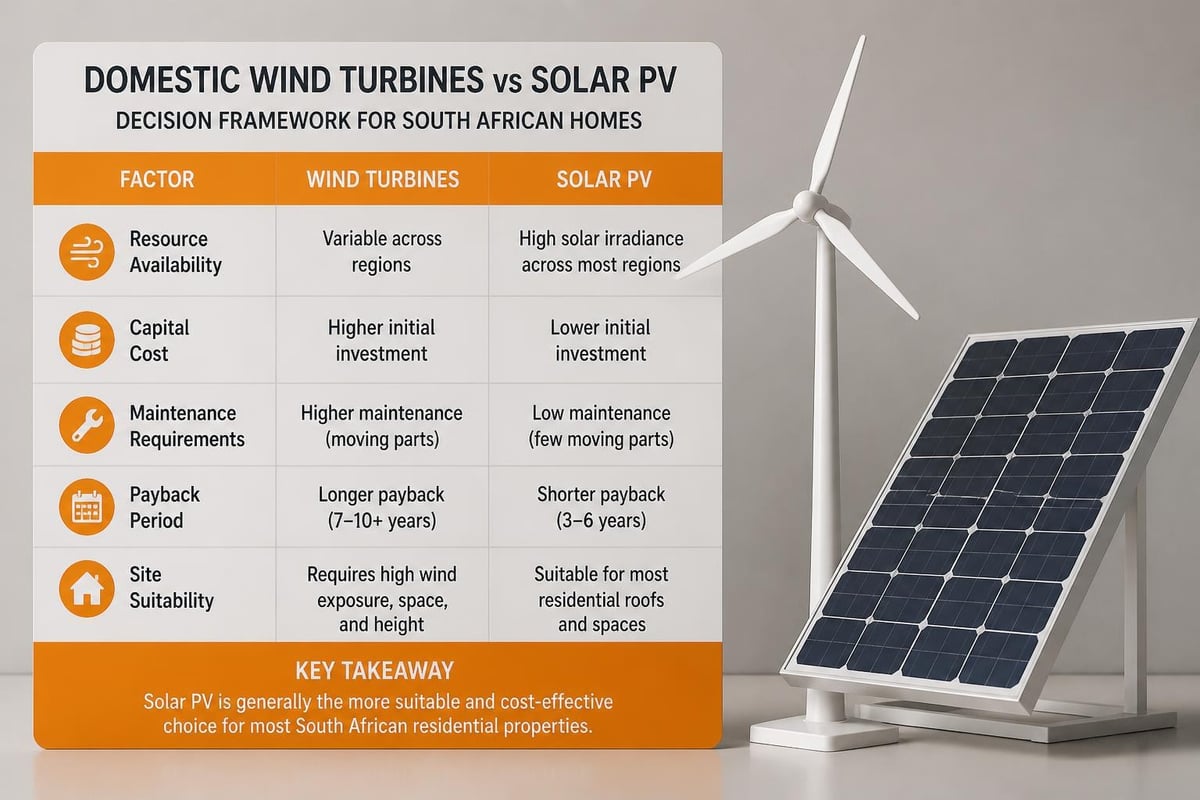
For most South African residential properties, solar photovoltaic systems currently offer superior economics, simpler installation, and lower maintenance requirements. However, properties with exceptional wind resources, limited roof space, or shading issues may find domestic wind turbines economically competitive or superior.
Future Outlook for Domestic Wind in South Africa
The domestic wind turbine market in South Africa remains modest compared to solar photovoltaic adoption, but several factors may influence future growth trajectories. Continued electricity price increases improve the economic case for all renewable technologies, whilst persistent load shedding creates demand for reliable on-site generation.
Technological improvements in turbine efficiency, noise reduction, and smart grid integration continue advancing. Vertical-axis wind turbines (VAWTs), whilst currently less efficient than traditional horizontal-axis designs, show promise for urban applications with turbulent, multi-directional wind patterns.
Policy developments, including potential feed-in tariff improvements or residential renewable energy incentives, could accelerate adoption. However, streamlined permitting processes and standardised grid connection requirements would likely prove more impactful than financial incentives alone.
Domestic wind turbines offer South African homeowners an alternative pathway to renewable energy adoption, particularly suited to properties with strong, consistent wind resources. Whilst solar photovoltaic systems currently dominate residential renewable energy for compelling economic and practical reasons, wind technology fills specific niches where solar proves less effective. Whether you're exploring wind, solar, or integrated hybrid systems, INFOLED provides comprehensive renewable energy engineering services across Southern Africa, from initial feasibility assessment through design, installation, and ongoing maintenance, helping residential and commercial clients reduce electricity costs whilst advancing energy independence and sustainability objectives.
Next Step
Need help with your energy strategy?
Speak to INFOLED about solar, storage, EV charging, service agreements or system performance.