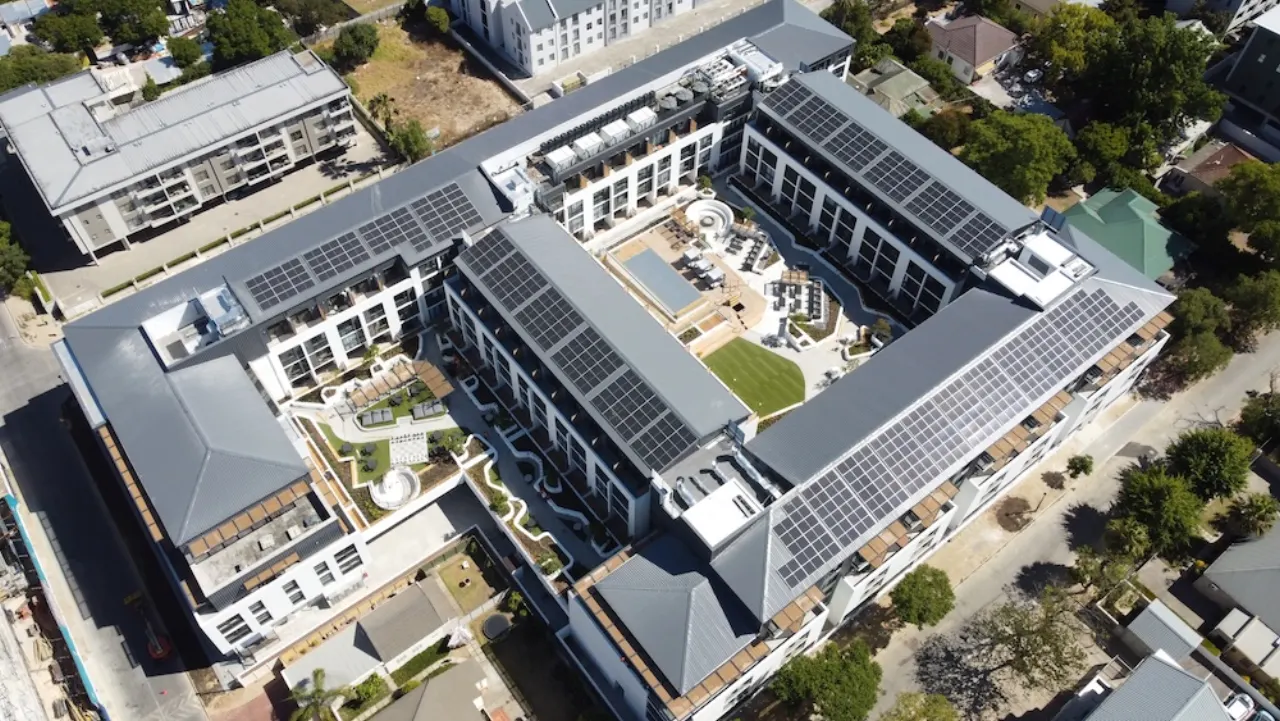
Modern organisations across Southern Africa face mounting pressure to reduce operational costs whilst meeting ambitious sustainability targets. Energy consumption monitoring has emerged as the cornerstone technology enabling businesses to achieve both objectives simultaneously. By providing granular visibility into energy usage patterns, these systems empower facility managers and executives to make data-driven decisions that directly impact the bottom line and environmental footprint.
The landscape of energy management has transformed dramatically over recent years, with smart metering infrastructure replacing legacy measurement approaches. South African enterprises now have access to sophisticated monitoring platforms that deliver real-time insights, predictive analytics and automated reporting capabilities that were unimaginable a decade ago.
Understanding Energy Consumption Monitoring Fundamentals
Energy consumption monitoring encompasses the systematic measurement, analysis and reporting of electricity usage across facilities, equipment and processes. Unlike traditional utility billing that provides monthly aggregated data, modern monitoring systems capture granular information at intervals ranging from seconds to minutes.
Core Components and Architecture
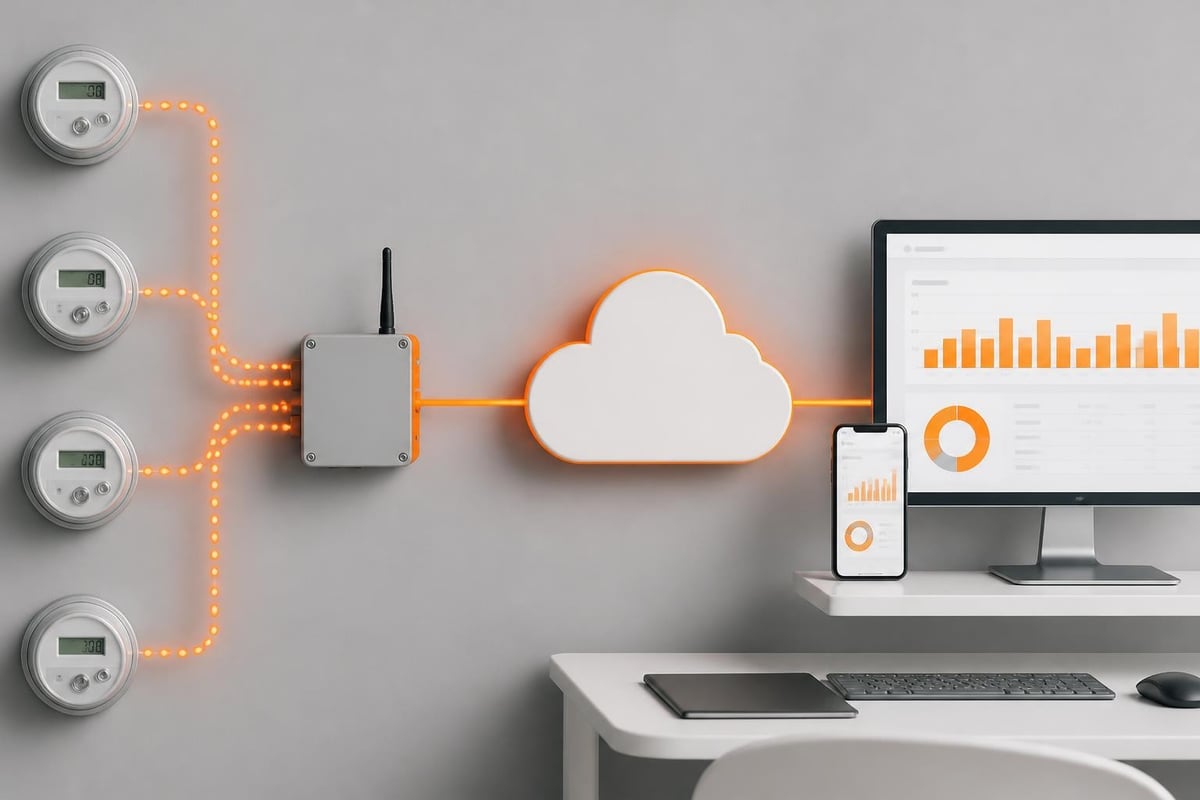
A comprehensive monitoring solution comprises several integrated elements working in concert. Smart meters form the foundation, collecting high-resolution consumption data at strategic measurement points throughout a facility. These devices communicate wirelessly or via hardwired connections to central data concentrators that aggregate and process information.
The data acquisition layer connects to cloud-based analytics platforms where advanced algorithms identify patterns, anomalies and optimisation opportunities. Modern systems align with ISO 50001 energy management standards, ensuring measurement practices meet international best practices for organizational energy programmes.
Key technical specifications to consider:
- Measurement accuracy (typically ±0.5% for revenue-grade meters)
- Sampling frequency (1-second to 15-minute intervals)
- Communication protocols (Modbus, BACnet, MQTT)
- Data storage capacity and retention periods
- Integration capabilities with existing building management systems
Measurement Granularity and Hierarchy
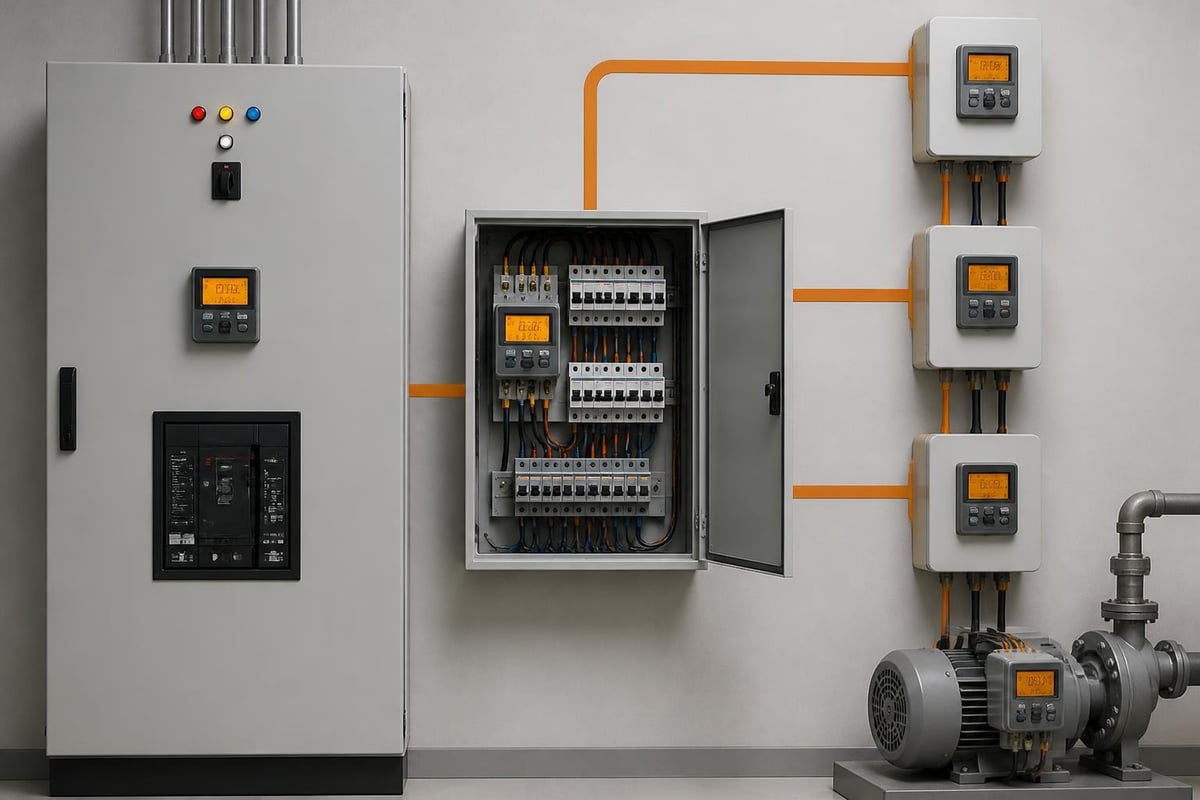
Effective energy consumption monitoring requires strategic placement of meters across multiple levels. Main incomer metering tracks total facility consumption, whilst sub-meters monitor specific departments, production lines or equipment categories. This hierarchical approach enables drill-down analysis from portfolio level to individual asset performance.
The IEEE P3005.7 standard provides detailed guidance on metering locations, techniques and power quality considerations for industrial and commercial facilities. Following these recommendations ensures measurement infrastructure delivers actionable intelligence rather than merely collecting data.
Business Benefits and Return on Investment
Organizations implementing robust monitoring programmes typically achieve rapid payback through multiple value streams. Direct cost savings from identifying and eliminating energy waste represent the most immediate benefit, but strategic advantages extend far beyond simple expense reduction.
Quantifiable Financial Returns
South African commercial facilities commonly reduce electricity consumption by 10-20% within the first year following monitoring system deployment. These savings translate directly to improved operating margins, particularly significant given the rising cost of grid electricity and municipal tariffs.
| Savings Category | Typical Impact | Payback Contribution |
|---|---|---|
| Equipment optimization | 5-12% reduction | 35-45% |
| Demand charge management | 8-15% reduction | 25-35% |
| Power factor correction | 2-5% reduction | 10-15% |
| Behavioral changes | 3-8% reduction | 15-20% |
Beyond operational savings, monitoring data proves invaluable when evaluating renewable energy investments. Detailed load profiles enable accurate sizing of solar PV arrays and battery storage systems, preventing costly over-specification whilst ensuring adequate capacity. Organizations exploring commercial battery storage solutions require precise consumption data to optimize system design and financial modelling.
Strategic Advantages for ESG and Compliance
Energy consumption monitoring forms the evidential foundation for environmental, social and governance reporting. Stakeholders increasingly demand transparent documentation of carbon emissions, energy efficiency improvements and progress toward Net Zero commitments.
Monitoring systems support:
- Scope 2 greenhouse gas emissions calculations
- Science-based target tracking and verification
- CDP and TCFD climate disclosure requirements
- Internal carbon pricing and allocation programmes
- Tenant and departmental energy billing accuracy
The European Commission's guidance on electricity metering interoperability demonstrates the global regulatory momentum toward standardized consumption data reporting, a trend South African enterprises should anticipate in local policy development.
Implementation Strategies and Best Practices
Successful deployment requires thoughtful planning that balances technical requirements with organizational capabilities and objectives. Rushing implementation without proper scoping commonly results in underutilized systems that fail to deliver anticipated returns.
Conducting Preliminary Energy Assessments
The implementation journey begins with comprehensive energy audits identifying major consumption categories, load patterns and improvement opportunities. These assessments inform metering strategy by highlighting which circuits, equipment groups and time periods warrant detailed monitoring.
Walk-through surveys document existing electrical infrastructure, available communication pathways and potential meter installation locations. This groundwork prevents costly redesigns during deployment and ensures compatibility between monitoring hardware and facility electrical systems.
Professional energy management services accelerate the assessment phase whilst ensuring no critical measurement points are overlooked. Experienced practitioners recognize subtle indicators of energy waste that may escape untrained observers.
Meter Selection and Placement Strategy
Choosing appropriate metering technology depends on application requirements, existing infrastructure and budget constraints. Revenue-grade meters meeting SANS 1524 standards suit tenant billing and reconciliation, whilst lower-cost monitoring-grade devices adequately serve internal optimization programmes.
- Identify critical measurement points (main incomer, major feeders, high-load equipment)
- Determine required measurement parameters (kWh, kVA, power factor, harmonics)
- Evaluate communication infrastructure availability and reliability
- Select meter models compatible with chosen analytics platform
- Develop installation schedule minimizing operational disruption
- Plan commissioning procedures and baseline data collection
The U.S. Department of Energy's commercial building performance monitoring guidance offers valuable technical frameworks applicable across diverse facility types, though local electrical standards and practices must always take precedence.
Advanced Analytics and Actionable Insights
Raw consumption data holds little value until transformed into actionable intelligence through sophisticated analysis. Modern platforms employ artificial intelligence and machine learning algorithms that automatically detect anomalies, forecast future consumption and recommend optimization actions.
Real-Time Monitoring and Alerting
Continuous data streams enable immediate identification of unusual consumption patterns indicating equipment malfunction, process deviation or unauthorized usage. Configurable alerts notify facility managers via SMS, email or mobile applications when predefined thresholds are exceeded.
This capability proves particularly valuable for detecting issues like:
- HVAC systems running outside scheduled hours
- Compressed air leaks causing continuous compressor operation
- Refrigeration equipment struggling due to failing components
- Production line inefficiencies requiring maintenance intervention
- Power quality disturbances threatening sensitive electronics
Alert configuration parameters:
- Consumption thresholds (absolute or percentage variance)
- Time-based rules (working hours vs. non-production periods)
- Rate of change limits (sudden load increases or decreases)
- Power quality metrics (voltage, frequency, harmonics)
- Demand forecasting and peak warning notifications
Benchmarking and Performance Tracking
Normalizing consumption data against production output, weather conditions, occupancy or other relevant variables enables meaningful performance comparison across time periods and facilities. Energy intensity metrics (kWh per unit produced, per square meter, per occupant) reveal efficiency trends that raw consumption figures obscure.
Portfolio managers benefit enormously from comparative analytics identifying top and bottom performers. Understanding why certain locations achieve superior efficiency guides knowledge transfer and continuous improvement initiatives across the organization.
The ENERGY STAR Portfolio Manager demonstrates the power of benchmarking for building performance evaluation, offering programmatic access to standardized metrics and greenhouse gas tracking methodologies applicable in South African contexts.
Integration with Renewable Energy Systems
Energy consumption monitoring becomes exponentially more valuable when coordinated with on-site generation and storage assets. The granular load profiles these systems capture enable sophisticated optimization of solar PV production, battery dispatch strategies and grid interaction patterns.
Solar PV Performance and Consumption Matching
Understanding minute-by-minute consumption patterns allows precise evaluation of solar self-consumption rates versus grid export volumes. This analysis directly informs financial modelling for proposed solar installations, ensuring accurate payback calculations that account for time-of-use tariff structures.
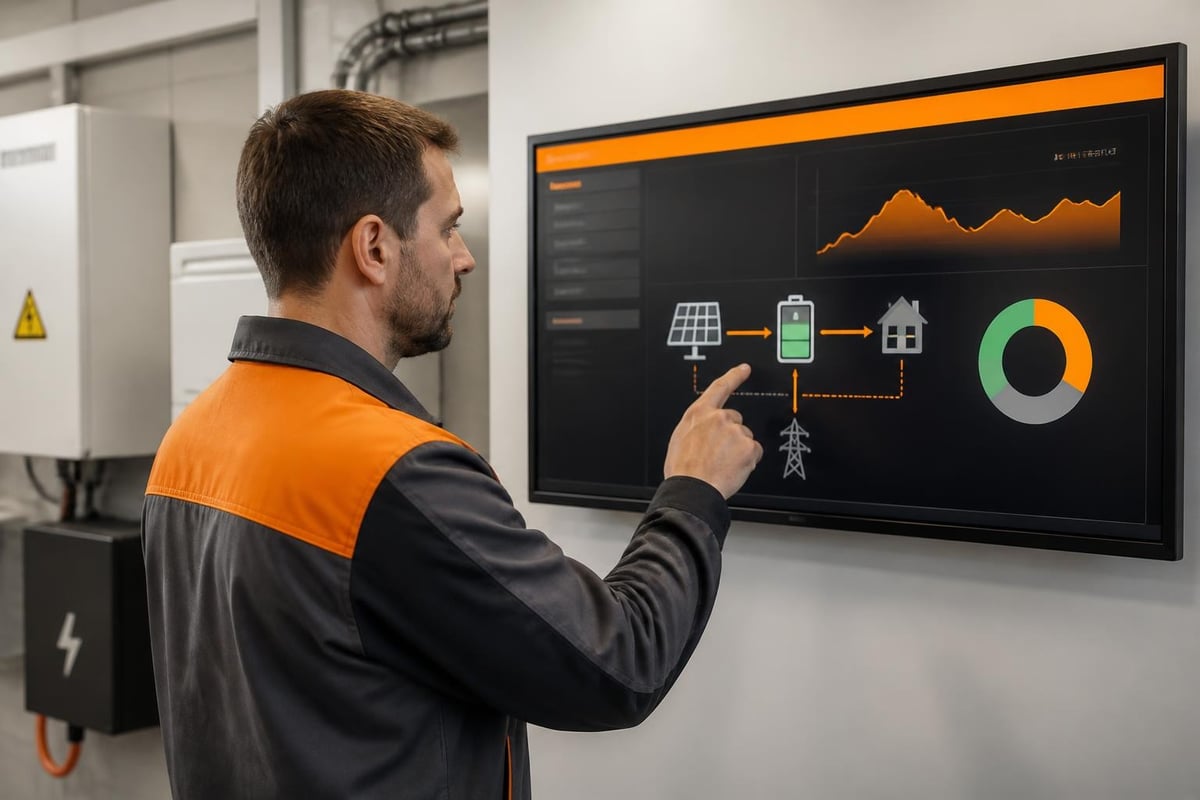
Operating facilities with existing solar arrays benefit from monitoring systems that track both generation and consumption simultaneously. Comparing actual performance against design expectations highlights underperforming arrays requiring maintenance attention or identifies operational changes that have shifted load profiles away from optimal solar alignment.
Organizations exploring solar and battery storage combinations require integrated monitoring across all energy flows. Battery management systems rely on accurate consumption forecasting to optimize charge/discharge cycles, maximizing economic returns whilst preserving battery lifespan.
Demand Management and Load Shifting
Detailed consumption visibility enables strategic load management that reduces peak demand charges and improves grid stability. Manufacturing facilities can schedule energy-intensive processes during off-peak periods or high solar production windows, substantially reducing electricity costs without sacrificing productivity.
Smart metering infrastructure from specialists like INFOLED provides the consumption monitoring foundation that enables sophisticated demand response programs, tenant billing accuracy and utility management across commercial and industrial portfolios.
| Load Management Strategy | Monitoring Requirement | Typical Savings |
|---|---|---|
| Time-of-use optimization | 15-minute interval data | 12-18% |
| Peak shaving with BESS | Real-time demand tracking | 15-25% |
| Equipment scheduling | Individual circuit monitoring | 8-15% |
| Process optimization | Sub-second measurement | 10-20% |
Technology Trends and Future Developments
The energy consumption monitoring sector continues rapid evolution driven by advances in sensor technology, wireless communication protocols and artificial intelligence capabilities. Organizations investing in monitoring infrastructure should consider emerging trends to ensure long-term system relevance.
Edge Computing and Distributed Intelligence
Traditional centralized architectures transmit all measurement data to cloud platforms for processing. Emerging edge computing approaches perform preliminary analysis at local gateways, reducing bandwidth requirements whilst enabling faster response times for time-critical applications.
Recent research published on arXiv demonstrates open-source platforms for high-resolution energy acquisition in manufacturing environments, showcasing modular hardware and software architectures that balance cost, performance and flexibility. These innovations democratize access to sophisticated monitoring previously limited to enterprises with substantial budgets.
Predictive Analytics and Machine Learning
Beyond reactive anomaly detection, next-generation platforms employ predictive models that forecast equipment failures, consumption trends and optimization opportunities before they manifest. These capabilities transform monitoring from diagnostic tools into strategic planning assets.
Machine learning applications include:
- Equipment remaining useful life prediction
- Consumption forecasting for procurement optimization
- Automated baseline adjustment for commissioning verification
- Fault detection and diagnostics for complex HVAC systems
- Occupancy pattern recognition for lighting and comfort optimization
Overcoming Implementation Challenges
Despite compelling benefits, organizations frequently encounter obstacles during monitoring system deployment. Anticipating these challenges and developing mitigation strategies improves implementation success rates and accelerates time-to-value.
Data Quality and Connectivity Issues
Unreliable communication infrastructure represents the most common technical barrier. Wireless signal interference, inadequate network coverage and incompatible protocols between legacy equipment and modern meters complicate data collection.
Thorough site surveys identifying connectivity challenges before meter procurement prevent costly remediation. Hybrid approaches combining cellular, Wi-Fi and hardwired connections provide redundancy ensuring continuous data flow even when individual pathways fail.
Organizational Change Management
Technology represents only half the monitoring equation. Successful programmes require organizational commitment to act upon insights generated by monitoring systems. Data without action delivers no value.
- Secure executive sponsorship and resource allocation
- Define clear roles and responsibilities for data analysis
- Establish regular review cadences and performance metrics
- Develop standard operating procedures for responding to alerts
- Integrate monitoring insights into capital planning processes
- Celebrate and communicate early wins building momentum
Companies with established service level agreements for energy system maintenance can extend these frameworks to encompass monitoring infrastructure, ensuring sustained performance and continuous optimization.
Selecting Monitoring Solutions and Partners
The South African market offers diverse monitoring technologies ranging from simple plug-and-play devices to enterprise-grade platforms supporting thousands of measurement points. Matching solution sophistication to organizational needs and capabilities prevents both under-specification and wasteful over-engineering.
Evaluation Criteria and Decision Framework
Assessment should encompass technical capabilities, commercial terms and vendor support quality. Proven experience in similar applications within relevant industry sectors indicates higher implementation success probability than generic solutions adapted from unrelated domains.
Critical vendor evaluation questions:
- What is the total cost of ownership including hardware, software licenses and ongoing support?
- How does the platform handle software updates and feature enhancements?
- What data ownership and export capabilities exist preventing vendor lock-in?
- Can the system scale to accommodate facility expansions or portfolio growth?
- What cybersecurity measures protect sensitive operational data?
- Does the vendor provide local technical support and spare parts inventory?
Organizations should request demonstration projects or pilot deployments in representative facilities before committing to portfolio-wide rollouts. Real-world performance under actual operating conditions reveals capabilities and limitations that laboratory specifications obscure.
Integration with Existing Systems
Monitoring platforms delivering maximum value integrate seamlessly with enterprise resource planning, building management and maintenance management systems. This interoperability enables automated workflows where monitoring insights trigger work orders, update production schedules or adjust HVAC setpoints without manual intervention.
South African facilities increasingly implement comprehensive renewable energy management strategies that coordinate multiple technologies. Energy consumption monitoring forms the intelligence layer enabling these integrated approaches, providing the visibility required to optimize interactions between solar, storage, backup generation and grid connections.
Energy consumption monitoring has evolved from a luxury reserved for large enterprises into an essential capability for any organization serious about cost control and sustainability performance. The combination of falling technology costs, rising electricity tariffs and increasing stakeholder scrutiny of environmental credentials makes monitoring infrastructure investments compelling across commercial, industrial and even residential applications. INFOLED delivers turnkey monitoring solutions integrated with solar PV, battery storage and smart metering systems, enabling Southern African organizations to achieve measurable reductions in electricity costs whilst advancing toward Net Zero objectives through intelligent, data-driven energy management.
Next Step
Need help with your energy strategy?
Speak to INFOLED about solar, storage, EV charging, service agreements or system performance.