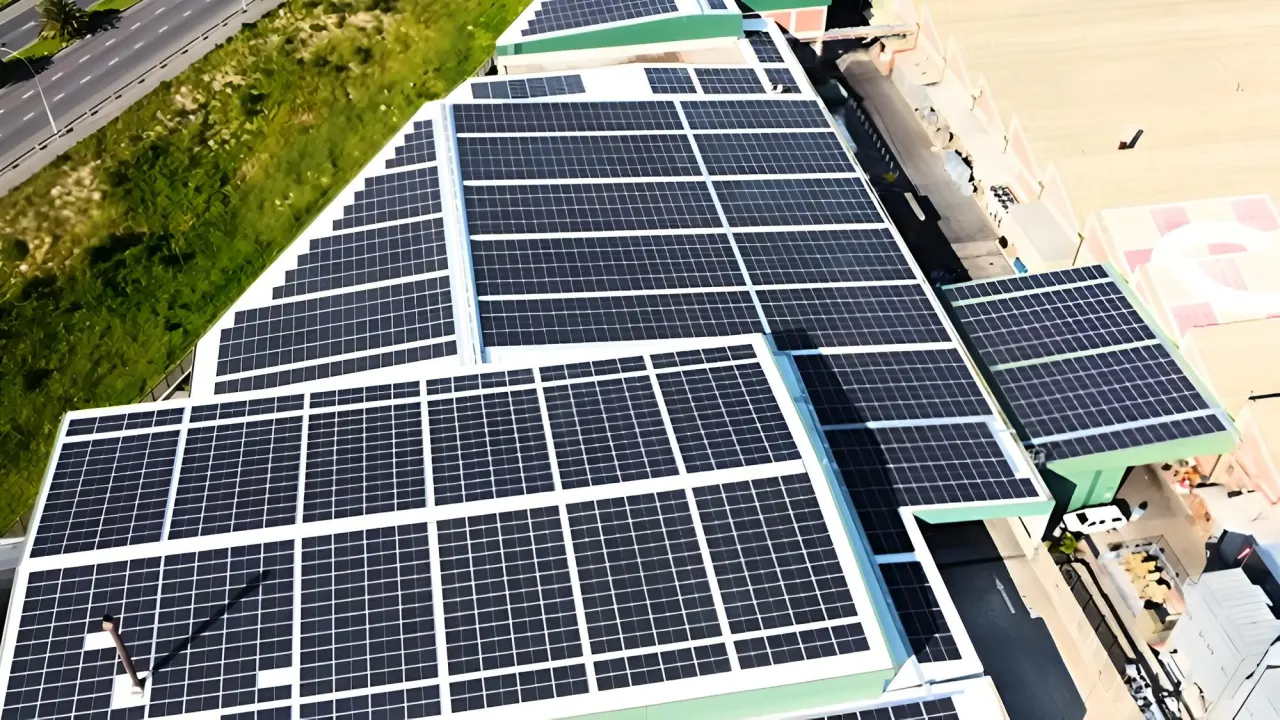
The transition to renewable energy across Southern Africa represents more than simply installing solar panels or battery systems. As businesses navigate load shedding, rising electricity costs, and ESG commitments, effective renewable energy management has become essential for extracting maximum value from clean energy investments. This sophisticated approach combines technology, data analytics, and operational strategy to ensure renewable assets deliver consistent financial returns, reliable power, and measurable carbon reductions across commercial, industrial, and agricultural operations.
Understanding Renewable Energy Management Systems
Renewable energy management encompasses the integrated monitoring, control, and optimisation of multiple energy assets working together. Unlike traditional energy infrastructure where power flows in one direction, modern renewable installations require intelligent coordination between generation, storage, consumption, and grid interaction.
Core Components of Management Systems
Modern energy management platforms integrate several critical layers:
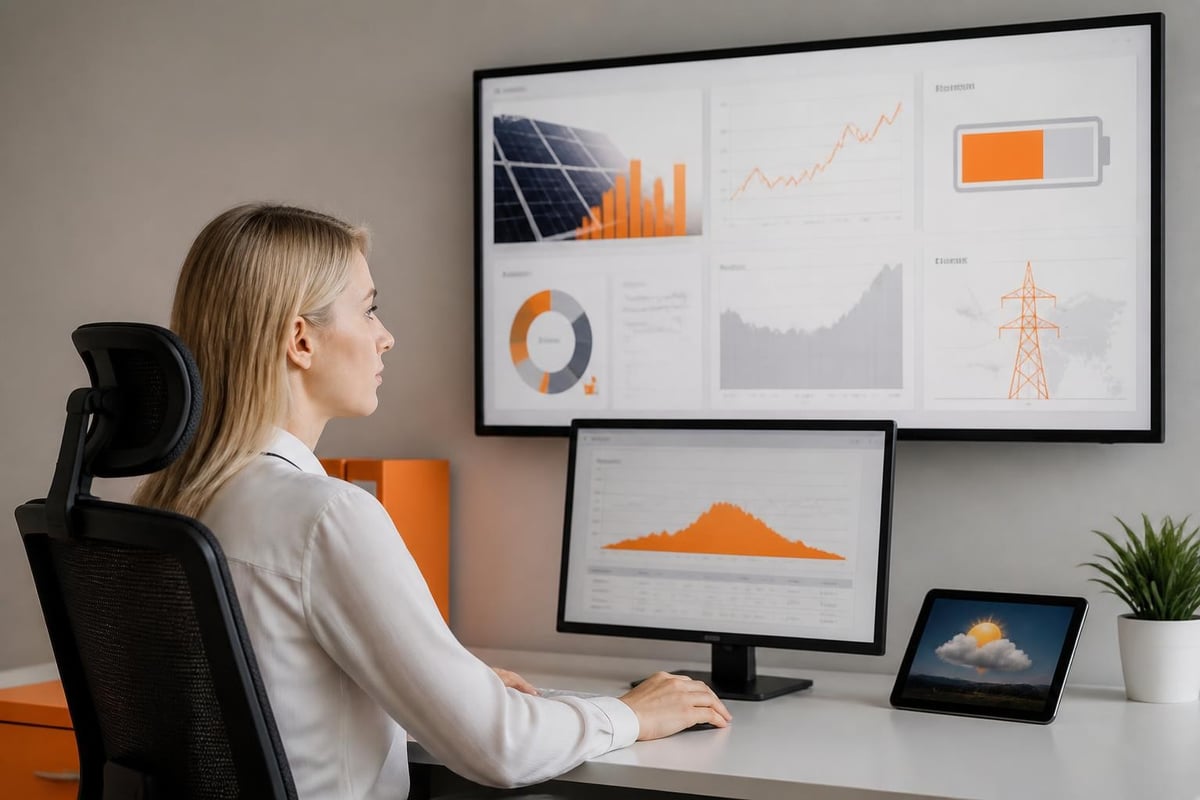
- Real-time monitoring tracks generation from solar arrays, charge levels in battery systems, and consumption patterns across facilities
- Predictive analytics forecast generation based on weather, estimate demand based on historical patterns, and optimise dispatch schedules
- Automated control manages battery charging cycles, load distribution, and grid export to maximise economic returns
- Reporting dashboards provide stakeholders with performance metrics, financial savings, and carbon reduction data
The sophistication of these systems has increased dramatically, with machine learning algorithms now capable of identifying inefficiencies that human operators would miss. Energy management platforms can detect degraded solar panels, optimise battery cycling to extend lifespan, and automatically shift loads to capitalise on time-of-use tariffs.
The Southern African Context
South Africa's energy landscape presents unique challenges that make renewable energy management particularly valuable. Eskom's tariff structures, with peak and off-peak pricing that can vary by 400%, create significant opportunities for facilities with intelligent energy storage and load management.
Load shedding schedules demand sophisticated forecasting to ensure battery reserves are adequate during planned outages. Industrial facilities in Gauteng and KwaZulu-Natal have reported production continuity improvements exceeding 98% when combining solar, BESS, and predictive management systems.
Financial Optimisation Through Active Management
The difference between passive renewable installations and actively managed systems can represent millions of rand in annual savings for commercial operations. Financial optimisation requires continuous adjustment based on multiple variables that change throughout each day.
Tariff Structure Navigation
Municipal and Eskom tariffs include numerous components that smart systems can exploit:
| Tariff Component | Management Strategy | Potential Saving |
|---|---|---|
| Time-of-Use (TOU) | Shift loads to off-peak periods using battery storage | 25-40% reduction |
| Demand charges | Peak shaving to reduce maximum kW draw | 15-35% reduction |
| Network charges | Manage power factor and reactive power | 5-15% reduction |
| Seasonal variations | Adjust battery cycling for winter/summer patterns | 10-20% improvement |
Advanced renewable energy management systems monitor these tariff components in real-time, automatically adjusting energy flows to minimise costs. A Johannesburg distribution centre reduced monthly electricity costs by R340,000 after implementing active management of their 500kWp solar array and 1MWh BESS, primarily through demand charge optimisation.
Return on Investment Acceleration
The financial case for renewable installations strengthens considerably when management systems are included from the outset. Static systems might achieve payback in 5-7 years, whilst actively managed installations frequently reach payback in 3-4 years through:
- Enhanced self-consumption rates increasing from 60-70% to 85-95%
- Reduced battery degradation extending asset life by 30-50%
- Ancillary revenue streams from grid services where regulations permit
- Avoided demand penalties from managing peak consumption
The grid-enhancing technologies review published by Nature demonstrates how sophisticated management and control systems increase the effective capacity of renewable installations, often eliminating the need for oversized systems.
Technical Architecture and Integration
Implementing effective renewable energy management requires careful integration of hardware, software, and communication protocols. The technical architecture must accommodate existing infrastructure whilst providing flexibility for future expansion.
Hardware Layer Requirements
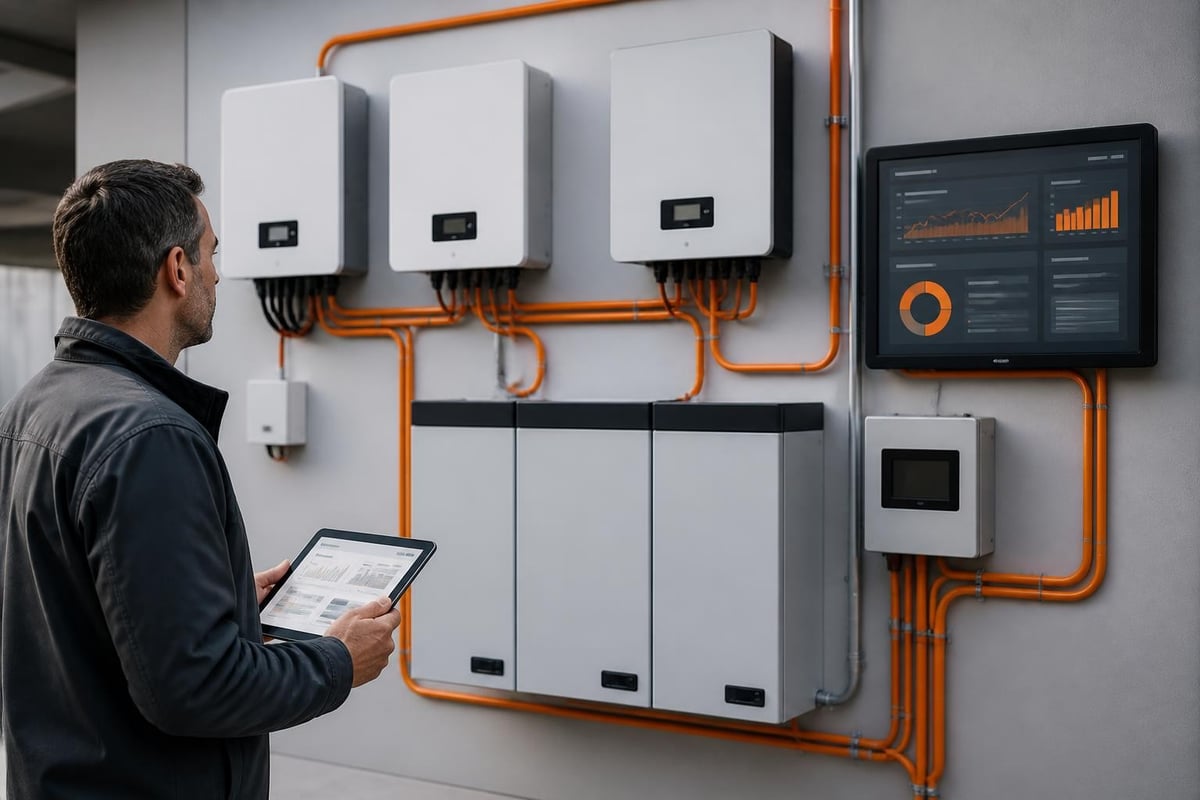
Physical infrastructure includes smart meters, inverter communications, battery management systems, and environmental sensors. Each component must communicate through standardised protocols to enable centralised control.
Modern inverters from manufacturers like SMA, Fronius, and Huawei provide Modbus TCP/IP or SunSpec-compliant interfaces that facilitate integration. Battery systems require BMS (Battery Management System) integration to monitor cell voltages, temperatures, and state-of-charge with precision.
Weather stations measuring irradiance, temperature, and wind speed feed forecasting algorithms that predict generation hours or days in advance. This capability proves essential for scheduling maintenance, planning production runs, and optimising battery charging cycles.
Software and Analytics Platforms
The software layer transforms raw data into actionable intelligence. Enterprise-grade platforms process thousands of data points per second, applying algorithms that continuously optimise system performance.
Energy monitoring and AI analytics capabilities enable facilities to identify consumption anomalies, forecast generation with 95%+ accuracy, and automate responses to grid events or tariff changes. Integration with building management systems (BMS) allows coordination between HVAC, lighting, and renewable assets to minimise total facility energy costs.
Operational Strategies for Maximum Performance
Technical capability only delivers value when paired with sound operational strategies. Different facilities require different approaches based on their consumption profiles, available renewable resources, and business objectives.
Load Shifting and Peak Shaving
Commercial and industrial facilities face substantial demand charges based on their highest 30-minute average consumption during peak periods. Renewable energy management systems can reduce these charges through strategic battery discharge.
A Cape Town manufacturing plant with 800kWp solar and 600kWh battery storage implemented a peak shaving strategy that limited grid draw to 250kW during Eskom peak periods (07:00-10:00 and 18:00-20:00). The facility reduced demand charges from R180,000 to R68,000 monthly, achieving R1.34 million in annual savings.
Forecasting and Scheduling
Accurate forecasting enables proactive rather than reactive management. IEA Wind recommended practices for renewable forecasting demonstrate methodologies applicable to solar installations, particularly for large-scale commercial arrays where production variability impacts operations.
Manufacturing facilities use forecasts to schedule energy-intensive processes during high solar generation periods. Agricultural operations coordinate irrigation pumping with expected solar output, whilst cold storage facilities pre-cool during off-peak periods to reduce consumption during expensive peak windows.
Battery Cycling Optimisation
Battery lifespan directly correlates with depth-of-discharge (DoD) and cycle count. Effective renewable energy management balances immediate financial returns against long-term asset preservation.
Lithium-ion batteries cycling between 20-80% state-of-charge can achieve 8,000-10,000 cycles, whilst full 0-100% cycling might limit life to 3,000-4,000 cycles. Smart systems calculate optimal cycling strategies based on electricity prices, ensuring batteries are used when financial benefit justifies marginal degradation.
The comprehensive review of energy storage system roles published in Electric Power Systems Research details control strategies that extend battery life whilst maximising grid services and economic returns.
Grid Interaction and Regulatory Compliance
As renewable penetration increases across South Africa's grid, the relationship between distributed generation and utility networks becomes increasingly complex. Renewable energy management systems must ensure compliance whilst capitalising on opportunities for grid participation.
SSEG Registration and Compliance
NERSA's Small-Scale Embedded Generation (SSEG) regulations require registration for systems exceeding 1MVA or those exporting to the grid. Management systems must monitor and log export volumes, maintain power quality standards, and respond to grid events as specified by municipal connection agreements.
Anti-islanding protection, power factor management, and voltage regulation all require active control that manual systems cannot provide. Automated compliance reporting reduces administrative burden whilst ensuring facilities meet all regulatory obligations.
Future Grid Services Participation
International markets demonstrate substantial revenue opportunities from providing grid services like frequency regulation, voltage support, and capacity firming. Whilst South Africa's regulatory framework remains under development, forward-thinking renewable energy management systems are being designed with these capabilities in mind.
ERCOT's operational resource adequacy documentation illustrates how markets with high renewable penetration create value streams for flexible resources. South African facilities investing in capable management systems position themselves to capitalise as local markets mature.
EV Charging Integration and Sector Coupling
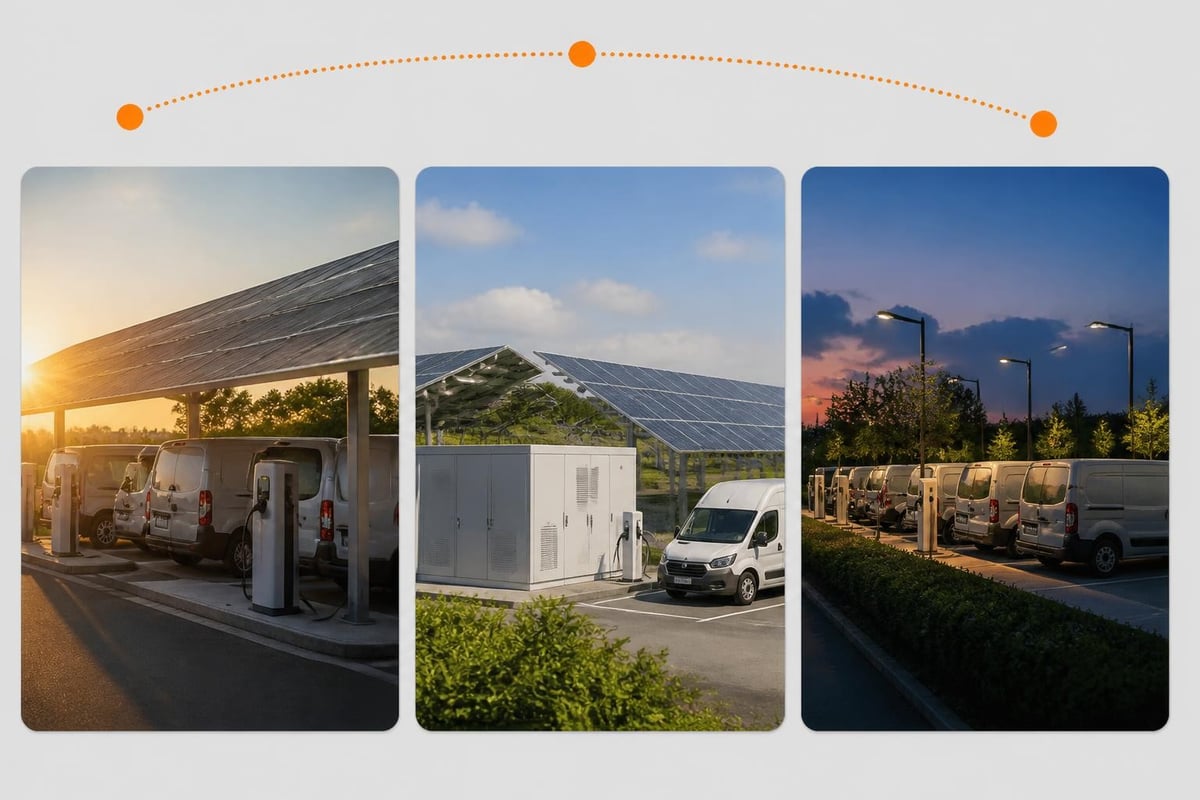
Electric vehicle adoption across commercial fleets introduces new complexity and opportunity for renewable energy management. Coordinating EV charging with solar generation and battery storage represents the next frontier in optimisation.
Managed Charging Strategies
Unmanaged EV charging can create new demand peaks that increase electricity costs. Smart management systems coordinate charging sessions with available solar generation and off-peak tariff periods.
- Solar-prioritised charging directs vehicles to charge during peak solar production hours
- Load balancing distributes available power across multiple charging points to avoid demand spikes
- Time-shift charging delays sessions until off-peak periods when batteries can supplement solar
- Vehicle-to-building (V2B) uses EV batteries as additional storage during grid outages
The comparative study on grid-integrated solutions for EV charging demonstrates that coordinated charging with renewables and storage reduces infrastructure costs by 30-45% compared to standalone charging installations.
A Durban logistics company with 50 delivery vehicles installed 150kWp solar, 200kWh stationary storage, and 12 EV charging points under unified management. The system prioritises solar charging during the day, uses battery reserves for evening top-ups, and shifts remaining needs to off-peak periods, reducing fuel and electricity costs by R95,000 monthly.
Performance Monitoring and Continuous Improvement
Installing renewable systems represents the beginning rather than the end of the optimisation journey. Continuous monitoring identifies degradation, changing consumption patterns, and new opportunities for improvement.
Key Performance Indicators
Effective renewable energy management tracks metrics across financial, technical, and environmental dimensions:
Financial Metrics:
- Cost per kWh (total system cost divided by lifetime generation)
- Demand charge reduction percentage
- Simple payback period and internal rate of return
- Savings versus baseline consumption
Technical Metrics:
- Specific yield (kWh generated per kWp installed)
- Performance ratio (actual vs theoretical generation)
- Battery round-trip efficiency
- System availability and uptime percentage
Environmental Metrics:
- Carbon emissions avoided (tonnes CO2e)
- Renewable energy percentage of total consumption
- Grid electricity displacement rate
- Progress toward Net Zero commitments
Predictive Maintenance and Asset Health
Advanced monitoring detects issues before they cause failures. Thermal imaging identifies hot spots on solar panels, indicating failing bypass diodes or connection problems. Inverter performance monitoring reveals declining efficiency that suggests component degradation.
Battery management systems track cell balance, internal resistance, and capacity fade to predict end-of-life and schedule replacement before failure occurs. This proactive approach minimises downtime and extends overall system life.
Commercial solar installations with comprehensive monitoring typically achieve 97-99% availability compared to 92-95% for passively monitored systems, translating to 5-7% higher lifetime generation and revenue.
Integration with Building Management Systems
Holistic renewable energy management extends beyond generation and storage to encompass total facility energy consumption. Integration with building management systems (BMS) creates opportunities for coordinated optimisation.
HVAC and Thermal Load Management
Heating, ventilation, and air conditioning typically represents 40-60% of commercial building energy consumption. Smart management systems can:
- Pre-cool buildings during off-peak periods or high solar generation
- Adjust setpoints based on occupancy and electricity pricing
- Reduce HVAC load during peak tariff periods when batteries supplement critical loads
- Shift ventilation and air handling to coincide with renewable generation
A Pretoria office complex integrated their 250kWp solar system with BMS control, enabling the facility to pre-cool 2 hours before peak periods and reduce HVAC load by 70% during 18:00-20:00 peak windows, saving R47,000 monthly in demand charges.
Lighting and Non-Critical Load Control
LED lighting, although efficient, still consumes substantial power in large facilities. Management systems can dim or switch non-essential lighting during peak periods, or shift high-consumption tasks like water heating to solar production hours.
This level of integration transforms renewable installations from simple generation assets into comprehensive energy management solutions that touch every aspect of facility operations.
ESG Reporting and Carbon Accounting
Corporate sustainability commitments require accurate measurement and reporting of environmental impact. Renewable energy management systems provide the detailed data necessary for credible ESG disclosure and Net Zero planning.
Automated Carbon Tracking
Modern platforms calculate avoided emissions based on actual renewable generation and local grid carbon intensity factors. South African facilities using Eskom's published emission factors (approximately 0.95 kg CO2e per kWh) can demonstrate substantial carbon reductions.
A 1MWp solar installation generating 1,650 MWh annually avoids approximately 1,568 tonnes of CO2e emissions. When paired with battery storage that increases self-consumption from 65% to 90%, avoided emissions increase to 1,410 tonnes annually, strengthening sustainability reporting.
Stakeholder Reporting and Transparency
Automated reporting eliminates manual data collection whilst providing stakeholders with transparent, verified environmental performance data. Monthly reports can demonstrate:
- Total renewable energy generated and consumed
- Percentage of operations powered by clean energy
- Carbon emissions avoided and progress toward reduction targets
- Financial savings reinvested into additional sustainability initiatives
This transparency strengthens corporate reputation, supports sustainable finance applications, and demonstrates genuine commitment to environmental responsibility beyond greenwashing.
Challenges and Implementation Considerations
Whilst renewable energy management delivers substantial benefits, successful implementation requires addressing several practical challenges that facilities commonly encounter.
Data Integration and Legacy Systems
Many commercial and industrial facilities operate legacy systems that lack modern communication protocols. Integrating smart meters, sensors, and control systems with decades-old infrastructure requires careful planning and sometimes significant investment in middleware or gateway devices.
Facilities should conduct thorough audits of existing infrastructure before designing management systems, identifying communication gaps and upgrade requirements early in the planning process.
Cybersecurity and Network Resilience
Connected energy systems create potential cybersecurity vulnerabilities. Management platforms controlling critical infrastructure must implement robust security measures including:
- Network segmentation isolating energy systems from corporate IT
- Encrypted communications between field devices and central platforms
- Multi-factor authentication for system access
- Regular security audits and penetration testing
- Incident response plans for potential breaches
Skills and Training Requirements
Operating sophisticated renewable energy management systems requires technical expertise that many facilities lack internally. Organisations must either develop internal capabilities through training or partner with specialised service providers who offer ongoing support.
The complexity of modern systems makes comprehensive service level agreements essential, defining response times, performance guarantees, and support availability to ensure systems deliver promised benefits.
Effective renewable energy management transforms solar, battery, and EV infrastructure from standalone assets into integrated systems that deliver maximum financial, operational, and environmental value. As electricity costs continue rising and sustainability commitments intensify, the businesses that extract the most value from renewable investments will be those that prioritise intelligent management alongside physical infrastructure. INFOLED designs, installs, and maintains comprehensive renewable energy management solutions across Southern Africa, helping commercial, industrial, and agricultural clients reduce electricity costs, improve energy resilience, and achieve their ESG objectives through integrated solar, BESS, EV charging, and smart metering technologies.
Next Step
Need help with your energy strategy?
Speak to INFOLED about solar, storage, EV charging, service agreements or system performance.