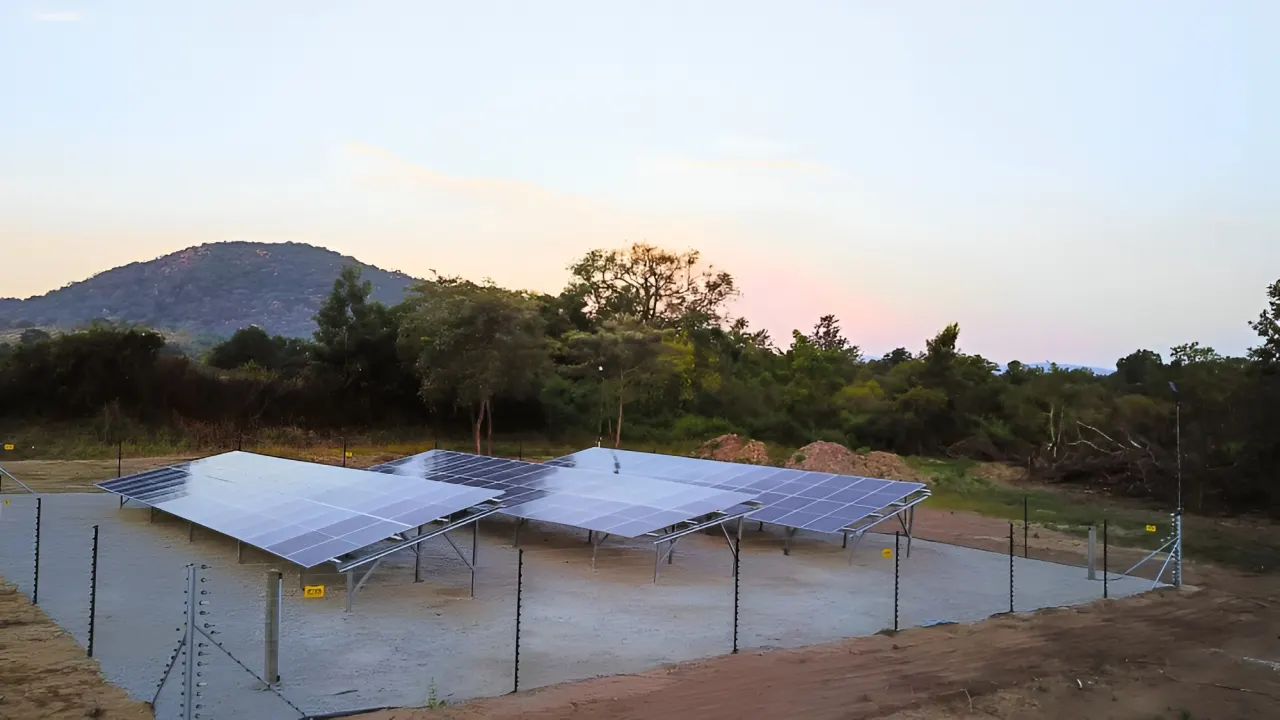
Businesses across Southern Africa are increasingly turning to commercial solar PV installations as a strategic response to rising electricity costs, grid instability, and mounting pressure to meet environmental targets. The commercial solar photovoltaic sector has matured significantly, offering proven technologies, predictable returns, and sophisticated financing models that make renewable energy accessible to organizations of all sizes. Whether you're managing a manufacturing facility, retail complex, office park, or agricultural operation, understanding the fundamentals of commercial solar PV systems is essential for making informed energy infrastructure decisions that deliver both financial and operational benefits.
Understanding Commercial Solar PV Systems
Commercial solar PV installations differ substantially from residential systems in scale, complexity, and regulatory requirements. These systems typically range from 50kW to several megawatts, designed to offset significant portions of a business's daytime electricity consumption.
The fundamental components include photovoltaic modules, inverters, mounting structures, electrical infrastructure, and monitoring systems. Modern commercial installations often integrate advanced technologies such as bifacial modules, string optimizers, and sophisticated management platforms that maximize energy generation and provide granular performance data.
System Configuration Options
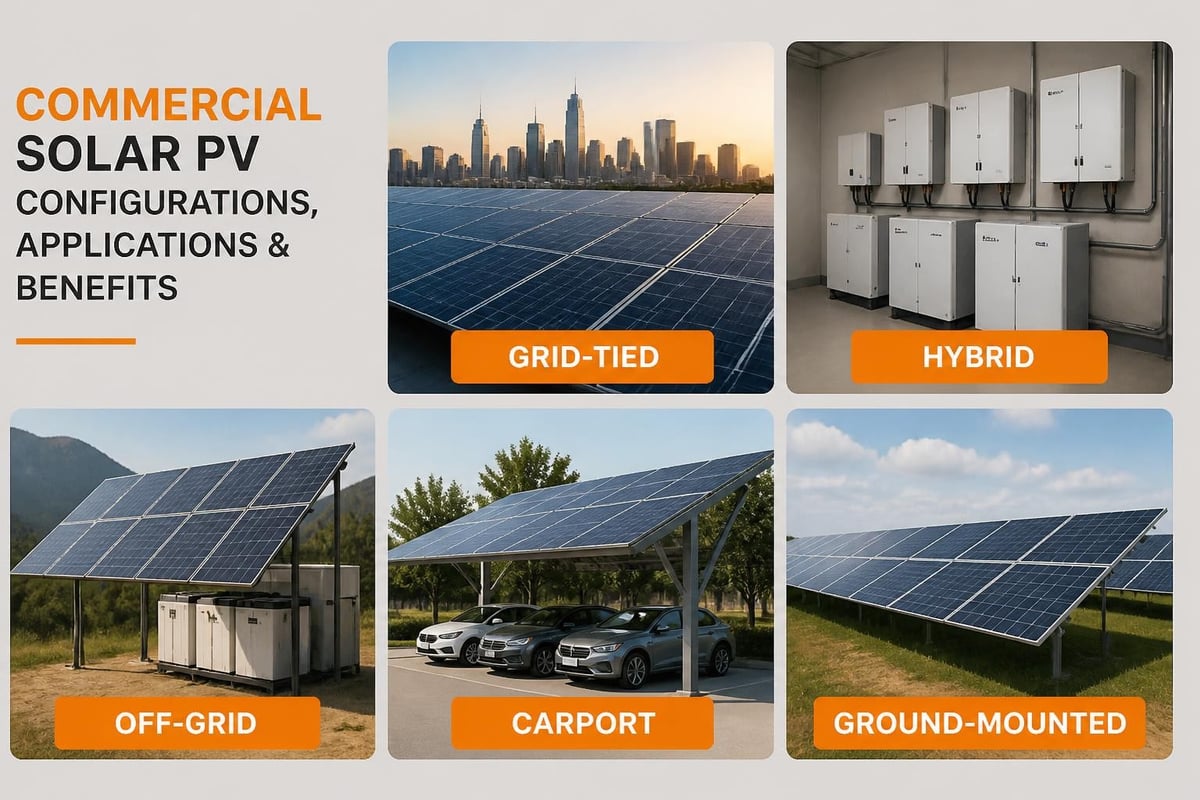
Businesses can choose from several configuration approaches depending on their energy needs and site characteristics:
- Grid-tied systems connect directly to the utility network, allowing excess generation to flow back to the grid
- Hybrid configurations combine solar generation with battery storage for enhanced resilience
- Off-grid installations provide complete energy independence in remote locations
- Carport and canopy systems utilize parking areas to generate power whilst providing shade
- Ground-mounted arrays suit properties with available land but limited roof space
The choice between these configurations depends on your operational requirements, available space, budget constraints, and strategic energy objectives. Grid-tied systems remain the most common commercial approach due to their lower initial costs and simpler regulatory compliance.
Financial Considerations and Return on Investment
The economics of commercial solar PV have transformed dramatically over the past decade. According to the U.S. Department of Energy's cost benchmarks, system costs have declined by over 70% since 2010, making solar one of the most cost-effective electricity sources available.
Capital Requirements and Cost Structure
Commercial solar PV pricing varies based on system size, complexity, and site-specific factors. Larger installations typically achieve better economies of scale, with per-watt costs decreasing as system capacity increases.
| System Size | Typical Cost Range (ZAR/Watt) | Payback Period | Annual Savings Potential |
|---|---|---|---|
| 50-100kW | R18-R22 | 4-6 years | R80,000-R160,000 |
| 100-500kW | R15-R18 | 3-5 years | R160,000-R800,000 |
| 500kW-1MW | R12-R16 | 3-4 years | R800,000-R1,600,000 |
| 1MW+ | R11-R15 | 2.5-4 years | R1,600,000+ |
These figures reflect current Southern African market conditions and assume optimal system performance with professional design and installation. Actual costs depend on factors including roof condition, electrical infrastructure upgrades, mounting complexity, and specific equipment selections.
Businesses should conduct comprehensive financial modeling that accounts for electricity price escalation, system degradation rates, maintenance costs, and tax implications. Most commercial installations achieve positive cash flow within three to five years, delivering 20-30% internal rates of return over their 25-year operational lifespan.
Design and Engineering Requirements
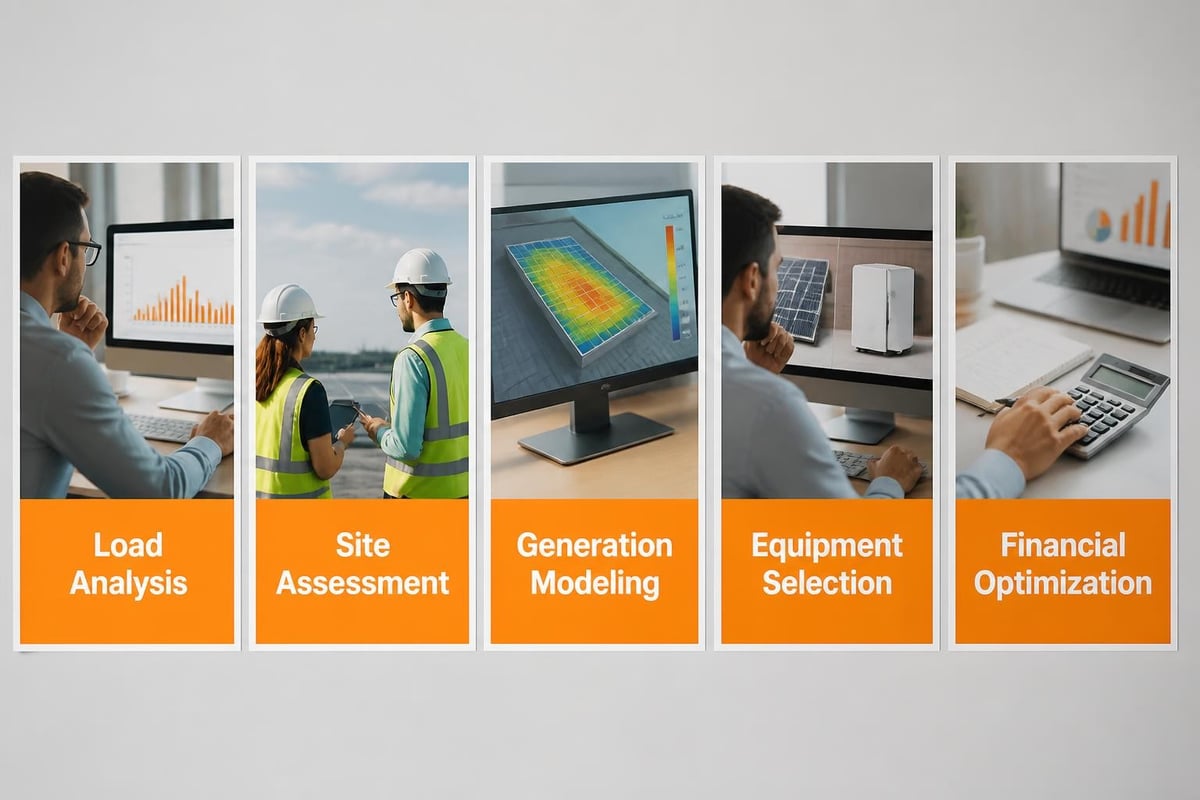
Successful commercial solar PV implementations require meticulous planning and professional engineering. The design process encompasses structural assessments, electrical load analysis, generation modeling, and regulatory compliance planning.
Site Assessment and System Sizing
Professional energy audits form the foundation of optimal system design. Engineers analyze your consumption patterns, identifying peak demand periods, seasonal variations, and load characteristics that inform sizing decisions.
Key design considerations include:
- Roof structural capacity to support additional loads including modules, mounting systems, and environmental forces
- Available installation area accounting for shading, maintenance access, and equipment placement
- Electrical infrastructure capacity to accommodate solar integration without extensive upgrades
- Grid connection requirements including utility approval processes and technical specifications
- Spatial optimization maximizing generation within physical and regulatory constraints
Research from Lawrence Berkeley National Laboratory analyzing commercial property characteristics shows that proper system sizing aligned with actual consumption patterns significantly improves project economics compared to oversized installations.
Many businesses benefit from integrating Commercial Solar PV Design services that combine technical engineering with financial modeling, ensuring systems deliver maximum value whilst meeting all regulatory and safety standards. Professional designers utilize sophisticated software to model generation profiles, optimize array configurations, and predict long-term performance under various scenarios.
Financing Models and Investment Structures
Capital constraints need not delay commercial solar PV adoption. The market offers diverse financing mechanisms that align investment structures with your organization's financial strategy and balance sheet objectives.
Traditional Ownership Models
Direct purchase remains the simplest approach, providing complete asset ownership, maximum tax benefits, and unrestricted operational control. Organizations with available capital or access to low-cost debt often prefer this route, capturing the full economic value of their solar investment.
Bank financing and specialized green lending facilities have emerged as commercial solar PV becomes increasingly recognized as bankable infrastructure. Lenders now offer competitive rates for solar projects, viewing them as low-risk assets with predictable cash flows.
Alternative Financing Structures
Several innovative models have democratized access to commercial solar:
- Power Purchase Agreements (PPAs) where third parties own and operate systems whilst businesses purchase generated electricity at predetermined rates
- Operating leases providing equipment access without capital expenditure or balance sheet impact
- Energy-as-a-Service models bundling installation, maintenance, monitoring, and performance guarantees into monthly fees
- Green bonds and sustainability-linked financing offering preferential terms for environmental projects
Each structure carries distinct tax, accounting, and operational implications. The World Resources Institute research examining commercial sector adoption highlights how financing innovation has significantly accelerated market penetration by reducing entry barriers.
Regulatory Compliance and Grid Connection
Navigating the regulatory landscape represents a critical success factor for commercial solar PV projects. Requirements vary by jurisdiction, but most installations must satisfy building codes, electrical standards, utility regulations, and environmental compliance obligations.
Grid Application Processes
Grid-tied commercial systems require formal utility approval before commissioning. Application processes typically involve:
- Preliminary design submission and technical review
- Engineering approval and connection agreements
- Meter installation or replacement with bidirectional capability
- Pre-commissioning inspection and compliance verification
- Final authorization to energize and parallel with the grid
Processing timelines range from several weeks to several months depending on system size and utility responsiveness. Professional project managers familiar with local requirements can significantly expedite approval processes and ensure first-time compliance.
Safety and Standards Compliance
Commercial installations must meet stringent electrical and safety standards. This includes proper earthing systems, arc fault protection, rapid shutdown capabilities, and appropriate signage. Professional installation teams ensure compliance with all relevant codes whilst maintaining warranty validity on equipment.
Performance Optimization and Monitoring
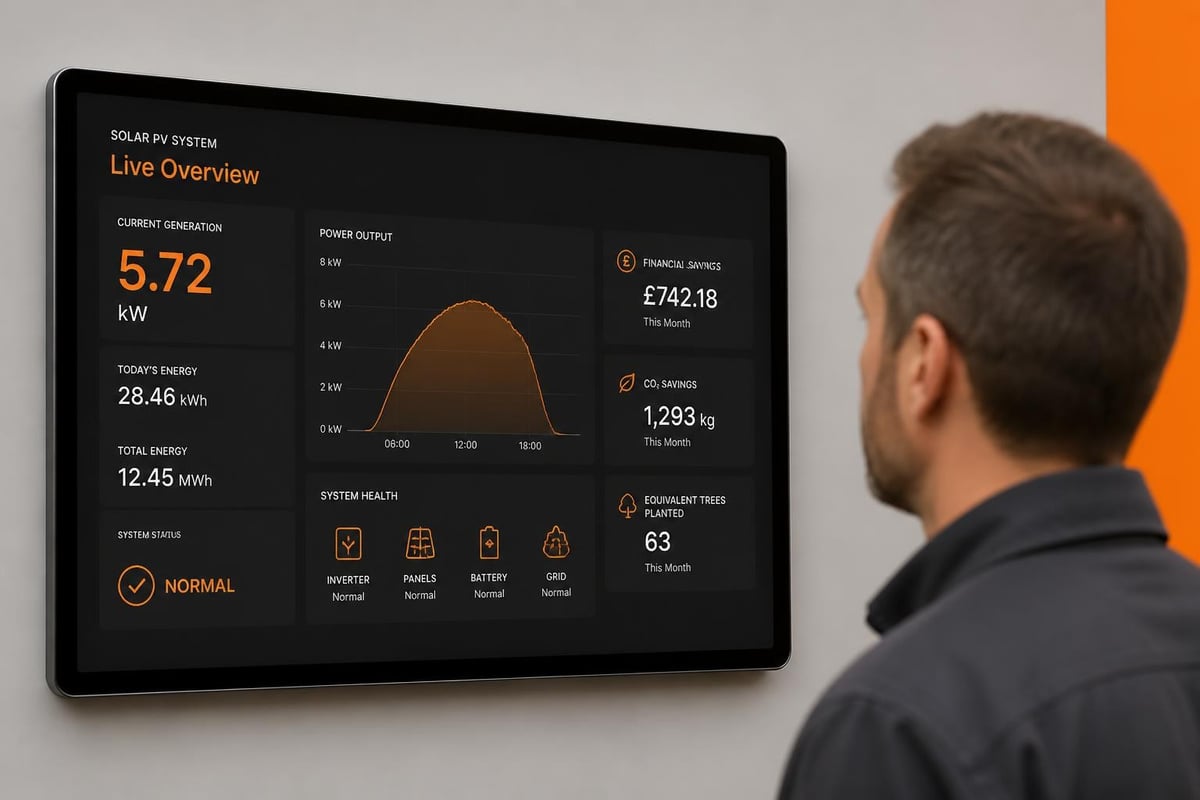
Maximizing return on your commercial solar PV investment requires ongoing performance management. Modern systems incorporate sophisticated monitoring platforms providing real-time visibility into generation, consumption, and system health.
Real-Time Performance Tracking
Advanced monitoring systems deliver granular data including:
| Metric Category | Key Performance Indicators | Business Value |
|---|---|---|
| Generation | Daily/monthly energy production, peak output, capacity factor | Revenue and savings validation |
| System Health | Inverter status, string performance, fault detection | Early issue identification |
| Environmental Impact | Carbon offset, equivalent trees planted | ESG reporting and sustainability metrics |
| Financial Performance | Cumulative savings, ROI progress, avoided costs | Investment tracking and stakeholder reporting |
Cloud-based platforms enable remote monitoring from any device, with automated alerts notifying operators of performance anomalies or system faults. This visibility ensures rapid response to issues whilst providing documentation for warranty claims and performance guarantees.
Integration with Energy Storage Systems
The convergence of commercial solar PV with battery storage has created unprecedented opportunities for energy independence, demand management, and grid service participation. Hybrid systems combine generation and storage, delivering benefits beyond what either technology achieves independently.
Battery integration enables businesses to store excess solar generation for use during peak tariff periods, significantly enhancing financial returns. Storage systems also provide backup power during grid outages, protecting operations from load shedding and supply interruptions. Research on large-scale solar PV inspection methodologies demonstrates how integrated monitoring of combined solar and storage systems improves overall asset management.
The decision to integrate storage depends on your tariff structure, criticality of operations, and capital availability. Time-of-use tariffs with significant peak/off-peak differentials typically justify battery investment, as do operations requiring high reliability where supply interruptions impose substantial costs.
Maintenance Requirements and Asset Management
Commercial solar PV systems require minimal but essential maintenance to sustain optimal performance throughout their operational life. Well-maintained installations consistently achieve 95-98% of their rated performance, whilst neglected systems can experience significant degradation and premature failures.
Preventative Maintenance Protocols
Professional maintenance programs include scheduled activities designed to identify and address issues before they impact production:
- Quarterly visual inspections checking for physical damage, soiling, vegetation encroachment, and hardware integrity
- Annual electrical testing verifying string performance, insulation resistance, and protection device functionality
- Thermal imaging surveys detecting hotspots, cell damage, and electrical anomalies invisible to visual inspection
- Cleaning schedules removing accumulated dust, bird droppings, and environmental contamination
- Inverter servicing including firmware updates, component replacement, and efficiency verification
The Global Renewables Watch dataset analyzing solar installations worldwide confirms that properly maintained commercial systems consistently outperform industry averages whilst experiencing fewer unexpected failures and longer operational lifespans.
Environmental Impact and Sustainability Credentials
Beyond financial returns, commercial solar PV delivers substantial environmental benefits that increasingly influence corporate decision-making. Organizations face growing stakeholder pressure to demonstrate environmental responsibility through measurable carbon reduction initiatives.
Quantifying Environmental Benefits
Commercial solar installations provide tangible sustainability metrics including:
- Carbon dioxide reduction measured in tonnes avoided annually
- Equivalent fossil fuel displacement quantifying coal, oil, or gas not consumed
- Water savings from reduced thermal power generation requirements
- Air quality improvements through eliminated combustion emissions
A typical 500kW commercial installation in South Africa offsets approximately 600-750 tonnes of CO₂ annually, equivalent to removing 130-160 passenger vehicles from roads. These metrics directly support ESG reporting, sustainability certifications, and Net Zero commitments.
Studies examining factors influencing solar adoption confirm that environmental benefits increasingly drive commercial decisions alongside financial considerations, particularly amongst organizations with formal sustainability commitments or stakeholder reporting obligations.
Industry-Specific Applications and Case Studies
Commercial solar PV adapts to diverse industry requirements, with sector-specific considerations influencing system design and configuration. Understanding how different industries implement solar provides valuable insights for planning your installation.
Manufacturing and Industrial Facilities
Energy-intensive manufacturing operations represent ideal candidates for large-scale commercial solar PV. These facilities typically consume substantial electricity during daylight hours, creating excellent alignment between generation and consumption.
Industrial installations often incorporate:
- Ground-mounted arrays utilizing unused land parcels
- Rooftop systems on warehouse and production buildings
- Carport installations over employee and vehicle parking
- Integration with existing backup generators and UPS systems
- Demand management strategies coordinating solar generation with production schedules
Retail and Commercial Property
Shopping centres, office parks, and retail developments leverage commercial solar PV to reduce operating costs whilst enhancing tenant value propositions. These installations frequently feature distributed systems across multiple buildings with centralized monitoring and management.
Agricultural Operations
Farming enterprises face unique opportunities and challenges. Solar systems can power irrigation pumping, cold storage, processing facilities, and farm infrastructure. Ground-mounted installations utilize marginal land unsuitable for cultivation, whilst specialized agrivoltaic designs combine crop production with electricity generation.
Technology Advances and Future Trends
The commercial solar PV sector continues evolving rapidly, with emerging technologies promising improved performance, reduced costs, and enhanced functionality. Staying informed about technological developments helps businesses make forward-looking investment decisions.
Current innovation focuses on:
- Bifacial modules capturing reflected light from mounting surfaces to boost generation by 10-20%
- Half-cut cell technology reducing resistive losses and improving shade tolerance
- Integrated string optimization maximizing individual panel performance within arrays
- Artificial intelligence platforms predicting generation patterns and optimizing consumption alignment
- Building-integrated photovoltaics seamlessly incorporating solar into architectural elements
Research on combined photovoltaic and thermoelectric systems explores advanced approaches to improving overall conversion efficiency, though such technologies remain primarily experimental in commercial applications.
The trajectory toward higher efficiency modules, longer warranties, and declining costs continues unabated. Module efficiencies now regularly exceed 21-22% for commercial-grade products, with premium offerings approaching 23-24%. Manufacturers increasingly offer 25-year performance warranties guaranteeing 85-87% of original output after a quarter-century of operation.
Risk Management and Due Diligence
Professional commercial solar PV implementation requires comprehensive risk assessment and mitigation strategies. Understanding potential challenges enables proactive management rather than reactive problem-solving.
Technical and Performance Risks
System underperformance represents the primary technical risk. Mitigation strategies include professional design utilizing validated modeling software, high-quality equipment from reputable manufacturers, expert installation by qualified teams, and comprehensive commissioning procedures.
Performance guarantees and insurance products provide additional protection. Many commercial agreements include minimum generation clauses with compensation mechanisms if systems fail to meet projections due to design or installation deficiencies.
Financial and Commercial Risks
Equipment warranties, installer longevity, and changing regulatory environments all present financial considerations. Thorough due diligence on contractors, preference for established equipment brands, and conservative financial modeling help manage these exposures.
| Risk Category | Mitigation Strategy | Implementation Approach |
|---|---|---|
| Technical Performance | Professional design and quality equipment | Engage experienced engineering firms, specify tier-1 components |
| Installation Quality | Certified installers with proven track records | Verify credentials, inspect previous projects, check references |
| Equipment Failure | Comprehensive warranties and insurance | Minimum 10-year inverter, 25-year module warranties |
| Regulatory Changes | Conservative financial modeling | Assume reduced incentives, model multiple scenarios |
| Contractor Stability | Established companies with local presence | Prioritize firms with 5+ years operation, local support infrastructure |
Procurement and Contractor Selection
Selecting the right implementation partner significantly influences project outcomes. The commercial solar PV market includes diverse participants ranging from specialized boutique firms to large multinational corporations, each offering distinct capabilities and value propositions.
Evaluating Potential Partners
Comprehensive contractor assessment should examine:
- Technical capabilities including in-house engineering, design software proficiency, and installation expertise
- Project experience specifically with commercial-scale systems in your industry sector
- Financial stability indicating capacity to honor warranties and provide ongoing support
- Local presence ensuring responsive service and maintenance throughout system life
- Quality assurance processes governing design review, installation supervision, and commissioning procedures
Request detailed proposals from multiple qualified contractors, ensuring comparisons account for equipment specifications, warranty terms, performance guarantees, and post-installation support rather than focusing solely on upfront pricing.
Commercial solar PV represents a proven, financially attractive investment that delivers energy cost reduction, operational resilience, and measurable environmental benefits for businesses across Southern Africa. The combination of declining costs, mature technologies, flexible financing, and growing regulatory support creates an exceptionally favorable environment for commercial adoption in 2026. INFOLED brings specialized expertise in designing, financing, installing, and maintaining commercial solar PV systems tailored to your specific operational requirements and strategic objectives, helping businesses across the region transition to intelligent, sustainable energy solutions that support both bottom-line performance and ESG commitments.
Next Step
Need help with your energy strategy?
Speak to INFOLED about solar, storage, EV charging, service agreements or system performance.