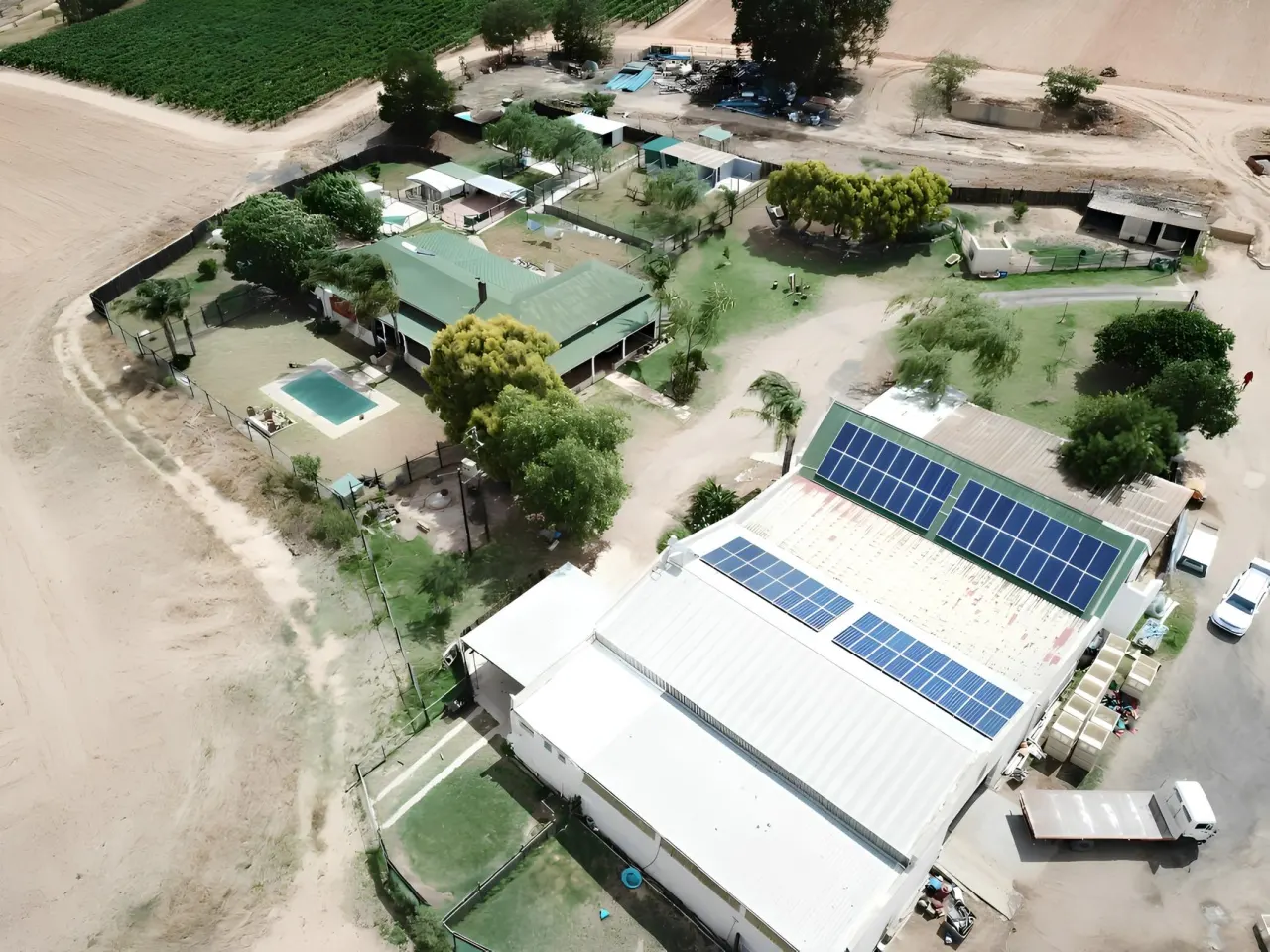
Understanding how a solar inverter with solar panel systems function together is essential for anyone considering renewable energy in South Africa. The solar inverter serves as the critical bridge between the direct current (DC) electricity generated by your panels and the alternating current (AC) electricity that powers your appliances, machinery, and lighting. Without this conversion process, the energy harvested from sunlight would remain unusable for standard electrical equipment. As load shedding continues to challenge South African businesses and households, comprehending the relationship between these components becomes increasingly important for energy resilience and cost reduction.
Understanding Solar Inverter Functionality
A solar inverter with solar panel integration represents the heart of any photovoltaic system. The inverter performs several crucial functions beyond simple DC to AC conversion. It manages power output, monitors system performance, and ensures safety compliance with grid connection standards.
Modern inverters incorporate maximum power point tracking (MPPT) technology, which continuously adjusts electrical operating conditions to extract the maximum available power from solar panels under varying weather conditions. This optimization becomes particularly valuable in South Africa's diverse climate zones, where cloud cover, temperature fluctuations, and seasonal variations significantly impact solar generation.
Key Inverter Technologies
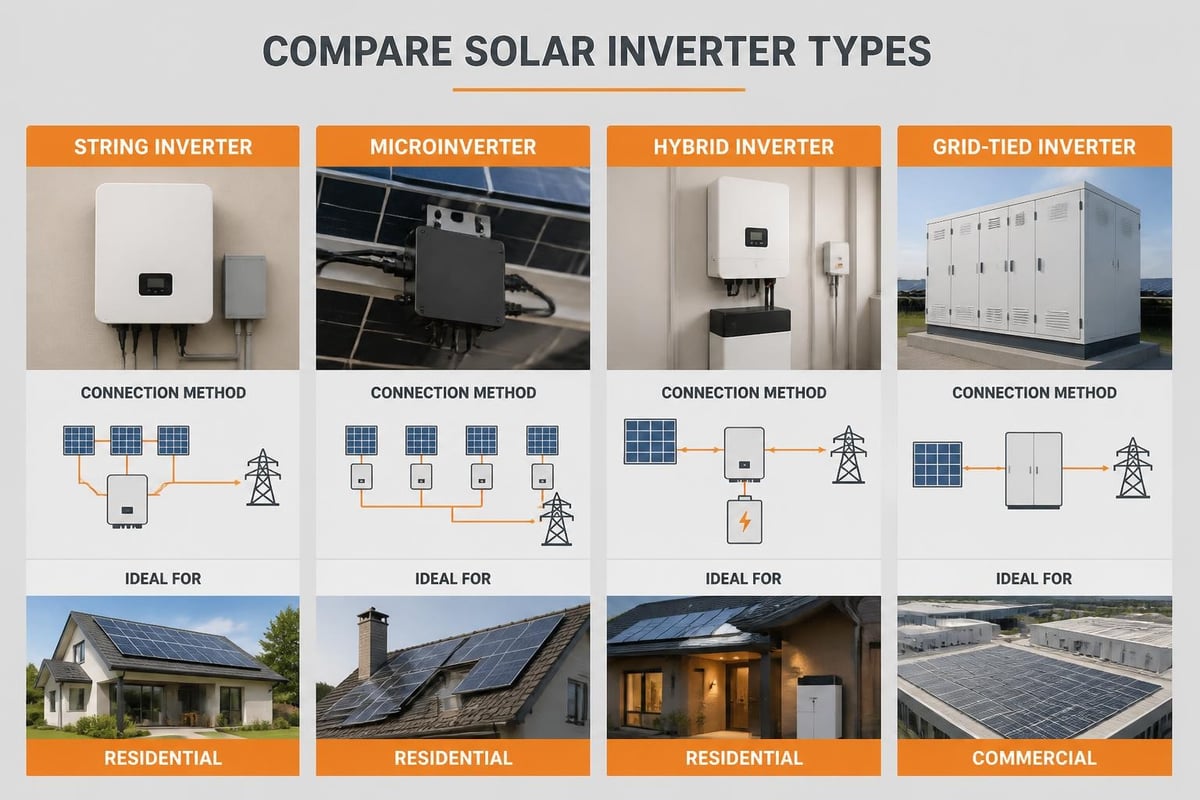
Different inverter technologies suit different applications and installation scenarios:
- String inverters connect multiple panels in series, offering cost-effective solutions for commercial rooftops with minimal shading
- Microinverters attach to individual panels, providing panel-level optimization and monitoring ideal for complex roof layouts
- Hybrid inverters integrate battery storage capabilities, enabling load shedding protection and energy independence
- Grid-tied inverters synchronize with Eskom's network, allowing excess energy export and grid support functions
The choice between these technologies depends on site conditions, budget constraints, and performance requirements. For instance, a manufacturing facility in Johannesburg with large, unshaded roof areas typically benefits from string inverters, whilst a residential property in Cape Town with multiple roof planes and shading from neighbouring trees might achieve better results with microinverters.
System Sizing and Compatibility
Properly matching a solar inverter with solar panel arrays requires careful calculation of electrical parameters. The inverter must handle the combined DC voltage and current output from all connected panels whilst operating within its specified efficiency range.
The total panel wattage should generally fall between 100% and 130% of the inverter's rated capacity. This oversizing, known as the DC-to-AC ratio, accounts for real-world conditions where panels rarely operate at their maximum rated output simultaneously. In Gauteng's summer conditions, for example, a 10 kW inverter might connect to 12 kW of panel capacity to maximize annual energy production.
Critical Sizing Considerations
| Parameter | Requirement | Impact |
|---|---|---|
| Voltage range | Must exceed panel string voltage | System won't start if too low |
| Current capacity | Must handle total panel current | Prevents inverter damage and derating |
| Temperature coefficient | Account for ambient conditions | Performance varies with Highveld versus coastal temperatures |
| Start-up voltage | Adequate for dawn/dusk operation | Extends daily generation hours |
The U.S. Department of Energy's solar systems integration guide provides foundational knowledge about how inverters must match panel specifications and grid requirements.
Working with experienced providers who understand South African conditions ensures proper system design. Professional renewable energy engineering services include detailed load studies, financial modelling, and feasibility assessments that account for local irradiation data, electricity tariffs, and grid connection requirements.
Grid Integration and Compliance
A solar inverter with solar panel systems in South Africa must comply with stringent grid connection standards, particularly NRS 097-2-1 for small-scale embedded generation. These requirements ensure that distributed solar installations don't destabilize the electricity network or create safety hazards for utility workers.
Essential Grid Connection Features
Modern grid-tied inverters incorporate sophisticated protection mechanisms:
- Anti-islanding protection immediately disconnects the system when grid power fails, preventing backfeeding into Eskom's network during maintenance
- Voltage and frequency monitoring continuously measures grid conditions, disconnecting if parameters exceed safe ranges
- Power factor adjustment supports grid stability by managing reactive power
- Ramp rate control prevents sudden generation changes that could destabilize local networks
The UL 1741 standard establishes internationally recognized safety and performance requirements for inverters, whilst South African regulations add specific local requirements. Many municipalities now require certified electricians to submit grid connection applications that demonstrate compliance with these standards.
For commercial and industrial installations, advanced inverter functions enable participation in demand response programmes and future grid services markets. The Department of Energy's overview of inverters and grid services explores how modern inverters can provide ancillary services that enhance grid reliability whilst creating additional revenue opportunities.
Performance Optimization Strategies
Maximizing efficiency from a solar inverter with solar panel configuration requires attention to multiple operational factors. Inverter efficiency typically ranges from 95% to 98.5%, meaning even small optimization improvements translate to significant energy gains over a system's 25-year lifespan.
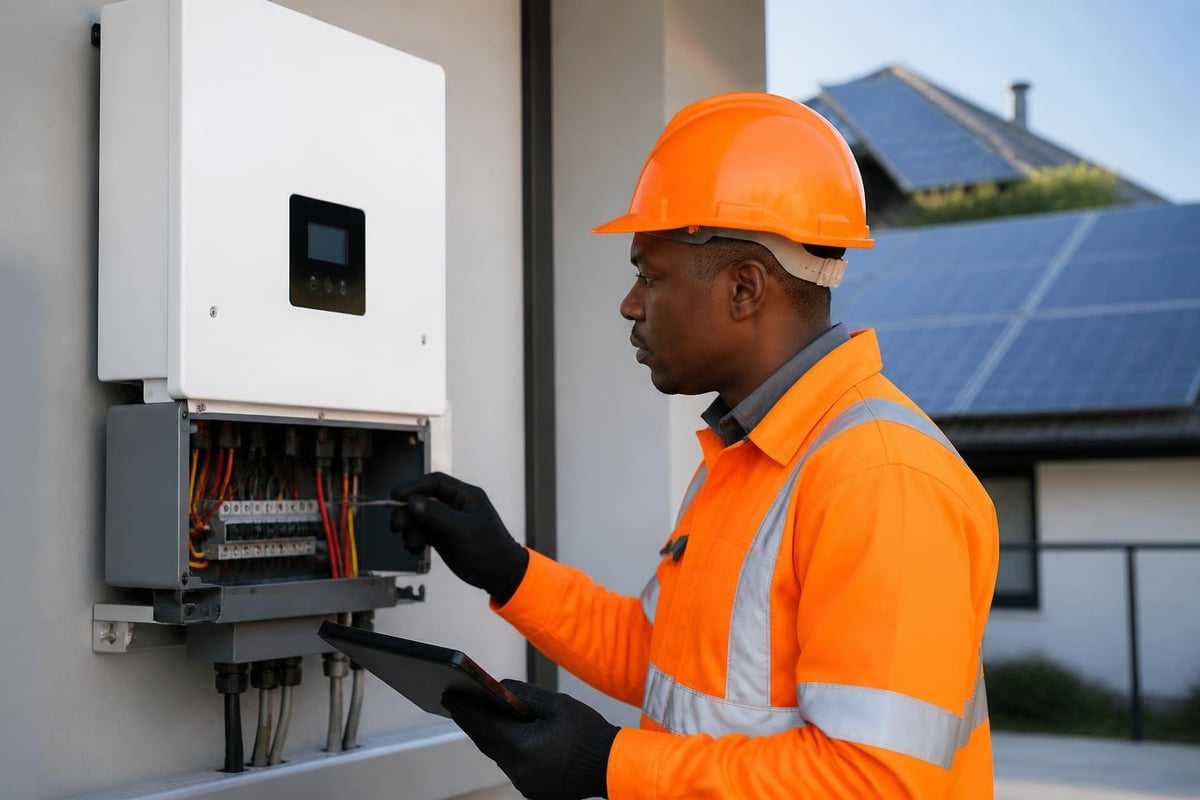
Inverter placement substantially impacts performance. Installing inverters in shaded, well-ventilated locations prevents thermal derating, which reduces output capacity when internal temperatures exceed design limits. In South Africa's summer heat, particularly in provinces like Limpopo and the Northern Cape, ambient temperatures can exceed 40°C, making thermal management critical.
Optimization Checklist
- Position inverters away from direct sunlight and heat sources
- Ensure adequate ventilation around inverter enclosures
- Maintain clear access for monitoring and maintenance activities
- Install at accessible heights for display reading and troubleshooting
- Protect from moisture, dust, and corrosive atmospheres in coastal or industrial environments
- Connect monitoring systems for real-time performance tracking
The Sandia National Laboratories' PV Performance Modeling Collaborative offers valuable research on modeling how inverters perform under various environmental conditions, helping system designers predict real-world output accurately.
Monitoring and Maintenance Requirements
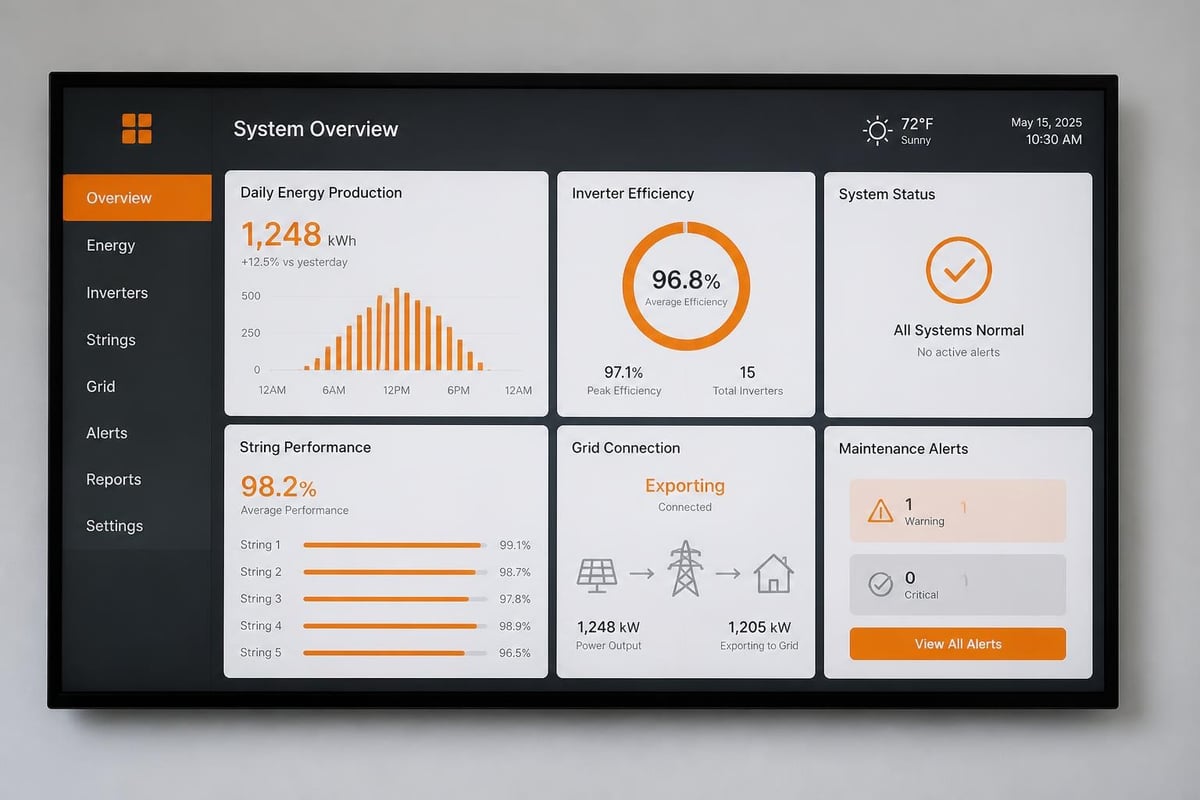
Effective monitoring of a solar inverter with solar panel systems enables early detection of performance issues and ensures maximum return on investment. Modern inverters provide detailed data through integrated displays, mobile applications, and cloud-based platforms.
Key performance indicators include:
- Daily energy production compared to expected output based on irradiation levels
- Inverter efficiency tracking conversion losses and identifying degradation
- String voltage and current revealing panel-level problems or shading issues
- Grid connection status monitoring disconnections and power quality events
- System alerts flagging faults, warnings, and maintenance requirements
Remote monitoring becomes particularly valuable for commercial installations across multiple sites. A retailer operating solar systems at stores throughout KwaZulu-Natal, for instance, can centrally track performance without dispatching technicians to each location for routine checks.
| Maintenance Activity | Frequency | Purpose |
|---|---|---|
| Visual inspection | Quarterly | Check for physical damage, loose connections, or environmental issues |
| Performance review | Monthly | Verify output matches expectations and identify declining performance |
| Firmware updates | As available | Enhance functionality and address potential vulnerabilities |
| Connection tightening | Annually | Prevent losses from high-resistance connections |
| Professional service | 2-3 years | Comprehensive testing and component inspection |
Regular maintenance extends system lifespan and maintains warranty coverage. Most inverter manufacturers require documented service records to honor performance guarantees, making systematic maintenance scheduling essential for protecting your investment. Resources on INFOLED's projects page demonstrate professional installation and maintenance practices across diverse applications.
Safety Considerations and Standards
Operating a solar inverter with solar panel arrays involves high voltages and currents that demand rigorous safety protocols. Properly designed and installed systems pose minimal risk, but understanding potential hazards ensures safe operation and maintenance.
DC voltage from solar panels persists whenever light strikes the modules, even on cloudy days or during system shutdowns. String voltages commonly reach 600V to 1000V in commercial systems, presenting serious shock hazards. Inverters incorporate isolation mechanisms and rapid shutdown capabilities, but qualified electricians must handle all electrical work.
Critical Safety Elements
- Properly sized DC and AC disconnects enable safe isolation for maintenance
- Adequate earthing and bonding protect against fault currents and lightning strikes
- Surge protection devices safeguard equipment from voltage spikes
- Arc fault detection identifies dangerous electrical arcing conditions
- Residual current devices prevent ground fault hazards
Installation must comply with SANS 10142-1 wiring regulations and Occupational Health and Safety Act requirements. The Sandia PV PACT testing programme validates inverter safety performance under various fault conditions, providing empirical data that informs safety standards.
Financial and Environmental Benefits
Investing in a solar inverter with solar panel system delivers measurable returns through reduced electricity costs and environmental benefits. With Eskom tariffs increasing substantially above inflation year after year, solar generation offers price certainty and protection against future increases.
A typical commercial installation in South Africa achieves payback periods of 3 to 6 years, depending on electricity consumption patterns, available roof space, and financing arrangements. After payback, systems continue generating virtually free electricity for another 15 to 20 years, with only modest maintenance costs.
Return on Investment Factors
Commercial and industrial facilities benefit most from solar when:
- Electricity consumption occurs primarily during daylight hours, matching solar generation patterns
- Current electricity costs exceed ZAR 1.50 per kWh including demand charges
- Roof or ground space accommodates sufficient panel area for meaningful generation
- Credit profiles support favorable financing terms or capital exists for cash purchase
- Energy security and load shedding mitigation justify premium hybrid configurations
Beyond financial returns, solar systems reduce carbon emissions and support corporate sustainability commitments. Each megawatt-hour of solar electricity generated prevents approximately 0.95 tonnes of CO₂ emissions from South Africa's coal-dominated grid. For organizations pursuing ESG reporting and Net Zero targets, documented renewable energy generation provides verifiable environmental benefits.
The INFOLED calculator enables quick assessment of potential savings and system sizing for your specific circumstances, whilst detailed feasibility studies provide comprehensive financial analysis including tax benefits, depreciation allowances, and lifecycle costs.
Hybrid Systems and Battery Integration
Modern solar inverter with solar panel installations increasingly incorporate battery storage, creating hybrid systems that maximize self-consumption and provide backup power during grid outages. This capability has become particularly valuable in South Africa's load shedding environment.
Hybrid inverters manage complex energy flows between solar panels, batteries, grid connection, and electrical loads. During the day, they prioritize charging batteries with excess solar generation after meeting immediate consumption needs. When solar production falls below demand, the system draws from batteries before importing grid electricity. During load shedding, the inverter seamlessly transitions to battery power, maintaining critical loads without interruption.
Battery sizing depends on backup requirements and consumption patterns. A manufacturing facility might require several hours of backup for production equipment, whilst a retail store might need only enough capacity to maintain point-of-sale systems, refrigeration, and security until grid power restores.
Hybrid System Advantages
- Maximized self-consumption through energy storage and time-shifting
- Load shedding protection without relying on diesel generators
- Peak demand reduction lowering Eskom capacity charges
- Participation in potential future time-of-use tariff structures
- Enhanced energy independence and resilience
Battery chemistry selection impacts performance, lifespan, and cost. Lithium iron phosphate (LiFePO₄) batteries dominate the South African market due to their safety characteristics, cycle life, and temperature tolerance. These systems typically deliver 4,000 to 6,000 cycles at 80% depth of discharge, translating to 10 to 15 years of service life.
For organizations exploring integrated solutions, comprehensive resources are available through INFOLED's articles covering solar, storage, and smart energy management topics.
Future Developments and Technology Trends
The solar inverter with solar panel market continues evolving rapidly, with several trends shaping future installations in South Africa and globally. These developments promise improved performance, reduced costs, and enhanced functionality.
Inverter efficiency continues improving through advanced semiconductor technologies, particularly silicon carbide (SiC) components that reduce switching losses and enable smaller, lighter designs. Next-generation inverters achieving 99% efficiency are entering commercial production, reducing conversion losses and heat generation.
Artificial intelligence and machine learning algorithms increasingly optimize inverter operation through predictive performance modeling, fault detection, and automated parameter adjustment. These systems learn from operational data to maximize energy harvest and identify developing problems before they cause system failures.
Grid-forming inverters represent a significant technical advancement, enabling solar installations to create and maintain stable AC waveforms without grid reference. This capability becomes crucial as renewable energy penetration increases and grid stability challenges intensify. Unlike traditional grid-following inverters that require strong grid voltage to operate, grid-forming inverters can black-start and support weak grid conditions.
Emerging Capabilities
- Bidirectional charging for electric vehicles, enabling V2G and V2H applications
- Enhanced cybersecurity protecting systems from digital threats
- Modular architectures allowing capacity expansion without complete replacement
- Extended warranties reflecting improved component reliability and manufacturer confidence
- Integration with smart home and building management systems for holistic energy optimization
These technological advances will make solar more accessible, efficient, and valuable for South African businesses and homeowners. Staying informed about developments ensures that new installations incorporate the latest capabilities whilst avoiding obsolete technologies.
Regional Installation Considerations
Installing a solar inverter with solar panel system across South Africa's diverse regions requires accounting for significant climatic and regulatory variations. Coastal installations in Durban face high humidity and salt spray requiring additional corrosion protection, whilst inland installations in Pretoria and Bloemfontein contend with intense summer heat and afternoon thunderstorms.
The Western Cape experiences winter rainfall patterns that reduce solar generation during peak consumption months, necessitating larger system sizes or battery storage to maintain consistent benefits. Conversely, the Northern Cape offers exceptional solar resources year-round, making it ideal for large-scale commercial and agricultural installations.
Municipal regulations vary considerably across South Africa's metros and local authorities. Some municipalities have streamlined approval processes for small-scale embedded generation, whilst others maintain complex requirements involving multiple departments and extended timelines. Engaging experienced providers familiar with local processes accelerates approvals and ensures compliance with specific municipal requirements.
Grid connection capacity also varies by location. Some areas of major metros approach distribution transformer capacity limits, requiring network upgrade contributions for new solar connections. Understanding these constraints during feasibility assessment prevents costly surprises during implementation.
The electrical installation industry continues maturing, with increasing numbers of qualified solar installers and service providers throughout South Africa. Selecting experienced contractors with proven track records, appropriate registrations, and comprehensive insurance coverage protects your investment and ensures quality outcomes. For sustainable energy solutions, proper end-of-life planning matters too, with solar recycling programmes ensuring responsible disposal when systems eventually reach retirement.
A well-designed solar inverter with solar panel system delivers decades of reliable, cost-effective, clean energy whilst enhancing energy resilience against grid instability. Understanding the critical relationship between these components, proper sizing methodologies, and operational requirements ensures maximum value from your renewable energy investment. INFOLED brings comprehensive renewable energy engineering expertise to commercial, industrial, and residential clients across Southern Africa, designing and implementing intelligent solar solutions tailored to your specific operational requirements and financial objectives. Contact our team to explore how integrated solar, storage, and smart metering technologies can reduce your electricity costs whilst supporting your sustainability commitments.
Next Step
Need help with your energy strategy?
Speak to INFOLED about solar, storage, EV charging, service agreements or system performance.