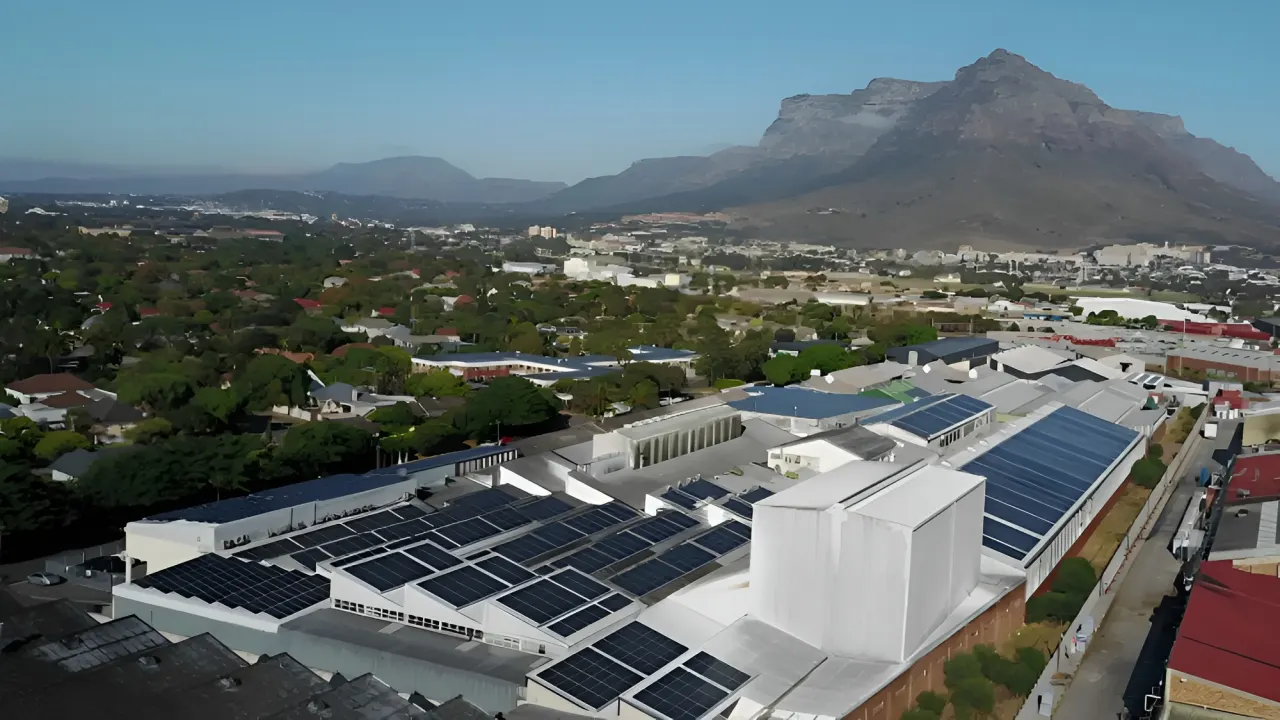
Solar power and inverter technology has become the cornerstone of South Africa's renewable energy transformation, particularly as businesses across Gauteng, Western Cape, and KwaZulu-Natal seek reliable alternatives to grid dependency. The inverter serves as the critical bridge between solar panels that generate direct current (DC) electricity and the alternating current (AC) power that commercial and industrial facilities require. Understanding how these two components work together is essential for any organisation considering solar energy investment in 2026, especially given the evolving landscape of load shedding mitigation strategies and energy cost optimisation.
Understanding the Solar Power and Inverter Relationship
Solar panels capture photons from sunlight and convert them into DC electricity through the photovoltaic effect. However, South African businesses operate on AC power, which requires a conversion process that inverters facilitate. The quality and specifications of your inverter directly impact system efficiency, energy yield, and long-term return on investment.
The inverter performs several critical functions beyond basic conversion. It optimises power output through maximum power point tracking (MPPT), monitors system performance, and ensures grid compliance with South African electrical standards. Modern inverters also provide essential safety features, including anti-islanding protection that prevents power backfeeding during grid outages.
Types of Inverters for South African Applications
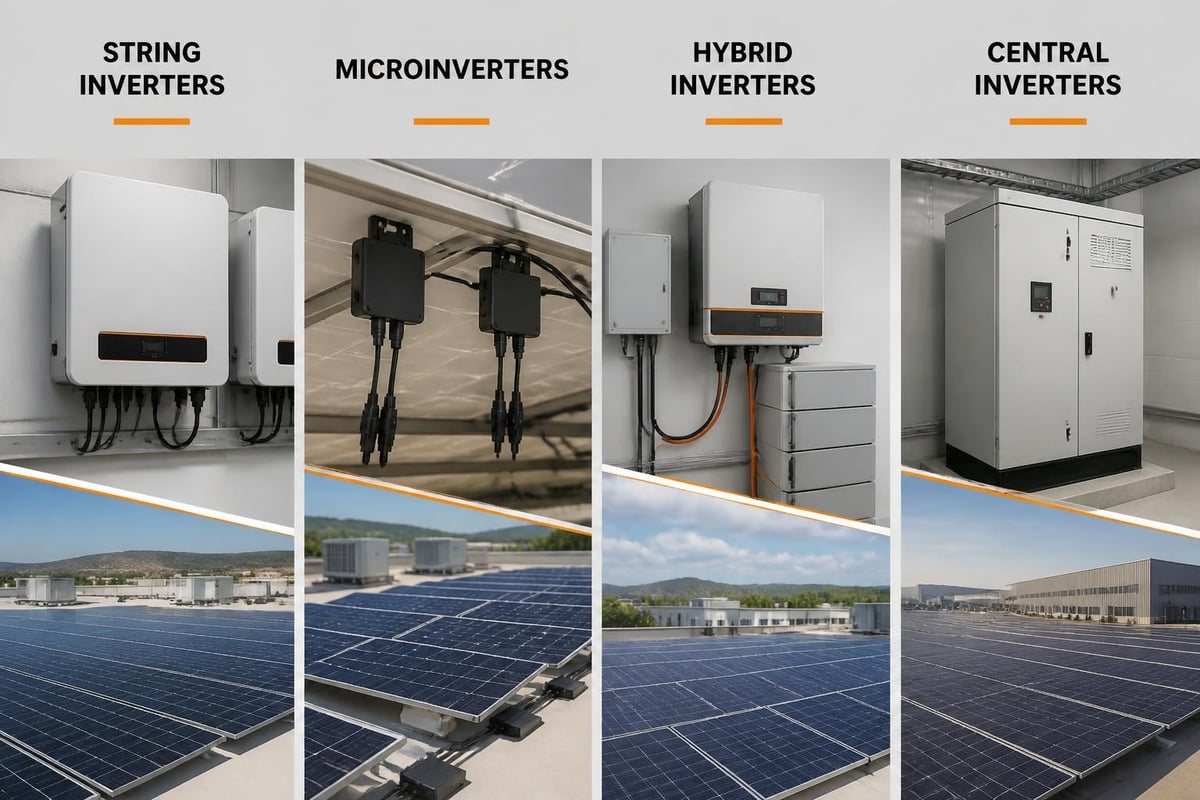
Selecting the appropriate inverter type depends on your facility's energy profile, budget constraints, and operational requirements. Each configuration offers distinct advantages for different commercial scenarios.
String inverters remain the most common choice for commercial rooftop installations across Johannesburg and Cape Town. These units connect multiple solar panels in series, converting DC to AC at a central location. They offer cost-effectiveness and straightforward installation, making them suitable for warehouses, retail centres, and manufacturing facilities with minimal shading issues.
Microinverters attach to individual solar panels, providing panel-level optimisation and monitoring. Whilst the upfront investment is higher, these units excel in complex roof layouts or installations with partial shading from nearby structures. According to research on power electronics advancements, improvements in microinverter technology have significantly reduced installation costs whilst enhancing grid integration capabilities.
Hybrid inverters have gained substantial traction in the South African market, particularly for facilities requiring backup power during load shedding. These sophisticated units manage solar generation, battery storage, and grid connection simultaneously, offering maximum flexibility for energy resilience strategies.
| Inverter Type | Typical Cost (ZAR/kW) | Best Application | Efficiency Range |
|---|---|---|---|
| String | 1,500 - 3,000 | Simple rooftop arrays | 96% - 98% |
| Microinverter | 4,000 - 6,000 | Complex layouts, shading | 95% - 97% |
| Hybrid | 3,500 - 7,500 | Battery integration | 94% - 97% |
| Central | 1,200 - 2,500 | Large ground-mount | 97% - 99% |
Sizing Your Solar Power and Inverter System
Accurate sizing ensures optimal performance and prevents oversizing that wastes capital or undersizing that limits energy production. South African businesses must consider both current consumption patterns and future expansion plans when specifying system capacity.
Load Analysis and Energy Profiling
Begin with a comprehensive energy audit examining your facility's consumption patterns across different times and seasons. Peak demand periods, baseload requirements, and seasonal variations all influence inverter sizing decisions. Manufacturing operations with heavy machinery during standard business hours require different configurations than retail establishments with extended trading hours.
The inverter-to-array ratio (also called the DC:AC ratio) typically ranges between 1.1:1 and 1.3:1 for South African installations. This intentional oversizing of the solar array relative to inverter capacity accounts for real-world losses from temperature, soiling, and other factors whilst maximising energy harvest during optimal conditions.
Key sizing considerations include:
- Municipal tariff structures and time-of-use pricing
- Seasonal irradiance variations across South African regions
- Three-phase power requirements for industrial equipment
- Future expansion capabilities and scalability
- Grid export limitations and feed-in tariff policies
Integration with Battery Energy Storage Systems
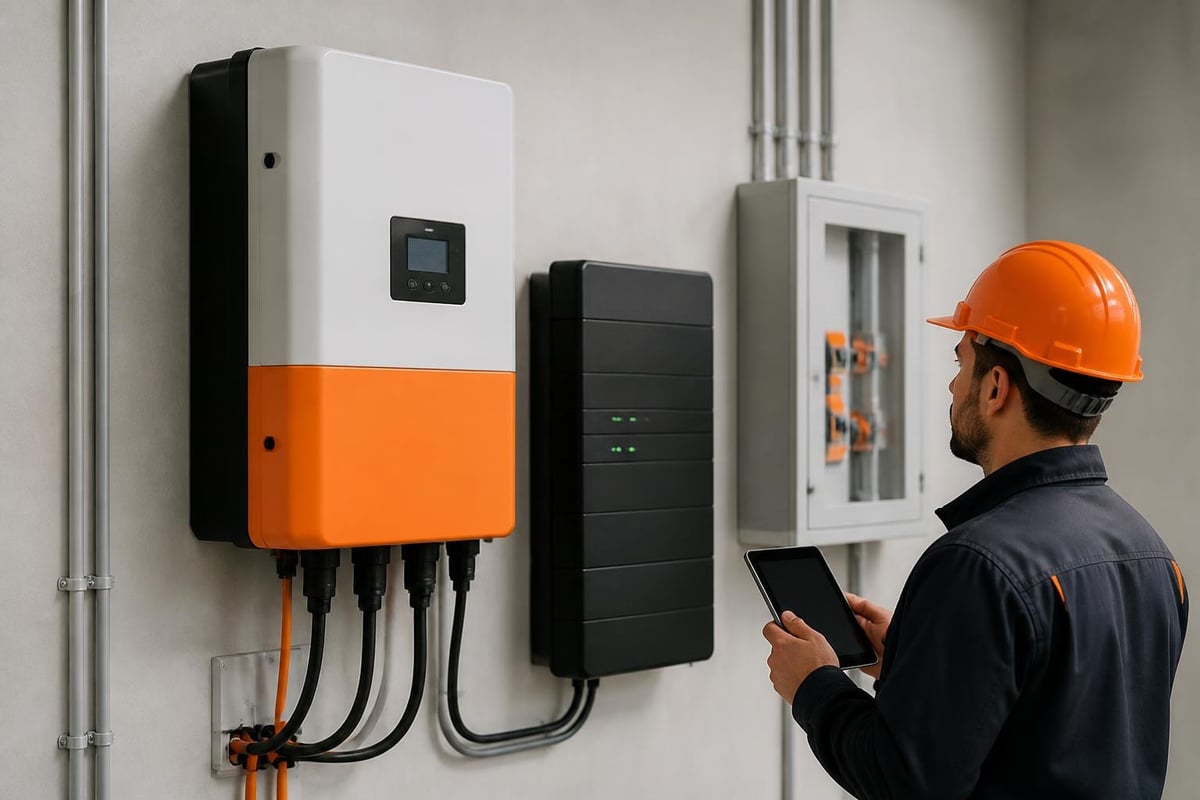
The combination of solar power and inverter technology with battery storage has revolutionised energy management for South African businesses. Hybrid systems enable load shifting, peak demand reduction, and uninterrupted operations during grid failures.
When integrating Battery Energy Storage Systems (BESS), the inverter manages complex power flows between solar panels, batteries, grid connection, and facility loads. This orchestration requires sophisticated control algorithms that optimise charging schedules, manage discharge cycles, and ensure battery longevity.
AC-coupled systems use separate solar and battery inverters, offering installation flexibility and easier retrofitting to existing solar arrays. DC-coupled configurations employ a single hybrid inverter that manages both solar and battery DC connections, typically delivering 4-6% higher efficiency through reduced conversion losses.
Battery Integration Strategies
Modern hybrid inverters support multiple operating modes that businesses can configure based on operational priorities. Time-of-use optimisation charges batteries during off-peak periods and discharges during expensive peak periods, significantly reducing monthly electricity costs. Backup mode prioritises battery reserves for critical loads during outages, whilst self-consumption mode maximises on-site solar utilisation.
The U.S. Department of Energy's research on solar integration and grid services highlights how inverters provide essential frequency regulation and voltage support, capabilities increasingly valuable as South Africa's grid accommodates more renewable generation.
Grid Connection Standards and Compliance
South African solar installations must comply with stringent electrical standards and grid codes to ensure safety and grid stability. The NRS 097-2-1 standard governs small-scale embedded generation connections, whilst larger installations follow the Grid Connection Code requirements.
Your inverter must include anti-islanding protection that immediately disconnects from the grid during outages, preventing dangerous backfeeding that could endanger municipal workers. Voltage and frequency ride-through capabilities allow modern inverters to remain connected during minor grid disturbances, supporting overall grid stability rather than disconnecting and exacerbating problems.
Smart Inverters and Advanced Grid Services
The evolution toward grid-forming inverters represents a significant advancement in renewable energy integration. Unlike traditional grid-following inverters that require an existing grid signal, grid-forming units can create stable voltage and frequency references, potentially restarting sections of the grid after blackouts.
Advanced inverter functions include:
- Reactive power control for voltage regulation
- Frequency-watt response during grid events
- Volt-VAR optimisation for power quality
- Ramp rate control to prevent sudden generation changes
- Remote monitoring and control capabilities
The National Institute of Standards and Technology guidelines emphasise cybersecurity considerations for smart inverters, particularly as South African businesses increasingly rely on remote monitoring and control systems for their renewable energy infrastructure.
Monitoring and Performance Optimisation
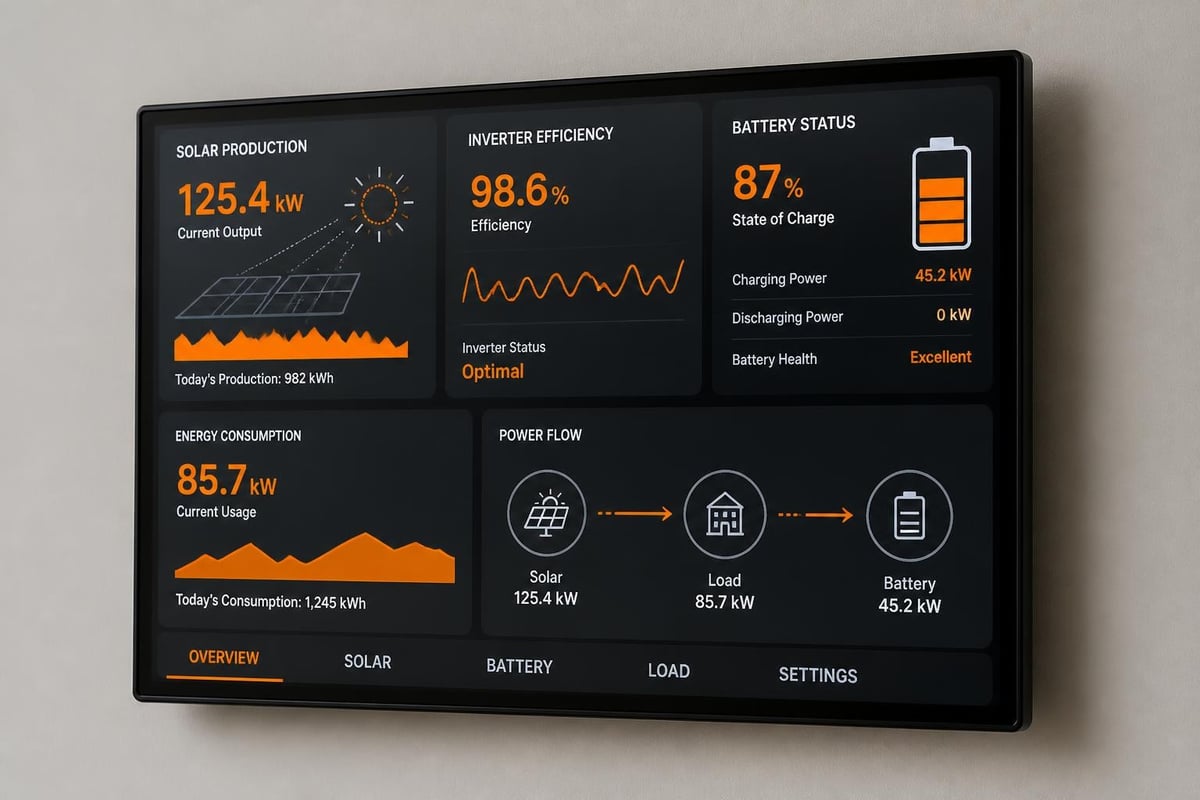
Effective monitoring systems provide real-time visibility into solar power and inverter performance, enabling rapid fault detection and optimisation opportunities. Commercial-grade monitoring platforms track production metrics, identify underperforming panels, and alert facility managers to maintenance requirements.
Most modern inverters include integrated monitoring capabilities accessible through web portals or mobile applications. Advanced systems correlate performance data with weather conditions, electricity pricing, and consumption patterns to provide actionable insights for energy management teams.
| Performance Metric | Target Range | Red Flag Threshold |
|---|---|---|
| System efficiency | 75% - 85% | Below 70% |
| Inverter efficiency | 96% - 98% | Below 94% |
| Capacity factor | 18% - 24% | Below 15% |
| Performance ratio | 0.75 - 0.85 | Below 0.70 |
Predictive Maintenance Through Data Analytics
Thermal imaging, IV curve analysis, and performance modelling identify degradation patterns before they impact revenue. Research on oscillations from inverter-based resources demonstrates how monitoring systems can detect harmonic distortions and power quality issues that affect equipment lifespan and grid compliance.
Annual production typically degrades 0.5-0.8% per year for quality solar panels, but inverter issues, soiling accumulation, or electrical faults can cause more dramatic declines. Establishing baseline performance metrics during commissioning enables meaningful comparisons that highlight deviations requiring investigation.
Financial Considerations and Return on Investment
Solar power and inverter investments in South Africa typically achieve payback periods between 3-6 years for commercial installations, depending on electricity tariff rates, system size, and financing structure. The elimination or reduction of monthly electricity costs provides immediate cash flow benefits whilst protecting against future tariff increases.
Financing Options for South African Businesses
Several financing models accommodate different capital availability and risk preferences. Outright purchase provides maximum long-term savings and asset ownership, suitable for organisations with available capital or access to low-cost financing. Power purchase agreements (PPAs) eliminate upfront investment, with energy purchasers paying per kilowatt-hour at rates below municipal tariffs.
Leasing arrangements offer middle-ground solutions with predictable monthly payments and maintenance included. The Section 12B tax allowance permits 100% first-year depreciation on renewable energy assets, significantly improving after-tax returns for taxpaying entities.
VAT-registered businesses can claim input VAT on solar installations, reducing the effective investment by 15%. When combined with avoided electricity VAT on municipal tariffs, the total tax benefits substantially enhance project economics.
Inverter Reliability and Warranty Considerations
Inverter warranties typically range from 5-10 years for standard units, with extended warranties available for premium products. Given that inverters represent the most likely component requiring replacement during a solar system's 25-year lifespan, warranty terms and manufacturer reputation warrant careful consideration.
European and Asian manufacturers dominate the South African market, with brands like SMA, Fronius, Huawei, and SolarEdge commanding significant market share. Selecting manufacturers with established local support networks ensures timely warranty claims and technical assistance when required.
The stability and operation of smart inverters highlights emerging challenges as grid penetration of inverter-based resources increases, emphasising the importance of selecting units with robust grid support capabilities and firmware update paths for evolving standards.
Maintenance and Operational Costs
Inverters require minimal routine maintenance but benefit from periodic inspections verifying proper ventilation, clean air filters, and secure electrical connections. Budget approximately ZAR 500-1,500 annually per inverter for basic maintenance within comprehensive solar maintenance programmes.
Environmental factors influence inverter longevity significantly. Coastal installations face salt corrosion risks requiring IP65-rated enclosures, whilst inland facilities contend with dust accumulation affecting cooling efficiency. Proper installation in shaded, well-ventilated locations extends operational life and maintains efficiency.
Regulatory Environment and Future Developments
South Africa's Electricity Regulation Act amendments continue evolving, with the 100MW licensing exemption threshold enabling larger embedded generation projects without onerous regulatory requirements. Municipal approval processes vary significantly across jurisdictions, with some metros streamlining applications whilst others maintain complex bureaucratic procedures.
The Department of Mineral Resources and Energy's Integrated Resource Plan anticipates substantial renewable energy growth through 2030, creating opportunities for businesses to contribute distributed generation capacity. Grid code revisions under development will likely mandate additional grid reliability standards for inverter-based resources, ensuring system stability as renewable penetration increases.
Emerging Technologies and Market Trends
Silicon carbide (SiC) semiconductors are gradually replacing traditional silicon in premium inverters, offering higher efficiency, reduced weight, and improved high-temperature performance. Whilst currently commanding price premiums, economies of scale should make these advanced units more accessible by 2027-2028.
Artificial intelligence integration in inverter management systems enables predictive optimisation that adjusts operational parameters based on weather forecasts, electricity pricing signals, and historical performance patterns. These intelligent systems maximise financial returns whilst extending equipment lifespan through optimised operating conditions.
Implementation Best Practices
Successful solar power and inverter projects require careful planning, professional design, and quality installation practices. Engage qualified solar engineers early in the process to conduct feasibility studies considering structural capacity, electrical infrastructure, and regulatory requirements.
Critical implementation steps include:
- Comprehensive site assessment and energy audit
- Detailed financial modelling with sensitivity analysis
- Professional electrical and structural engineering design
- Municipal approval and grid connection applications
- Quality installation by accredited contractors
- Commissioning tests and performance verification
- Staff training on system operation and monitoring
Selecting experienced engineering firms with proven track records in commercial solar installations reduces project risks and ensures compliance with all applicable standards. The complexity of integrating solar power and inverter technology with existing building management systems, backup generators, and electrical infrastructure demands specialised expertise beyond basic electrical contractors.
Operational Integration and Energy Management
Maximising value from solar investments requires integrating renewable generation into broader energy management strategies. Smart metering, load monitoring, and demand response capabilities transform solar systems from simple generation assets into sophisticated energy management tools.
Time-of-use optimisation algorithms shift flexible loads toward periods of peak solar production, maximising self-consumption and reducing grid dependency. Manufacturing operations can schedule energy-intensive processes during midday solar peaks, whilst commercial buildings optimise HVAC pre-cooling strategies to leverage available solar capacity.
For businesses seeking comprehensive energy management solutions, modern platforms integrate solar production data, consumption patterns, battery status, and electricity pricing to provide unified visibility and control across all energy assets.
Risk Management and Performance Guarantees
Professional solar providers offer performance guarantees ensuring minimum energy production levels based on site-specific irradiance data and system specifications. These guarantees provide financial protection if systems underperform due to design flaws or equipment defects, though they typically exclude force majeure events and inadequate maintenance.
Insurance considerations include property damage coverage for solar arrays, business interruption protection accounting for lost electricity cost savings, and public liability coverage for grid-connected systems. Premium costs vary based on system size, location, and risk profile, typically representing 0.3-0.5% of system value annually.
Understanding your service level agreement provisions ensures clear expectations regarding response times, maintenance frequency, and performance obligations from your solar provider.
Solar power and inverter technology represents a proven, financially viable solution for South African businesses seeking energy cost reduction, operational resilience, and sustainability objectives in 2026. The careful selection of appropriately sized inverters, quality components, and professional installation establishes the foundation for decades of reliable renewable energy generation. Whether you're exploring initial feasibility or ready to implement a comprehensive energy solution, INFOLED provides the engineering expertise, technology platforms, and ongoing support to design, finance, install, and maintain intelligent solar systems tailored to your specific operational requirements across Southern Africa.
Next Step
Need help with your energy strategy?
Speak to INFOLED about solar, storage, EV charging, service agreements or system performance.