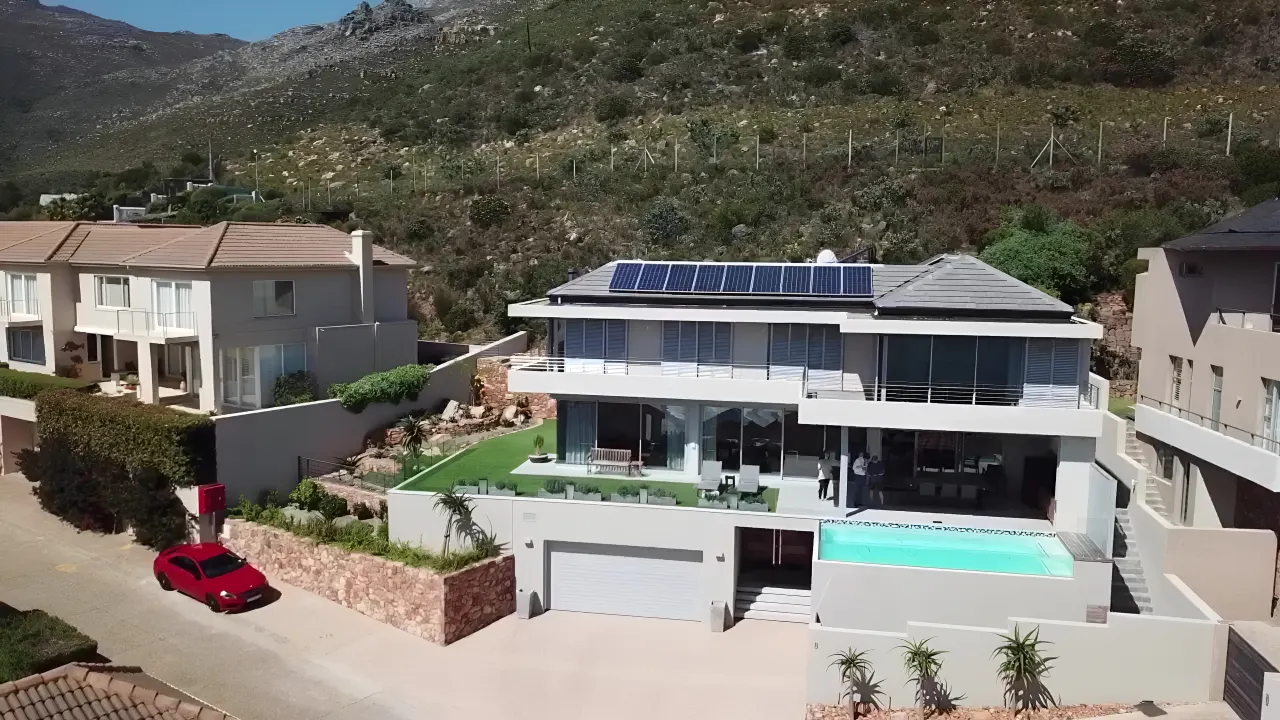
Energy PV technology has become the cornerstone of renewable energy adoption across Southern Africa, delivering reliable, cost-effective electricity generation for businesses facing rising utility tariffs and grid instability. Photovoltaic systems convert sunlight directly into electrical energy through semiconductor materials, offering commercial, industrial, and agricultural enterprises a proven path toward energy independence and operational resilience. As South African businesses navigate electricity price volatility and increasing pressure to meet environmental, social, and governance targets, understanding the technical capabilities, financial benefits, and implementation considerations of energy PV systems has never been more critical.
Understanding Energy PV Technology and Components
Energy PV systems operate through the photovoltaic effect, where semiconductor materials such as silicon absorb photons from sunlight and release electrons, creating an electrical current. This fundamental process enables solar panels to generate direct current (DC) electricity whenever light strikes their surface.
The technology has evolved considerably since the first practical photovoltaic cells emerged in the 1950s. Modern energy PV modules achieve conversion efficiencies exceeding 22% for commercial installations, with premium monocrystalline panels reaching even higher performance levels. The U.S. Department of Energy's overview of photovoltaic technology provides comprehensive technical details on how these systems function at a fundamental level.
Core System Components
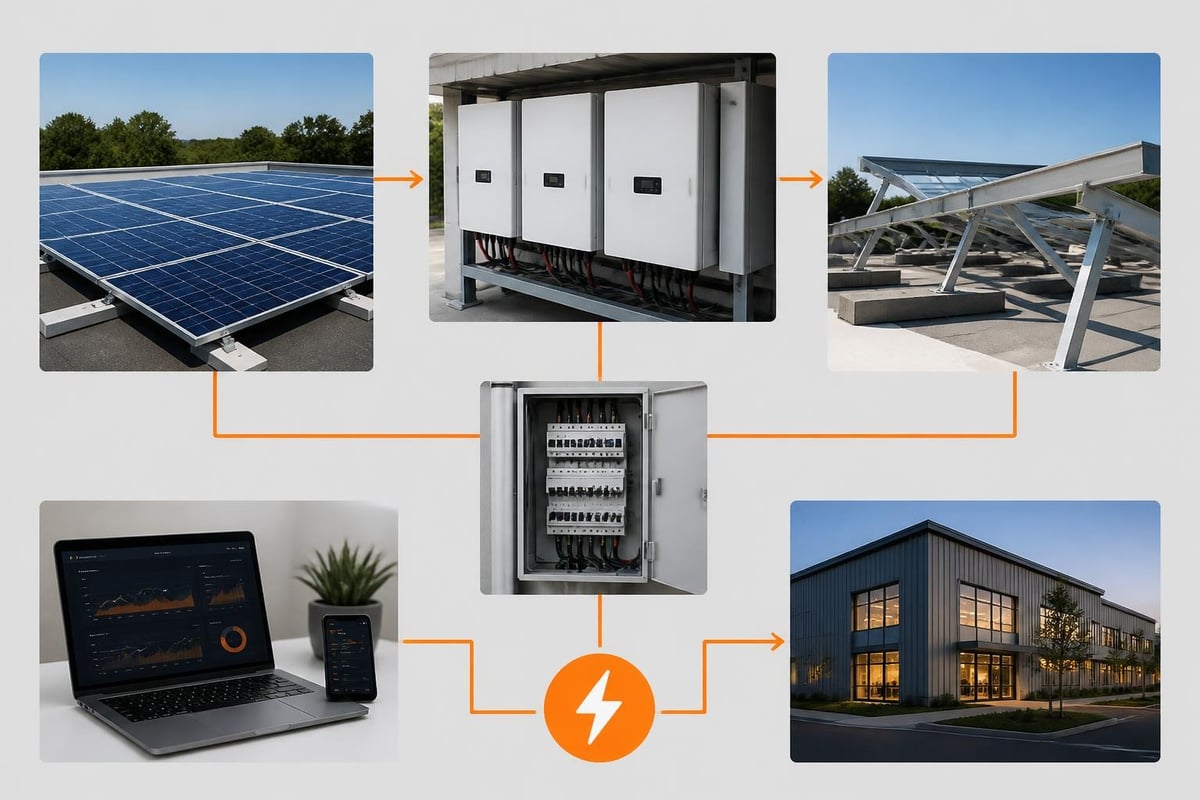
A complete energy PV installation comprises several essential elements working in harmony:
- Solar panels (modules): Convert sunlight into DC electricity through photovoltaic cells
- Inverters: Transform DC power into alternating current (AC) for building consumption
- Mounting structures: Secure panels to rooftops, ground mounts, or carports
- Electrical balance of system: Wiring, disconnects, surge protection, and monitoring equipment
- Metering infrastructure: Tracks generation, consumption, and grid interaction
The inverter represents perhaps the most critical component beyond the panels themselves. String inverters serve multiple panels in series, whilst micro-inverters attach to individual modules for enhanced monitoring and performance optimisation. Hybrid inverters integrate battery storage capabilities, enabling load-shifting and backup power functionality.
Installation Configurations
| Configuration Type | Application | Grid Connection | Backup Capability |
|---|---|---|---|
| Grid-tied | Cost reduction through self-consumption | Full grid integration | None (system shuts down during outages) |
| Hybrid | Energy independence with resilience | Grid-connected with battery backup | Full or partial (depending on battery size) |
| Off-grid | Remote locations without grid access | No grid connection | Complete (battery-dependent) |
Grid-tied energy PV systems remain the most economical option for businesses with reliable utility access, maximising return on investment through immediate self-consumption of generated electricity. When examining commercial solar PV deployment strategies, the hybrid configuration increasingly dominates the South African market due to load-shedding concerns and the declining cost of battery storage technology.
Financial Performance and Return on Investment
Energy PV installations deliver compelling financial returns for South African businesses through multiple value streams. Direct electricity cost savings typically constitute the primary economic driver, with commercial and industrial electricity tariffs ranging from ZAR 1.50 to ZAR 3.50 per kilowatt-hour depending on municipality, time-of-use schedules, and consumption tier.
Payback Period Calculations
A typical commercial energy PV system in Gauteng or Western Cape achieves payback within 4 to 6 years under current tariff structures. This calculation considers:
- Initial capital investment (panels, inverters, installation, engineering)
- Annual energy generation (based on irradiation levels and system size)
- Avoided utility purchases (at applicable tariff rates)
- Operating and maintenance costs (typically 1-2% of capital cost annually)
- Tariff escalation (historical average of 7-9% annually in South Africa)
The World Bank's assessment of solar photovoltaic power potential by country demonstrates that South Africa possesses exceptional solar resources, with annual irradiation exceeding 2,000 kWh per square metre in most regions. This resource abundance translates directly to superior energy PV system performance and accelerated investment recovery.
Financing Mechanisms
Several financing approaches enable businesses to implement energy PV without substantial upfront capital expenditure:
- Cash purchase: Fastest payback, maximum lifetime savings, full asset ownership
- Debt financing: Preserves working capital, tax-deductible interest payments
- Power purchase agreements (PPAs): Zero capital outlay, immediate electricity cost reduction
- Operating lease structures: Off-balance-sheet treatment, flexible upgrade options
The optimal financing strategy depends on corporate capital allocation policies, tax position, and strategic objectives around asset ownership. Many South African enterprises leverage Section 12B tax allowances for renewable energy assets, accelerating depreciation and improving project economics.
System Sizing and Performance Optimisation
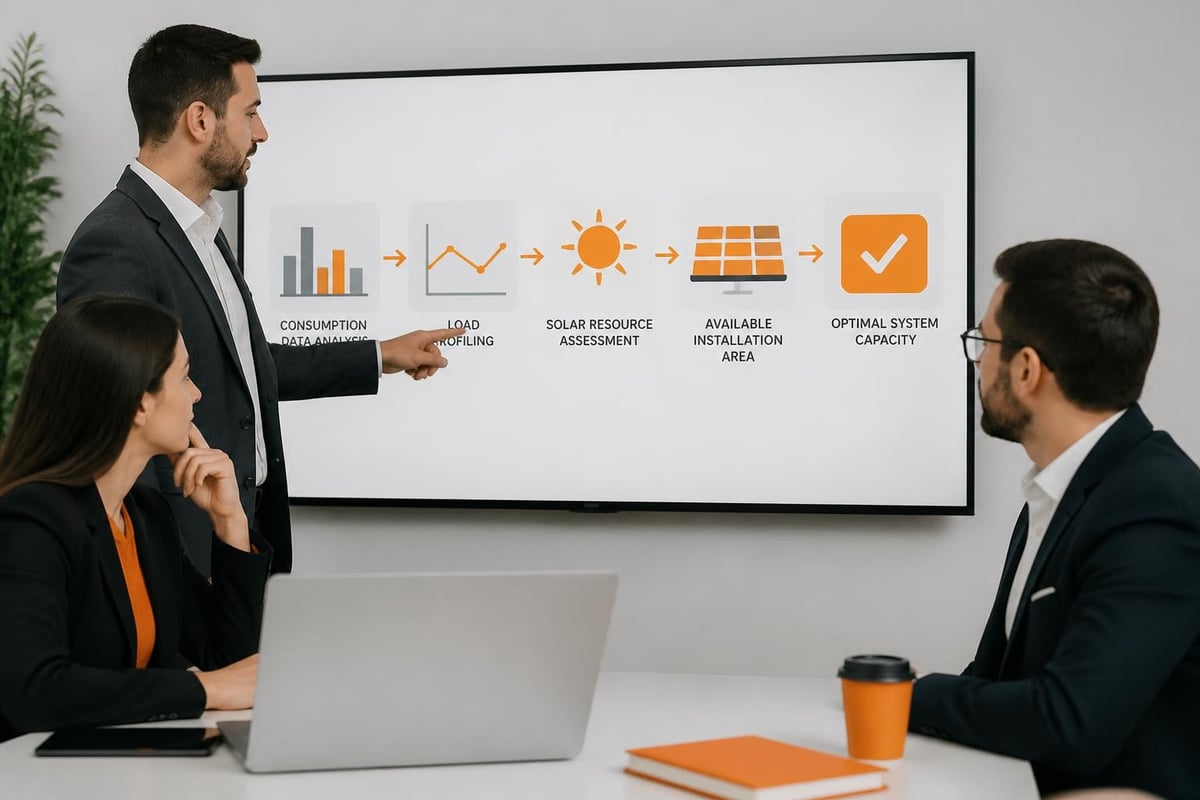
Proper energy PV system sizing requires detailed analysis of electricity consumption patterns, available installation area, and financial objectives. Undersizing relative to consumption leaves savings potential unrealised, whilst oversizing may result in grid export at unfavourable rates or curtailment.
Load Profile Analysis
Successful energy PV implementations begin with comprehensive consumption data collection spanning at least 12 months. Half-hourly or 15-minute interval metering reveals critical insights:
- Peak demand periods and magnitude
- Baseload consumption throughout operating hours
- Seasonal variations in electricity usage
- Time-of-use alignment with solar generation profiles
- Opportunities for load-shifting and demand management
Businesses with daytime-weighted consumption achieve the highest self-consumption ratios, often exceeding 80% for properly sized installations. Manufacturing facilities, cold storage operations, and agricultural processing plants typically exhibit excellent alignment between solar generation and operational demand.
Technical Performance Factors
| Performance Factor | Impact on Generation | Mitigation Strategy |
|---|---|---|
| Panel orientation and tilt | ±15-20% annual yield | Optimal azimuth and angle design |
| Shading from structures/trees | 5-50% reduction (location-specific) | 3D shade analysis, strategic placement |
| Soiling and dust accumulation | 2-8% efficiency loss | Regular cleaning schedules |
| Inverter efficiency | 2-5% conversion loss | High-efficiency equipment selection |
| Temperature coefficient | 0.3-0.5% per °C above 25°C | Adequate ventilation, premium modules |
The Nature Energy research on floating photovoltaics explores innovative installation approaches that address land constraints whilst potentially improving performance through cooling effects. Whilst floating solar remains nascent in South Africa, the research demonstrates ongoing innovation in energy PV deployment strategies.
Advanced tracking systems that follow the sun's path throughout the day can increase generation by 20-35% compared to fixed-tilt installations. The IEEE review of solar tracking technologies examines various tracking mechanisms and their applicability to different installation contexts, though the added complexity and maintenance requirements must be weighed against generation benefits.
Integration with Battery Storage and Smart Systems
Modern energy PV installations increasingly incorporate battery energy storage systems (BESS) to enhance value delivery beyond simple self-consumption. Battery integration enables load-shifting, demand charge reduction, backup power during grid outages, and participation in demand response programmes.
Hybrid System Architecture
Hybrid energy PV and battery systems operate through intelligent energy management controllers that optimise electricity flows based on real-time conditions and programmed priorities. Typical operational logic includes:
- Morning: Battery charges from energy PV generation exceeding building demand
- Peak periods: Battery discharges to reduce expensive utility purchases and demand charges
- Evening: Remaining solar generation powers operations directly
- Night-time: Grid electricity supplies baseload, potentially recharging battery during off-peak periods
- Grid outage: System islands from utility, providing uninterrupted power from solar and battery
The sophistication of energy management algorithms directly impacts financial performance. Machine learning systems now forecast consumption patterns, weather conditions, and optimal charge-discharge schedules to maximise economic returns.
Through Renewable Energy Engineering Services, proper system design ensures that energy PV and battery components work cohesively, with appropriate inverter capacity, battery sizing relative to consumption patterns, and control logic aligned with specific operational requirements and tariff structures.
Smart Metering and Monitoring
Real-time visibility into energy PV system performance, building consumption, and battery status enables proactive management and rapid fault detection. Modern monitoring platforms provide:
- Live generation and consumption dashboards
- Historical performance analysis and trending
- Automatic fault alerts and diagnostics
- Financial tracking and savings verification
- Environmental impact quantification
These capabilities prove essential for large-scale installations across multiple sites, enabling centralised oversight and performance benchmarking. When exploring energy management systems approaches, the integration of energy PV monitoring with broader building management systems creates comprehensive visibility and control.
Regulatory Compliance and Grid Connection
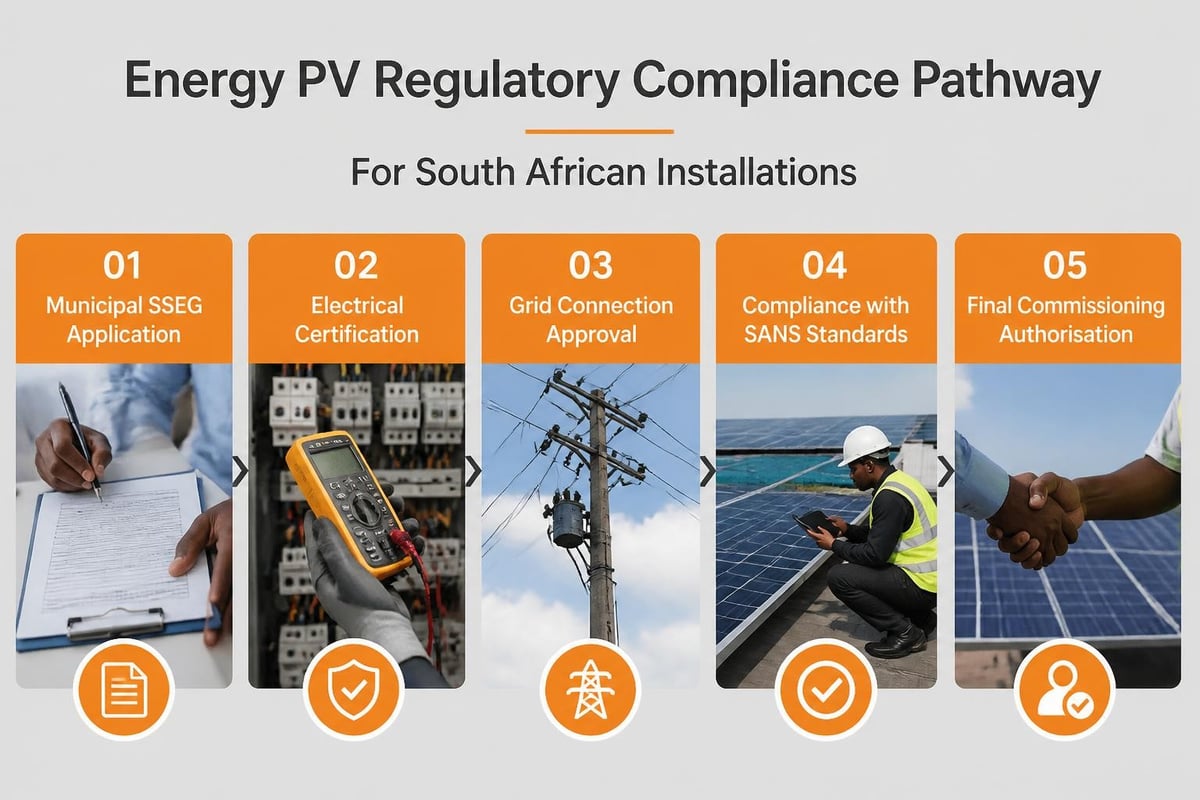
Energy PV installations in South Africa must navigate various regulatory requirements depending on system size, connection type, and municipal jurisdiction. Understanding these obligations prevents project delays and ensures legal compliance.
SSEG Registration Requirements
The Small-Scale Embedded Generation (SSEG) framework governs grid-tied energy PV systems under one megawatt capacity. Key requirements include:
- Municipality application and approval: Timelines vary from 30 days to 6 months depending on jurisdiction
- Grid impact studies: Required for systems above certain thresholds (typically 100-500 kW)
- Electrical compliance certification: Certificate of Compliance (CoC) from registered electrician
- Metering arrangements: Bidirectional meters for systems that may export to grid
- Distribution use of system agreements: Defines rights, responsibilities, and connection terms
Johannesburg, Cape Town, and eThekwini have developed relatively streamlined SSEG processes, whilst smaller municipalities often lack established procedures. Early engagement with the local utility proves essential for project planning and timeline estimation.
Technical Standards and Safety
Energy PV installations must comply with:
| Standard/Regulation | Requirement |
|---|---|
| SANS 10142-1 | Wiring of premises for AC installations |
| SANS 10142-1-3 | Low-voltage installations in photovoltaic systems |
| NRS 097-2-1/3 | Grid connection code for embedded generation |
| Occupational Health and Safety Act | Safe installation practices and certification |
Professional engineering input ensures compliance whilst optimising system design for performance and longevity. Projects lacking proper technical oversight frequently encounter commissioning challenges, safety issues, and underperformance relative to expectations.
Maintenance Requirements and Long-Term Performance
Energy PV systems require minimal maintenance compared to conventional generation technologies, but proactive servicing maximises generation and extends system lifespan. Well-maintained installations commonly operate effectively for 25-30 years, though inverters typically require replacement after 10-15 years.
Preventative Maintenance Programmes
Structured maintenance schedules address common performance degradation factors:
- Panel cleaning: Quarterly to bi-annually depending on location and soiling rates
- Electrical inspection: Annual verification of connections, earthing, and protective devices
- Inverter servicing: Firmware updates, fan cleaning, connection inspection
- Mounting structure assessment: Corrosion inspection, fastener torque verification
- Performance testing: I-V curve tracing to identify underperforming strings or modules
- Vegetation management: Prevention of shading from growing trees or plants
Thermal imaging surveys identify problematic modules, bypass diode failures, and connection issues invisible to standard monitoring. Drone-based thermal inspection proves particularly cost-effective for large ground-mount installations where manual inspection proves time-consuming.
Performance Monitoring and Degradation
Energy PV modules experience gradual performance decline over time, typically 0.5-0.8% annually for premium modules. Monitoring generation relative to expected output (adjusted for weather conditions) identifies issues requiring investigation:
- Sudden generation drops indicate equipment failure or grid disruption
- Gradual underperformance suggests soiling accumulation or module degradation
- String-level variations point to shading issues or localised failures
- Inverter efficiency changes may indicate cooling problems or component wear
The REN21 Global Status Report on renewables tracks worldwide energy PV deployment and performance trends, demonstrating the technology's maturation and the importance of proper maintenance in sustaining long-term returns.
Environmental and Social Governance Benefits
Beyond financial returns, energy PV installations deliver measurable environmental benefits that support corporate sustainability objectives and ESG reporting requirements. Businesses increasingly face pressure from investors, customers, and regulators to demonstrate meaningful climate action.
Carbon Footprint Reduction
Each megawatt-hour generated through energy PV displaces grid electricity that would otherwise come from coal-fired generation dominating South Africa's energy mix. The carbon intensity of Eskom's grid averages approximately 0.95 kg CO₂ per kWh, meaning a 100 kW energy PV system generating 160,000 kWh annually avoids roughly 152 tonnes of CO₂ emissions.
This carbon reduction can be quantified and verified for inclusion in:
- Scope 2 emissions reporting under GHG Protocol
- Carbon Disclosure Project (CDP) submissions
- Science-based targets for corporate decarbonisation
- Sustainability reports and stakeholder communications
- Green building certifications such as Green Star SA
Net Zero Alignment
The IRENA report on solar PV supply chains and ESG standards addresses the full lifecycle environmental considerations of photovoltaic technology, including manufacturing impacts, material sourcing, and end-of-life management. Businesses committed to Net Zero targets must consider these upstream and downstream factors alongside operational emissions reduction.
Responsible procurement practices include evaluating module manufacturers' environmental credentials, labour practices, and supply chain transparency. The growing focus on solar panel recycling addresses end-of-life concerns, with recovery rates exceeding 95% for glass, aluminium, and silicon from decommissioned panels.
Economic Development Impact
Local energy PV deployment creates employment across installation, maintenance, and manufacturing sectors. The industry supports thousands of direct jobs in South Africa, with particularly strong growth in installation and engineering services. Businesses implementing solar projects contribute to this economic development whilst securing energy independence.
Emerging Applications and Future Trends
Energy PV technology continues evolving rapidly, with several trends shaping deployment strategies for forward-thinking businesses. Understanding these developments enables long-term planning and investment decisions aligned with technological trajectories.
Bifacial Module Technology
Bifacial energy PV panels capture sunlight from both front and rear surfaces, achieving 5-20% additional generation depending on ground albedo and mounting configuration. White or reflective surfaces beneath panels enhance rear-side irradiation, making bifacial technology particularly effective for:
- Ground-mount installations with light-coloured gravel or concrete
- Elevated carport structures allowing light underneath
- Commercial rooftops with reflective membrane surfaces
- Agricultural applications where crops grow beneath raised panels
The technology premium has narrowed considerably, with bifacial modules often cost-competitive with standard panels when total system economics are considered.
Agrivoltaics and Dual-Use Systems
Agricultural businesses increasingly explore agrivoltaic installations that combine crop production with electricity generation. Elevated panel arrays allow farming equipment operation beneath whilst providing beneficial shade for certain crops. The World Bank's off-grid solar market trends report examines innovative deployment models, including agricultural applications in developing markets.
Livestock operations similarly benefit from solar carports over feeding areas or shade structures that serve dual purposes. These approaches maximise land productivity whilst generating renewable energy for farm operations.
Building-Integrated Photovoltaics
Building-integrated photovoltaic (BIPV) systems incorporate energy PV functionality into building facades, windows, and roofing materials. Whilst currently more expensive than conventional installations, BIPV technology offers architectural advantages for new construction and premium renovations. Solar glass technology now achieves reasonable transparency whilst generating electricity, creating opportunities for south-facing facades.
Project Implementation Considerations
Successful energy PV projects require careful planning across technical, financial, and operational dimensions. Businesses benefit from structured implementation approaches that address common challenges proactively.
Site Assessment and Feasibility
Comprehensive feasibility studies evaluate:
- Solar resource availability: Irradiation data and shading analysis for specific location
- Structural capacity: Roof loading calculations for building-mounted systems
- Electrical infrastructure: Existing distribution capacity and upgrade requirements
- Spatial constraints: Available area relative to consumption and sizing objectives
- Financial modelling: Cash flow projections under various scenarios and financing structures
Professional engineering input during feasibility stages prevents costly design revisions later in project development. The technical complexity of multi-megawatt installations demands specialist expertise in electrical systems, structural engineering, and energy modelling.
Procurement and Contracting
Energy PV procurement involves selecting equipment suppliers, installation contractors, and ongoing service providers. Key considerations include:
- Equipment warranties (typically 25 years for panels, 5-10 years for inverters)
- Installation workmanship guarantees
- Performance guarantees and recourse mechanisms
- Commissioning and testing procedures
- Operations and maintenance service level agreements
Establishing clear performance expectations and contractual protections safeguards project returns and provides recourse should issues arise. References from previous projects and financial stability of contractors merit careful evaluation.
Commissioning and Performance Verification
Proper commissioning ensures the energy PV system operates as designed before final acceptance. This process includes:
- Physical inspection of all components and connections
- Electrical testing and safety verification
- Inverter configuration and monitoring system setup
- Grid connection approval and metering validation
- Performance testing under various load conditions
- Documentation handover and operator training
Post-commissioning performance monitoring during the initial months confirms generation aligns with projections and identifies any early issues requiring attention. Comparing performance across similar installations provides useful benchmarking data.
Energy PV technology delivers proven financial returns, operational resilience, and environmental benefits for South African businesses facing rising electricity costs and sustainability pressures. The combination of exceptional solar resources, mature technology, and multiple financing options makes photovoltaic systems an increasingly essential component of corporate energy strategies. INFOLED provides comprehensive renewable energy solutions from initial feasibility and engineering through installation, monitoring, and long-term maintenance, helping commercial, industrial, and agricultural clients across Southern Africa achieve energy independence whilst advancing their ESG and Net Zero objectives.
Next Step
Need help with your energy strategy?
Speak to INFOLED about solar, storage, EV charging, service agreements or system performance.