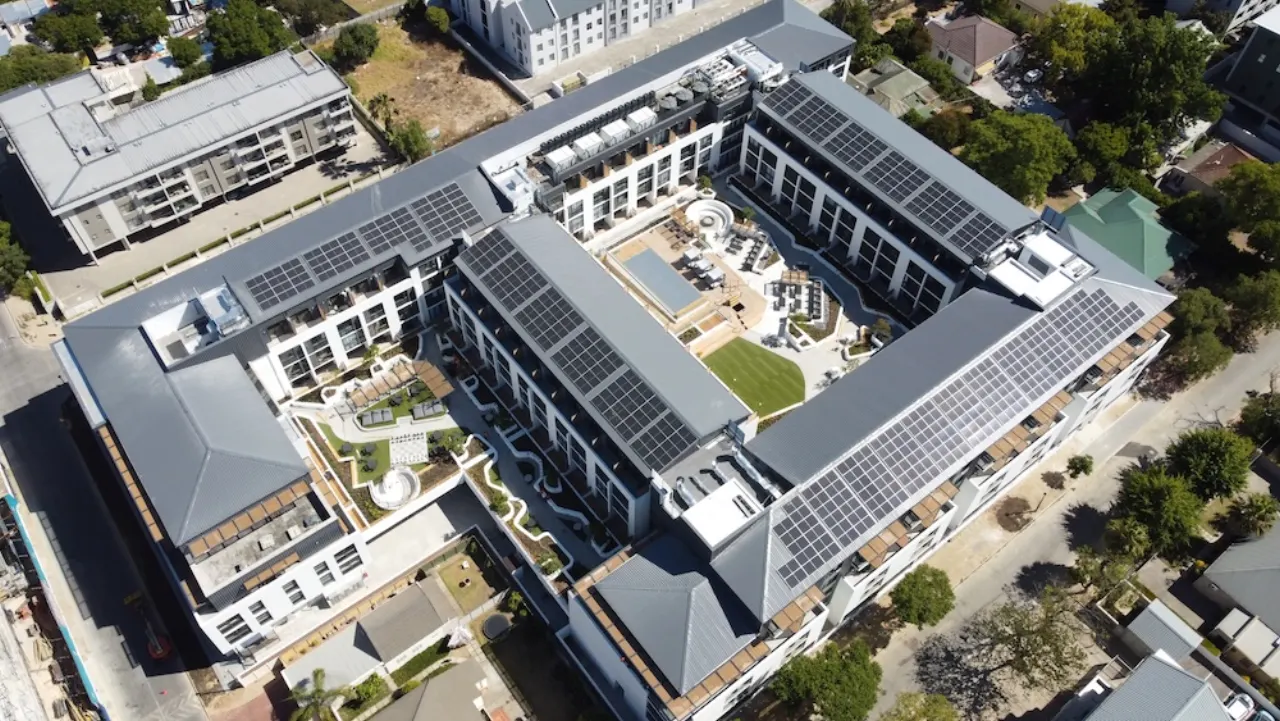
The renewable energy landscape in South Africa has transformed dramatically over the past few years, driven by load shedding, rising electricity costs, and the urgent need for energy security. At the heart of every successful solar installation lies a critical partnership: the solar and inverter combination that converts sunlight into usable electricity. Understanding how these two components work together is essential for anyone considering renewable energy investment, whether for a Johannesburg office park, a Cape Town warehouse, or a residential property in Durban. This guide explores the technical fundamentals, system configurations, and practical considerations that define modern solar and inverter installations across Southern Africa.
Understanding the Solar and Inverter Relationship
Solar panels generate direct current (DC) electricity when photons strike their photovoltaic cells. However, the electrical grid and most household appliances operate on alternating current (AC). This fundamental incompatibility creates the need for inverters, which serve as the critical bridge between solar generation and electricity consumption.
The inverter performs several simultaneous functions beyond simple DC-to-AC conversion. It optimizes power output through maximum power point tracking (MPPT), monitors system performance, ensures safety compliance, and increasingly provides advanced grid services. Modern inverters have evolved from basic conversion devices into sophisticated power management systems that enable solar integration and grid services across multiple operational scenarios.
System Architecture Options
Different solar and inverter configurations suit different applications, each with distinct advantages and limitations:
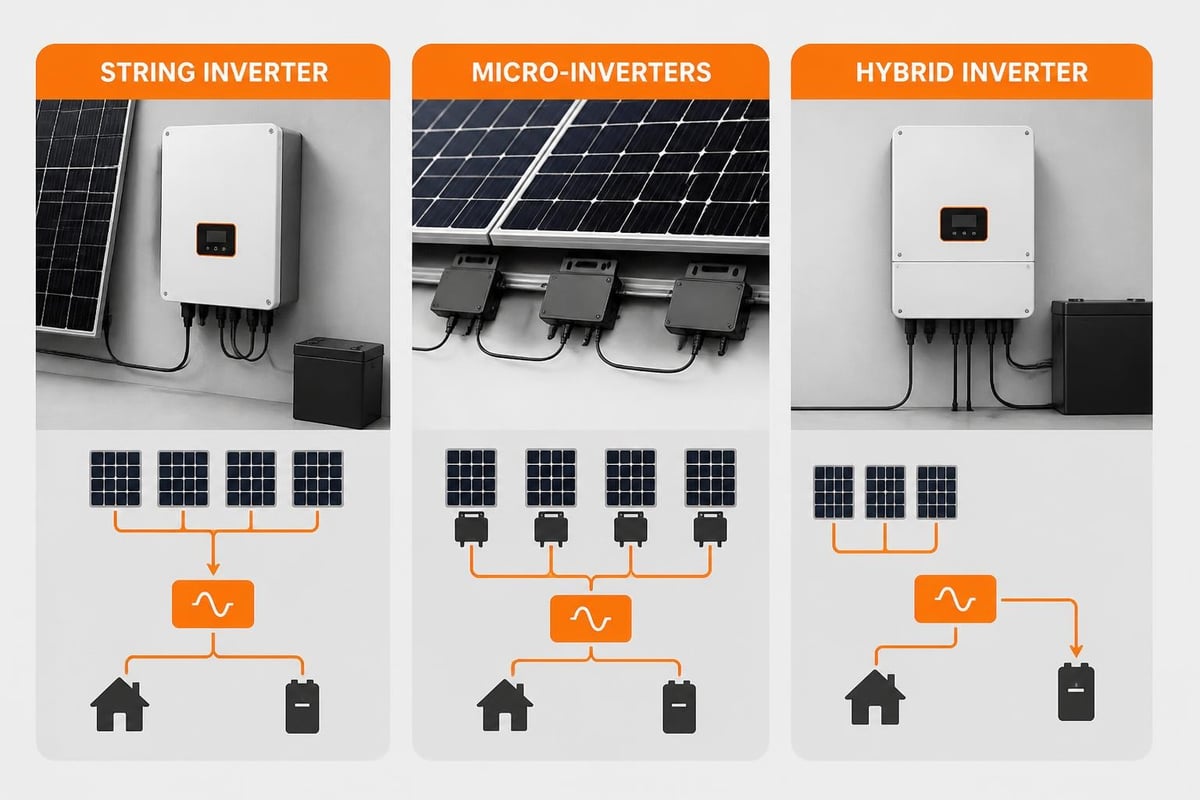
String Inverters connect multiple solar panels in series, with the entire string feeding into a single inverter unit. This approach offers cost efficiency and simplicity but can suffer performance losses when individual panels experience shading or soiling.
Micro-inverters attach to each individual panel, converting DC to AC at the panel level. This configuration maximizes energy harvest from each panel independently, making it ideal for complex roof layouts or partially shaded environments common in established South African suburbs.
Hybrid Inverters integrate battery storage management alongside solar conversion, enabling sophisticated energy management strategies that combine solar generation, battery storage, and grid interaction within a single device.
| Inverter Type | Best Application | Key Advantage | Primary Limitation |
|---|---|---|---|
| String | Large commercial rooftops | Lowest cost per watt | Shading affects entire string |
| Micro-inverter | Residential, complex layouts | Panel-level optimization | Higher initial investment |
| Hybrid | Load shedding protection | Integrated battery management | Complex programming required |
| Central | Utility-scale solar farms | Maximum efficiency at scale | Single point of failure |
Technical Specifications That Matter
When evaluating solar and inverter systems for Southern African conditions, several technical parameters directly impact performance and return on investment. The inverter's efficiency rating indicates how much DC power converts to usable AC power, with premium units achieving 98% or higher efficiency under optimal conditions.
Power Rating and Sizing
The inverter must match the solar array capacity whilst accounting for real-world operational factors. In South Africa's high-irradiance environment, panels often generate power exceeding their nameplate rating during peak sun hours. A properly sized inverter typically ranges from 70% to 110% of the array's total DC capacity, depending on the installation's specific characteristics and objectives.
Oversizing considerations for commercial installations in areas like Sandton or Umhlanga include:
- Expected panel degradation over 25-year lifespan
- Potential for future array expansion
- Local temperature coefficients affecting panel output
- Seasonal irradiance variations across South Africa's diverse climate zones
Undersizing scenarios might be appropriate when optimizing for financial returns rather than absolute maximum generation, particularly where Time-of-Use tariffs create opportunities for strategic energy management.
Environmental Resilience
South African installations face unique environmental challenges that demand robust inverter specifications. Operating temperature ranges must accommodate both the Western Cape's coastal humidity and Gauteng's dry, high-altitude conditions. Quality inverters maintain efficiency across temperatures from -20°C to +60°C, crucial for both winter nights in the Drakensberg and summer rooftops in Limpopo.
IP (Ingress Protection) ratings indicate how well the inverter resists dust and moisture:
- IP65: Standard for outdoor installations, protecting against dust ingress and water jets
- IP66: Enhanced water protection for coastal environments
- IP67: Temporary immersion protection for flood-prone areas
Grid-Interactive Capabilities
Modern solar and inverter systems do far more than simply generate electricity. Advanced inverter functions enable sophisticated grid interaction that benefits both the installation owner and the broader electrical network. These capabilities have become increasingly important as South Africa's grid faces capacity constraints and stability challenges.
Grid-forming inverters represent a significant technological advancement, particularly for larger commercial and industrial installations. Unlike traditional grid-following inverters that require a stable grid signal to operate, grid-forming technology can establish and maintain voltage and frequency independently. This capability proves invaluable during grid disturbances or when operating in islanded mode during load shedding events.
Reactive Power and Voltage Support
Beyond active power delivery, modern inverters provide reactive power support that helps stabilize local grid voltage. This becomes particularly valuable in areas with weak grid infrastructure or high renewable penetration. The inverter can inject or absorb reactive power to maintain voltage within acceptable bands, supporting grid reliability whilst potentially avoiding expensive capacitor bank installations.
Key reactive power capabilities include:
- Automatic voltage regulation (AVR) responding to grid conditions
- Power factor correction adjusting to load requirements
- Volt-VAR optimization coordinating with utility requirements
- Frequency-watt response curtailing output during over-frequency events
Commercial installations often benefit from configuring these functions in consultation with renewable energy engineering services that understand both the technical capabilities and utility interconnection requirements specific to each municipality across Southern Africa.
Battery Integration and Energy Storage
The solar and inverter combination reaches its full potential when integrated with battery energy storage systems (BESS). Load shedding has accelerated battery adoption across South Africa, transforming solar from a daytime-only solution into comprehensive energy resilience infrastructure.
Hybrid inverters manage the complex three-way power flow between solar panels, batteries, and the grid. During sunny periods with full batteries, excess solar generation exports to the grid (where net metering agreements exist). When solar generation falls short of demand, the inverter seamlessly draws from batteries before reverting to grid power. This orchestration happens continuously, optimizing energy costs and ensuring uninterrupted operation.
Battery Chemistry Considerations
Different battery technologies integrate differently with solar and inverter systems:
| Battery Type | Cycle Life | Depth of Discharge | Best Application | Typical Cost (ZAR/kWh) |
|---|---|---|---|---|
| Lithium Iron Phosphate | 6,000-10,000 | 80-90% | Daily cycling, load shedding | 8,000-12,000 |
| Lithium NMC | 3,000-5,000 | 80% | Residential backup | 7,000-10,000 |
| Lead-Acid AGM | 500-1,200 | 50% | Budget backup | 3,500-5,500 |
| Flow Battery | 10,000+ | 100% | Large commercial | 12,000-18,000 |
The inverter's battery management algorithms significantly impact battery longevity. Sophisticated charge controllers prevent overcharging, manage cell balancing, and optimize charging rates based on battery temperature and state of charge. These functions protect the investment whilst maximizing usable energy storage capacity over the system's operational life.
Monitoring and Performance Management
A solar and inverter system generates vast amounts of operational data that enable proactive maintenance and performance optimization. Modern inverters include Wi-Fi or cellular connectivity, transmitting real-time metrics to cloud-based monitoring platforms accessible via smartphone or desktop browsers.
Critical monitoring parameters include:
- Instantaneous power generation and consumption
- Daily, monthly, and lifetime energy production
- String-level voltage and current measurements
- Inverter operating temperature and efficiency
- Grid voltage and frequency readings
- Battery state of charge and cycling statistics
- Fault codes and alarm notifications
This data transparency enables rapid fault identification. A sudden drop in string current might indicate panel soiling requiring cleaning. Persistent efficiency reductions could signal component degradation requiring professional attention. For commercial installations with multiple inverters, comparative performance analysis quickly identifies underperforming units.
The monitoring data also validates financial projections. Actual generation compared against modeled predictions reveals whether the system delivers expected returns, supporting investment decisions for portfolio expansion. Many businesses track these metrics alongside other operational KPIs, integrating renewable energy performance into broader business intelligence systems.
Regulatory Compliance and Standards
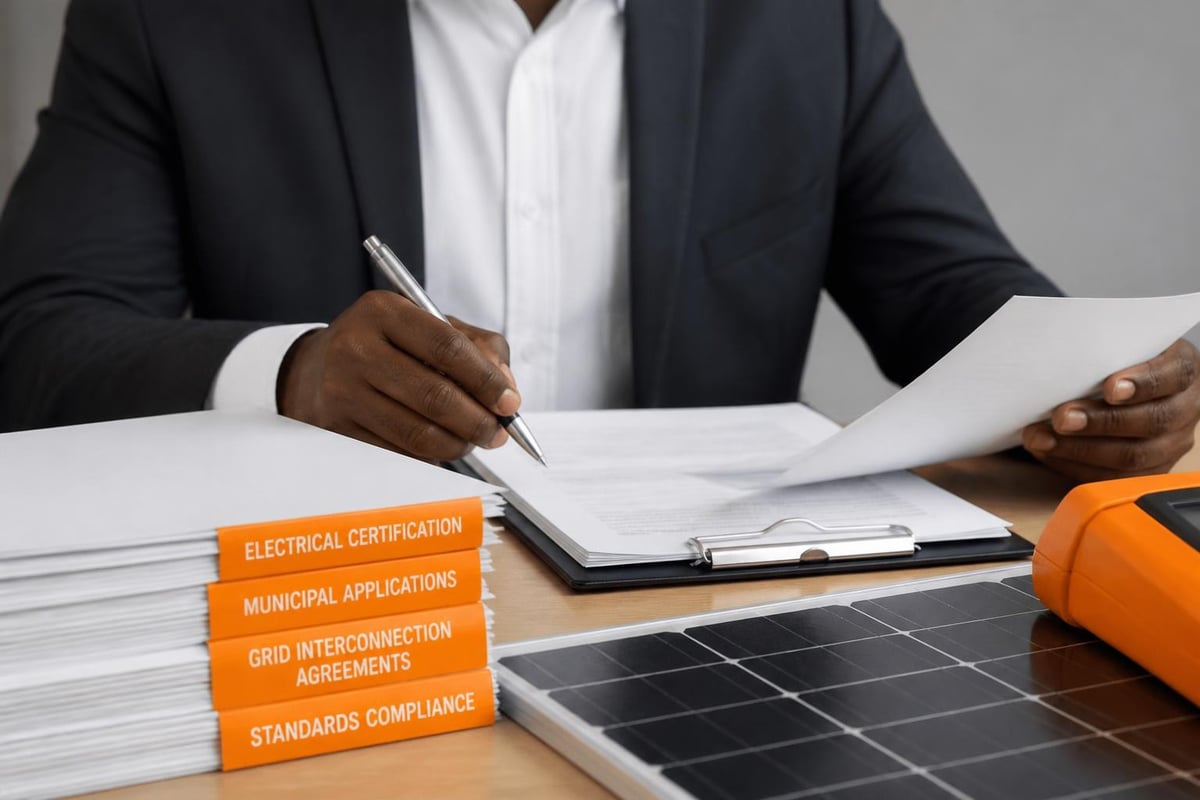
Solar and inverter installations in South Africa must comply with multiple regulatory frameworks governing electrical safety, grid interconnection, and building standards. The South African Bureau of Standards (SABS) provides the primary compliance framework, whilst municipal regulations add location-specific requirements.
The inverter must carry appropriate certifications demonstrating compliance with relevant standards. IEEE 1547 standards govern the interconnection and interoperability of distributed energy resources with the electrical power system, establishing technical requirements for voltage regulation, frequency response, and fault behaviour.
Municipal Interconnection Requirements
Each South African municipality maintains distinct requirements for solar interconnection. Johannesburg, Cape Town, eThekwini, and other major metros have established formal processes, though complexity and timelines vary considerably. Common requirements include:
- Electrical compliance certificate from registered electrician
- Single-line diagram showing system architecture
- Inverter specifications and certifications
- Proposed operating mode (grid-tied, hybrid, off-grid)
- Earthing and protection arrangements
- Net metering or feed-in agreement applications
Professional installation through qualified contractors familiar with local requirements streamlines this process considerably. The financial and operational risks of non-compliant installations far exceed the cost of proper engineering and approval procedures.
Installation Quality and Workmanship
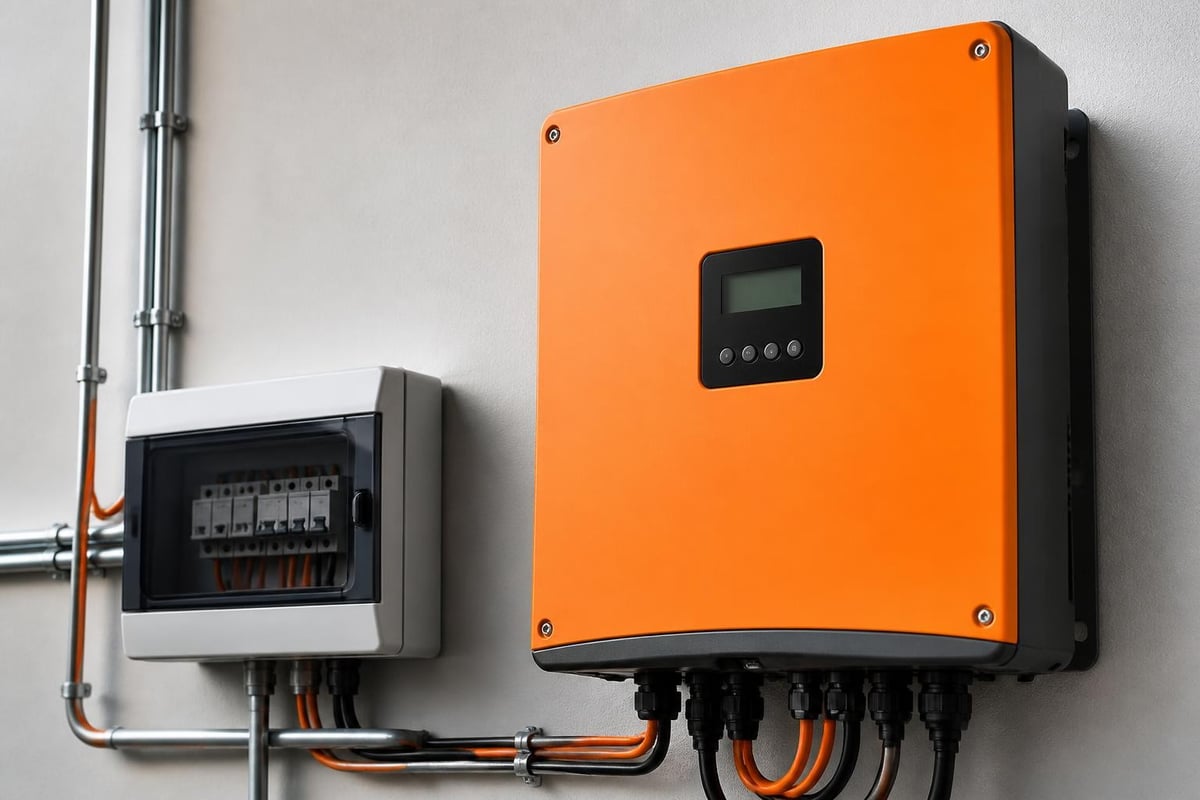
Even the highest-quality solar and inverter components deliver poor results when installed incorrectly. Critical installation factors include proper inverter placement, adequate ventilation, correct DC and AC wiring, earthing systems, and surge protection.
Inverter location directly impacts performance and longevity. The unit should install in a shaded, ventilated location avoiding direct sun exposure that elevates operating temperature and reduces efficiency. Commercial installations often locate inverters in dedicated plant rooms with climate control, whilst residential systems might use covered carports or north-facing walls (avoiding heat buildup).
Cable Sizing and Voltage Drop
Undersized cables between panels and inverter create voltage drops that reduce system efficiency and potentially damage equipment. South African installations operating under intense midday sun with ambient temperatures exceeding 35°C require careful cable derating calculations. The cable must safely carry maximum expected current whilst maintaining voltage drop below 2% under worst-case conditions.
Proper cable sizing considers:
- Maximum DC current from solar array
- Cable run length from panels to inverter
- Ambient temperature and installation method
- Voltage drop calculations for DC and AC circuits
- Future expansion provisions
Protection devices including DC and AC isolators, surge arrestors, and circuit breakers form essential safety infrastructure. Quality installations locate these components accessibly for maintenance whilst protecting them from environmental exposure.
Financial Considerations and Return on Investment
Solar and inverter system economics have shifted dramatically in South Africa's evolving energy landscape. Rising municipal electricity tariffs, decreasing equipment costs, and load shedding's operational impact combine to create compelling financial propositions across residential, commercial, and industrial sectors.
Typical commercial installations in 2026 achieve payback periods between 3 to 6 years, depending on electricity consumption patterns, tariff structures, and system configuration. Industrial users with high daytime consumption and demand charges often see faster returns, whilst residential installations might extend to 7 to 9 years without battery storage.
Cost Components
Understanding total system costs enables accurate financial modelling and realistic expectations:
- Equipment (40-50%): Panels, inverters, mounting structures, cables
- Installation (25-35%): Labour, electrical work, commissioning
- Design and Engineering (5-10%): Load studies, system design, approvals
- Project Management (3-5%): Coordination, quality assurance
- Contingency (5-10%): Unforeseen challenges, scope additions
Battery storage adds ZAR 80,000 to ZAR 250,000 for residential systems, with commercial installations scaling proportionally. However, batteries transform the value proposition by enabling load shifting, demand charge reduction, and complete load shedding protection rather than simple generation offset.
Maintenance and Operational Excellence
Solar and inverter systems require minimal but essential maintenance to sustain optimal performance over their 25-year design life. Unlike conventional generation equipment with complex moving parts, solar installations have few failure modes when properly designed and installed.
Routine maintenance includes:
- Panel cleaning (quarterly in dusty environments, bi-annually in cleaner areas)
- Visual inspection of mounting integrity and cable connections
- Inverter air filter cleaning or replacement
- Performance data review and trend analysis
- Thermal imaging to identify hot spots or failing components
- Vegetation management preventing shading
Most commercial installations establish formal maintenance contracts covering these activities whilst providing guaranteed response times for faults. The cost typically ranges from 1% to 2% of system capital cost annually, a modest investment protecting the substantial initial capital deployment.
Inverter warranties typically provide 5 to 10 years of coverage, with premium manufacturers offering extended protection to 15 or 20 years. Understanding warranty terms, particularly exclusions around environmental damage or unauthorized modifications, protects against unexpected replacement costs.
Future Developments and Technology Trends
Solar and inverter technology continues advancing rapidly, with several developments poised to reshape system capabilities and economics. Inverter manufacturers increasingly embed artificial intelligence for predictive maintenance, learning consumption patterns to optimize battery charging and grid interaction automatically.
Vehicle-to-grid (V2G) capabilities allowing electric vehicles to serve as mobile energy storage represent another frontier. Bi-directional inverters enable EVs to discharge stored energy back to buildings during peak demand or grid outages, multiplying the resilience benefits of renewable energy infrastructure.
Advanced simulation tools enable more accurate modeling of inverter behavior under complex grid conditions, supporting better system design and integration with utility networks. These developments particularly benefit large commercial installations where sophisticated energy management delivers substantial operational advantages.
Module-level power electronics combining panel-level optimization with centralized inversion offer a middle path between string and micro-inverter architectures. This approach captures many benefits of distributed MPPT whilst avoiding the higher costs of fully distributed conversion.
Solar and inverter technology has matured into a reliable, cost-effective solution for South Africa's energy challenges, offering both financial returns and operational resilience. Whether you're evaluating renewable energy for the first time or expanding existing infrastructure, professional guidance ensures optimal system design and long-term performance. INFOLED combines engineering expertise, proven implementation experience, and comprehensive support services to deliver intelligent energy solutions tailored to your specific requirements across Southern Africa's diverse commercial, industrial, and residential sectors.
Next Step
Need help with your energy strategy?
Speak to INFOLED about solar, storage, EV charging, service agreements or system performance.