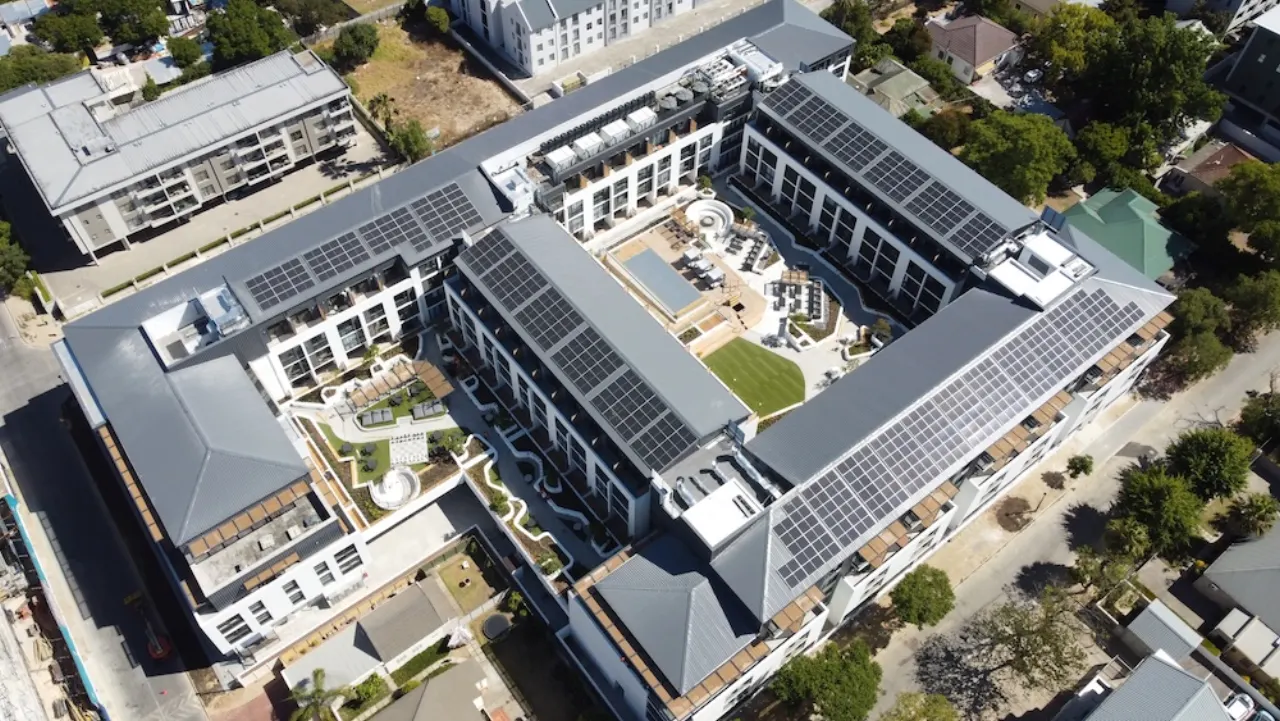
The transition towards renewable power generation is accelerating across Southern Africa, driven by falling technology costs, grid instability, and mounting pressure to reduce carbon emissions. Solar and wind energy have emerged as the cornerstone technologies for this transformation, offering commercial, industrial, and residential consumers viable alternatives to conventional fossil fuel generation. As organisations across the region grapple with escalating electricity tariffs and persistent load shedding, the economic and operational case for adopting solar and wind energy has never been stronger.
The Economic Reality of Solar and Wind Energy in 2026
The financial landscape for renewable energy has shifted dramatically over the past decade. Solar and wind energy technologies have experienced unprecedented cost reductions, fundamentally altering the economics of power generation across Southern Africa.
According to Lazard's comprehensive levelised cost of energy analysis, utility-scale solar photovoltaic systems now range between R800 and R1,600 per megawatt-hour, whilst onshore wind installations deliver electricity at R650 to R1,400 per megawatt-hour. These figures represent remarkable improvements from just five years ago, positioning both technologies as cost-competitive with, or cheaper than, coal and gas-fired generation.
Understanding Levelised Cost Comparisons
| Technology | Cost Range (ZAR/MWh) | Capacity Factor | Key Advantages |
|---|---|---|---|
| Utility Solar PV | R800 – R1,600 | 18% – 28% | Rapid deployment, modular scaling |
| Onshore Wind | R650 – R1,400 | 30% – 45% | Higher capacity factor, predictable generation |
| Coal (new build) | R1,200 – R2,400 | 65% – 85% | Dispatchable, but declining competitiveness |
| Gas Peaking | R2,000 – R3,800 | 10% – 40% | Flexibility, but fuel price volatility |
For commercial and industrial consumers in South Africa, these cost dynamics translate directly into operational savings. When combined with escalating municipal electricity tariffs-which have increased by more than 400% since 2008-the payback periods for solar and wind energy investments have contracted significantly.
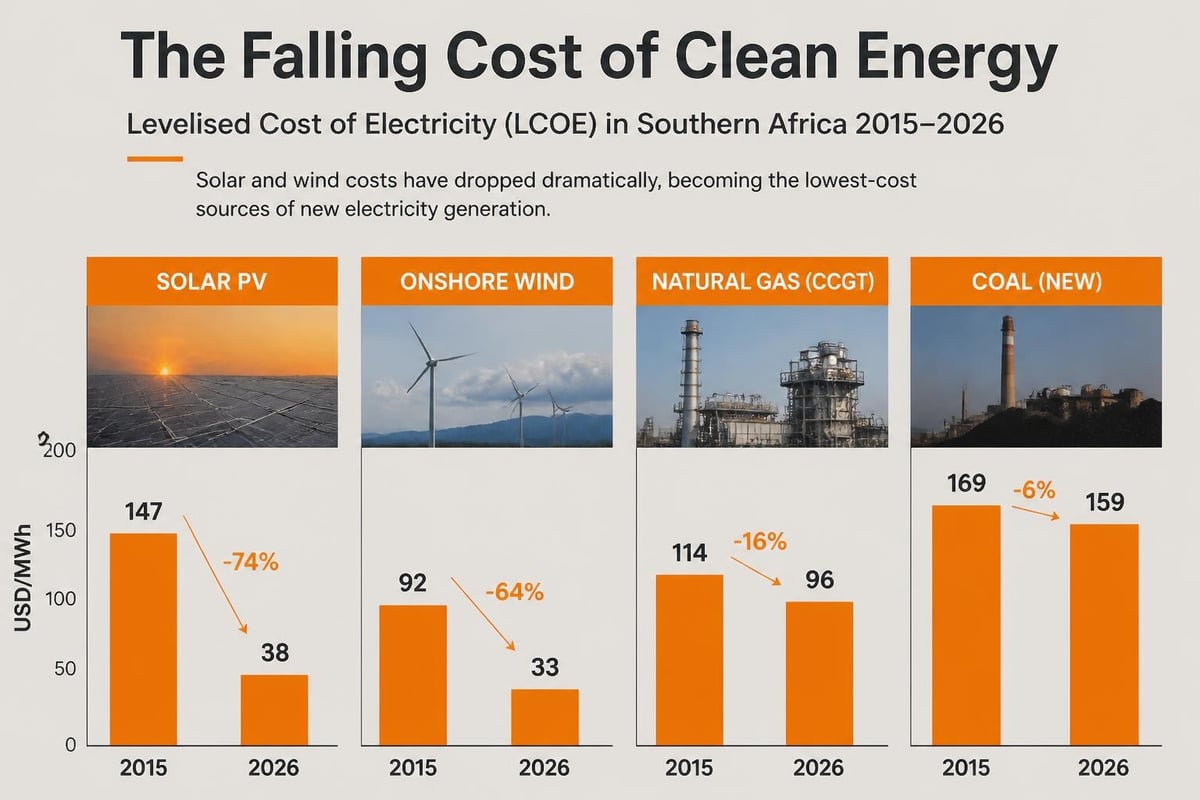
The true economic advantage emerges when examining total cost of ownership over a 20 to 25-year operational lifespan. Whilst conventional generation faces ongoing fuel costs and carbon tax exposure, solar and wind energy systems benefit from zero fuel costs and predictable maintenance expenses.
Technical Integration and Grid Stability Considerations
Integrating high penetrations of solar and wind energy into existing electrical networks presents distinct technical challenges. Both technologies generate variable power output dependent on weather conditions, requiring sophisticated grid management strategies to maintain stability and reliability.
Variability and Predictability Patterns
Solar generation follows predictable diurnal patterns, with peak output occurring during midday hours when commercial and industrial demand typically remains high. Wind resources exhibit greater temporal variability but often generate during evening and overnight periods, providing natural complementarity to solar output.
The U.S. Department of Energy's renewable systems integration research demonstrates that advanced forecasting tools now predict solar and wind energy output with 95% accuracy for day-ahead scheduling, enabling grid operators to plan conventional generation dispatch more effectively.
Modern power electronics have transformed the grid-support capabilities of renewable installations. Recent research published in Nature Reviews Electrical Engineering highlights how inverter-based wind and solar plants now provide frequency regulation, voltage support, and synthetic inertia-services previously exclusive to synchronous generators.
- Frequency response: Modern inverters inject or absorb reactive power within milliseconds
- Voltage regulation: Advanced controls maintain stable voltage profiles across distribution networks
- Ramp rate management: Intelligent curtailment prevents destabilising sudden output changes
- Black start capability: Certain configurations enable grid restoration without external power
Battery Energy Storage: The Integration Enabler
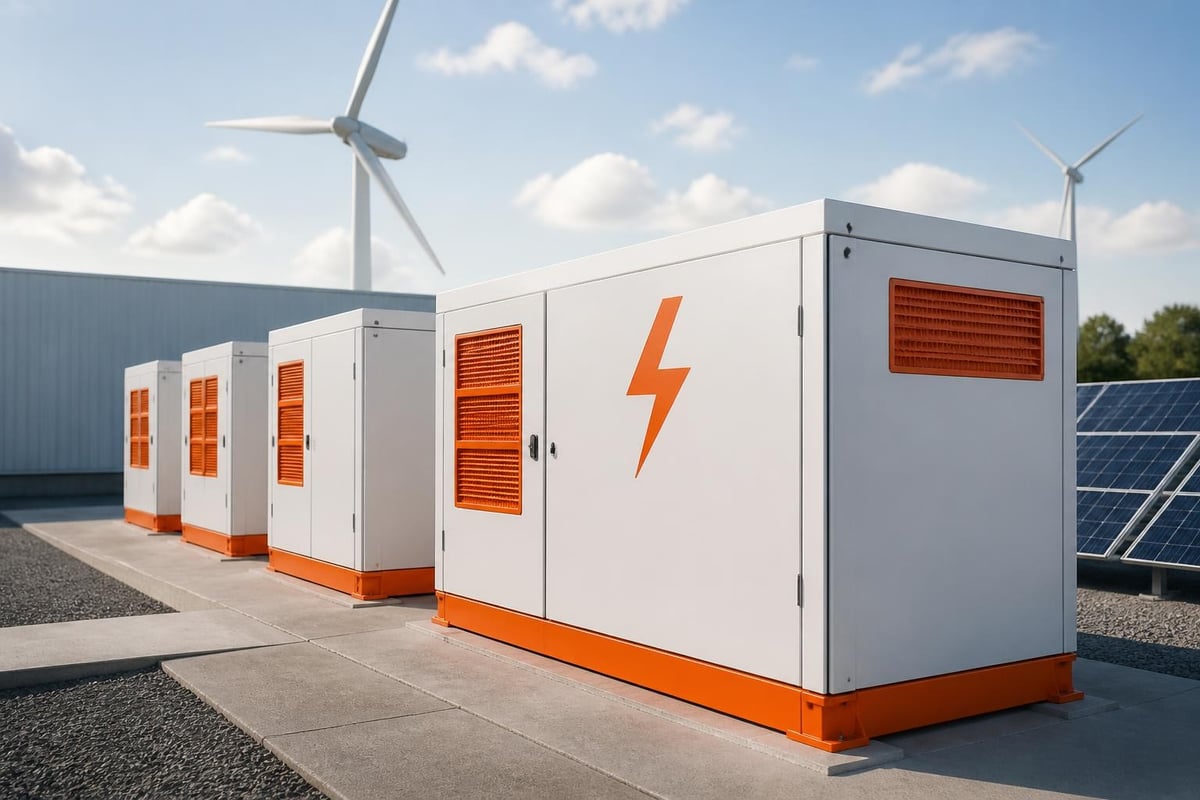
Energy storage systems have emerged as the critical technology enabling higher solar and wind energy penetration whilst maintaining grid reliability. Battery energy storage systems (BESS) address the temporal mismatch between renewable generation and consumption patterns.
For commercial and industrial facilities, Commercial, Industrial, Agricultural and Residential Battery Energy Storage Systems (BESS) deliver multiple value streams beyond simple time-shifting. These include demand charge reduction, backup power provision during grid outages, and participation in demand response programmes.
Storage Applications Across Market Segments
| Application | Typical Duration | Primary Benefit | Suitable Technologies |
|---|---|---|---|
| Peak shaving | 2–4 hours | Demand charge reduction | Lithium-ion, flow batteries |
| Load shifting | 4–8 hours | Energy arbitrage | Lithium-ion, compressed air |
| Backup power | 4–24 hours | Resilience during outages | Lithium-ion, lead-acid |
| Frequency regulation | 15–60 minutes | Grid stability services | Lithium-ion, flywheels |
The economics of battery storage have improved in tandem with solar and wind energy costs. Lithium-ion battery pack prices have declined by approximately 90% since 2010, with installed system costs now ranging between R8,000 and R14,000 per kilowatt-hour for commercial-scale installations in South Africa.
Hybrid System Design and Optimisation
The most sophisticated renewable energy deployments combine solar and wind energy generation with battery storage in integrated hybrid systems. This approach maximises resource utilisation whilst minimising grid dependence and demand charges.
Hybrid system design requires careful analysis of several factors:
- Load profile characterisation: Detailed understanding of consumption patterns across hourly, daily, and seasonal timeframes
- Resource assessment: Solar irradiation and wind speed data with sufficient temporal resolution
- Tariff structure analysis: Time-of-use rates, demand charges, and seasonal variations
- Resilience requirements: Critical loads requiring uninterrupted power during grid outages
- Physical constraints: Available roof space, ground area, wind exposure, and structural capacity
Commercial facilities with complementary solar and wind resources can achieve remarkable self-sufficiency levels. Manufacturing operations in coastal regions of the Western and Eastern Cape, for example, benefit from strong afternoon winds that coincide with declining solar output, extending productive generation hours.
Capacity Factor Improvements Through Hybridisation
Individual solar installations typically achieve capacity factors between 18% and 22% in South Africa, whilst wind projects range from 30% to 38% depending on site quality. Properly designed hybrid systems can deliver combined capacity factors exceeding 40%, substantially improving asset utilisation and return on investment.
The National Academies' analysis of grid evolution emphasises that hybrid renewable installations with co-located storage reduce transmission infrastructure requirements and improve local grid stability compared to standalone facilities.
Regional Resource Characteristics Across Southern Africa
Solar and wind energy resource quality varies significantly across Southern Africa's diverse geography. Understanding these regional patterns enables optimised system design and accurate financial modelling.
Solar Resources
South Africa ranks amongst the world's premier solar resources, with most regions receiving 4.5 to 6.5 peak sun hours daily. The Northern Cape province offers exceptional conditions, with irradiation levels exceeding 2,200 kilowatt-hours per square metre annually. Coastal areas experience slightly lower but still excellent resources, whilst the Highveld benefits from clear winter skies despite lower sun angles.
Wind Resources
The Western Cape, Eastern Cape, and KwaZulu-Natal coastal regions demonstrate the strongest wind resources, with average wind speeds exceeding 7 metres per second at 80-metre hub heights. The Cookhouse Wind Farm corridor in the Eastern Cape has become a focal point for wind development due to consistently strong and reliable wind patterns.
Recent wind resource assessments identify promising sites along the escarpment regions of Mpumalanga and Limpopo, where topographic acceleration enhances wind speeds. These inland locations often exhibit different diurnal patterns compared to coastal sites, generating peak output during evening hours.
- Coastal wind farms: Strong afternoon sea breezes, evening peak generation
- Escarpment sites: Topographic enhancement, diverse seasonal patterns
- Inland plateaus: Moderate resources, complementary to solar generation timing
- Mountain passes: Concentrated wind corridors, high turbulence considerations
Regulatory Framework and Grid Connection Requirements
Navigating South Africa's regulatory environment for solar and wind energy projects requires understanding multiple layers of requirements spanning municipal, provincial, and national jurisdictions.
Embedded Generation Regulations
The National Energy Regulator of South Africa (NERSA) has established frameworks for embedded generation facilities up to 100 megawatts. Installations below 1 megawatt face simplified registration requirements, whilst larger systems require formal licensing and grid impact studies.
Municipal regulations vary significantly across jurisdictions. Some metropolitan areas have streamlined approval processes for commercial solar PV installations, whilst others impose lengthy bureaucratic procedures. Engaging with municipal authorities early in project development prevents costly delays.
Grid connection agreements define technical requirements, metering arrangements, and export conditions. Many commercial facilities opt for non-export configurations to avoid complex wheeling agreements, using battery storage to capture surplus generation rather than feeding back into the grid.
Environmental and Social Governance Imperatives
Corporate sustainability commitments increasingly drive solar and wind energy adoption across Southern Africa. Organisations pursuing Environmental, Social, and Governance (ESG) objectives and Net Zero carbon strategies recognise renewable energy as fundamental to emission reduction targets.
Scope 2 emissions from purchased electricity represent the largest carbon footprint component for most commercial and industrial operations. Transitioning to on-site solar and wind energy generation delivers immediate, measurable emission reductions that strengthen sustainability reporting and stakeholder confidence.
Quantifying Carbon Displacement
South Africa's grid emission factor averages approximately 0.95 kilograms of CO₂ equivalent per kilowatt-hour, amongst the highest globally due to coal dependence. Each megawatt-hour of solar and wind energy generation therefore displaces nearly one tonne of carbon emissions.
For context, a 500-kilowatt commercial solar installation generating 800 megawatt-hours annually prevents roughly 760 tonnes of CO₂ emissions-equivalent to removing 165 passenger vehicles from South African roads for one year.
Operational Performance and Maintenance Requirements
Solar and wind energy systems require distinct maintenance approaches to ensure optimal long-term performance. Understanding these operational requirements enables accurate lifecycle cost projections and availability planning.
Solar Photovoltaic Maintenance
- Module cleaning: Quarterly or bi-annual cleaning maintains optimal output, particularly critical in dusty inland regions
- Inverter servicing: Annual inspections and firmware updates prevent degradation
- String voltage testing: Identifies underperforming modules or connection issues
- Thermal imaging: Detects hot spots indicating cell damage or bypass diode failures
- Vegetation management: Prevents shading from encroaching plant growth
Wind Turbine Maintenance
Wind installations demand more intensive maintenance compared to solar systems due to mechanical complexity. Major components including gearboxes, generators, and pitch systems require scheduled servicing every 3 to 6 months.
Remote monitoring systems enable predictive maintenance strategies, identifying developing issues before catastrophic failures occur. Vibration analysis, oil quality monitoring, and thermal imaging detect bearing wear, lubrication degradation, and electrical connection problems.
Leveraging comprehensive operations and maintenance programmes maximises system availability and extends asset life. Professional service providers deliver performance guarantees, ensuring systems achieve projected generation targets and financial returns.
Financial Structuring and Investment Models
Multiple financing mechanisms enable organisations to adopt solar and wind energy without prohibitive upfront capital expenditure. Selecting the appropriate financial structure depends on balance sheet constraints, tax position, and strategic objectives.
Common Investment Structures
| Model | Capital Outlay | Ownership | Key Advantages | Considerations |
|---|---|---|---|---|
| Direct purchase | Full upfront | Customer | Maximum savings, asset ownership | Requires capital allocation |
| Debt finance | Loan deposit | Customer | Asset ownership, tax benefits | Debt capacity, interest costs |
| Lease agreement | Minimal | Lessor | Off-balance sheet, predictable costs | Lower total savings |
| Power purchase agreement | None | Third party | No capex, immediate savings | Long-term commitment |
Power purchase agreements (PPAs) have gained significant traction amongst corporate consumers. Under this model, a third-party investor funds, owns, and operates the renewable energy installation, selling electricity to the host customer at contracted rates below municipal tariffs.
Exploring renewable energy financing options reveals that projected savings over 20-year contracts typically range from 15% to 35% compared to grid electricity, with savings increasing as municipal tariffs escalate whilst PPA rates remain fixed or subject to low inflation indexation.
Integration With Broader Energy Management Strategies
Solar and wind energy installations deliver maximum value when integrated within comprehensive energy management frameworks. Isolated renewable generation represents just one component of holistic efficiency and resilience strategies.
Advanced energy management systems combine renewable generation data with consumption monitoring, demand forecasting, and automated load control. These platforms identify optimisation opportunities including:
- Load shifting: Moving flexible consumption to periods of high renewable generation
- Demand limiting: Preventing peak demand spikes through intelligent load shedding
- Battery dispatch optimisation: Coordinating storage charge/discharge cycles for maximum financial benefit
- Power quality monitoring: Detecting harmonics, voltage fluctuations, and phase imbalances
Real-time monitoring enables rapid response to developing issues. Inverter failures, module degradation, or wind turbine faults trigger immediate alerts, minimising generation losses and revenue impact.
Future Outlook and Technology Evolution
The trajectory for solar and wind energy adoption across Southern Africa points towards continued rapid growth. Several converging trends will accelerate deployment over the coming decade.
Technology improvements continue unabated. Solar module efficiency has increased from 15% to beyond 22% for mainstream crystalline silicon technology, with laboratory prototypes exceeding 27%. Wind turbine hub heights and rotor diameters steadily increase, accessing stronger, more consistent wind resources whilst improving capacity factors.
Digitalisation and artificial intelligence enhance system performance through predictive generation forecasting, autonomous grid balancing, and optimised maintenance scheduling. Machine learning algorithms analyse historical weather data, generation patterns, and equipment performance to maximise output and minimise operational costs.
Emerging Technology Developments
- Bifacial solar modules: Capture reflected light from surfaces beneath panels, increasing yield by 5% to 15%
- Floating solar installations: Utilise water bodies for solar deployment, reducing land requirements
- Offshore wind: Coastal Southern African waters offer substantial wind resources for future development
- Green hydrogen production: Renewable electricity enables zero-carbon hydrogen for industrial processes and transportation
Policy evolution will shape market development. Grid access reforms, streamlined licensing procedures, and carbon pricing mechanisms influence investment decisions and project economics. South Africa's Renewable Energy Independent Power Producer Procurement Programme (REIPPPP) demonstrates government commitment to expanding renewable capacity.
Skills Development and Local Economic Impact
Large-scale solar and wind energy deployment creates substantial employment opportunities across manufacturing, installation, operations, and maintenance sectors. The renewable energy industry supports approximately 35,000 direct jobs in South Africa, with significant growth projected.
Localisation requirements within government procurement programmes stimulate domestic manufacturing capabilities. South African companies now produce solar mounting structures, inverters, and balance-of-system components, whilst international manufacturers establish local assembly operations.
Skills development initiatives prepare technicians and engineers for renewable energy careers. Accredited training programmes cover photovoltaic system design, wind turbine maintenance, battery storage integration, and grid connection requirements. As the installed capacity base expands, demand for qualified professionals will intensify.
Community benefit programmes associated with commercial renewable projects deliver local economic development. These initiatives support education, healthcare, and enterprise development in surrounding communities, particularly important for installations in rural areas.
Solar and wind energy represent transformative technologies reshaping how Southern African organisations source and manage electricity. The compelling economics, proven reliability, and environmental benefits position these resources as central to future energy strategies.
INFOLED delivers comprehensive renewable energy solutions tailored to commercial, industrial, and residential requirements across Southern Africa. From initial feasibility assessment through design, financing, installation, monitoring, and maintenance, our integrated approach ensures optimised performance and maximum return on investment. Contact our engineering team to explore how solar and wind energy can reduce your electricity costs, enhance resilience, and advance your sustainability objectives.
Next Step
Need help with your energy strategy?
Speak to INFOLED about solar, storage, EV charging, service agreements or system performance.