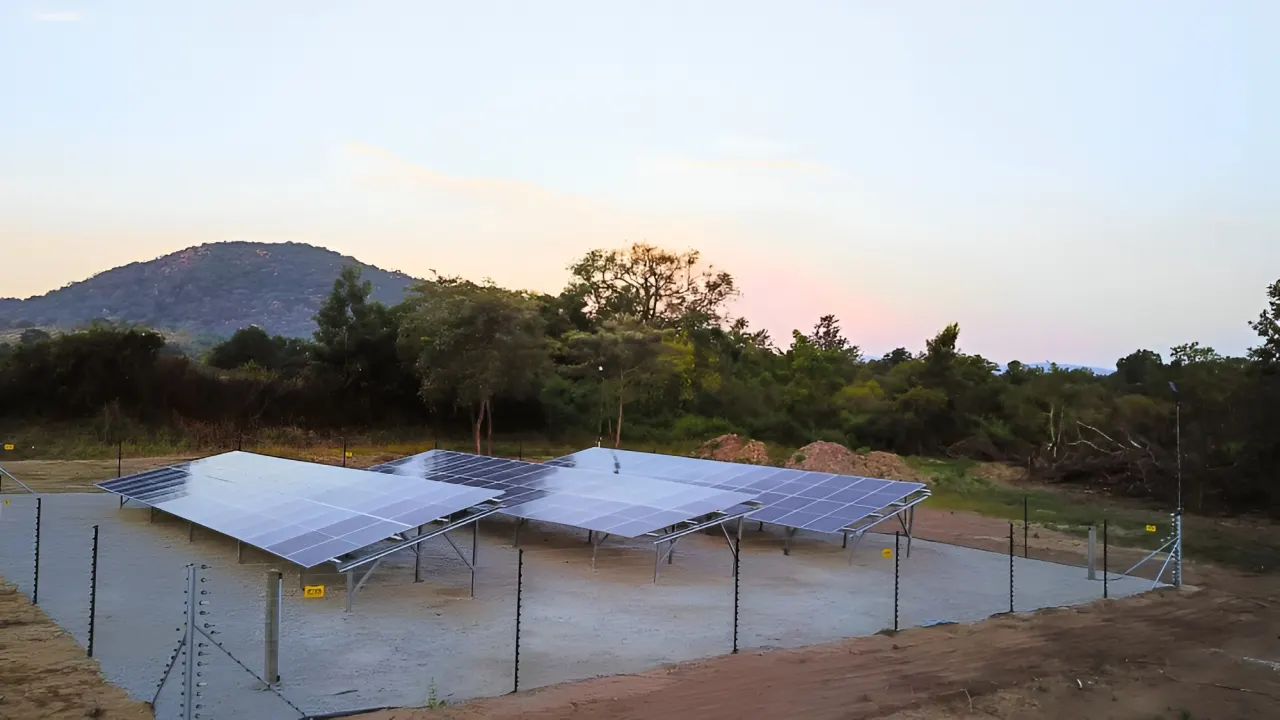
Solar battery storage has become a cornerstone technology for businesses and households across South Africa navigating the dual challenges of load shedding and escalating electricity tariffs. As renewable energy adoption accelerates throughout 2026, the integration of battery energy storage systems with solar photovoltaic installations is no longer a luxury but a strategic necessity. This technology enables organisations to capture surplus solar generation during peak production hours, store that energy efficiently, and deploy it precisely when needed, whether during evening demand peaks, grid outages, or periods of high municipal tariffs. For commercial and industrial operations in Gauteng, the Western Cape, and KwaZulu-Natal, the financial and operational advantages of pairing solar arrays with battery storage are reshaping energy procurement strategies.
Understanding Solar Battery Storage Technology
Solar battery storage systems function as the critical bridge between intermittent solar generation and consistent energy demand. When photovoltaic panels produce more electricity than a facility requires, the excess flows into battery banks rather than being curtailed or exported to the grid at unfavourable rates. Modern lithium-ion battery systems dominate the South African market due to their superior energy density, declining costs, and extended cycle life.
Core Components and System Architecture
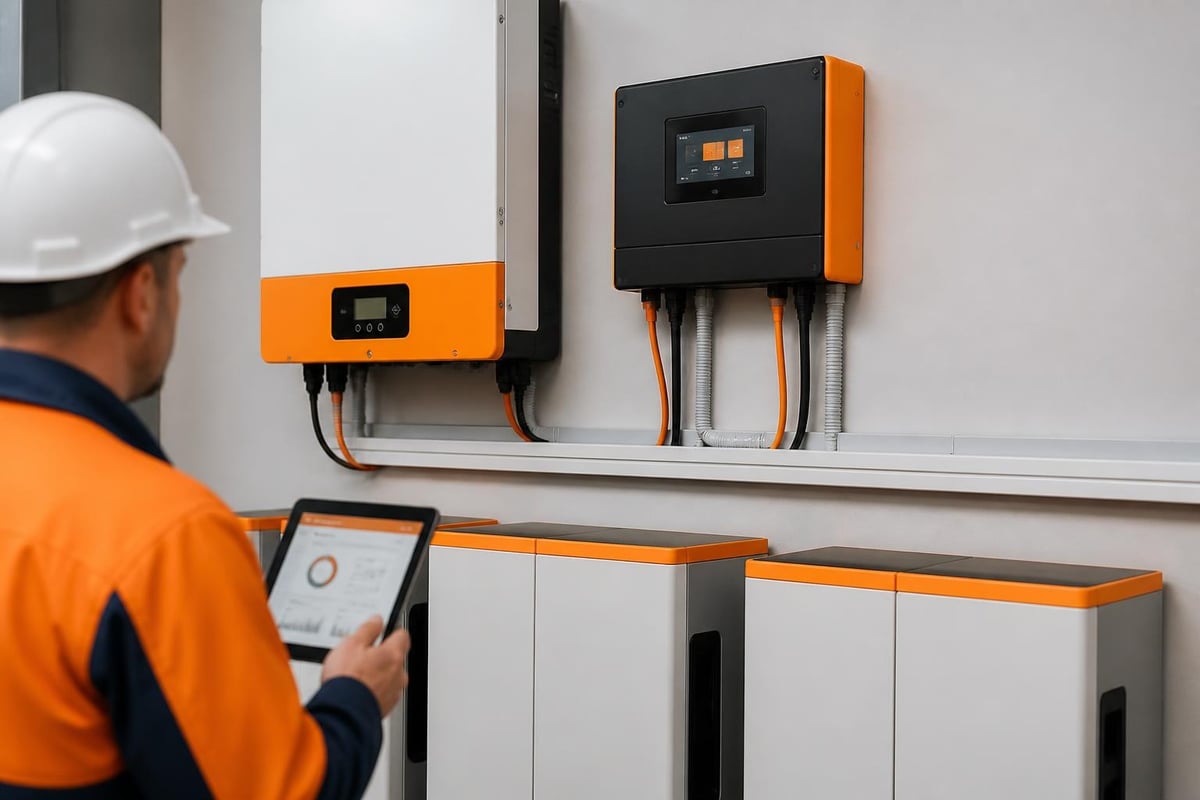
A complete solar battery storage installation comprises several interconnected elements working in harmony. The battery management system (BMS) monitors individual cell voltages, temperatures, and state of charge to optimise performance and safety. Inverters convert direct current from solar panels and batteries into alternating current suitable for building loads and grid connection. Smart energy management software orchestrates when to charge batteries, when to discharge them, and when to draw from or export to the municipal grid.
Key technical specifications that determine system performance include:
- Usable capacity measured in kilowatt-hours (kWh)
- Power rating indicating maximum simultaneous discharge in kilowatts (kW)
- Round-trip efficiency typically ranging from 85% to 95%
- Depth of discharge parameters affecting battery longevity
- Cycle life expectations spanning 3,000 to 10,000 cycles
The U.S. Department of Energy's procurement guidance provides valuable frameworks for specifying these parameters during project development.
| Battery Chemistry | Typical Efficiency | Cycle Life | Relative Cost |
|---|---|---|---|
| Lithium Iron Phosphate (LFP) | 92-95% | 6,000-10,000 | Medium-High |
| Nickel Manganese Cobalt (NMC) | 90-93% | 3,000-5,000 | High |
| Lead-Acid (AGM) | 75-85% | 500-1,500 | Low |
Financial Advantages for South African Businesses
The economic case for solar battery storage has strengthened considerably as component costs decline and electricity tariffs rise. According to IRENA's 2025 renewable power cost report, battery storage costs have fallen by over 70% since 2015, with further reductions anticipated through 2026 and beyond.
Tariff Optimisation and Peak Shaving
Commercial entities on time-of-use tariffs face dramatically different rates throughout the day. Municipal peak periods in South Africa typically coincide with evening hours when solar generation ceases. Battery storage enables businesses to charge during low-tariff periods or from solar generation, then discharge during expensive peak windows, potentially reducing electricity bills by 40-60%.
For example, a manufacturing facility in Johannesburg paying R2.50 per kWh during peak periods but only R0.95 during off-peak can achieve substantial savings. A 200 kWh battery system discharging 150 kWh daily during peak periods could save approximately R85,000 monthly, with payback periods often under five years when paired with solar.
Demand Charge Reduction
Large industrial consumers face demand charges based on their highest 30-minute power draw each month. These charges can constitute 30-50% of total electricity costs. Solar battery storage systems strategically discharge during high-demand events, "shaving" peak consumption and reducing monthly demand charges by R50,000 to R500,000 depending on facility size.
The Brookings Institution's analysis on battery storage economics demonstrates how these financial mechanisms drive adoption across diverse sectors.
Applications Across Commercial and Industrial Sectors
Different industries leverage solar battery storage to address specific operational challenges beyond simple cost reduction.
Manufacturing and Production Facilities
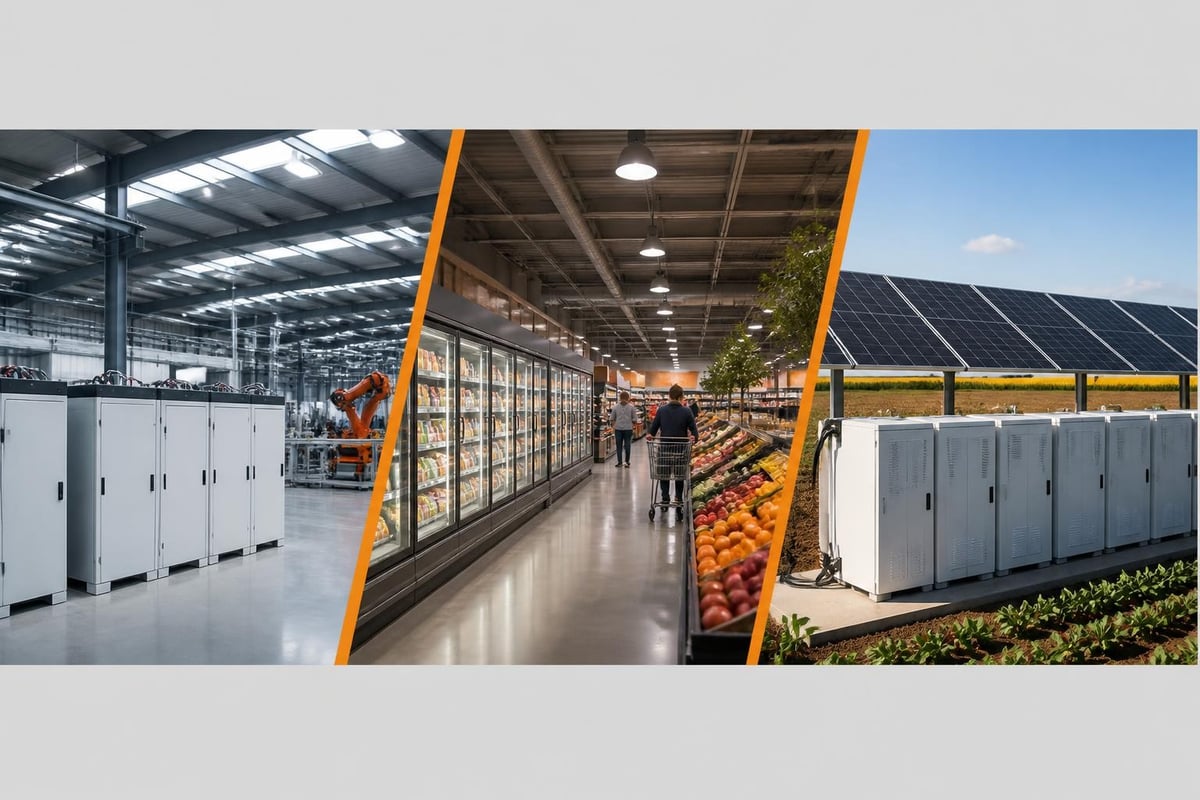
Manufacturers require uninterrupted power to maintain production schedules and protect sensitive equipment. Solar battery storage provides:
- Seamless backup power during grid failures without diesel generator noise or emissions
- Power quality improvement by buffering voltage fluctuations
- Production continuity during load shedding stages
- Reduced carbon footprint supporting sustainability reporting
Agricultural operations implementing smart irrigation systems particularly benefit from solar battery storage, ensuring pumps operate consistently regardless of grid availability.
Retail and Hospitality
Shopping centres, hotels, and restaurants cannot afford downtime during load shedding. Battery storage maintains:
- Point-of-sale systems and payment processing
- Refrigeration for perishable inventory
- HVAC systems for customer comfort
- Security and access control systems
A typical 100 kWh system can sustain essential loads for 4-8 hours, covering most load shedding events whilst also enabling energy management systems to optimise consumption patterns.
System Sizing and Configuration Strategies
Properly sizing solar battery storage requires comprehensive analysis of consumption patterns, solar generation profiles, and business objectives. Undersized systems fail to deliver anticipated benefits, whilst oversized installations inflate capital costs unnecessarily.
Load Profile Analysis
Understanding your facility's energy consumption across hourly, daily, and seasonal timeframes forms the foundation of effective system design. Key metrics include:
- Average daily consumption in kWh
- Peak demand periods and magnitude
- Essential vs. non-essential loads during outages
- Seasonal variations affecting both consumption and solar generation
Professional engineering and energy audits quantify these parameters, enabling accurate system specifications.
Solar-to-Battery Ratio Optimisation
The relationship between solar array capacity and battery storage capacity significantly impacts system performance. In South Africa's climate, a typical commercial installation might pair a 100 kWp solar array with 150-250 kWh of battery storage, depending on consumption patterns.
Common configuration strategies include:
- Solar-dominant systems (3:1 solar-to-battery ratio) maximising self-consumption with modest storage
- Balanced systems (2:1 ratio) providing comprehensive peak shaving and backup capability
- Storage-dominant systems (1:1 or lower ratio) prioritising extended backup duration
The Department of Energy's solar integration guide explores these architectural decisions in depth.
| System Size | Solar Capacity | Battery Capacity | Typical Application |
|---|---|---|---|
| Small Commercial | 50-100 kWp | 50-100 kWh | Office buildings, clinics |
| Medium Commercial | 100-500 kWp | 200-500 kWh | Warehouses, hotels |
| Industrial | 500-2,000 kWp | 500-2,000 kWh | Factories, cold storage |
Safety Standards and Regulatory Compliance
Battery energy storage systems contain significant stored energy requiring rigorous safety protocols. South African installations must adhere to SANS 10142 electrical installation standards alongside international best practices.
Fire Safety and Testing Requirements
Large-scale battery installations undergo thermal runaway testing per UL 9540A standards, which simulate cell-level failures to assess system-level fire propagation risks. These comprehensive tests inform proper spacing, ventilation, and suppression system requirements.
NFPA 855 establishes installation criteria including:
- Minimum separation distances from property lines and structures
- Ventilation requirements for enclosed battery rooms
- Fire detection and suppression systems
- Emergency shutdown procedures
- Signage and access control protocols
Compliance with these standards protects both property and personnel whilst often reducing insurance premiums.
Grid Connection and Regulatory Approvals
Connecting solar battery storage systems to the municipal grid requires formal applications and approvals. Most municipalities throughout South Africa mandate:
- Electrical compliance certificates from registered electricians
- Grid connection agreements specifying export limitations
- Engineering sign-off on system design and installation
- Periodic inspections ensuring ongoing compliance
Working with experienced renewable energy engineering providers streamlines these regulatory processes.
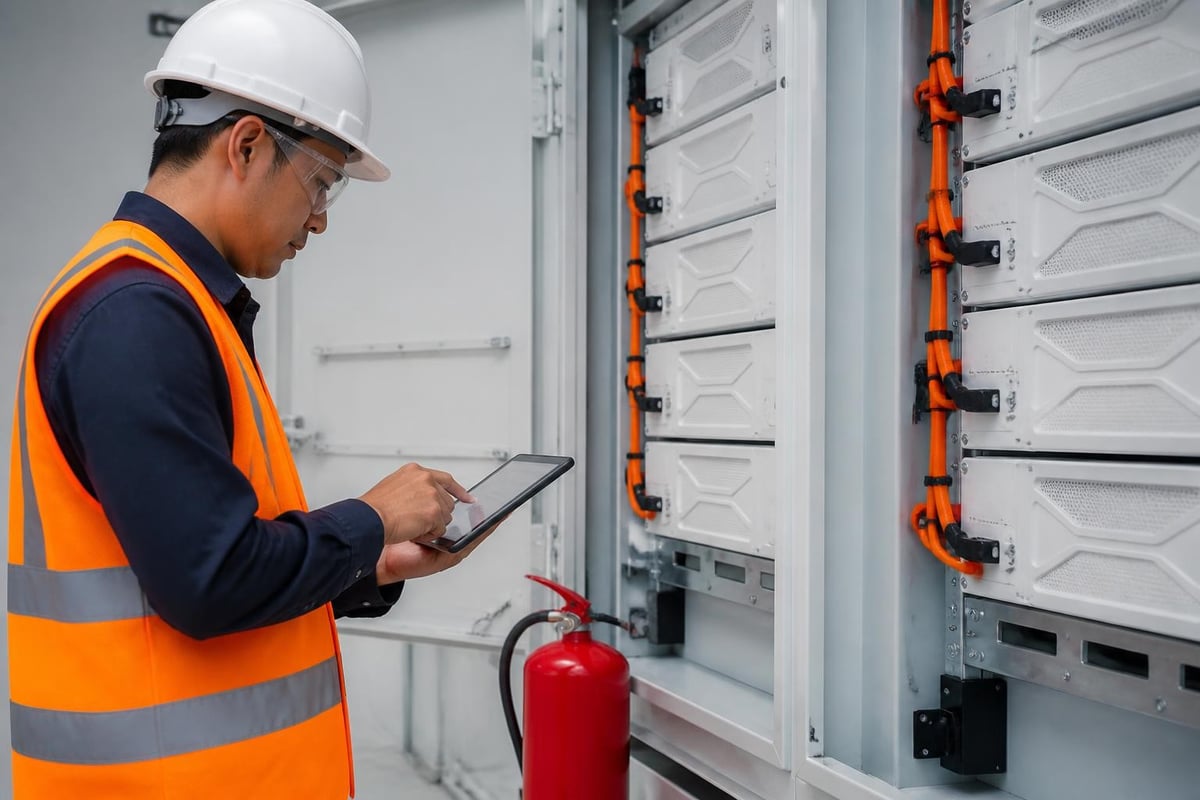
Performance Monitoring and Maintenance
Maximising return on investment from solar battery storage requires ongoing performance monitoring and preventative maintenance. Modern systems provide real-time visibility into energy flows, battery health, and financial savings.
Remote Monitoring Capabilities
Advanced monitoring platforms track:
- State of charge and discharge rates
- Solar generation vs. consumption in real-time
- Grid import and export volumes
- Battery cell voltages and temperatures
- Cumulative financial savings against baseline scenarios
These dashboards enable proactive responses to performance anomalies before they impact operations. Recent field studies demonstrate that monitored systems consistently outperform those without active oversight by 8-15%.
Scheduled Maintenance Protocols
Professional maintenance programmes extend battery life and preserve warranty coverage. Recommended activities include:
- Quarterly visual inspections of connections and enclosures
- Semi-annual thermal imaging to identify hot spots
- Annual capacity testing to measure degradation
- Firmware updates ensuring optimal control algorithms
- Cleaning of cooling systems and air filters
The Battery Energy Storage Systems service packages offered by specialised providers typically encompass these maintenance requirements within predictable monthly fees.
Integration With Broader Energy Strategies
Solar battery storage rarely operates in isolation. Forward-thinking organisations integrate storage with complementary technologies creating comprehensive energy management ecosystems.
Electric Vehicle Charging Infrastructure
As fleets electrify across South Africa, combining solar battery storage with EV charging infrastructure delivers synergistic benefits. Battery systems buffer charging loads, preventing demand spikes whilst enabling renewable-powered transport. Vehicle-to-grid capabilities, emerging in 2026, transform EV batteries into distributed storage resources.
Microgrid Development
Multiple distributed energy resources including solar arrays, battery storage, diesel generators, and grid connections can be orchestrated as microgrids. These sophisticated systems automatically optimise among available sources based on cost, emissions, and reliability objectives. During grid outages, microgrids island seamlessly, maintaining critical operations indefinitely.
Organisations pursuing Net Zero strategies increasingly adopt microgrid architectures as the foundation for decarbonisation roadmaps.
Technology Trends and Future Outlook
The solar battery storage landscape continues evolving rapidly with several significant trends emerging throughout 2026 and beyond.
Second-Life Battery Applications
Electric vehicle batteries retain 70-80% capacity after automotive service, making them suitable for stationary storage applications. This circular economy approach reduces costs whilst addressing end-of-life EV battery volumes. Several South African pilot projects are demonstrating the technical and economic viability of second-life battery installations.
Solid-State Battery Development
Whilst lithium-ion dominates current deployments, solid-state battery technology promises higher energy densities, improved safety, and longer lifespans. Although commercial availability remains 2-4 years away, this next-generation technology could further reduce system costs and footprints.
Artificial Intelligence Optimisation
Machine learning algorithms increasingly predict consumption patterns, weather impacts on solar generation, and grid tariff structures. These AI-driven systems autonomously optimise charge-discharge schedules, capturing additional value without manual intervention. Early adopters report 10-18% improvement in financial returns compared to rule-based control strategies.
The evolving policy landscape, including potential feed-in tariff adjustments and carbon pricing mechanisms, will further influence solar battery storage economics throughout Southern Africa's markets.
Solar battery storage represents a transformative technology enabling South African businesses to achieve energy independence, reduce operating costs, and advance sustainability objectives simultaneously. As component costs continue declining and grid reliability challenges persist, the strategic imperative for integrated renewable energy solutions intensifies across commercial, industrial, and agricultural sectors. INFOLED specialises in designing, financing, and implementing comprehensive solar battery storage systems tailored to your specific operational requirements and financial objectives, delivering measurable improvements in energy resilience whilst supporting your organisation's transition toward Net Zero targets.
Next Step
Need help with your energy strategy?
Speak to INFOLED about solar, storage, EV charging, service agreements or system performance.