Agricultural operations across South Africa face unprecedented energy challenges in 2026. Rising electricity tariffs, persistent load shedding, and the escalating costs of diesel generators have pushed farming businesses to seek sustainable alternatives. Solar panels for farms offer a transformative solution that addresses these challenges whilst improving long-term profitability and environmental stewardship. From irrigation systems and cold storage to dairy operations and packhouses, renewable energy integration is reshaping how South African farms operate and compete in both domestic and export markets.
Understanding the Economics of Farm Solar Installations
The financial case for solar panels for farms has strengthened considerably over the past several years. Capital costs for photovoltaic systems have decreased by approximately 60% since 2015, whilst electricity tariffs from Eskom have increased by over 400% during the same period. This convergence creates a compelling investment opportunity for agricultural enterprises of all scales.
Return on Investment for Agricultural Solar
South African farms typically achieve payback periods of 3-5 years on solar installations, depending on energy consumption patterns, system sizing, and financing structures. The most significant returns come from operations with high daytime electricity demand that aligns naturally with solar generation patterns.
| Farm Operation Type | Typical Daily Consumption | Estimated System Size | Payback Period |
|---|---|---|---|
| Irrigation & pumping | 500-2,000 kWh | 200-800 kW | 3-4 years |
| Dairy farming | 300-1,200 kWh | 150-500 kW | 3.5-5 years |
| Packhouses & cold storage | 800-3,000 kWh | 350-1,200 kW | 2.5-4 years |
| Poultry operations | 400-1,500 kWh | 180-600 kW | 3-5 years |
Tax incentives further enhance the financial appeal. The Section 12B allowance permits businesses to deduct the full cost of renewable energy assets from taxable income in the first year, delivering immediate cash flow benefits. Additionally, farms can claim input VAT on qualifying solar installations, reducing the effective capital outlay by 15%.
Financing Options for Agricultural Solar Projects
Capital availability remains a common concern for farming operations considering solar investment. Several financing mechanisms have emerged specifically for agricultural renewable energy:
- Commercial bank green loans offering preferential interest rates and extended repayment terms
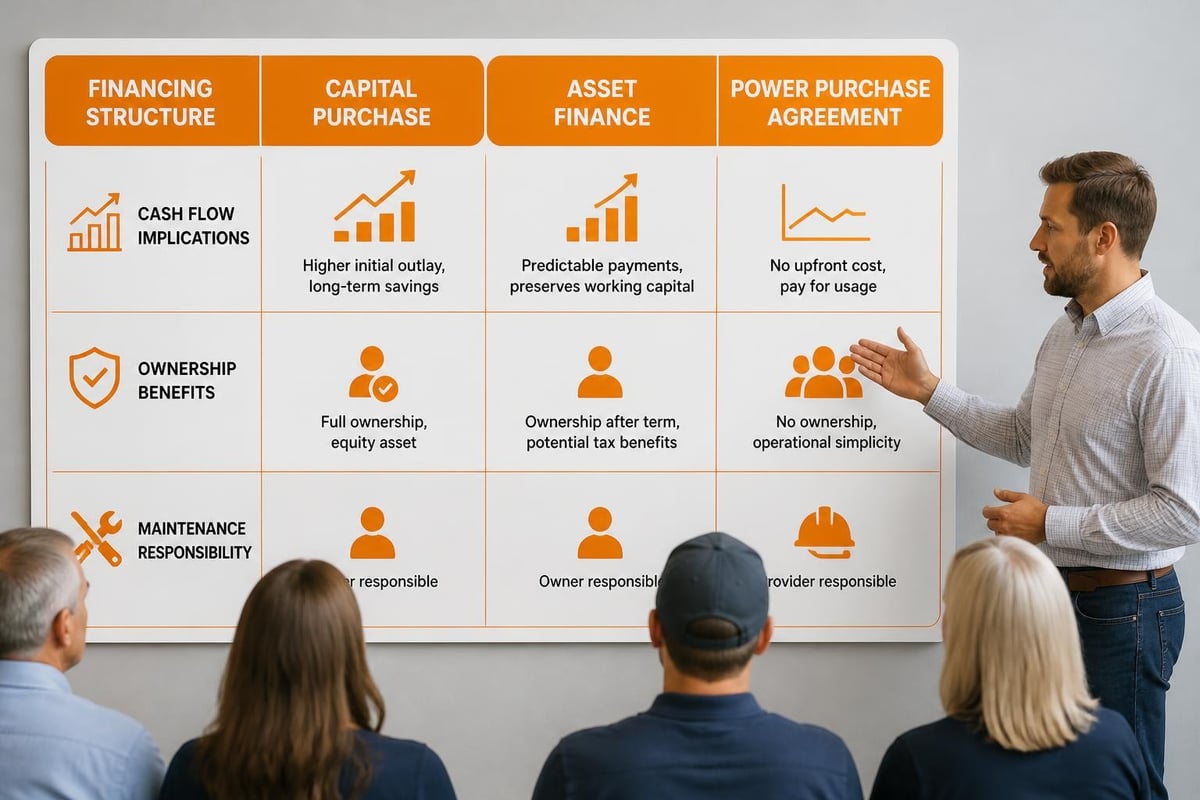
- Asset finance structures that preserve working capital whilst deploying solar infrastructure
- Power purchase agreements (PPAs) where third parties own and maintain systems whilst farms purchase electricity at predetermined rates
- Development finance from institutions like the Industrial Development Corporation for qualifying projects
The DOE Farmer's Guide to Going Solar provides comprehensive frameworks for evaluating different financing approaches, though South African farmers should adapt these principles to local market conditions and regulatory requirements.
Technical Considerations for Agricultural Solar Systems
Designing effective solar panels for farms requires careful consideration of agricultural operational requirements, environmental conditions, and system architecture. Unlike commercial rooftop installations, farm solar projects often involve unique mounting solutions, extended cable runs, and integration with existing agricultural infrastructure.
System Configuration Options
Agricultural solar installations typically fall into three primary configurations:
Ground-mounted systems offer the greatest flexibility for large-scale installations. These arrays can be positioned to optimise solar exposure without competing for valuable rooftop space on barns, packhouses, or storage facilities. Ground-mounted solar panels for farms work particularly well on marginal land unsuitable for cultivation, transforming unproductive acreage into revenue-generating assets.
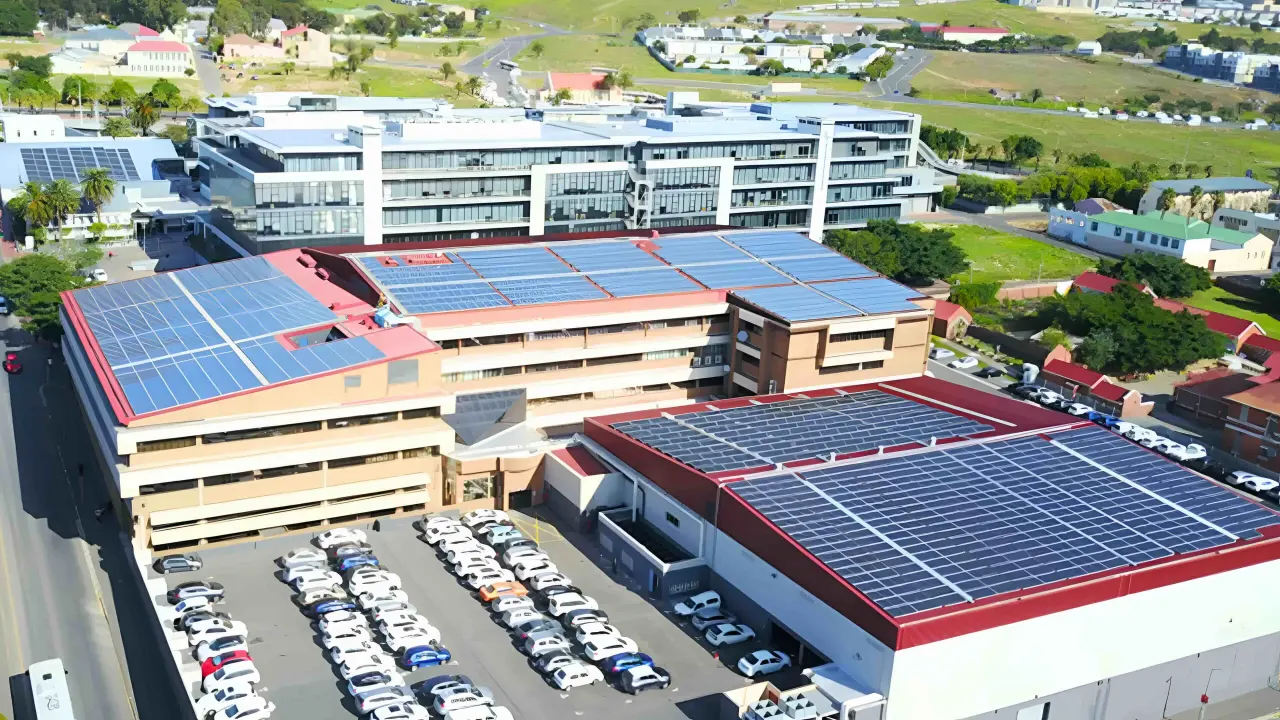
Rooftop installations utilise existing structures such as equipment sheds, workshops, and storage buildings. These systems benefit from reduced land use and lower installation costs but may require structural assessments to ensure roofs can support additional loads. Many South African farms have large corrugated iron structures ideal for solar retrofitting.
Carport and elevated structures serve dual purposes by providing covered areas for equipment storage, livestock shelter, or vehicle parking whilst generating electricity. These installations have gained popularity at farm markets, tourist facilities, and agritourism venues.
Agrivoltaics and Dual-Use Farming
The concept of agrivoltaics-combining solar generation with continued agricultural production-represents an innovative approach gaining traction globally. Elevated solar panels installed at heights of 3-5 metres allow farming activities to continue beneath the arrays.
Research published by the American Society of Agricultural and Biological Engineers demonstrates that certain crops actually benefit from partial shading provided by solar installations, particularly in regions with intense sun exposure like South Africa's Northern Cape and Limpopo provinces. Lettuce, spinach, and other leafy greens show improved yields and reduced water requirements when grown under photovoltaic arrays.
Livestock integration offers another compelling dual-use strategy. Sheep grazing beneath solar installations provides natural vegetation management whilst generating additional farm income. Several wine estates in the Western Cape have successfully implemented this model, combining renewable energy production with sustainable land management practices.
Grid Connection and Energy Storage Integration
The relationship between solar panels for farms and the broader electrical grid significantly influences system design and operational benefits. South African agricultural operations can pursue grid-tied, hybrid, or completely off-grid approaches depending on location, utility reliability, and operational requirements.
Grid-Tied Solar Systems
Farms with reliable Eskom connections often implement grid-tied systems that feed excess generation back to the utility whilst drawing power when solar production proves insufficient. The Electricity Regulation Act amendments permit embedded generation up to 100 MW without requiring generation licences, though registration with NERSA remains mandatory for systems exceeding 1 MW.
Net metering arrangements, where available from municipalities, allow farms to offset consumption against generation. However, implementation remains inconsistent across South African jurisdictions, and many utilities offer unfavourable feed-in tariffs that fail to reflect retail electricity rates.
Grid-tied solar panels for farms deliver immediate operational benefits but provide limited resilience during load shedding events. Many agricultural operations cannot afford extended power interruptions-dairy farms require continuous refrigeration, irrigation systems must maintain scheduled watering, and climate-controlled facilities need uninterrupted power supply.
Hybrid Systems with Battery Storage
Hybrid configurations combining solar generation with battery energy storage systems (BESS) have emerged as the preferred solution for South African farms in 2026. These systems provide load shedding protection, demand charge reduction, and the ability to store excess solar generation for evening and early morning use when many agricultural operations experience peak demand.
Commercial, Industrial, Agricultural and Residential Solar PV installations increasingly incorporate battery storage to maximise energy independence and operational resilience. Modern lithium-ion battery systems offer 10-15 year operational lifespans with minimal maintenance requirements, making them economically viable for agricultural applications.
| Battery Capacity | Typical Coverage | Best Applications |
|---|---|---|
| 50-100 kWh | 4-8 hours backup | Small farms, irrigation control systems |
| 100-250 kWh | 8-16 hours backup | Medium dairy, packhouses, cold storage |
| 250-500 kWh | 16-24 hours backup | Large operations, processing facilities |
| 500+ kWh | 24+ hours backup | Off-grid farms, critical infrastructure |
Practical Applications Across Agricultural Sectors
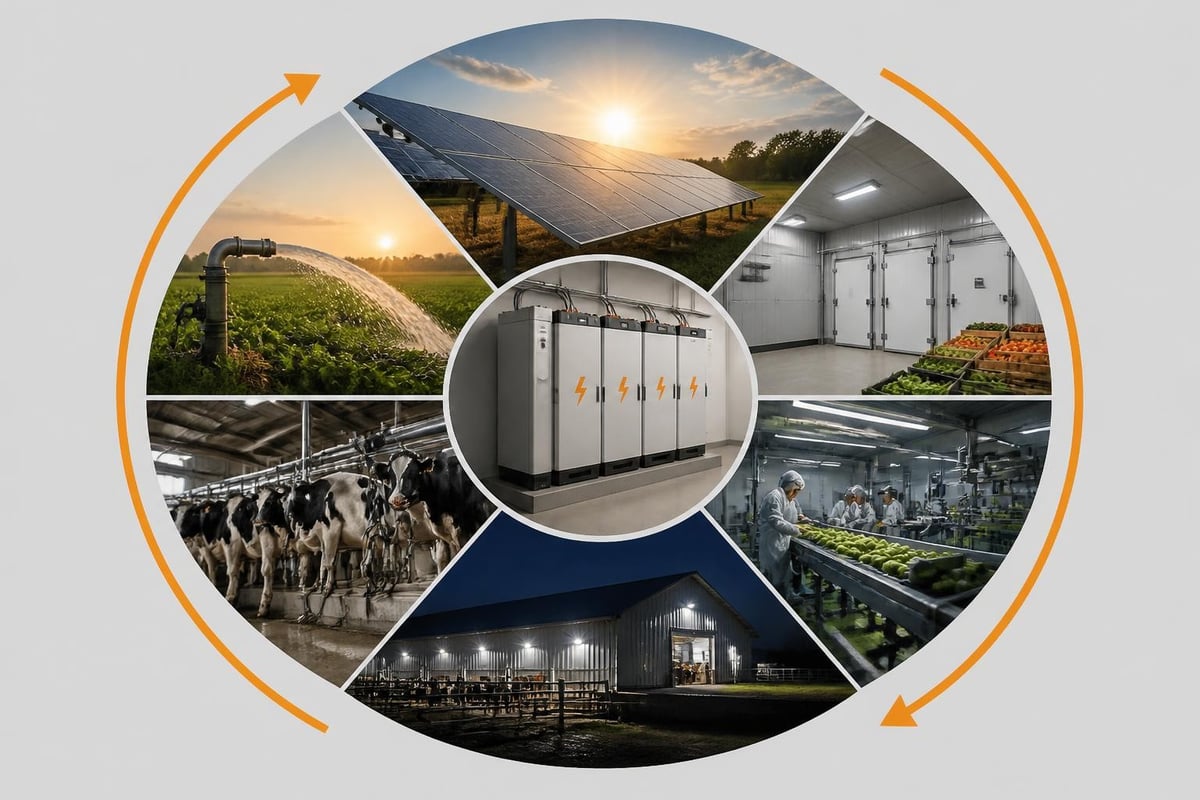
Solar panels for farms demonstrate versatility across diverse agricultural operations. Understanding sector-specific applications helps farmers identify the most impactful implementation strategies for their particular circumstances.
Irrigation and Water Management
Water pumping represents one of the most energy-intensive agricultural activities, particularly for farms relying on borehole extraction or river abstraction. Solar-powered irrigation systems align perfectly with crop water requirements-peak solar generation coincides with maximum evapotranspiration during summer months when irrigation demand reaches annual highs.
Direct-coupled solar pumping systems eliminate battery requirements by pumping water into elevated storage tanks during daylight hours, creating potential energy through gravitational storage. This approach proves especially cost-effective for smaller operations where simplicity and reliability outweigh the benefits of more sophisticated control systems.
Variable frequency drives (VFDs) optimise pump performance across varying solar irradiance levels, maintaining steady flow rates even during partially cloudy conditions. These intelligent controllers protect equipment whilst maximising water delivery per kilowatt-hour of solar generation.
Cold Chain and Post-Harvest Handling
Packhouses, cold storage facilities, and processing operations consume substantial electricity for refrigeration, sorting equipment, and climate control. These facilities often operate extended hours or continuously, making them excellent candidates for solar panels for farms with battery storage integration.
Temperature-sensitive export commodities-including deciduous fruit, citrus, vegetables, and flowers-require uninterrupted refrigeration to maintain quality standards and prevent spoilage. Solar-plus-storage systems deliver the reliability these operations demand whilst significantly reducing operational costs. The FAO overview of renewable energy applications in agriculture provides international perspectives on solar cold chain implementation that South African exporters can adapt to local contexts.
Thermal energy storage presents an complementary approach where excess solar generation produces ice or chilled water during daylight hours for use during evening peak periods. This strategy reduces battery requirements whilst still leveraging solar energy for time-shifted cooling applications.
Livestock Operations
Dairy farms, poultry operations, and intensive livestock facilities require consistent power for automated feeding systems, climate control, milk cooling, egg collection, and waste management. These operations typically demonstrate high daytime electricity consumption that aligns well with solar generation profiles.
Modern dairy parlours incorporate vacuum pumps, plate coolers, bulk milk tanks, and wash-down systems that collectively consume 300-1,200 kWh daily on medium-sized operations. Solar panels for farms in the dairy sector commonly achieve 3.5-4.5 year payback periods, particularly when combined with intelligent energy management systems that optimise load scheduling around solar availability.
Poultry operations benefit from solar integration for ventilation fans, automated feeding, egg conveyors, and climate control systems. Battery storage proves especially valuable for maintaining critical ventilation during load shedding events, preventing heat stress mortality that can devastate flocks within hours.
Installation and Maintenance Considerations
Successful implementation of solar panels for farms extends beyond initial system design to encompass installation quality, ongoing maintenance, and performance monitoring. Agricultural environments present unique challenges that require specialised expertise and robust equipment specifications.
Environmental Factors Affecting Farm Solar
Agricultural settings expose photovoltaic systems to conditions rarely encountered in urban commercial installations:
- Dust and particulate accumulation from ploughing, harvesting, and livestock operations reduces panel efficiency
- Corrosive atmospheres near fertiliser storage, livestock facilities, and coastal areas accelerate component degradation
- Agricultural chemicals including pesticides and herbicides may contact panels during spraying operations
- Wildlife interactions from birds, rodents, and livestock can damage cables, inverters, and mounting structures
- Extreme weather exposure without surrounding buildings providing wind protection
Panel selection should prioritise products tested for harsh environmental conditions, with IP67 or higher ingress protection ratings for junction boxes and robust anti-reflective coatings that resist chemical exposure. Mounting structures require hot-dip galvanisation or marine-grade stainless steel in corrosive environments.
Maintenance Protocols for Agricultural Solar
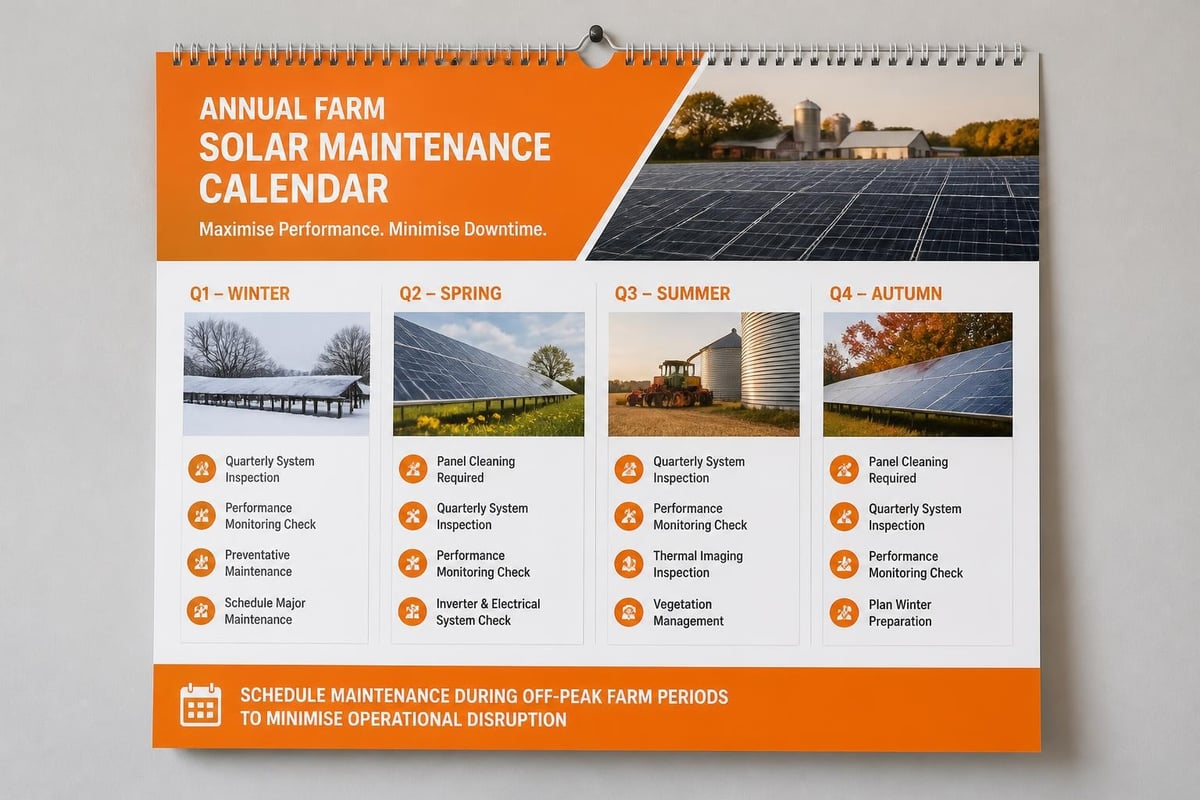
Regular maintenance schedules ensure solar panels for farms continue delivering optimal performance throughout their 25-30 year operational lifespans. Agricultural installations benefit from quarterly inspections addressing:
- Visual panel inspections identifying cracks, delamination, or soiling requiring attention
- Electrical testing measuring string voltages, insulation resistance, and earth continuity
- Inverter performance verification checking efficiency metrics and error logs
- Mounting structure assessment examining corrosion, loose fasteners, and structural integrity
- Vegetation management controlling growth that may shade panels or provide pest access
- Cleaning operations removing accumulated dust, bird droppings, and agricultural residue
Thermal imaging surveys conducted annually identify underperforming panels, faulty bypass diodes, and connection issues before they compromise overall system performance. Drone-based inspections offer cost-effective coverage for large ground-mounted installations across expansive farm properties.
Regulatory Compliance and Grid Connection Requirements
Navigating South African renewable energy regulations requires understanding multiple compliance frameworks that govern solar panels for farms. These requirements vary based on system size, grid connection status, and provincial jurisdiction.
Registration and Licensing Obligations
The National Energy Regulator of South Africa (NERSA) mandates registration for embedded generation facilities:
- Systems under 1 MW: Registration via the NERSA online portal with simplified documentation
- Systems 1-100 MW: Detailed technical specifications, grid impact studies, and formal registration certificates
- Systems exceeding 100 MW: Full generation licences requiring comprehensive environmental and technical assessments
Municipal electrical departments impose additional requirements for grid-tied systems within their jurisdictions. Applications typically require single-line diagrams, protection relay settings, and commissioning certificates from registered electrical engineers. Processing timeframes vary considerably between municipalities, ranging from weeks to months depending on administrative capacity.
Electrical Compliance and Safety Standards
All solar installations must comply with SANS 10142-1 for wiring of premises and SANS 10089 for energy efficiency. Grid-tied systems additionally require compliance with the Grid Connection Code for Renewable Power Plants (RPPs) and NRS 097 standards governing distributed generation.
Certificate of Compliance (CoC) documentation issued by registered electrical contractors confirms installations meet regulatory requirements. These certificates prove essential for insurance claims, property transactions, and regulatory audits. Farms should retain comprehensive installation documentation including:
- Electrical design drawings and specifications
- Equipment datasheets and warranty certificates
- Commissioning test results and performance data
- Operations and maintenance manuals
- Insurance certificates for installed assets
Environmental and Sustainability Benefits
Beyond financial returns, solar panels for farms deliver measurable environmental benefits that align with global sustainability trends and consumer expectations. South African agricultural exporters increasingly face customer requirements for transparent environmental reporting and carbon footprint reduction.
Carbon Emissions Reduction
Eskom's coal-dominated generation fleet produces approximately 0.95 kg CO₂ per kWh generated. A medium-sized 500 kW farm solar installation generating 800,000 kWh annually therefore prevents roughly 760 tonnes of CO₂ emissions each year-equivalent to removing 165 petrol vehicles from South African roads.
These emission reductions support corporate environmental, social, and governance (ESG) reporting requirements and contribute to national climate commitments under the Paris Agreement. Farms supplying export markets benefit from documented carbon reduction achievements that satisfy increasingly stringent retailer sustainability standards.
Water Conservation Linkages
The water-energy nexus proves particularly relevant in water-scarce South Africa. Coal-fired power generation consumes approximately 1.3 litres of water per kWh produced for cooling and ash handling. Solar photovoltaic generation requires negligible water beyond occasional panel cleaning, delivering substantial water conservation benefits at national scale.
Farms implementing solar-powered precision irrigation systems achieve dual sustainability benefits-reduced grid electricity consumption and optimised water application that minimises agricultural water usage. These integrated approaches align with the renewable energy integration strategies gaining prominence across Southern African agriculture.
Circular Economy Considerations
Responsible end-of-life management for solar panels for farms ensures environmental benefits extend throughout the complete product lifecycle. Photovoltaic modules contain valuable materials including silicon, silver, copper, and aluminium that can be recovered through specialised recycling processes.
South African regulations under Extended Producer Responsibility (EPR) frameworks will increasingly require manufacturers and importers to manage product end-of-life. Farms planning solar investments should confirm suppliers offer take-back programmes or partner with certified recycling facilities to manage decommissioned equipment responsibly. Further information on sustainable disposal options can be found through solar recycling resources.
Future Trends in Agricultural Solar Technology
The convergence of renewable energy innovation and agricultural technology continues accelerating, with several emerging trends poised to reshape how solar panels for farms deliver value in coming years.
Smart Agriculture Integration
Internet of Things (IoT) sensors, machine learning algorithms, and predictive analytics increasingly integrate solar generation with precision agriculture platforms. These systems coordinate irrigation scheduling, climate control, and processing operations with real-time solar forecasting to maximise self-consumption and minimise grid dependence.
Artificial intelligence optimisation can predict tomorrow's solar generation based on weather forecasts, automatically adjusting farm operations to capitalise on abundant renewable energy availability. Battery charging strategies, pump scheduling, and discretionary loads shift dynamically to align consumption with generation patterns.
Bifacial Modules and Advanced Technologies
Bifacial solar panels that capture reflected light from ground surfaces beneath the modules deliver 10-25% additional generation compared to conventional single-sided panels. This technology proves particularly effective for elevated agrivoltaic installations where light-coloured ground cover or reflective mulches enhance albedo effects.
Floating solar installations on farm dams and irrigation reservoirs represent another emerging application. These systems reduce water evaporation whilst generating electricity without consuming valuable agricultural land. Several pilot projects in Limpopo and the Eastern Cape have demonstrated technical viability, though economic competitiveness requires further cost reductions.
Vehicle-to-Farm (V2F) Integration
Electric farm vehicles and equipment increasingly incorporate bidirectional charging capabilities that enable batteries to supply power back to farm operations during peak demand periods or grid outages. This Vehicle-to-Farm (V2F) integration effectively expands energy storage capacity without dedicated stationary batteries.
Electrification of tractors, utility vehicles, and materials handling equipment aligns naturally with daytime solar generation patterns. These vehicles charge during working hours when solar production peaks, then provide backup power for critical evening loads including refrigeration and climate control systems.
Solar panels for farms represent a strategic investment that addresses immediate energy cost challenges whilst building long-term operational resilience and environmental sustainability. South African agricultural operations implementing renewable energy solutions position themselves competitively for evolving market conditions, regulatory requirements, and consumer expectations. INFOLED specialises in designing, financing, and installing intelligent solar solutions tailored to agricultural operations across Southern Africa, supporting farms in reducing electricity costs, improving energy independence, and achieving sustainability objectives through integrated renewable energy technologies.
Next Step
Need help with your energy strategy?
Speak to INFOLED about solar, storage, EV charging, service agreements or system performance.