
The transition to renewable energy across Southern Africa has accelerated dramatically in 2026, driven by escalating electricity costs, grid instability, and corporate sustainability commitments. Yet installing solar panels or battery systems in isolation no longer delivers the performance and return on investment that businesses require. Renewable energy integration represents a fundamental shift from standalone installations to intelligent, interconnected energy ecosystems that maximise efficiency, resilience, and financial returns. For commercial, industrial, and agricultural operations across South Africa, understanding how to integrate multiple renewable technologies has become essential to achieving operational excellence and meeting Net Zero targets.
Understanding Renewable Energy Integration in the Southern African Context
Renewable energy integration extends beyond simply connecting solar panels to the grid. It encompasses the strategic coordination of generation assets, energy storage, consumption management, and grid interaction to create a cohesive, optimised energy system.
In South Africa's unique energy landscape, this integration addresses specific challenges that businesses face daily. Load shedding disruptions, time-of-use tariff structures, demand charges, and unreliable municipal supply all require sophisticated solutions. A properly integrated renewable energy system responds dynamically to these variables, shifting between grid supply, solar generation, and battery discharge based on real-time conditions and pre-programmed priorities.
The Technical Framework of Integration
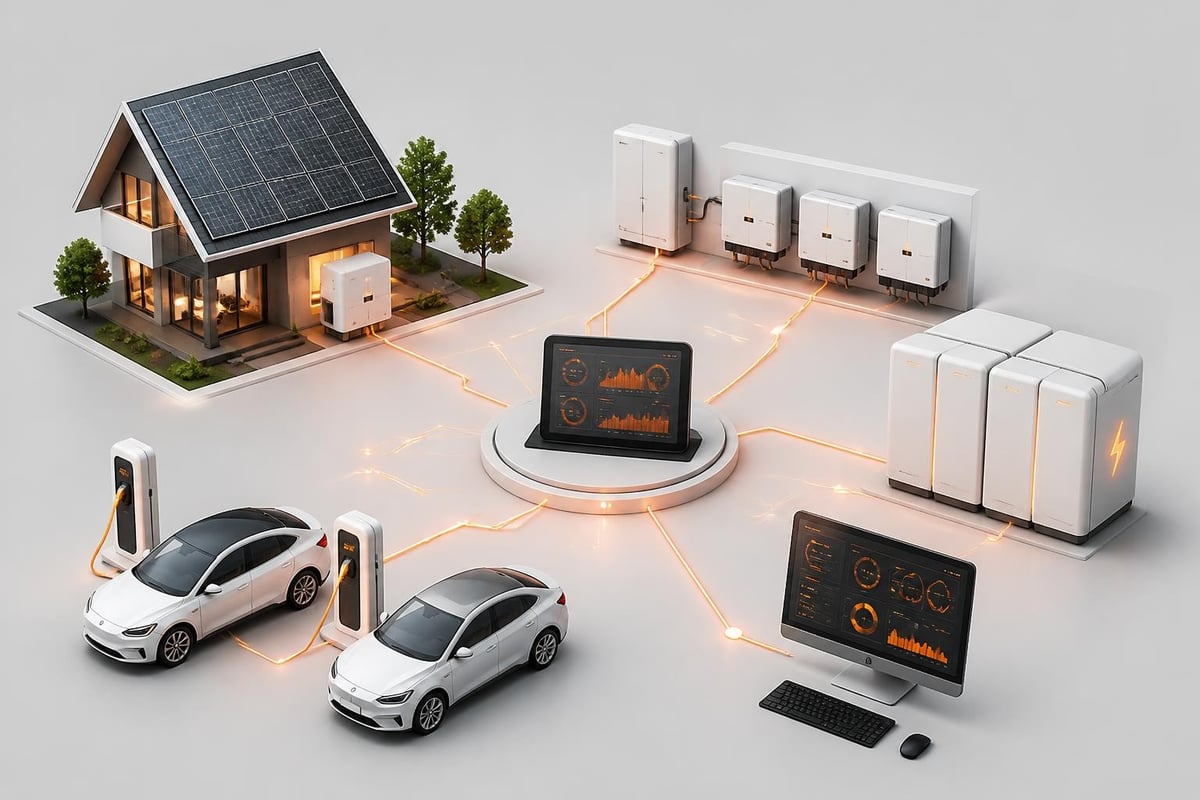
Modern renewable energy integration relies on several interconnected components working in harmony:
- Generation assets (solar PV, wind) producing variable power output
- Energy storage systems (BESS) buffering supply and demand mismatches
- Smart inverters managing bidirectional power flow and quality
- Energy management systems orchestrating all components through algorithms
- Monitoring infrastructure providing real-time data and predictive analytics
The International Energy Agency's comprehensive analysis on integrating solar and wind highlights that successful integration becomes progressively more complex as renewable penetration increases. Southern African businesses must consider these escalating technical requirements when planning their energy transition.
| Integration Phase | Renewable Share | Primary Challenge | Solution Approach |
|---|---|---|---|
| Phase 1 | 0-3% | Basic grid connection | Standard inverters, net metering |
| Phase 2 | 3-15% | Grid stability | Advanced inverters, voltage regulation |
| Phase 3 | 15-40% | Flexibility requirements | Energy storage, demand response |
| Phase 4 | 40%+ | System adequacy | Hybrid systems, forecasting, transmission |
Financial Optimisation Through Integrated Systems
The economic case for renewable energy integration in South Africa strengthens considerably when multiple technologies work together rather than operating independently. A commercial facility with only solar PV might achieve 30-40% electricity cost savings, but an integrated system combining solar, battery storage, and smart metering frequently delivers 60-80% reductions.
Time-of-use tariffs create significant arbitrage opportunities. Businesses can charge batteries during off-peak periods at ZAR 1.20 per kWh and discharge during peak periods when grid electricity costs ZAR 4.50 per kWh or more. This spread becomes even more valuable when solar generation charges batteries at zero marginal cost during midday hours.
Demand charge management represents another critical financial benefit. Many South African municipalities and Eskom tariffs include substantial demand charges based on peak 30-minute consumption intervals. Integrated battery systems can shave these peaks, potentially saving businesses tens of thousands of rands monthly. A warehouse in Gauteng operating on the Megaflex tariff structure might pay ZAR 800 per kVA in demand charges-for a 500 kVA facility, that's ZAR 400,000 annually that intelligent integration can substantially reduce.
Return on Investment Calculations
Calculating ROI for integrated renewable energy systems requires evaluating multiple value streams simultaneously:
- Energy cost savings from displaced grid consumption
- Demand charge reductions through peak shaving
- Tariff arbitrage using time-of-use differentials
- Production continuity during load shedding or outages
- Carbon credit potential and ESG reporting benefits
- Asset value appreciation for properties with energy resilience
Most commercial installations in South Africa achieve payback periods between 4-7 years, with well-designed integrated systems at the shorter end of this range. Commercial solar panel installations across the region demonstrate that integration accelerates returns compared to standalone solar approaches.
Grid Interaction and Resilience Considerations
The relationship between integrated renewable energy systems and the electricity grid requires careful technical and commercial consideration. South Africa's grid infrastructure faces ongoing challenges, making energy resilience a top priority for businesses dependent on reliable power supply.
Grid-Tied versus Hybrid Configurations
Grid-tied systems offer simplicity and lower initial costs, feeding excess solar generation back to the grid. However, most South African businesses now prioritise hybrid configurations that maintain critical loads during grid failures. The U.S. Department of Energy's National Transmission Planning Study provides valuable frameworks for understanding grid interaction at scale, principles that apply equally to individual facility design.
Hybrid systems incorporate sophisticated islanding capabilities, allowing facilities to disconnect from the grid automatically during disturbances while continuing operations on renewable generation and battery storage. This seamless transition prevents production losses, protects sensitive equipment, and maintains business continuity.
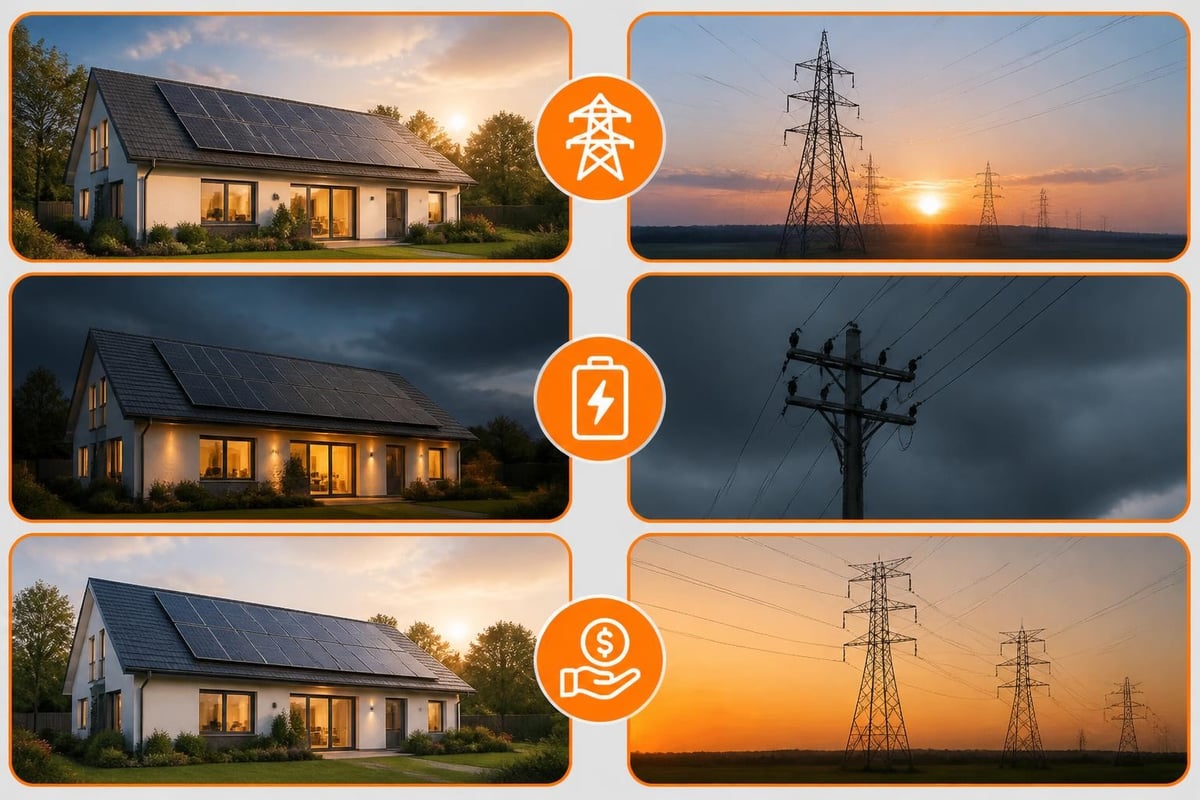
Modern integration platforms manage multiple operational modes:
- Grid-parallel operation optimising costs during normal conditions
- Island mode providing backup power during outages
- Peak shaving mode reducing demand charges
- Export mode selling excess generation where regulations permit
- Maintenance mode isolating specific components safely
Battery Energy Storage as the Integration Enabler
Battery Energy Storage Systems (BESS) serve as the crucial link that enables true renewable energy integration. Without storage, solar generation remains constrained by the immediate alignment of production and consumption. Batteries decouple these variables, storing energy when abundant and releasing it when needed.
For Southern African businesses, Commercial, Industrial, Agricultural and Residential Battery Energy Storage Systems (BESS) deliver multiple simultaneous benefits that justify their inclusion in integrated systems. Beyond basic backup power, sophisticated battery systems provide frequency regulation, voltage support, reactive power compensation, and rapid response to changing load conditions.
Battery chemistry selection impacts integration performance significantly. Lithium iron phosphate (LFP) batteries dominate the commercial market in 2026 due to their safety profile, cycle life exceeding 6,000 cycles, and stable performance across Southern Africa's temperature variations. High-temperature climates in provinces like Limpopo and the Northern Cape require thermal management systems within battery enclosures to maintain optimal operating conditions.
Sizing Batteries for Integration
Appropriate battery sizing depends on multiple factors beyond simple backup duration:
| Application Priority | Typical Size (kWh per kW solar) | Primary Use Case |
|---|---|---|
| Backup only | 0.5-1.0 | Essential loads during outages |
| Peak shaving | 1.0-2.0 | Demand charge reduction |
| Self-consumption | 1.5-3.0 | Maximising solar utilisation |
| Full autonomy | 3.0-6.0 | Off-grid or poor grid areas |
The trend in South African commercial installations has shifted toward larger battery systems that support multiple objectives simultaneously. A manufacturing facility might size batteries primarily for peak shaving but gain substantial additional value from backup capabilities and solar self-consumption optimisation.
Smart Monitoring and Energy Management Systems
Renewable energy integration achieves its full potential only through intelligent monitoring and control systems that orchestrate all components dynamically. Energy Management Systems (EMS) serve as the brain of integrated installations, processing real-time data and adjusting operations thousands of times daily.
Modern energy management systems deployed across Southern Africa incorporate machine learning algorithms that improve performance continuously. These platforms analyse historical consumption patterns, weather forecasts, grid tariff structures, and battery state-of-charge to optimise decisions automatically.
Key capabilities of advanced EMS platforms include:
- Load forecasting based on historical patterns and operational schedules
- Weather-based solar generation prediction
- Automated battery charge/discharge scheduling
- Demand response participation and curtailment
- Real-time tariff tracking and cost minimisation
- Predictive maintenance alerts and performance diagnostics
- Remote monitoring and troubleshooting capabilities
A food processing plant in KwaZulu-Natal using advanced EMS achieved 23% additional savings compared to their previous rule-based system simply through better prediction and optimisation algorithms. The system learned that certain production lines created predictable load spikes and pre-positioned battery reserves accordingly.
EV Charging Integration and Transport Electrification
Electric vehicle charging infrastructure represents an emerging integration opportunity that forward-thinking businesses are incorporating into their renewable energy strategies. As South Africa's EV adoption accelerates, workplace and fleet charging demand creates new load profiles that renewable energy systems must accommodate.
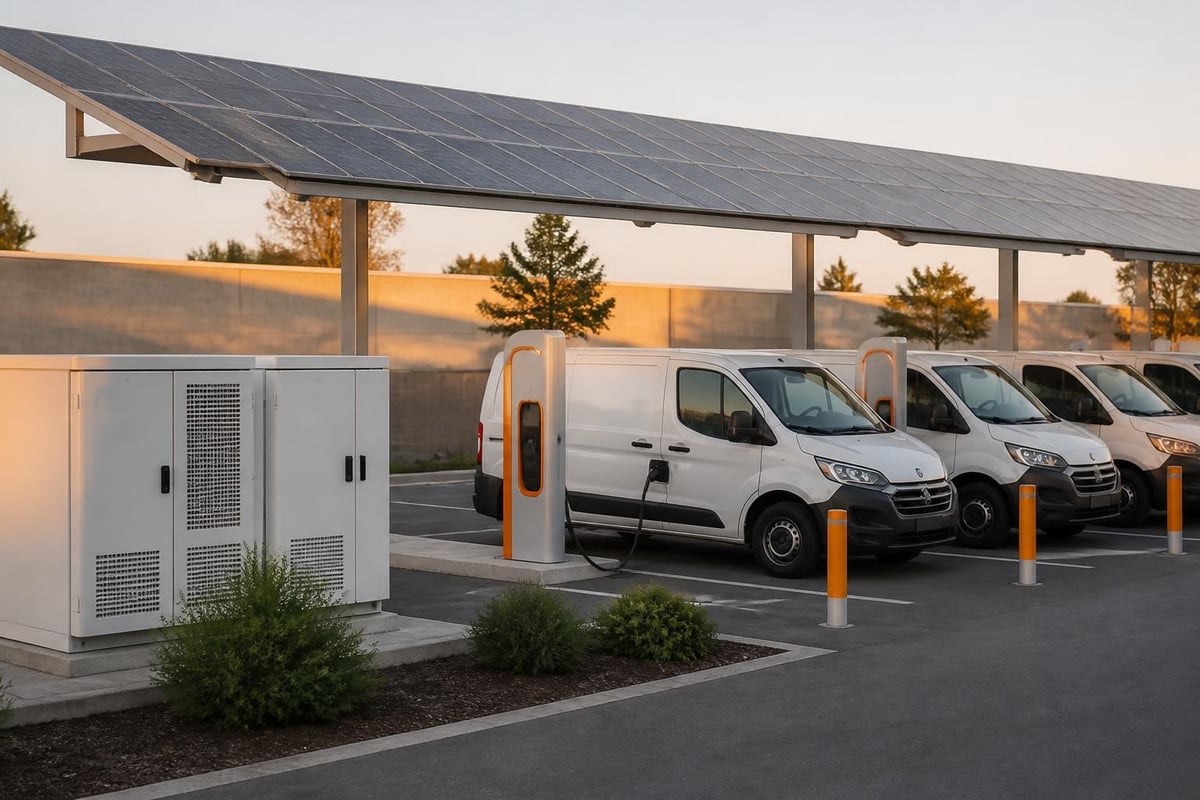
Integrating EV charging with solar and battery systems transforms what could be a significant new electricity expense into an optimised, low-cost service. Solar carports generate electricity directly where vehicles park, while battery systems buffer charging loads to prevent demand charge spikes. Smart charging algorithms can shift EV charging to periods of excess solar generation or low electricity prices.
The integration complexity increases with DC fast charging installations, which draw substantial instantaneous power. A single 150 kW fast charger creates load spikes that would trigger excessive demand charges without proper battery integration. Coordinated systems can deliver high-speed charging while maintaining overall facility load profiles within target parameters.
For logistics companies and corporate fleets, commercial EV charging integrated with renewable energy delivers three distinct advantages: lower fuel costs compared to diesel, reduced carbon emissions supporting sustainability targets, and enhanced energy independence reducing exposure to electricity price volatility.
Overcoming Integration Challenges in Southern African Markets
Implementing renewable energy integration across Southern Africa presents specific challenges that differ from developed market experiences documented in international literature. Understanding these obstacles enables businesses to plan appropriately and select experienced implementation partners.
Regulatory and Grid Connection Hurdles
Municipal and utility grid connection processes vary dramatically across South Africa's provinces and municipalities. Some metros like Cape Town have established streamlined procedures for embedded generation, while others maintain cumbersome approval processes that extend project timelines by months. The DOE transmission/interconnection roadmap offers frameworks that South African regulators could adopt to accelerate approvals.
Grid capacity constraints in certain areas limit integration potential. Businesses in rapidly developing industrial zones sometimes encounter transformers and feeders operating at capacity, preventing additional renewable installations without utility infrastructure upgrades. Early engagement with municipalities regarding planned renewable installations can identify these constraints before significant planning investment.
Technical Expertise and Quality Assurance
The rapid growth of renewable energy markets has created variable quality standards across installation providers. Proper integration requires electrical engineering expertise, understanding of protection systems, experience with communication protocols, and knowledge of energy management platforms. Businesses must verify that implementation partners possess demonstrated integration experience rather than simply solar installation capabilities.
Equipment compatibility issues frequently arise when integrating components from multiple manufacturers. A battery system from one supplier may not communicate properly with inverters from another without custom integration work. Selecting integrated solution providers who manage these compatibility challenges reduces project risk and ensures optimal long-term performance.
Climate Resilience and Extreme Weather Considerations
Southern Africa's changing climate patterns require renewable energy integration strategies that account for increasing weather variability and extreme events. Research published in Nature Reviews on resilience and climate risks emphasises that power systems with high renewable penetration must incorporate resilience planning against climate-related disruptions.
Severe storms, flooding, hailstorms, and extended drought periods each impact integrated renewable systems differently. Solar installations require structural engineering that accounts for increased wind loading from severe weather events. Battery systems need thermal management capable of handling temperature extremes, particularly in South Africa's interior regions where summer temperatures regularly exceed 40°C.
Drought conditions affect hydroelectric generation in Southern Africa's regional grid, often correlating with increased load shedding. Integrated renewable systems with substantial battery storage provide businesses with resilience precisely when grid reliability deteriorates. This countercyclical reliability represents significant value that traditional ROI calculations may underestimate.
Climate resilience features for integrated systems:
- Elevated equipment mounting in flood-prone areas
- Enhanced structural ratings for high-wind zones
- Advanced cooling systems for high-temperature environments
- Redundant communication links for remote monitoring
- Lightning protection systems exceeding standard specifications
- Weatherproof enclosures rated for harsh conditions
Advanced Integration Technologies and Future Trends
Emerging technologies continue expanding renewable energy integration capabilities, enabling even higher performance and new value creation opportunities. Businesses planning installations in 2026 should consider how these technologies might enhance their systems.
Grid-enhancing technologies (GETs) represent one promising frontier. Nature's review on grid-enhancing technologies describes how advanced controls, dynamic line rating, and power flow optimisation can increase transmission capacity without infrastructure expansion. While primarily discussed at utility scale, similar principles apply to campus microgrids and large industrial facilities.
Artificial intelligence and machine learning algorithms now optimise energy flows with precision impossible through rule-based systems. These algorithms detect subtle patterns in consumption data, predict equipment failures before they occur, and continuously refine operational strategies based on outcomes. A mining operation in Mpumalanga reported 12% additional efficiency gains after upgrading from conventional controls to AI-driven optimisation.
Vehicle-to-grid (V2G) technology remains experimental but holds significant promise for businesses with EV fleets. Vehicles could serve as distributed battery storage, feeding energy back to facilities during peak periods. Regulatory frameworks and standardised protocols need further development, but early pilots demonstrate technical feasibility.
Hydrogen Integration Pathways
Green hydrogen production using renewable electricity represents a longer-term integration opportunity particularly relevant to industrial operations with high-temperature heat requirements or heavy vehicle fleets. Electrolysers can absorb excess solar generation during midday periods, producing hydrogen for process heat, fuel cell vehicles, or export to industrial customers.
While hydrogen integration remains costly in 2026, pilot projects across South Africa demonstrate proof-of-concept. As electrolyser costs decline and hydrogen infrastructure expands, businesses with substantial renewable capacity may find hydrogen production creates additional revenue streams while enhancing overall system economics.
Maintenance, Monitoring and Performance Optimisation
Renewable energy integration creates complex systems requiring proactive maintenance and continuous performance monitoring to achieve projected returns. Unlike standalone solar installations with relatively simple maintenance requirements, integrated systems demand specialised expertise across multiple technology domains.
Service level agreements for integrated renewable systems should specify performance guarantees, response times for different failure modes, preventative maintenance schedules, and software update procedures. Businesses should clarify whether monitoring services include active performance analysis and optimisation recommendations or merely provide access to data dashboards.
Remote monitoring capabilities have become standard in 2026, enabling implementation partners to identify performance degradation before it impacts operations significantly. Thermal imaging surveys detect failing solar panels or loose connections, drone inspections assess mounting structure integrity, and battery management system data reveals cells requiring attention.
Comprehensive maintenance programmes address all system components:
- Solar array cleaning and inspection (quarterly recommended)
- Inverter performance verification and firmware updates
- Battery health testing and capacity verification
- Electrical connection thermal scanning
- Energy management system algorithm review
- Communication network security updates
- Physical security and access control audits
Performance degradation often occurs gradually, making periodic benchmarking essential. An integrated system might lose 1-2% efficiency annually through various minor issues-dust accumulation, component aging, suboptimal settings-that individually seem insignificant but compound substantially over time. Annual performance audits identify and address these degradation sources.
Financing and Investment Structures for Integrated Projects
The higher upfront investment required for fully integrated renewable energy systems compared to basic solar installations necessitates appropriate financing structures. Total project costs for commercial installations typically range from ZAR 20,000 to ZAR 35,000 per kW of installed capacity when including solar, batteries, monitoring systems, and installation.
Several financing models suit different business circumstances and priorities:
| Financing Model | Ownership | Key Advantage | Typical Application |
|---|---|---|---|
| Direct purchase | Client | Lowest long-term cost | Strong balance sheet |
| Loan financing | Client | Preserve working capital | Standard commercial lending |
| Operating lease | Client (eventual) | Tax benefits, off-balance sheet | Corporate tax optimisation |
| Power Purchase Agreement | Financier | Zero upfront cost | Limited capital availability |
Power Purchase Agreements (PPAs) have gained popularity in Southern Africa, particularly for businesses prioritising operational expenditure over capital expenditure. Under PPA structures, a third-party financier owns and maintains the integrated system while the business purchases electricity at a contracted rate typically 20-40% below grid tariffs. The business avoids upfront investment while immediately capturing savings.
Environmental, Social, and Governance (ESG) reporting requirements increasingly influence investment decisions. Integrated renewable energy projects deliver measurable carbon reductions, energy resilience, and sustainability credentials that support corporate reporting obligations and stakeholder expectations. Some businesses find that ESG benefits justify project approval even when pure financial ROI falls slightly below standard hurdle rates.
Renewable energy integration has evolved from a future aspiration to an operational necessity for competitive businesses across Southern Africa in 2026. The technical frameworks, financial models, and implementation expertise now exist to deliver sophisticated integrated systems that transform energy from a cost centre into a strategic advantage. Whether your priority is cost reduction, operational resilience, sustainability commitments, or all three simultaneously, success depends on partnering with experienced providers who understand the complexities of true integration. INFOLED brings comprehensive engineering capabilities and proven implementation experience across solar, BESS, EV charging, and smart metering technologies, designing integrated renewable energy solutions that deliver measurable performance for commercial, industrial, and agricultural operations throughout Southern Africa.
Next Step
Need help with your energy strategy?
Speak to INFOLED about solar, storage, EV charging, service agreements or system performance.