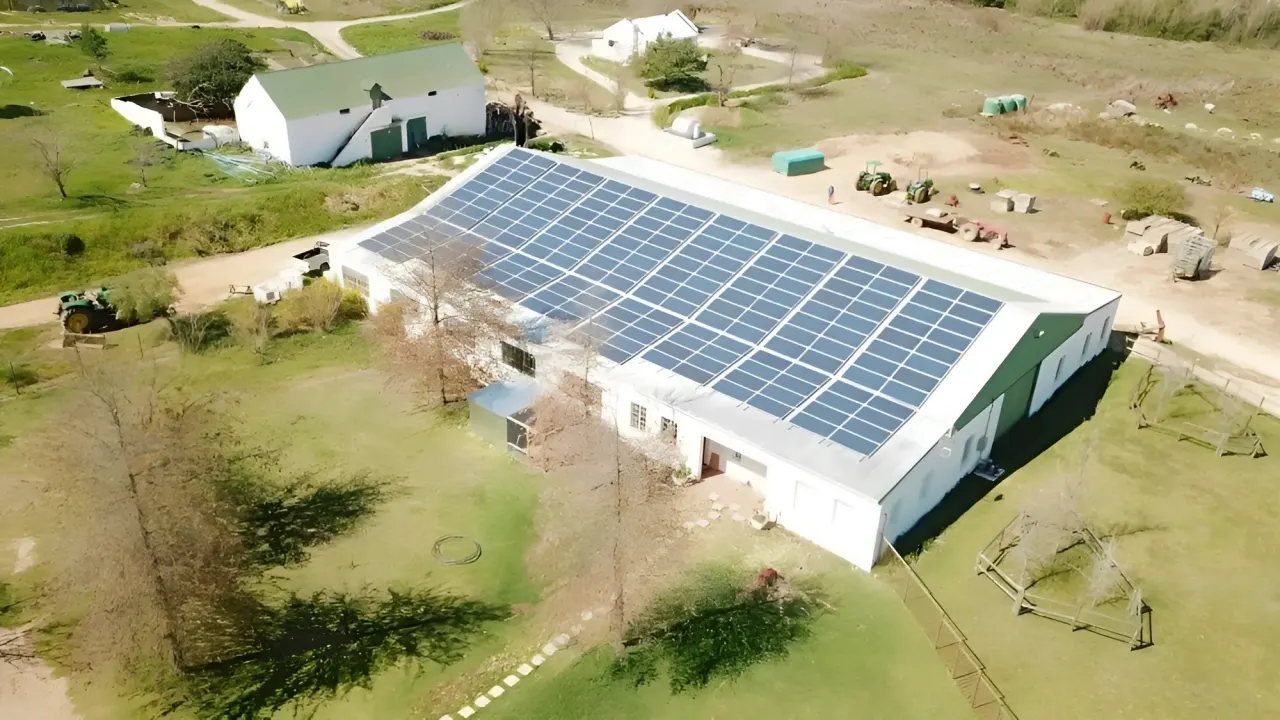
The global transition towards renewable energy has accelerated the development of integrated power generation systems that maximise efficiency and reliability. A wind solar hybrid system combines two complementary renewable sources, offering continuous power generation that addresses the intermittent nature of individual technologies. These integrated solutions represent the future of distributed energy generation, particularly for commercial and industrial operations seeking energy independence and cost reduction whilst advancing their sustainability objectives.
Understanding Wind Solar Hybrid System Architecture
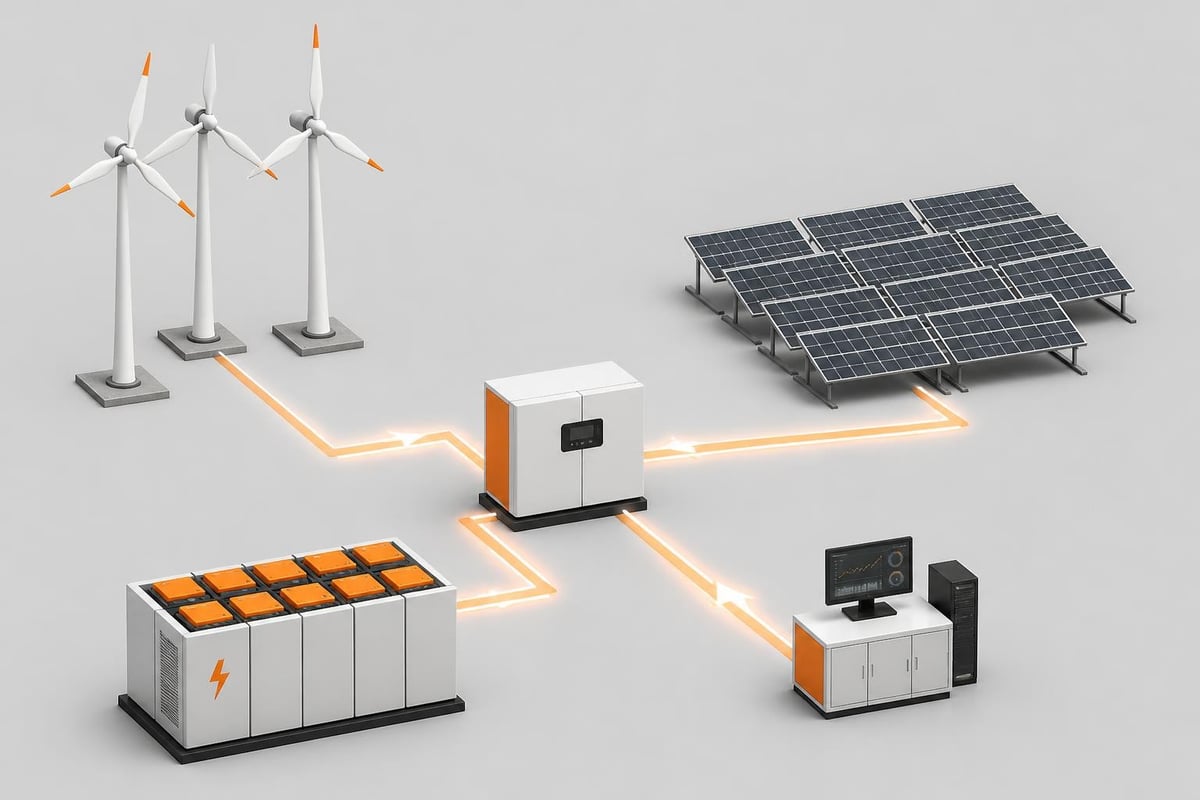
Modern hybrid renewable energy systems integrate multiple generation sources through sophisticated control mechanisms and shared infrastructure. The fundamental architecture comprises wind turbines, solar photovoltaic arrays, battery storage, inverters, and intelligent control systems working in concert to deliver reliable power.
Core Components and Integration
The primary advantage of combining wind and solar technologies lies in their complementary generation profiles. Solar panels produce maximum output during daylight hours, whilst wind resources often peak during evening and night-time periods. This natural offset creates a more consistent energy supply throughout 24-hour cycles.
Essential system components include:
- Wind turbines with power ratings matched to site wind resources
- Solar PV arrays sized for available installation area and irradiation
- Battery Energy Storage Systems (BESS) for load balancing and backup
- Bidirectional inverters managing AC/DC conversion
- Smart monitoring and control systems optimising generation mix
- Grid connection infrastructure for export or import when required
The control architecture determines system performance and economic viability. Advanced algorithms continuously assess generation potential, storage levels, and load requirements to optimise energy flow. Recent research on wind-solar hybrid renewable energy systems demonstrates how sophisticated power architectures and mathematical modelling enhance system performance.
Power Conversion and Common Bus Configuration
Most contemporary systems employ a common DC bus architecture, simplifying integration and improving efficiency. This configuration allows both wind and solar generation to feed into a shared DC infrastructure, reducing conversion losses and equipment costs.
The DC bus voltage typically ranges between 48V for smaller installations and 1000V for utility-scale implementations. Higher voltages reduce transmission losses and enable longer cable runs, particularly important for wind turbines positioned away from other system components.
Combined power systems with common DC bus configurations enable optimal energy harvesting through coordinated control strategies that balance generation, storage, and consumption in real-time.
Site Assessment and Resource Analysis
Successful wind solar hybrid system deployment begins with comprehensive resource assessment. Understanding local wind patterns, solar irradiation, and temporal variations determines optimal system sizing and configuration.
Wind Resource Characterisation
Wind assessment requires data collection over minimum 12-month periods to capture seasonal variations. Key metrics include average wind speed, prevailing directions, turbulence intensity, and vertical wind shear. Sites with average wind speeds exceeding 5 metres per second at hub height generally prove economically viable for small to medium wind turbines.
Terrain features significantly influence wind resources. Coastal locations, elevated sites, and areas with minimal obstructions typically offer superior wind generation potential. Urban and industrial environments present challenges including turbulence and regulatory restrictions on turbine height.
Solar Resource Evaluation
Solar assessment examines global horizontal irradiation (GHI), direct normal irradiation (DNI), and diffuse horizontal irradiation (DHI). Southern Africa enjoys exceptional solar resources, with many regions receiving over 2,000 kWh/m² annually.
| Resource Parameter | Measurement Period | Critical Factors |
|---|---|---|
| Wind Speed | 12+ months | Height, direction, variability |
| Solar Irradiation | 12+ months | GHI, shading analysis, orientation |
| Temperature | 12+ months | Impact on PV efficiency, wind density |
| Grid Availability | Current | Voltage, capacity, reliability |
Shading analysis identifies obstructions affecting solar panel performance throughout the year. Even partial shading can significantly reduce array output, making careful site layout essential for maximising generation.
System Sizing and Configuration Strategies
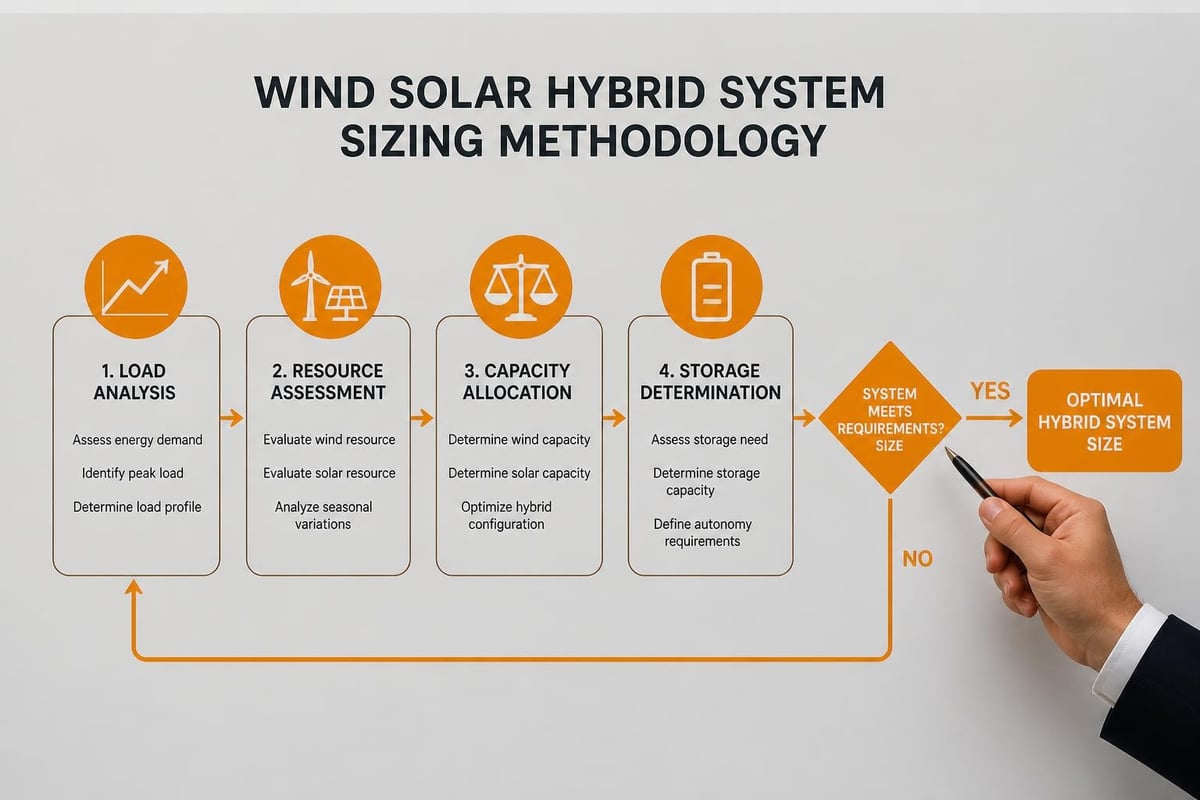
Optimal sizing balances generation capacity, storage requirements, and load profiles whilst maintaining economic viability. Oversized systems waste capital resources, whilst undersized installations fail to meet energy security objectives.
Load Profile Analysis
Detailed understanding of energy consumption patterns forms the foundation for system design. Commercial facilities typically exhibit peak demand during business hours, aligning well with solar generation. Industrial operations with continuous processes benefit from wind generation's night-time contribution.
Load analysis should capture:
- Peak demand periods and magnitudes
- Base load requirements
- Seasonal variations in consumption
- Future growth projections
- Critical loads requiring uninterrupted supply
Energy audits identify consumption patterns and opportunities for efficiency improvements that reduce required generation capacity. Reducing baseline consumption through efficiency measures typically offers superior return on investment compared to additional generation capacity.
Generation Capacity Allocation
The ratio between wind and solar capacity depends on local resources, load profiles, and economic factors. A balanced approach might allocate 40-60% of total capacity to solar and 40-60% to wind, though site-specific conditions warrant customised configurations.
Solar installations offer modular scalability, allowing phased deployment as budgets permit or demand grows. Wind turbines involve larger incremental capacity additions, requiring more significant upfront investment decisions.
Companies like INFOLED specialise in designing integrated renewable energy solutions that optimise the balance between solar, wind, and storage technologies for commercial and industrial applications across Southern Africa.
Battery Storage Integration and Management
Energy storage transforms intermittent renewable generation into dispatchable power, fundamentally enhancing system value. Hybrid Energy Systems incorporating battery storage provide peak shaving, load shifting, and backup power capabilities that pure generation systems cannot deliver.
Storage Capacity Determination
Battery sizing considers multiple operational scenarios including overnight autonomy, peak shaving requirements, and backup duration for critical loads. Typical commercial installations size storage between 2-6 hours of average consumption, though critical facilities may specify 12-24 hours autonomy.
Storage design parameters include:
- Daily load profile and peak demand periods
- Renewable generation patterns and seasonal variations
- Required backup duration for critical operations
- Grid reliability and import/export strategies
- Budget constraints and phased implementation options
Lithium-ion technologies dominate commercial storage applications, offering high energy density, excellent cycle life, and declining costs. Alternative chemistries including lithium iron phosphate (LFP) provide enhanced safety and longevity for installations prioritising lifespan over energy density.
Charge and Discharge Management
Sophisticated battery management systems (BMS) optimise charging strategies to maximise battery lifespan whilst meeting operational requirements. The BMS monitors cell voltages, temperatures, and state of charge, preventing damaging operating conditions.
Charging strategies prioritise renewable energy sources, using grid power only when generation proves insufficient and tariffs favour import. Discharge management balances immediate load requirements against forecast demand and generation potential, maintaining adequate reserves for anticipated needs.
| Battery Parameter | Optimal Range | Impact of Deviation |
|---|---|---|
| State of Charge | 20-80% | Improved cycle life within range |
| Charge/Discharge Rate | 0.5-1C | Higher rates reduce lifespan |
| Operating Temperature | 15-25°C | Temperature extremes degrade performance |
| Depth of Discharge | <80% daily | Shallow cycling extends service life |
Control Systems and Optimisation Algorithms
Advanced control strategies distinguish high-performing wind solar hybrid systems from basic installations. Intelligent controllers continuously optimise generation mix, storage utilisation, and grid interaction to minimise costs and maximise reliability.
Predictive Control Strategies
Modern systems employ weather forecasting data to anticipate generation potential hours or days ahead. These predictions inform decisions about battery charging, grid import scheduling, and load management to optimise energy costs.
Machine learning algorithms identify patterns in historical generation and consumption data, refining predictions over time. This continuous improvement enhances system performance without manual intervention, adapting to changing operational conditions.
Mathematical models of isolated hybrid power systems demonstrate how proportional-integral controllers maintain frequency stability and optimal load distribution across generation sources.
Load Prioritisation and Demand Response
Sophisticated systems categorise loads by criticality, ensuring essential operations receive priority during supply constraints. Non-essential loads can be automatically curtailed or shifted to periods of abundant generation, maximising renewable energy utilisation.
Demand response integration allows participation in utility programmes that compensate for load flexibility. Commercial facilities can reduce consumption during peak tariff periods, leveraging battery storage or curtailing non-critical processes to minimise electricity costs.
Grid Connection and Regulatory Considerations
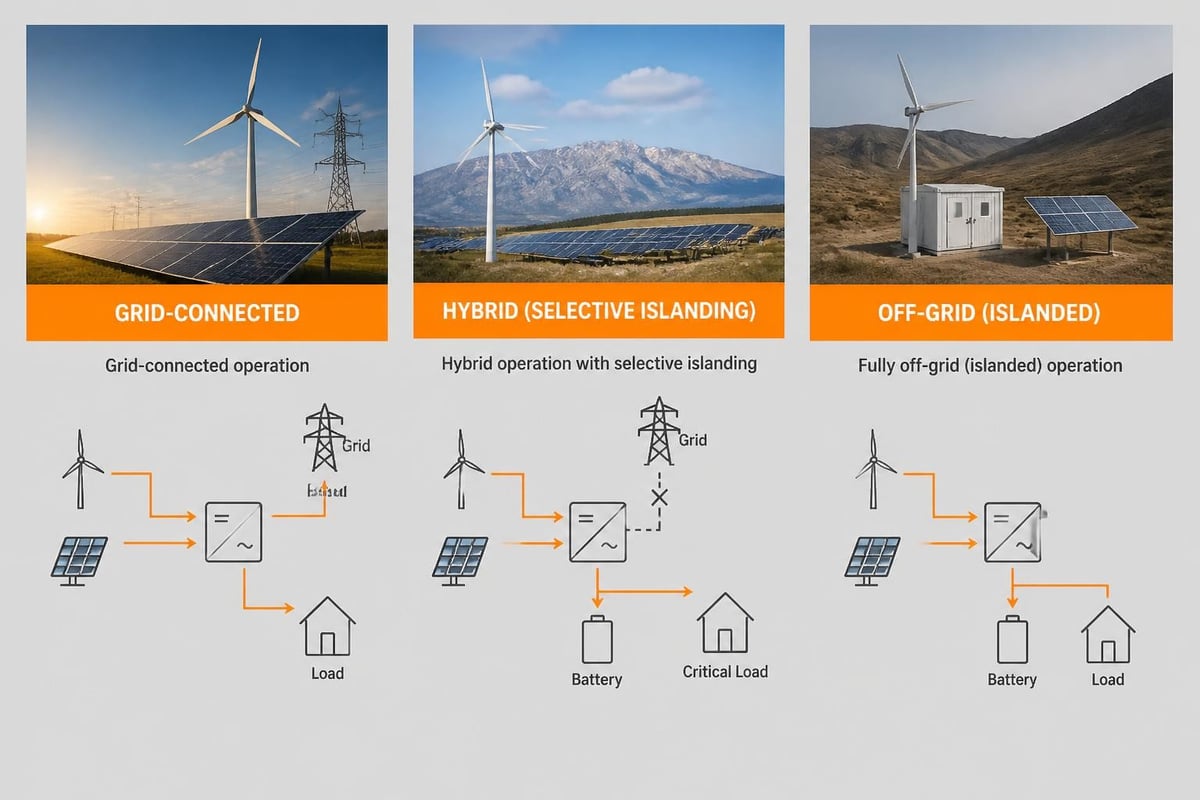
The relationship between a wind solar hybrid system and the electrical grid significantly influences system design and operational strategy. Grid-connected, hybrid, and off-grid configurations each present distinct advantages and challenges.
Grid-Connected Systems
Grid connection provides backup power when renewable generation proves insufficient and creates opportunities for exporting excess generation. Net metering or feed-in tariff programmes can generate revenue from surplus production, improving project economics.
Grid-connected systems require compliance with utility interconnection standards including voltage regulation, frequency stability, and power quality requirements. Sophisticated inverters maintain these parameters whilst managing bidirectional power flow.
- Submit grid connection application to utility provider
- Complete network impact assessment if required
- Install approved metering and protection equipment
- Undergo commissioning and compliance testing
- Receive authorisation for parallel operation
Regulatory frameworks governing renewable energy systems vary across Southern Africa. Understanding applicable standards, permitting requirements, and incentive programmes proves essential for project success.
Islanding and Off-Grid Operation
Systems designed for islanded operation must maintain voltage and frequency stability without grid support. This requirement demands more sophisticated inverter capabilities and typically larger battery storage capacity to ensure continuous supply.
Frequency dynamics studies explore how wind turbine generators can provide inertia emulation and primary frequency support, enhancing system stability during islanded operation.
Economic Analysis and Financial Modelling
Comprehensive financial analysis evaluates wind solar hybrid system viability, considering capital costs, operational expenses, energy savings, and revenue opportunities. Levelised cost of energy (LCOE) provides a standardised metric for comparing renewable options against conventional grid supply.
Capital Investment Components
Initial investment encompasses equipment procurement, installation labour, civil works, grid connection infrastructure, and project development costs. Wind turbines typically represent 30-40% of total project costs, solar arrays 25-35%, battery storage 20-30%, and balance of system components 10-20%.
Major cost categories include:
- Wind turbines including towers and foundations
- Solar PV modules, mounting structures, and cabling
- Battery storage systems and enclosures
- Inverters and power conversion equipment
- Monitoring and control systems
- Installation labour and project management
- Grid connection and compliance costs
Equipment costs have declined significantly over recent years, with solar module prices decreasing by over 80% since 2010 and battery costs falling by approximately 90% over the same period. These trends improve project economics and accelerate payback periods.
Operating Costs and Maintenance Requirements
Ongoing costs include preventative maintenance, component replacement, insurance, monitoring services, and land lease payments where applicable. Well-maintained systems typically incur annual operating costs between 1-3% of initial capital investment.
| System Component | Annual Maintenance Cost | Replacement Cycle |
|---|---|---|
| Solar PV Arrays | 0.5-1% of capital | 25-30 years (panels) |
| Wind Turbines | 2-3% of capital | 15-20 years (major overhaul) |
| Battery Storage | 1-2% of capital | 8-15 years (capacity dependent) |
| Inverters | 0.5-1% of capital | 10-15 years |
Return on Investment Calculations
Financial models project energy savings, revenue generation, and incentive payments over the system's operational lifetime, typically 20-25 years. Payback periods for commercial wind solar hybrid systems in Southern Africa generally range between 5-12 years, depending on energy costs, system sizing, and financing terms.
Sensitivity analysis examines how variations in key assumptions affect project returns. Critical variables include electricity tariff escalation, system performance degradation, maintenance costs, and component replacement timing.
Performance Monitoring and Optimisation
Continuous monitoring ensures wind solar hybrid systems deliver expected performance whilst identifying opportunities for optimisation. Real-time data collection enables proactive maintenance, performance verification, and operational refinement.
Key Performance Indicators
Comprehensive monitoring tracks generation output, consumption patterns, storage cycles, system efficiency, and financial performance. Deviations from expected values trigger alerts enabling rapid investigation and corrective action.
Essential monitoring metrics include:
- Energy generation by source (kWh daily, monthly, annual)
- System efficiency and losses
- Battery state of charge and cycle count
- Grid import and export quantities
- Cost savings and return on investment progress
- Environmental impact metrics (CO₂ avoided, fossil fuel displacement)
Advanced analytics identify underperforming components, suboptimal control settings, or operational patterns that reduce system value. These insights inform maintenance priorities and configuration adjustments that enhance overall performance.
Remote Monitoring Capabilities
Modern systems provide web-based dashboards and mobile applications delivering real-time visibility into system operation. Facility managers, maintenance teams, and energy professionals access identical data, ensuring coordinated decision-making and rapid response to issues.
Remote monitoring reduces site visit requirements, lowering operational costs whilst maintaining system reliability. Automated alerts notify relevant personnel when conditions require attention, preventing minor issues from escalating into costly failures.
Environmental Impact and Sustainability Benefits
Wind solar hybrid systems deliver substantial environmental benefits compared to fossil fuel generation, contributing to corporate sustainability objectives and regulatory compliance. Quantifying these impacts demonstrates commitment to environmental stewardship and supports ESG reporting requirements.
Carbon Emission Reduction
Displacing grid electricity or diesel generation with renewable energy significantly reduces greenhouse gas emissions. A typical 100 kW wind solar hybrid system in Southern Africa might avoid 150-200 tonnes of CO₂ annually, equivalent to removing 30-40 passenger vehicles from roads.
Lifecycle emissions including manufacturing, transportation, installation, and eventual recycling remain substantially lower than conventional generation. Renewable systems typically achieve energy payback within 1-3 years, spending the remaining 20+ years of operation as net energy producers.
Resource Conservation
Renewable generation reduces water consumption compared to thermal power plants requiring cooling water. This benefit proves particularly valuable in water-stressed regions of Southern Africa where every litre conserved supports essential uses.
Wind and solar resources require no fuel extraction, processing, or transportation, eliminating associated environmental impacts. The absence of combustion prevents air pollution, reducing health impacts and environmental degradation linked to fossil fuel use.
Implementation Challenges and Solutions
Deploying wind solar hybrid systems involves navigating technical, regulatory, and financial challenges. Understanding common obstacles and proven solutions accelerates project success and reduces implementation risks.
Technical Integration Challenges
Coordinating multiple generation sources, storage systems, and grid connections requires sophisticated engineering and careful project management. Component compatibility, communication protocols, and control integration demand thorough planning and experienced implementation teams.
Common technical challenges include:
- Voltage regulation across varying generation conditions
- Harmonic distortion from multiple inverters
- Protection coordination for bidirectional power flow
- Communication integration between different manufacturers
- Physical space constraints for equipment installation
Engaging experienced renewable energy engineering firms during design phases prevents costly mistakes and ensures optimal system configuration. Comprehensive commissioning procedures verify all components function correctly individually and as integrated systems.
Regulatory and Permitting Obstacles
Navigating utility interconnection requirements, building permits, environmental approvals, and land use regulations consumes significant time and resources. Early engagement with authorities streamlines approval processes and identifies potential showstoppers before substantial investment occurs.
Some jurisdictions impose restrictions on wind turbine height, noise levels, or setback distances that limit installation options. Understanding these constraints during site selection prevents costly redesigns or project abandonment after preliminary work commences.
Wind solar hybrid systems represent mature, proven technology delivering reliable renewable energy for commercial and industrial applications. The complementary generation profiles of wind and solar resources, combined with battery storage and intelligent controls, create resilient energy infrastructure that reduces costs, enhances sustainability, and supports operational independence. INFOLED designs, finances, installs, and maintains integrated renewable energy solutions tailored to commercial, industrial, and agricultural operations across Southern Africa, helping businesses achieve their energy cost reduction and Net Zero objectives through expertly engineered hybrid systems.
Next Step
Need help with your energy strategy?
Speak to INFOLED about solar, storage, EV charging, service agreements or system performance.