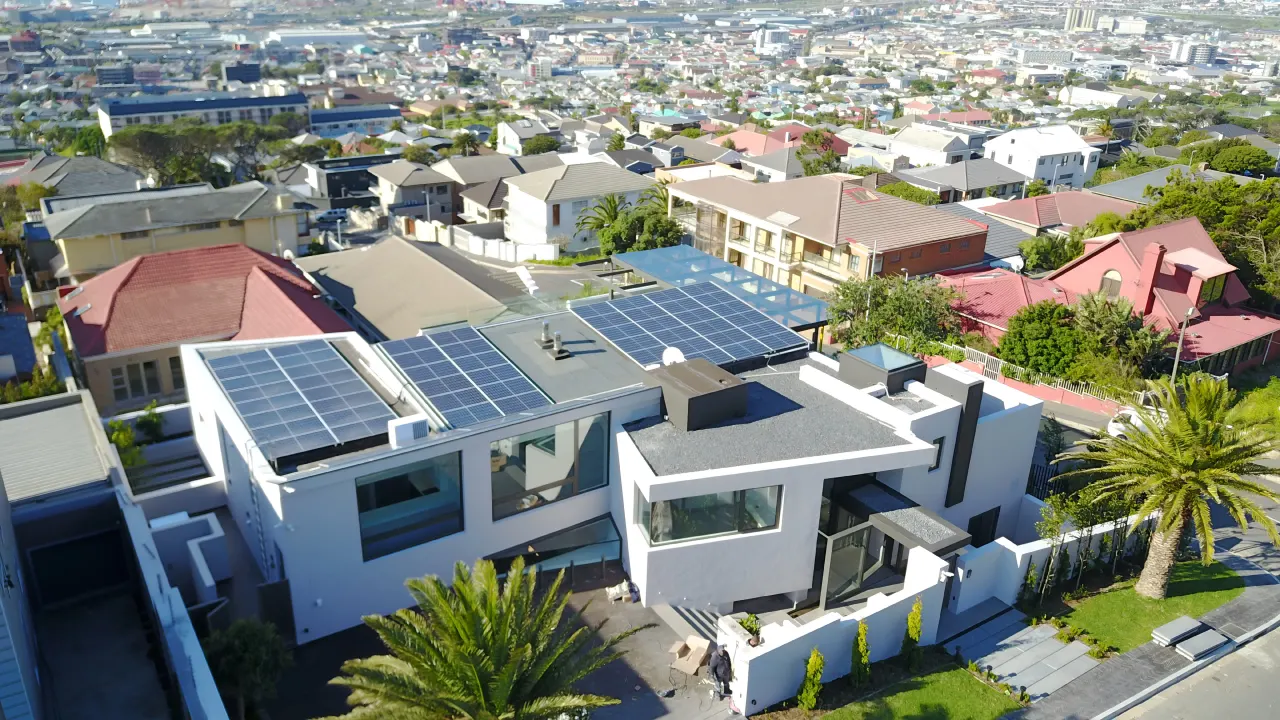
The renewable energy landscape in South Africa is evolving beyond single-technology installations. As businesses and property owners seek more reliable, cost-effective solutions to combat load shedding and rising electricity costs, the concept of a wind turbine with solar panels is gaining significant traction. This hybrid approach combines two complementary renewable technologies to deliver consistent power generation that addresses the intermittency challenges inherent in relying on a single renewable source.
Understanding Hybrid Wind and Solar Systems
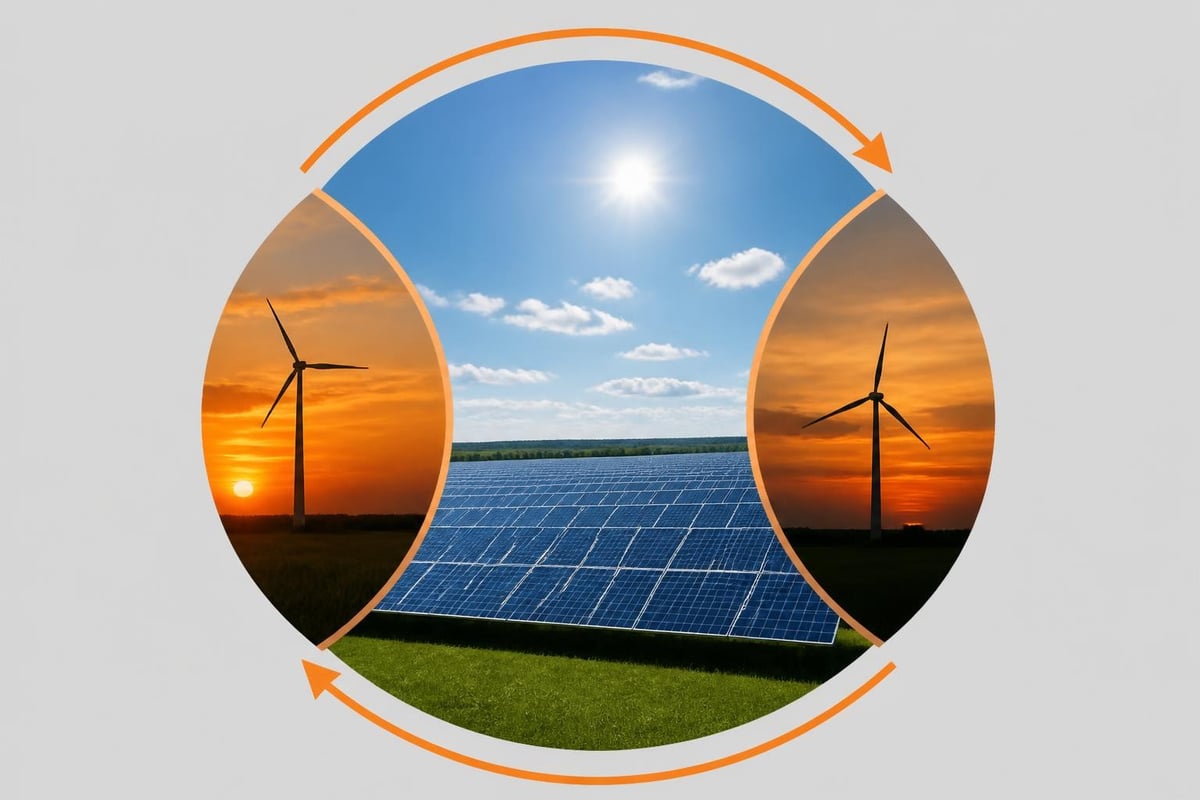
A wind turbine with solar panels represents an integrated renewable energy solution that harnesses both wind and sunlight to generate electricity. Unlike standalone installations, these hybrid systems capitalise on the natural complementarity of wind and solar resources. Solar panels produce maximum output during sunny daylight hours, whilst wind turbines often generate more power during evening hours and overcast conditions when wind speeds typically increase.
The engineering principle behind combining these technologies is straightforward yet powerful. Solar photovoltaic panels convert sunlight directly into electricity, with peak performance typically occurring between 10:00 and 15:00. Wind turbines capture kinetic energy from moving air, often performing best during early morning and evening hours when thermal gradients create stronger wind patterns.
Technical Configuration Options
Modern hybrid installations can take several physical forms:
- Co-located systems: Separate wind turbines and solar arrays installed on the same site, sharing common infrastructure
- Integrated tower designs: Solar panels mounted on wind turbine towers or surrounding structures
- Hybrid renewable energy parks: Large-scale installations combining multiple turbines and extensive solar fields
For commercial and industrial applications across Southern Africa, co-located systems offer the most flexibility. A manufacturing facility in Gauteng, for example, might install a rooftop solar array whilst positioning a small wind turbine on an adjacent structure to capture the region's consistent afternoon winds.
Performance Benefits and Energy Yield
The primary advantage of a wind turbine with solar panels lies in improved capacity factor and more consistent energy delivery. Research indicates that hybrid systems can achieve capacity factors 15-25% higher than standalone installations, translating to more predictable energy output and better return on investment.
Southern Africa's diverse climate zones create ideal conditions for hybrid deployment. Coastal regions experience strong sea breezes alongside high solar irradiation, whilst interior provinces benefit from reliable sunshine and seasonal wind patterns. According to recent research on hybrid plant optimisation, properly designed systems can significantly improve overall plant economics through better resource utilisation.
Energy Production Patterns
| Time Period | Solar Output | Wind Output | Combined Benefit |
|---|---|---|---|
| 06:00-09:00 | Medium | High | Consistent morning power |
| 10:00-15:00 | Very High | Low-Medium | Peak solar generation |
| 16:00-20:00 | Medium-Low | High | Evening demand coverage |
| 21:00-05:00 | None | Medium-High | Night-time baseload |
This complementary generation profile means businesses can reduce battery storage requirements or grid dependency. A wine estate in the Western Cape implementing a wind turbine with solar panels might find they need 30-40% less battery capacity compared to a solar-only system, resulting in substantial cost savings.
System Design and Sizing Considerations
Proper sizing of hybrid systems requires sophisticated analysis of local wind and solar resources, load profiles, and operational requirements. Unlike single-technology installations, a wind turbine with solar panels demands careful attention to the ratio between wind and solar capacity to optimise performance and economics.
Wind resource assessment involves collecting data on wind speeds, directions, and patterns over at least 12 months. Many South African regions experience seasonal variations, with winter months often bringing stronger winds whilst summer delivers peak solar irradiation. This seasonal complementarity can be particularly valuable for agricultural operations with varying energy demands throughout the year.
Solar resource assessment is equally critical. South Africa enjoys some of the world's best solar irradiation levels, with most regions receiving 4.5-6.5 kWh/m² daily. When combined with wind data, engineers can determine the optimal balance between technologies.
Key Design Parameters
- Optimal wind-to-solar ratio based on local resources (typically 20:80 to 40:60 in most SA regions)
- Shared infrastructure including inverters, transformers, and grid connection points
- Control systems managing power flow from both sources
- Energy storage integration sized for combined output variability
Projects require thorough renewable energy engineering services including feasibility studies, load analysis, and financial modelling to ensure optimal system configuration. These assessments examine site-specific conditions, regulatory requirements, and economic factors to deliver systems that meet performance and budget expectations.
Integration with Battery Storage Systems
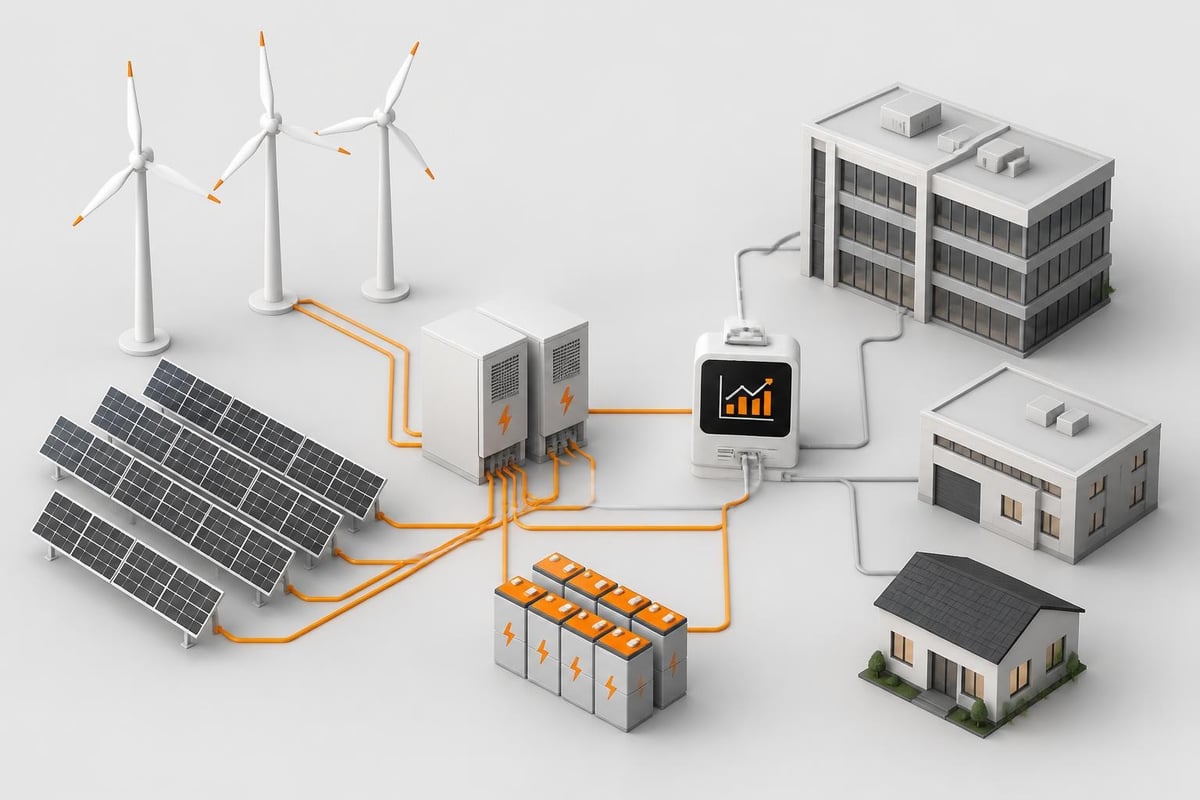
Most commercial wind turbine with solar panels installations incorporate battery energy storage systems (BESS) to maximise value and ensure reliability. Batteries serve multiple functions: storing excess generation for later use, providing backup power during grid outages, and enabling sophisticated energy management strategies like peak shaving and demand charge reduction.
The integration of BESS with hybrid renewable systems creates what engineers term a "fully dispatchable renewable energy solution". Unlike grid-tied systems that export excess power to the utility, hybrid systems with storage can deliver power on demand, significantly improving energy independence.
Storage Sizing for Hybrid Systems
Battery capacity for a wind turbine with solar panels typically ranges from 2-6 hours of peak load coverage, depending on application requirements and budget. A distribution centre in KwaZulu-Natal operating 24/7 might require larger storage to cover extended periods of low renewable generation, whilst a retail facility with predictable daytime loads could manage with smaller capacity.
Cost considerations for battery storage have improved dramatically. Lithium-ion battery prices have fallen approximately 80% since 2015, making storage economically viable for many commercial applications. When evaluating total system costs, hybrid installations often demonstrate better economics than oversized single-technology systems requiring larger battery banks.
Modern battery management systems enable sophisticated strategies:
- Time-of-use optimisation: Storing energy during low-tariff periods and discharging during peak pricing
- Demand charge management: Limiting peak demand from the grid to reduce monthly charges
- Backup power provision: Ensuring critical loads remain operational during outages
- Grid services: Participating in demand response programmes where available
Financial Performance and Return on Investment
The economics of a wind turbine with solar panels depend on multiple factors including system sizing, local resources, electricity tariffs, available incentives, and operational costs. South African businesses face some of Africa's highest and most volatile electricity prices, creating compelling economics for renewable energy investments.
Levelised cost of energy (LCOE) for hybrid systems typically ranges between R0.85 and R1.45 per kWh across Southern Africa, comparing favourably to municipal and Eskom tariffs that often exceed R2.00 per kWh for commercial users. The specific LCOE depends heavily on wind resource quality, which varies significantly across regions.
Financial Metrics Comparison
| System Type | Typical LCOE (ZAR/kWh) | Payback Period | Capacity Factor |
|---|---|---|---|
| Solar only | R0.95 - R1.35 | 5-8 years | 18-24% |
| Wind only | R1.15 - R1.85 | 7-12 years | 25-35% |
| Hybrid wind-solar | R0.85 - R1.45 | 4-7 years | 35-45% |
| Hybrid with BESS | R1.05 - R1.65 | 5-9 years | 40-55% |
These figures assume commercial-scale installations (100 kW to 5 MW) with appropriate wind resources. The improved capacity factor of hybrid systems translates to more kilowatt-hours generated annually, accelerating payback despite potentially higher upfront costs.
Tax incentives enhance financial returns. Section 12B of the South African Income Tax Act allows accelerated depreciation for renewable energy assets, enabling businesses to deduct 50% of the cost in year one, with the balance depreciated over subsequent years. This creates substantial tax benefits for profitable enterprises investing in a wind turbine with solar panels.
Regulatory and Grid Connection Requirements
Installing a wind turbine with solar panels in South Africa involves navigating municipal regulations, environmental assessments, and grid connection procedures. Requirements vary significantly by location, system size, and whether the installation connects to the grid or operates off-grid.
Municipal approval processes differ across metros and municipalities. Systems under 1 MW typically face streamlined approval processes, whilst larger installations may require comprehensive applications including structural certifications, electrical compliance certificates, and environmental impact assessments. Wind turbines face additional scrutiny regarding height restrictions, noise levels, and aviation safety.
Grid connection for hybrid systems follows similar procedures to single-technology installations but requires additional documentation addressing dual-source generation. The National Energy Regulator of South Africa (NERSA) regulates grid connections, though actual approval processes are managed by local utilities.
Compliance Requirements
- SANS 10142-1: Wiring regulations for electrical installations
- SANS 10393: Small-scale embedded generation installations
- Environmental authorisation: Required for wind turbines above certain sizes or in sensitive areas
- Aviation clearance: Necessary for turbines exceeding specific heights near airports
- Building approval: For structural installations and tower foundations
Working with experienced renewable energy contractors familiar with Southern African regulations significantly streamlines approval processes. Many renewable energy projects demonstrate successful navigation of these requirements across diverse applications and regions.
Operation, Maintenance and Monitoring
A wind turbine with solar panels requires ongoing maintenance to ensure optimal performance and longevity. Whilst both technologies are relatively low-maintenance compared to fossil fuel generators, regular inspections and preventative maintenance protocols are essential for maximising return on investment.
Solar array maintenance involves periodic cleaning to remove dust and debris, inspection of mounting systems, inverter maintenance, and electrical testing. In South Africa's dusty interior regions, cleaning frequencies may increase to monthly intervals during dry seasons. Coastal installations face salt accumulation requiring specialised cleaning approaches.
Wind turbine maintenance demands more intensive attention. Mechanical components including gearboxes, bearings, and blades require regular inspection and servicing. Small turbines (under 100 kW) typically need quarterly inspections, whilst larger machines may require monthly attention. Blade inspections using drone technology have become standard practice, enabling detailed assessment without costly shutdowns.
Monitoring and Performance Management
Modern hybrid systems incorporate comprehensive monitoring platforms tracking:
- Real-time power generation from each source
- Equipment health and fault detection
- Environmental conditions (wind speed, solar irradiation, temperature)
- Energy storage status and cycling
- Grid interaction and power quality metrics
Advanced energy management systems enable predictive maintenance, identifying potential issues before failures occur. Machine learning algorithms analyse performance patterns, flagging deviations that might indicate developing problems.
Remote monitoring capabilities prove particularly valuable for distributed installations. A property management company operating hybrid systems across multiple locations can monitor all sites from a central operations centre, dispatching maintenance crews only when required rather than following rigid schedules.
Environmental Impact and Sustainability
Beyond financial benefits, a wind turbine with solar panels delivers substantial environmental advantages. These hybrid systems displace fossil fuel consumption, reduce carbon emissions, and support corporate sustainability objectives increasingly important to stakeholders, investors, and customers.
Carbon reduction from hybrid renewable installations can be significant. A 500 kW hybrid system generating 1.2 million kWh annually displaces approximately 950 tonnes of CO₂ annually when replacing coal-based grid electricity. Over a 25-year operational life, this represents nearly 24,000 tonnes of avoided emissions.
These environmental benefits support compliance with South Africa's carbon tax legislation and enable participation in voluntary carbon markets. Companies implementing hybrid renewable systems can generate carbon credits, creating additional revenue streams whilst demonstrating climate leadership.
Lifecycle Considerations
- Manufacturing impact: Modern solar panels and wind turbines have energy payback periods of 1-3 years
- Land use efficiency: Hybrid systems maximise energy generation per hectare
- End-of-life management: Proper solar panel recycling and turbine decommissioning procedures
- Biodiversity impact: Careful siting minimises effects on bird populations and local ecosystems
Research into hybrid solar and wind technologies continues advancing our understanding of optimal design approaches that maximise both performance and environmental benefits. Emerging concepts include integrated designs where solar panels and wind turbines share common structural elements, reducing material use and installation costs.
Emerging Technologies and Future Developments
The field of hybrid renewable energy is experiencing rapid innovation. A wind turbine with solar panels is evolving from simple co-located installations to sophisticated integrated systems incorporating artificial intelligence, advanced materials, and novel configurations.
Vertical axis wind turbines (VAWTs) are gaining attention for hybrid applications. Unlike traditional horizontal axis designs, VAWTs can operate effectively in turbulent urban environments and accept wind from any direction. Recent prototypes combining VAWTs with solar panels demonstrate promising performance characteristics for commercial buildings and industrial facilities where space constraints limit conventional turbine deployment.
Bifacial solar panels capture light from both sides, generating additional power from ground reflection and ambient light. When installed near white or reflective surfaces common around wind turbine installations, bifacial modules can deliver 10-20% more energy than conventional panels, improving the economics of hybrid systems.
Innovation Trends
- Smart inverters with advanced grid support functions enabling better integration
- Hybrid-optimised energy storage specifically designed for dual-source charging
- Integrated tower designs reducing installation costs and improving aesthetics
- AI-powered forecasting predicting renewable generation with increasing accuracy
- Modular systems enabling staged deployment and easier expansion
These technological advances are making hybrid installations increasingly accessible to smaller commercial operations. Systems that once required multi-million Rand investments are now viable at scales of 50-100 kW, opening opportunities for small manufacturers, agricultural operations, and commercial properties.
Practical Applications Across Industries
A wind turbine with solar panels serves diverse applications across Southern Africa's commercial, industrial, and agricultural sectors. Each application presents unique requirements and opportunities for hybrid renewable energy deployment.
Manufacturing facilities benefit from hybrid systems' ability to deliver consistent power during production hours whilst managing demand charges through intelligent battery dispatch. A food processing plant in the Eastern Cape might size its hybrid system to cover daytime processing loads with solar whilst using wind generation and stored energy for refrigeration systems operating around the clock.
Agricultural operations including farms, packhouses, and irrigation systems find hybrid systems particularly valuable. Irrigation pumping often occurs during early morning or evening hours when wind resources peak, complementing solar generation during crop processing and cooling operations. Wine estates, citrus farms, and vegetable packhouses across the Western Cape and Limpopo are increasingly adopting hybrid approaches.
Sector-Specific Benefits
| Industry | Primary Benefit | Typical System Size |
|---|---|---|
| Manufacturing | Demand charge reduction | 200 kW - 2 MW |
| Agriculture | Irrigation power reliability | 50 kW - 500 kW |
| Hospitality | Energy independence, ESG positioning | 100 kW - 1 MW |
| Retail | Operating cost reduction | 150 kW - 750 kW |
| Logistics | 24/7 facility operation | 250 kW - 3 MW |
Shopping centres and retail facilities increasingly recognise hybrid systems as dual investments in cost reduction and brand positioning. Customers respond positively to visible sustainability initiatives, whilst retailers benefit from reduced operating expenses and protection against grid instability.
Similar hybrid approaches are being successfully implemented in wind solar hybrid systems across various scales and applications, demonstrating the versatility and effectiveness of combined renewable technologies.
Site Assessment and Feasibility Analysis
Before implementing a wind turbine with solar panels, comprehensive site assessment determines technical feasibility and economic viability. This analysis evaluates wind resources, solar potential, physical constraints, electrical infrastructure, and regulatory considerations specific to each location.
Wind resource assessment typically involves installing a meteorological mast or deploying sonic detection and ranging (SODAR) equipment to measure wind speeds at proposed turbine hub heights. Assessment periods should span at least 12 months to capture seasonal variations. Many regions of South Africa show strong wind resources, particularly coastal areas, escarpments, and elevated interior regions.
Solar assessment can leverage satellite data combined with on-site measurements. South Africa's high solar irradiation levels mean most locations prove suitable for photovoltaic generation, though specific considerations include shading analysis, roof or ground conditions, and orientation optimisation.
Physical site constraints require careful evaluation. Wind turbines need adequate clearance from buildings, property boundaries, and obstacles that create turbulence. Solar arrays require unshaded areas with appropriate structural support. Hybrid installations must balance optimal positioning for each technology within available space.
Assessment Components
- Wind speed and direction data collection (12+ months recommended)
- Solar irradiation measurement and shading analysis
- Electrical infrastructure evaluation (existing capacity, connection points)
- Structural assessment for mounting systems
- Environmental screening (noise, visual impact, ecology)
- Regulatory review (zoning, height restrictions, permits)
Professional feasibility studies integrate these technical assessments with financial modelling to project system performance, costs, and returns. These analyses should account for degradation over time, maintenance costs, and realistic energy pricing scenarios to provide accurate investment guidance.
System Control and Optimisation Strategies
Maximising the performance of a wind turbine with solar panels requires sophisticated control systems managing power flow, storage dispatch, and grid interaction. Modern hybrid installations employ smart controllers that continuously optimise operations based on multiple inputs including weather forecasts, load predictions, and electricity pricing signals.
Maximum power point tracking (MPPT) ensures both solar arrays and wind turbines operate at peak efficiency across varying conditions. Advanced inverters incorporate dual-input MPPT controllers specifically designed for hybrid applications, optimising each generation source independently whilst managing combined output.
Load management strategies prioritise renewable energy utilisation over grid consumption. When renewable generation exceeds immediate demand, excess power charges batteries or exports to the grid (where permitted). During high-demand periods, the system draws from batteries before accessing grid power, minimising expensive peak-period consumption.
Energy management becomes particularly sophisticated when integrated with demand response capabilities and time-of-use tariffs. The system can:
- Predict renewable generation based on weather forecasts
- Anticipate building loads from historical patterns and schedules
- Optimise battery charging and discharging timing
- Shift discretionary loads to periods of high renewable generation
- Participate in grid services where available
These optimisation strategies can improve system economics by 15-30% compared to basic operational approaches, significantly enhancing return on investment.
Hybrid renewable systems combining wind and solar technologies represent a mature, proven approach to reliable, cost-effective power generation across Southern Africa's diverse climate zones. The complementary generation profiles, improved capacity factors, and enhanced energy security make a wind turbine with solar panels an increasingly attractive solution for commercial, industrial, and agricultural operations facing rising electricity costs and grid instability. Whether you're exploring renewable energy options for the first time or expanding existing installations, INFOLED delivers comprehensive engineering, installation, and maintenance services tailored to Southern African conditions, helping businesses achieve energy independence whilst supporting sustainability objectives.
Next Step
Need help with your energy strategy?
Speak to INFOLED about solar, storage, EV charging, service agreements or system performance.