

The rapid growth of electric vehicle adoption across South Africa has created an urgent need to understand the economics behind public and commercial charging infrastructure. As businesses and municipalities deploy charging stations, establishing fair, sustainable ev charging pricing models has become a critical challenge that balances profitability, consumer accessibility, and infrastructure investment recovery. From shopping centres in Sandton to industrial parks in Durban, the question of how to price electricity for electric vehicles touches on utility tariffs, infrastructure costs, user behaviour, and broader energy policy.
Understanding the Fundamentals of EV Charging Pricing
EV charging pricing differs fundamentally from traditional fuel retail because electricity tariffs themselves vary dramatically by time of day, demand level, and consumption volume. Unlike petrol stations where the commodity price remains relatively stable throughout the day, electricity costs fluctuate based on grid demand, time-of-use periods, and the specific tariff structure under which a site operates.
Most South African commercial and industrial electricity customers face complex tariff structures that include energy charges (per kWh), demand charges (based on maximum kW draw), network charges, and various regulatory levies. When deploying Electric Vehicle Charging Infrastructure for commercial or public use, these underlying utility costs form the foundation of any sustainable pricing model.
Core Components of Charging Costs
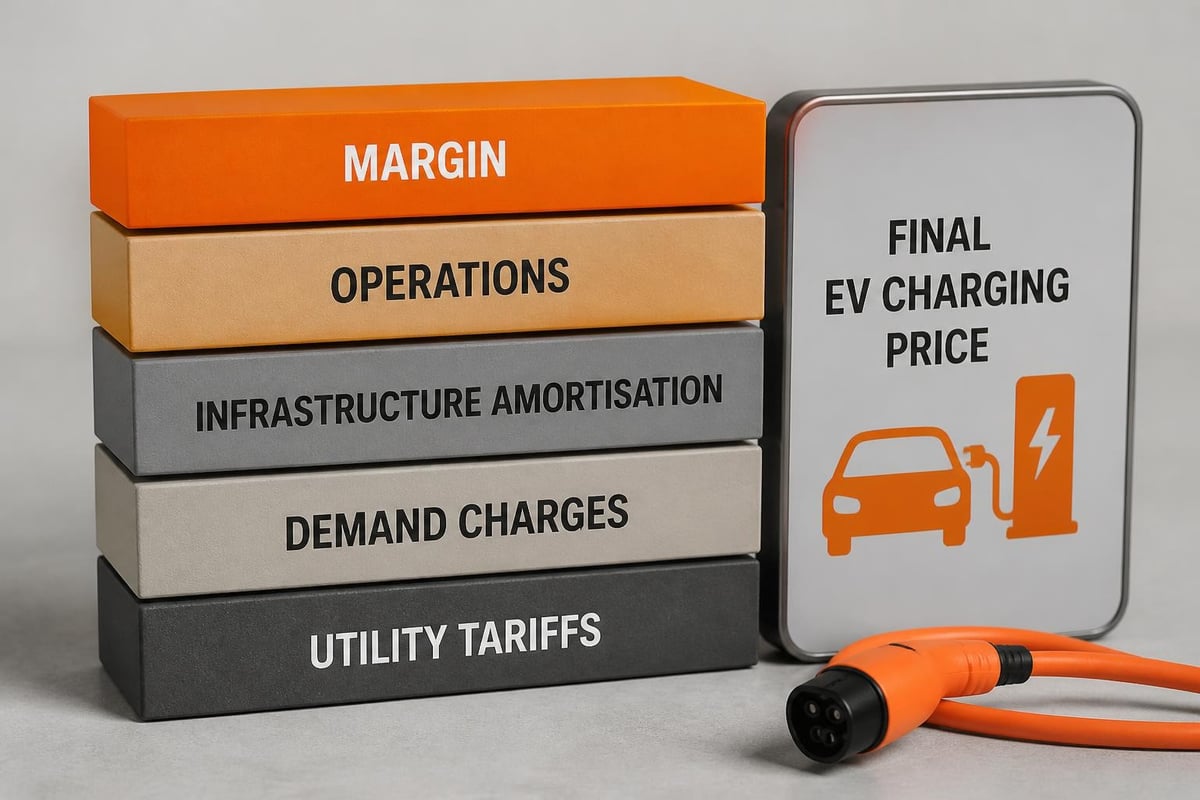
The total cost to deliver one kWh of electricity through a charging station comprises several elements that must be recovered through ev charging pricing:
- Wholesale electricity cost: The actual energy purchased from the utility or generated on-site
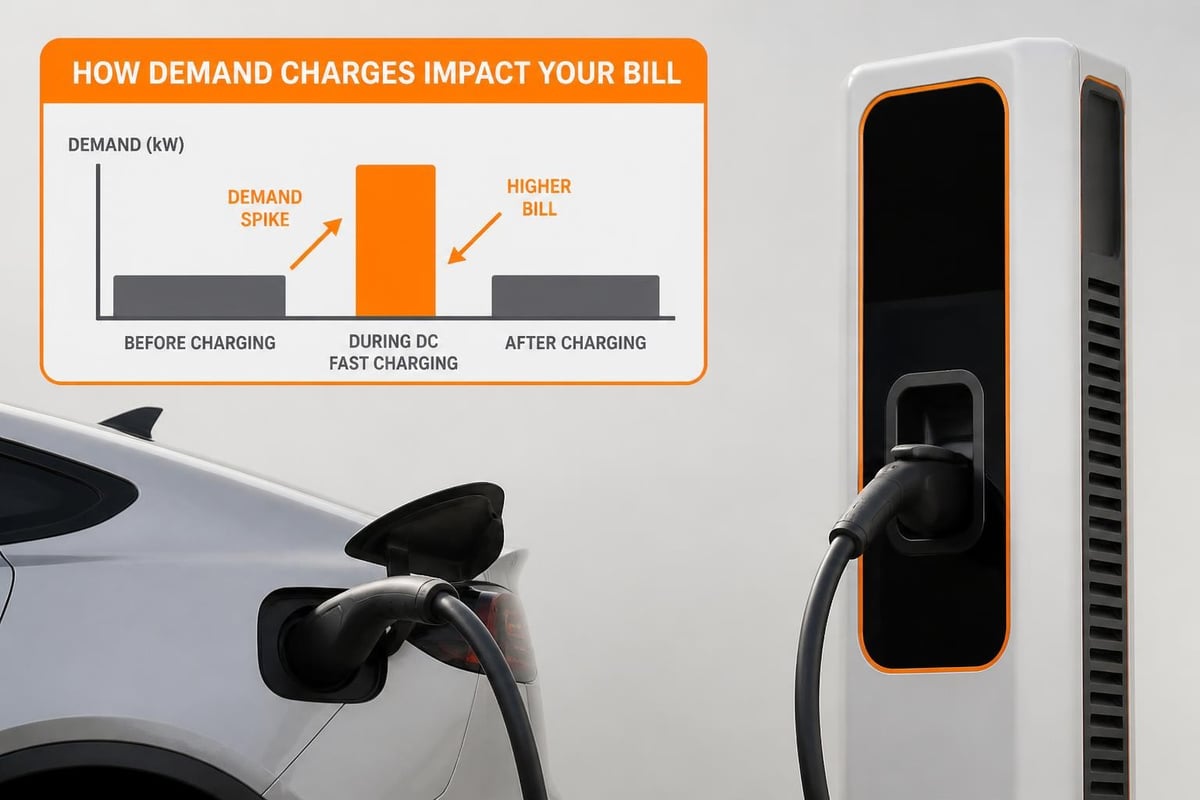
- Demand charges: Peak power draw fees that can represent 30-50% of total electricity costs for fast chargers
- Infrastructure capital: The upfront investment in charging hardware, installation, and grid upgrades
- Network and service fees: Ongoing costs for payment processing, network connectivity, and software platforms
- Operations and maintenance: Regular servicing, repairs, cleaning, and site management
- Property and overhead costs: Land lease or opportunity cost, insurance, security, and administration
Understanding how these components interact helps explain why ev charging pricing varies so significantly between locations, charging speeds, and operators.
Pricing Models Adopted Globally and Locally
Different markets have adopted various approaches to ev charging pricing, each with distinct advantages and challenges for both operators and users. South African operators can learn from international experience whilst adapting to local regulatory and market conditions.
Energy-Based Pricing (per kWh)
Charging by the kilowatt-hour consumed represents the most transparent and intuitive model for users familiar with home electricity billing. This approach directly correlates payment to the actual energy delivered, making it easy for drivers to compare costs with home charging and calculate trip expenses.
| Advantages | Disadvantages |
|---|---|
| Transparent and easy to understand | Requires sub-metering approval in some jurisdictions |
| Fair for users (pay for energy used) | Doesn't account for session duration |
| Directly reflects electricity costs | May not recover demand charges effectively |
| Comparable to home charging | Can encourage occupancy without charging |
The California Public Utilities Commission has extensively studied per-kWh pricing models and their impact on market transparency.
Time-Based Pricing (per Minute)
Charging by the minute gained popularity particularly with DC fast charging, where session duration rather than energy consumption became the pricing basis. This model incentivises users to unplug promptly once charging completes, improving station turnover and availability.
However, time-based ev charging pricing creates fairness issues because different vehicles charge at different speeds. A vehicle with a smaller battery or slower on-board charger pays the same per-minute rate as one charging at maximum speed, resulting in vastly different effective costs per kWh.
Hybrid Models
Many sophisticated operators now combine energy and time components, creating hybrid ev charging pricing that addresses the weaknesses of single-metric approaches:
- Base energy charge (R3.50-R6.00/kWh) plus occupancy fee after charging completes
- Time-based pricing during high-demand periods, kWh pricing during off-peak
- Tiered pricing based on charging speed or power level
- Session fees plus energy or time charges
The European Alternative Fuels Observatory tracks these hybrid models across different markets, revealing significant diversity in approach.
Subscription and Membership Models
Fleet operators and frequent users often benefit from subscription-based pricing that offers reduced rates in exchange for monthly fees. This approach provides predictable revenue for operators whilst delivering savings and convenience for regular users.
Demand Charges and Their Impact on Charging Economics
For commercial and industrial sites in South Africa, demand charges represent one of the most significant challenges in ev charging pricing strategy. Eskom and municipal utilities levy substantial fees based on the maximum 30-minute average power draw during peak periods, often reaching R400-R800 per kVA per month.
A single 120 kW DC fast charger operating at full capacity creates a demand charge liability that can exceed R96,000 annually, before any energy is even consumed. This cost structure fundamentally shapes charging economics and explains why fast charging typically costs 50-150% more than slower AC charging.
Mitigation Strategies
Businesses deploying charging infrastructure employ several approaches to manage demand charge exposure:
- Load management systems that limit simultaneous charging power across multiple stations
- Battery storage integration to buffer peak charging loads and reduce grid draw
- Time-of-use restrictions that direct fast charging to off-peak periods when possible
- On-site solar generation to offset grid consumption during demand charge windows
- Intelligent scheduling for fleet charging to distribute load across time
The Transportation Energy Institute's comprehensive analysis examines these mitigation strategies in detail, providing practical frameworks for site hosts and operators.
Regulatory and Market Factors in South Africa
South Africa's regulatory environment for EV charging continues to evolve, with implications for how ev charging pricing can be structured and implemented. National Energy Regulator (NERSA) guidelines, municipal by-laws, and licensing requirements all influence commercial charging operations.
Sub-Metering and Resale Regulations
Current regulations around electricity resale and sub-metering create complexity for charging station operators. Whilst recent amendments have clarified paths for legal electricity resale in certain contexts, operators must ensure compliance with local authority requirements and licensing conditions.
Some municipalities require specific licences for commercial electricity resale, whilst others permit charging services under existing business licenses. This regulatory patchwork affects where and how charging services can legally operate, influencing market development and competitive dynamics.
Grid Capacity Constraints
Many South African commercial and industrial sites face grid capacity limitations that restrict the size and number of chargers that can be installed. These infrastructure constraints directly impact ev charging pricing because capital costs increase significantly when grid upgrades become necessary.
A site requiring transformer upgrades, additional cabling, or substation modifications may face R500,000 to R2 million in infrastructure costs before the first charger operates. These expenses must be recovered through pricing or offset through alternative revenue streams.
Setting Competitive Yet Sustainable Prices
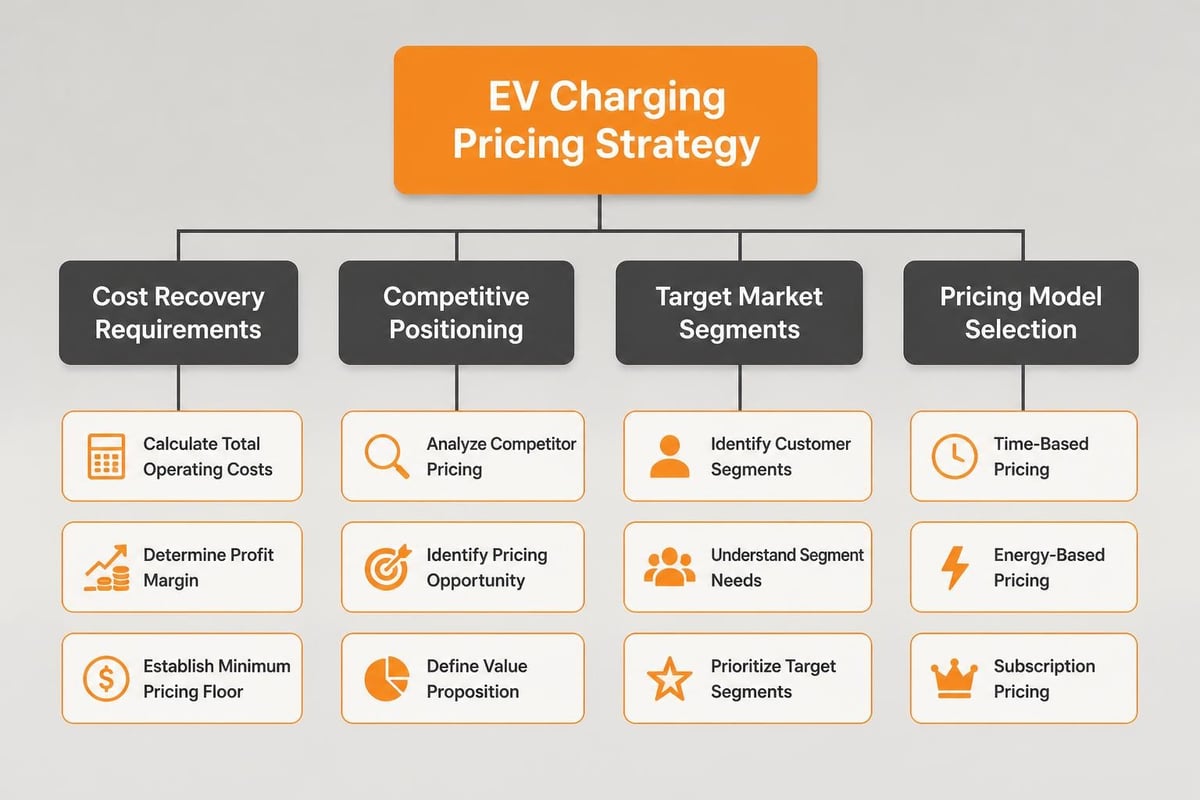
Establishing ev charging pricing requires balancing multiple objectives: recovering costs, remaining competitive, supporting adoption, and generating reasonable returns on infrastructure investment. The U.S. Department of Energy's EV Infrastructure Playbook offers valuable frameworks for thinking through pricing strategy, even for South African contexts.
Market Benchmarking
Current South African public charging prices demonstrate significant variation based on location, charging speed, and operator:
| Charging Type | Typical Range (R/kWh) | Session Duration | Use Case |
|---|---|---|---|
| AC Level 2 (7-22 kW) | R3.20 - R5.50 | 2-6 hours | Workplace, destination |
| DC Fast (50-60 kW) | R5.50 - R8.50 | 20-40 minutes | Retail, highway |
| DC Ultra-Fast (150+ kW) | R7.50 - R12.00 | 10-25 minutes | Highway, premium |
| Home equivalent | R1.80 - R3.20 | Overnight | Residential (baseline) |
These ranges reflect market conditions in late 2026 and vary by region, with Gauteng and Western Cape metros typically at the higher end due to property and operating costs.
Cost-Plus Methodology
Many operators begin with a cost-plus approach that calculates total delivered cost per kWh and adds a margin:
Base electricity cost (R2.50) + Demand charge allocation (R1.80) + Infrastructure amortisation (R1.20) + Operations (R0.60) + Margin (R1.40) = R7.50/kWh
This methodology ensures cost recovery but must be validated against market willingness to pay and competitive pricing in the area.
Dynamic and Smart Pricing Approaches
Advanced ev charging pricing strategies leverage real-time data and smart technologies to optimise both revenue and grid impact. These approaches become particularly relevant as charging networks scale and grid integration deepens.
Time-of-Use Alignment
Aligning charging prices with utility time-of-use periods encourages beneficial charging behaviour whilst reflecting the true cost of electricity delivery. A typical structure might include:
- Off-peak (22:00-06:00): R3.80/kWh (encourage overnight charging)
- Standard (06:00-07:00, 10:00-18:00, 20:00-22:00): R5.20/kWh
- Peak (07:00-10:00, 18:00-20:00): R8.50/kWh (discourage grid stress)
This pricing structure sends clear economic signals that support grid stability whilst offering genuine savings to flexible users. For businesses exploring commercial EV charging deployment, time-of-use alignment often represents a key strategy for improving project economics.
Load-Responsive Pricing
More sophisticated systems adjust pricing dynamically based on real-time site load, grid conditions, or renewable energy availability. When on-site solar generation is abundant, prices automatically decrease to encourage charging. When grid demand peaks, prices rise to discourage consumption.
This approach requires robust software platforms and clear communication to users but can significantly improve both infrastructure utilisation and financial performance.
User Experience and Payment Friction
Whilst much attention focuses on the per-kWh or per-minute rate, the overall user experience significantly impacts charging service value and adoption. Payment friction, unexpected fees, and complex pricing structures all create barriers that suppress utilisation.
Session Fees and Hidden Costs
Some operators impose session fees (flat fees per charging event), idle fees (penalties for remaining plugged after charging completes), or membership requirements that complicate the total cost picture. The TRB report on payment-system best practices highlights how payment friction reduces charging station effectiveness and user satisfaction.
Transparent ev charging pricing requires clear communication of all potential fees before charging begins, eliminating surprise costs that damage trust and discourage repeat use.
Accessibility and Payment Methods
Supporting multiple payment methods (credit card, mobile payment, app-based, RFID cards) expands accessibility but increases complexity and costs. Balancing convenience with operational efficiency remains an ongoing challenge for network operators.
Equity Considerations in Pricing Strategy
As EV adoption grows, ensuring equitable access to charging infrastructure becomes increasingly important. Premium ev charging pricing in convenient locations can create barriers for lower-income users who lack home charging options and depend on public infrastructure.
The ACEEE's work on affordability and energy equity provides frameworks for thinking about equitable charging access and pricing policies that support inclusive electrification.
Tiered or Subsidised Pricing
Some operators and municipalities explore tiered pricing structures that offer reduced rates during off-peak periods or for lower-income users. Whilst administratively complex, these approaches can support broader adoption whilst maintaining overall cost recovery.
Government incentives, grants, or mandates may eventually require minimum service levels at regulated rates, similar to universal service obligations in telecommunications. Forward-thinking operators prepare for this possibility by building flexible pricing platforms.
Revenue Models Beyond Per-kWh Charging
Sustainable ev charging pricing strategy often incorporates revenue streams beyond electricity sales, particularly for slower destination charging where occupancy and customer attraction matter more than charging speed.
Ancillary Revenue Sources
Commercial site hosts generate value through:
- Increased dwell time: EV drivers spending 30-60 minutes on-site shop, dine, or use services
- Premium parking revenue: Charging bays commanding higher parking fees
- Advertising opportunities: Charging stations as platforms for targeted marketing
- Data and analytics: Anonymised user behaviour insights valuable for property optimisation
- Sustainability credentials: ESG reporting benefits and green certification support
For retail centres, the customer acquisition value may far exceed the direct charging revenue, justifying subsidised or even free charging as a loss leader.
Workplace Charging Economics
Employers offering workplace charging as a benefit typically subsidise costs, viewing them as part of total compensation rather than a profit centre. However, establishing fair internal ev charging pricing that recovers real costs whilst remaining attractive to employees requires careful calibration.
Many organisations charge employees at or slightly below home electricity rates (R2.50-R3.50/kWh), positioning workplace charging as a valuable perk without creating significant employer expense.
Technology Platforms and Pricing Flexibility
Modern charging management systems provide unprecedented flexibility in ev charging pricing strategy, enabling operators to test, adjust, and optimise pricing in near real-time based on performance data.
Key capabilities include:
- Dynamic pricing engines that adjust rates based on demand, time, or grid conditions
- User segmentation allowing different prices for members, guests, fleets, or partners
- Promotional pricing for new site launches, off-peak incentives, or seasonal campaigns
- A/B testing frameworks to optimise rate structures based on actual user response
- Revenue analytics tracking yield per station, per session, and per kWh delivered
These platforms transform ev charging pricing from a static decision into a continuously optimised strategy that adapts to market conditions and business objectives.
Integration with Renewable Energy and Storage
Sites combining EV charging with solar generation and battery storage unlock unique opportunities for cost reduction and pricing innovation. On-site generation reduces grid electricity purchases, whilst storage buffers both demand charges and renewable intermittency.
A properly designed system generates electricity at R1.20-R1.80/kWh (solar) and stores it for R0.80-R1.20/kWh (battery round-trip cost), creating delivered costs well below grid rates. This cost advantage can be passed to users through lower ev charging pricing whilst maintaining healthy margins.
Battery storage also enables participation in demand response programmes and grid services that generate additional revenue, further improving project economics. For businesses exploring integrated solutions, understanding how renewable energy management intersects with charging infrastructure becomes essential.
Future Trends and Emerging Models
The ev charging pricing landscape continues to evolve rapidly as technology advances, competition intensifies, and regulatory frameworks mature. Several trends merit attention for long-term planning:
Vehicle-to-Grid (V2G) Bi-directional Pricing
As bi-directional charging technology matures, EVs become mobile storage assets that can sell electricity back to the grid or building. This creates entirely new pricing dynamics where vehicles earn revenue during high-demand periods and charge during low-cost windows.
Early V2G trials suggest pricing premiums of R2.00-R4.00/kWh above standard rates for grid services, creating compelling economic incentives for participation.
Charging-as-a-Service Models
Rather than purchasing infrastructure outright, businesses increasingly adopt service models where third-party operators install, own, and maintain charging equipment in exchange for revenue sharing or fixed service fees. These arrangements shift ev charging pricing risk and complexity to specialists whilst ensuring professional operation.
Blockchain and Peer-to-Peer Charging
Emerging platforms explore blockchain-based pricing and settlement, enabling peer-to-peer charging transactions without centralised intermediaries. Whilst still nascent, these models could disrupt traditional operator economics by dramatically reducing transaction costs.
Establishing sustainable ev charging pricing requires balancing cost recovery, market competitiveness, user accessibility, and long-term infrastructure viability-a complex optimisation that continues to evolve as technology and markets mature. Whether deploying workplace charging, public networks, or fleet infrastructure, businesses must carefully analyse their specific cost structures, target markets, and strategic objectives to develop pricing that supports both adoption and financial sustainability. INFOLED brings extensive experience in designing, installing, and operating commercial EV charging infrastructure across Southern Africa, helping organisations navigate these complexities whilst delivering intelligent energy solutions that reduce costs, improve resilience, and support sustainability goals.
Next Step
Need help with your energy strategy?
Speak to INFOLED about solar, storage, EV charging, service agreements or system performance.