
Geothermal heating represents one of the most stable and efficient renewable energy technologies available to commercial, industrial, and residential property owners. By harnessing the Earth's constant subsurface temperatures, these systems provide reliable heating and cooling regardless of seasonal weather variations. For South African businesses seeking to reduce operational costs, enhance energy resilience, and achieve sustainability targets, understanding how geothermal technology integrates with existing energy infrastructure offers valuable strategic insights. This technology has matured significantly over recent decades, with proven applications across diverse climate zones and building types, making it an increasingly viable option for organisations committed to long-term environmental and financial performance.
Understanding Geothermal Heating Technology
Geothermal heating systems exploit the fact that underground temperatures remain relatively constant throughout the year, typically between 10°C and 16°C at depths of just a few metres below the surface in most South African regions. This thermal stability provides an ideal heat source during winter and a heat sink during summer months.
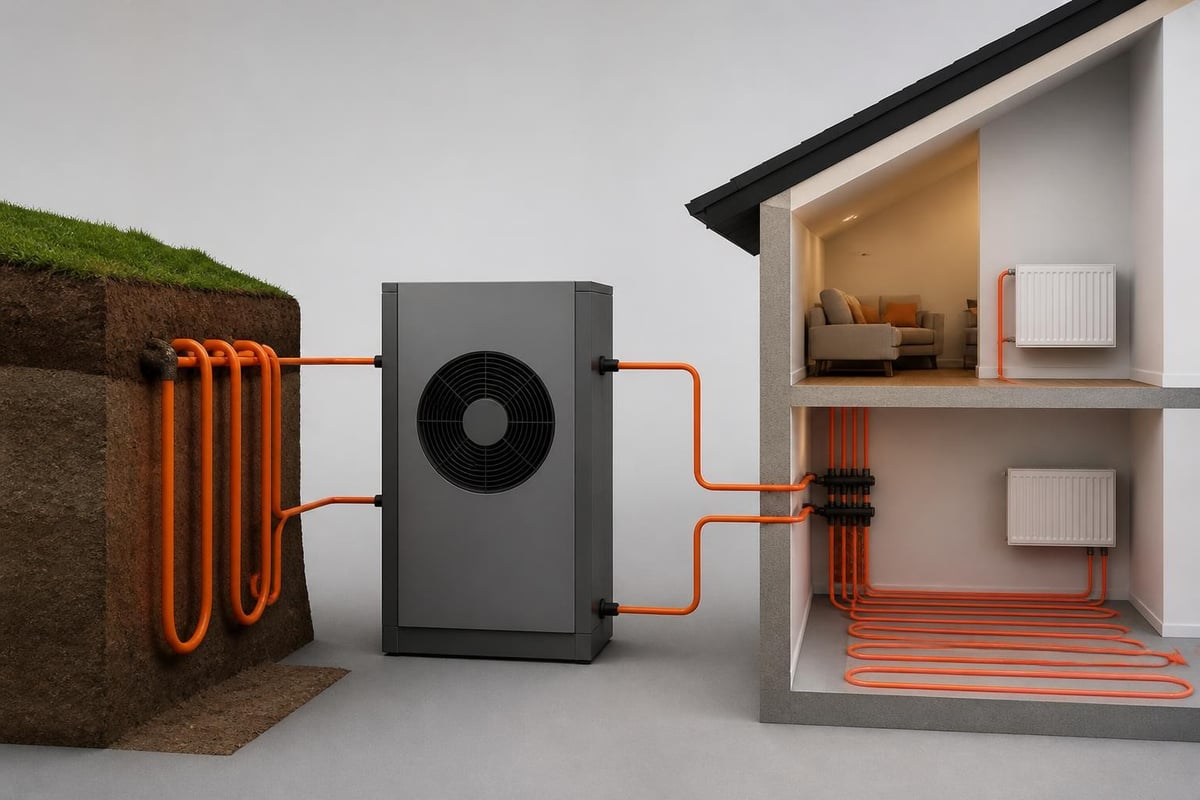
The fundamental operating principle involves circulating a heat transfer fluid through underground loops of buried piping. During colder months, this fluid absorbs heat from the ground and carries it to a heat pump, which concentrates the thermal energy and distributes it throughout the building via conventional heating systems.
System Components and Configuration
A complete geothermal heating installation comprises several integrated components:
- Ground loop field (horizontal or vertical boreholes)
- Heat pump unit (water-to-air or water-to-water)
- Distribution system (underfloor heating, radiators, or forced air)
- Control systems (thermostats and zone management)
- Heat exchange fluid (water-glycol mixture)
The ground loop configuration depends heavily on available land area, soil conditions, and local geology. Horizontal loops require substantial open space but involve shallower excavation, whilst vertical boreholes demand less surface area but require specialised drilling equipment capable of reaching depths between 50 and 150 metres.
| System Type | Depth Required | Land Area | Installation Complexity | Typical Application |
|---|---|---|---|---|
| Horizontal Loop | 1.5-2.5 metres | Large (300-600 m²) | Moderate | Residential, rural properties |
| Vertical Borehole | 50-150 metres | Small (50-100 m²) | High | Commercial, urban sites |
| Pond/Lake Loop | 2-6 metres | Moderate | Low | Properties with water access |
| Standing Column | 100-200 metres | Minimal | Very High | Dense urban environments |
Economic Considerations for South African Applications
The financial viability of geothermal heating depends on numerous factors including installation costs, operational savings, maintenance requirements, and system lifespan. South African businesses must evaluate these elements within the context of local energy prices, available incentives, and projected utility cost escalation.
Initial capital investment typically ranges from ZAR 180,000 to ZAR 450,000 for residential installations, whilst commercial projects can exceed ZAR 2 million depending on building size and system complexity. These figures include drilling or excavation, equipment procurement, installation labour, and commissioning.
However, operational costs prove substantially lower than conventional heating and cooling systems. According to recent techno-economic studies on shallow geothermal systems, properly designed installations achieve coefficient of performance (COP) values between 3.5 and 5.0, meaning they deliver three to five units of heating or cooling for every unit of electrical energy consumed.
Payback Period and Long-Term Value
Most commercial installations achieve payback within seven to twelve years through reduced energy expenditure. For properties with high heating or cooling demands, such as hotels, healthcare facilities, or data centres, this period may shorten considerably.
- Year 1-3: Higher initial investment offset by immediate operational savings
- Year 4-7: Cumulative savings accelerate as energy prices rise
- Year 8-12: System typically achieves full payback
- Year 13+: Pure profit phase with minimal maintenance costs
The extended operational lifespan of geothermal systems (25+ years for ground loops, 15-20 years for heat pumps) provides significant value beyond simple payback calculations. This durability contributes positively to asset valuations and supports long-term energy management strategies.
Integration with Complementary Renewable Technologies
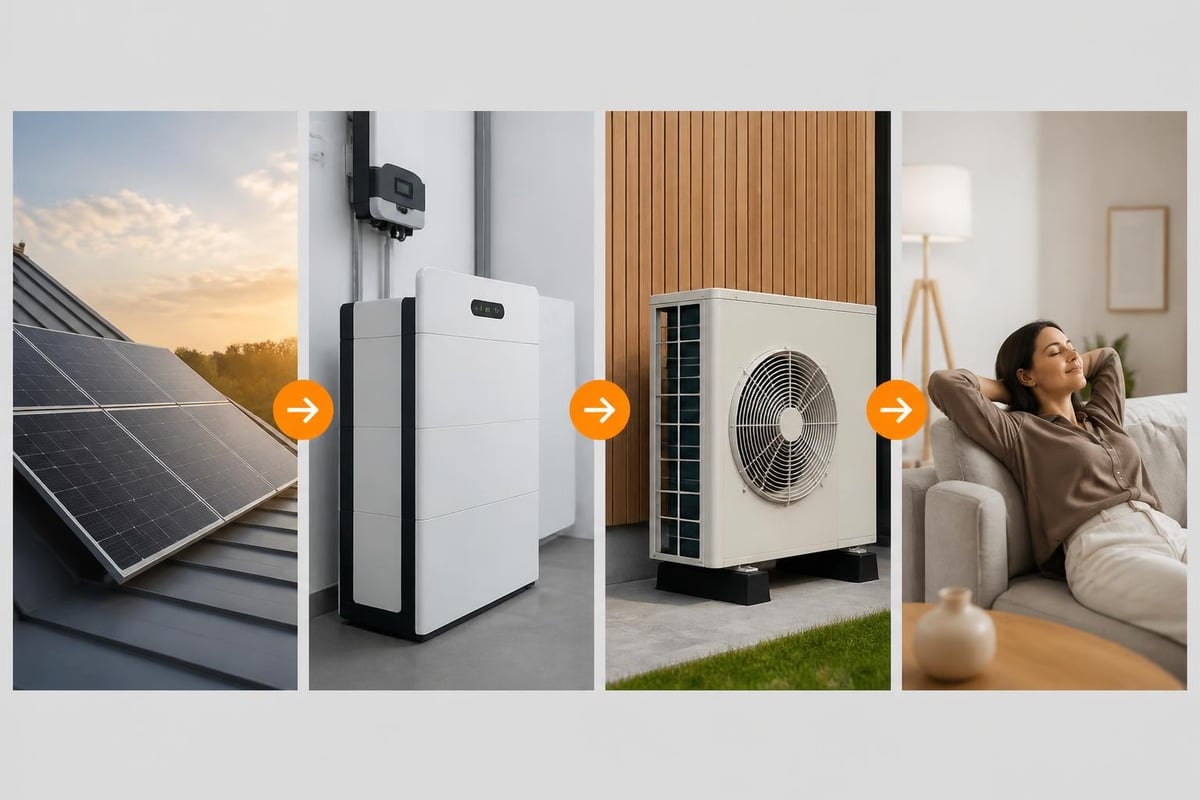
Geothermal heating operates most effectively when integrated within a broader renewable energy ecosystem. The electrical requirements of heat pump units create natural synergies with solar photovoltaic installations, battery storage systems, and intelligent energy management platforms.
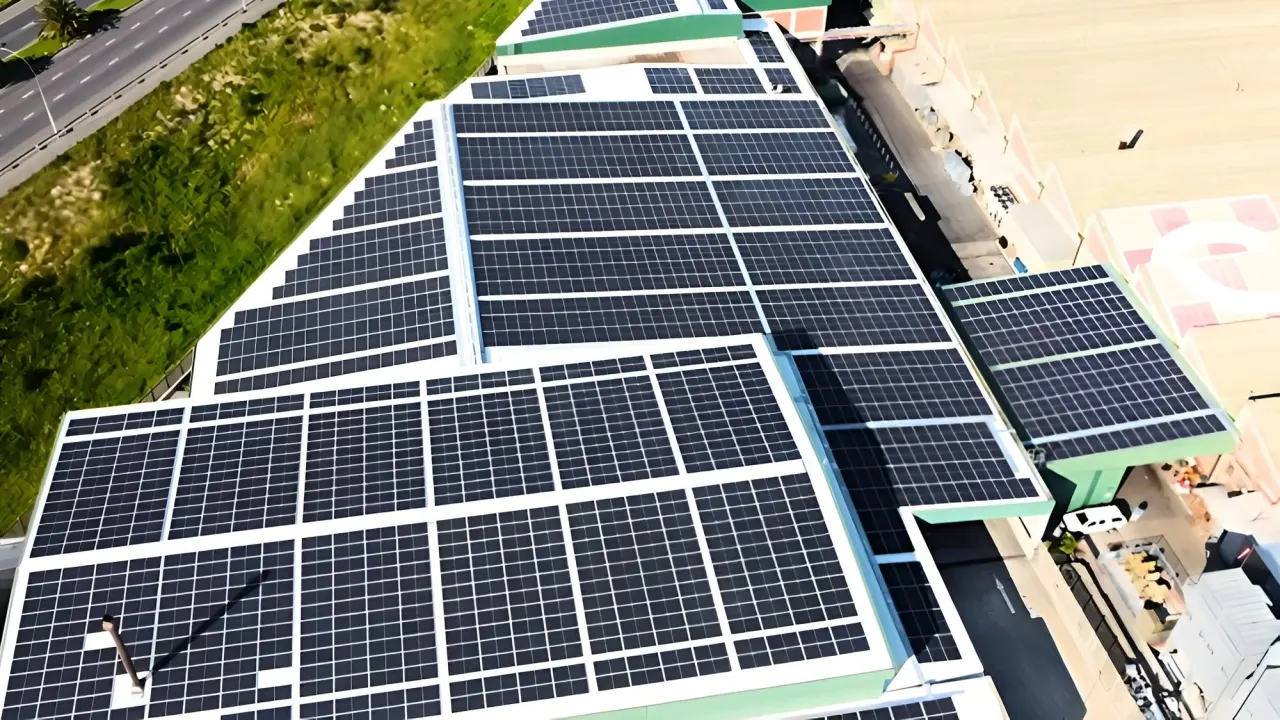
For South African commercial properties, combining rooftop solar with geothermal heating delivers exceptional results. Solar PV systems generate electricity during peak sunlight hours, which can power heat pumps for daytime heating or cooling requirements. Any surplus generation charges battery storage for evening and overnight operation.
This integrated approach addresses several challenges simultaneously. It reduces grid dependency, mitigates the impact of load shedding on climate control systems, and maximises the utilisation of renewable energy assets across different operational profiles.
Smart Control and Optimisation
Modern geothermal installations benefit enormously from intelligent control systems that optimise performance based on occupancy patterns, weather forecasts, and electricity pricing. These platforms analyse real-time data to determine optimal operating schedules, pre-heating or pre-cooling strategies, and load-shifting opportunities.
Advanced energy monitoring and analytics platforms track system performance metrics including:
- Heat pump efficiency and COP trends
- Ground loop temperature differentials
- Electrical consumption patterns
- Thermal comfort metrics across building zones
- Maintenance alert triggers based on performance deviation
Climate Suitability Across South African Regions
South Africa's diverse climate zones present varying opportunities for geothermal heating deployment. Understanding regional thermal characteristics helps organisations assess site-specific viability and expected performance.
Highveld Region (Johannesburg, Pretoria, Bloemfontein): Cold winters and warm summers create ideal conditions for year-round geothermal operation. Ground temperatures typically stabilise around 16-18°C, providing excellent heating efficiency during winter months when conventional systems struggle with sub-zero ambient temperatures.
Coastal Areas (Cape Town, Durban, Port Elizabeth): Moderate temperatures throughout the year reduce absolute heating and cooling demands but geothermal systems still deliver substantial efficiency gains over conventional technology. The consistent ground temperatures prove particularly valuable for applications requiring precise temperature control.
Arid Interior (Northern Cape, western Free State): Higher soil temperatures and lower moisture content affect ground loop performance but vertical boreholes reaching adequate depth maintain effectiveness. These regions benefit most from hybrid configurations combining geothermal with other renewable technologies.
Environmental Impact and Sustainability Benefits
The environmental advantages of geothermal heating extend well beyond simple carbon emission reductions. According to comprehensive reviews in Nature Reviews Earth & Environment, shallow geothermal energy systems deliver measurable benefits across multiple environmental dimensions.
Carbon Footprint Reduction: A typical 500 m² commercial installation eliminates approximately 15-25 tonnes of CO₂ equivalent emissions annually compared to conventional heating and cooling systems. Over a 25-year operational lifespan, this represents a substantial contribution toward Net Zero planning and ESG reporting requirements.
Refrigerant Management: Modern geothermal heat pumps utilise environmentally responsible refrigerants with low global warming potential, addressing concerns about traditional HVAC systems that rely on high-GWP substances.
Water Conservation: Unlike cooling towers and evaporative systems that consume significant water volumes, closed-loop geothermal systems require minimal water after initial filling, making them particularly suitable for water-scarce regions across South Africa.
Regulatory Compliance and Reporting
Organisations implementing geothermal technology strengthen their environmental compliance posture and sustainability reporting capabilities. The measurable, verifiable nature of emission reductions supports:
- Scope 2 emissions reporting under GHG Protocol
- CDP Climate Change disclosure requirements
- Green building certification (EDGE, Green Star SA)
- Carbon tax optimisation strategies
- ESG investor communications
Technical Challenges and Solutions
Despite proven benefits, geothermal heating deployment faces several technical considerations that require careful planning and professional expertise. Understanding these challenges enables organisations to structure projects for successful outcomes.
Geological Assessment: Thorough site investigation determines subsurface conditions, thermal conductivity, and groundwater presence. Professional geological surveys prevent costly design errors and ensure optimal system sizing. Poor thermal conductivity soils may require extended ground loop lengths or alternative configurations.
Space Constraints: Urban commercial properties often lack adequate land area for horizontal ground loops. Vertical borehole solutions overcome this limitation but require specialised drilling capabilities and potentially complex municipal approvals for deeper installations.
Initial Cost Barriers: The substantial upfront investment challenges many organisations despite attractive long-term economics. Structured financing arrangements, energy performance contracts, and phased implementation strategies help bridge this gap.
| Challenge | Impact Level | Mitigation Strategy | Implementation Complexity |
|---|---|---|---|
| High capital cost | High | Performance-based financing, phased rollout | Moderate |
| Limited contractor expertise | Medium | Partner with experienced integrators | Low |
| Geological uncertainty | Medium | Thorough site assessment, test boreholes | High |
| Long payback period | Medium | Integrate with complementary renewables | Moderate |
| Municipal approvals | Low | Early engagement, professional documentation | Low |
Maintenance Requirements and System Longevity
Geothermal heating systems demand remarkably little maintenance compared to conventional HVAC equipment, contributing to their superior lifecycle economics. The buried ground loop contains no moving parts and typically requires no maintenance throughout its operational life, which often exceeds the building's lifespan.
Heat pump units require annual professional inspection covering refrigerant levels, electrical connections, and heat exchanger cleanliness. Filter replacement, typically quarterly, represents the primary routine maintenance task for facility management teams. These minimal requirements translate to annual maintenance costs of approximately 1-2% of initial installation value, substantially lower than conventional heating and cooling systems.
The U.S. Department of Energy's geothermal publications document numerous case studies demonstrating system reliability over multi-decade operational periods with proper preventative care.
Design Considerations for Commercial Applications
Successful commercial geothermal heating projects begin with comprehensive design that accounts for building-specific thermal loads, operational schedules, and future expansion plans. Professional engineering assessments evaluate heating and cooling requirements across different seasons, occupancy patterns, and process loads.
Load Calculation Accuracy: Precise thermal modelling prevents over-sizing or under-sizing, both of which compromise system efficiency and economics. Commercial buildings with variable occupancy, such as office complexes or retail centres, require sophisticated load analysis accounting for internal heat gains, ventilation requirements, and peak demand periods.
Zoning Strategies: Large commercial installations benefit from multi-zone configurations allowing independent temperature control across different building areas. This flexibility improves occupant comfort whilst reducing energy waste in unoccupied or low-use spaces.
Backup Systems: Risk management strategies typically incorporate supplementary heating or cooling capacity for extreme weather events or maintenance periods. These backup systems ensure business continuity whilst allowing the geothermal installation to handle the majority of annual thermal loads.

The integration of geothermal systems with existing building infrastructure requires careful coordination between mechanical, electrical, and structural disciplines. Modern commercial projects increasingly adopt building information modelling (BIM) to visualise system layouts, identify clashes, and optimise installation sequences.
Future Developments in Geothermal Technology
The geothermal heating sector continues evolving with emerging technologies that enhance performance, reduce costs, and expand application possibilities. These developments promise to strengthen the business case for South African organisations considering geothermal investments.
Advanced refrigerants with improved thermodynamic properties push heat pump COP values higher whilst reducing environmental impact. Next-generation compressors incorporating variable-speed drives and magnetic bearing technology deliver superior part-load efficiency, matching system output more precisely to actual building demands.
Hybrid ground heat exchangers combining vertical boreholes with horizontal loops or energy piles integrated into building foundations optimise site utilisation whilst reducing installation costs. These innovations prove particularly valuable for retrofitting existing commercial properties where traditional ground loop configurations face space limitations.
District-scale geothermal networks serving multiple buildings from centralised ground loop fields demonstrate exceptional efficiency in high-density developments. Shopping centres, business parks, and residential estates increasingly evaluate these shared-infrastructure approaches, spreading capital costs across multiple properties whilst maximising thermal resource utilisation.
Procurement and Project Implementation
Organisations pursuing geothermal heating installations should structure procurement processes to ensure quality outcomes whilst managing costs effectively. A phased approach typically delivers optimal results.
Phase 1: Feasibility Assessment involves preliminary site evaluation, thermal load estimation, and high-level economic modelling. This stage identifies potential showstoppers and establishes realistic performance expectations before committing substantial resources.
Phase 2: Detailed Engineering encompasses comprehensive geological surveys, precise thermal modelling, equipment specification, and financial optimisation. Professional engineering partners develop construction-ready designs meeting all regulatory requirements and manufacturer specifications.
Phase 3: Installation and Commissioning requires experienced contractors capable of managing drilling operations, mechanical installations, and electrical integration. Rigorous commissioning procedures verify system performance against design parameters before final acceptance.
Phase 4: Performance Monitoring establishes ongoing measurement and verification protocols ensuring sustained efficiency. Modern systems incorporate remote monitoring capabilities enabling proactive maintenance and performance optimisation throughout the operational lifespan.
Organisations benefit from selecting implementation partners with demonstrated geothermal expertise, appropriate professional registrations, and comprehensive warranty support. Thorough reference checking and site visits to completed installations provide valuable insights into contractor capabilities and typical project outcomes. For businesses evaluating broader renewable energy services, geothermal heating integrates naturally within comprehensive energy strategies addressing multiple operational requirements simultaneously.
Policy Landscape and Incentive Mechanisms
South Africa's evolving renewable energy policy framework creates opportunities for organisations investing in geothermal heating technology. While specific incentives targeting geothermal remain limited compared to solar PV, several mechanisms support renewable thermal energy adoption.
The Section 12B tax allowance for energy efficiency provides accelerated depreciation on qualifying energy-saving assets, potentially including geothermal heat pumps that demonstrate measurable energy savings. Organisations should engage qualified tax advisors to structure installations maximising available benefits.
Municipal rebate programmes in certain jurisdictions offer financial incentives for renewable energy installations, though coverage varies significantly across different local authorities. Johannesburg, Cape Town, and Durban have periodically offered programmes supporting commercial energy efficiency projects that may encompass geothermal technology.
Green building certification programmes including Green Star SA and EDGE recognise geothermal heating within their assessment frameworks, contributing points toward overall sustainability ratings. For commercial developers and property owners pursuing certified buildings, geothermal installations strengthen applications whilst delivering operational benefits.
Geothermal heating delivers proven environmental and economic benefits for South African organisations committed to sustainable operations and long-term cost reduction. When integrated thoughtfully with complementary renewable technologies, these systems provide reliable climate control whilst advancing corporate sustainability objectives. INFOLED partners with commercial, industrial, and residential clients across Southern Africa to design and implement integrated renewable energy solutions that reduce electricity costs, improve energy resilience, and support ESG and Net Zero strategies through intelligent technology deployment.
Next Step
Need help with your energy strategy?
Speak to INFOLED about solar, storage, EV charging, service agreements or system performance.