
The transition to sustainable energy has accelerated dramatically across Southern Africa, driven by load shedding challenges, rising electricity costs, and increasing corporate commitments to environmental responsibility. Green energy products have evolved from niche technologies into mainstream business solutions that deliver measurable financial returns whilst reducing carbon footprints. For commercial, industrial, and residential clients throughout South Africa, understanding the landscape of available renewable energy technologies represents the first step toward energy independence and long-term cost savings.
Understanding Modern Green Energy Products
Green energy products encompass a broad range of technologies designed to generate, store, manage, and optimize renewable power. Unlike conventional fossil fuel systems, these solutions harness natural resources such as sunlight, wind, and thermal energy to produce electricity with minimal environmental impact.
The Southern African market has witnessed remarkable growth in renewable energy adoption since 2020, with businesses across Gauteng, Western Cape, and KwaZulu-Natal investing heavily in solar installations and battery systems. This expansion reflects both technological maturity and improved financial accessibility through various financing models.
Core Categories of Renewable Energy Technologies
Modern green energy products fall into several distinct categories, each serving specific operational requirements:
- Photovoltaic solar systems (grid-tied, hybrid, and off-grid configurations)
- Battery energy storage systems (lithium-ion, flow batteries, and advanced chemistries)
- Electric vehicle charging infrastructure (AC Level 2 and DC fast charging)
- Smart metering and monitoring platforms (real-time consumption analytics)
- Energy management systems (AI-driven optimization software)
- Heat pump water heaters (efficient thermal energy solutions)
Each category addresses different aspects of energy consumption, generation, or management. The most effective implementations combine multiple technologies into integrated systems that maximize efficiency and resilience.
Solar Photovoltaic Systems: Foundation of Renewable Infrastructure
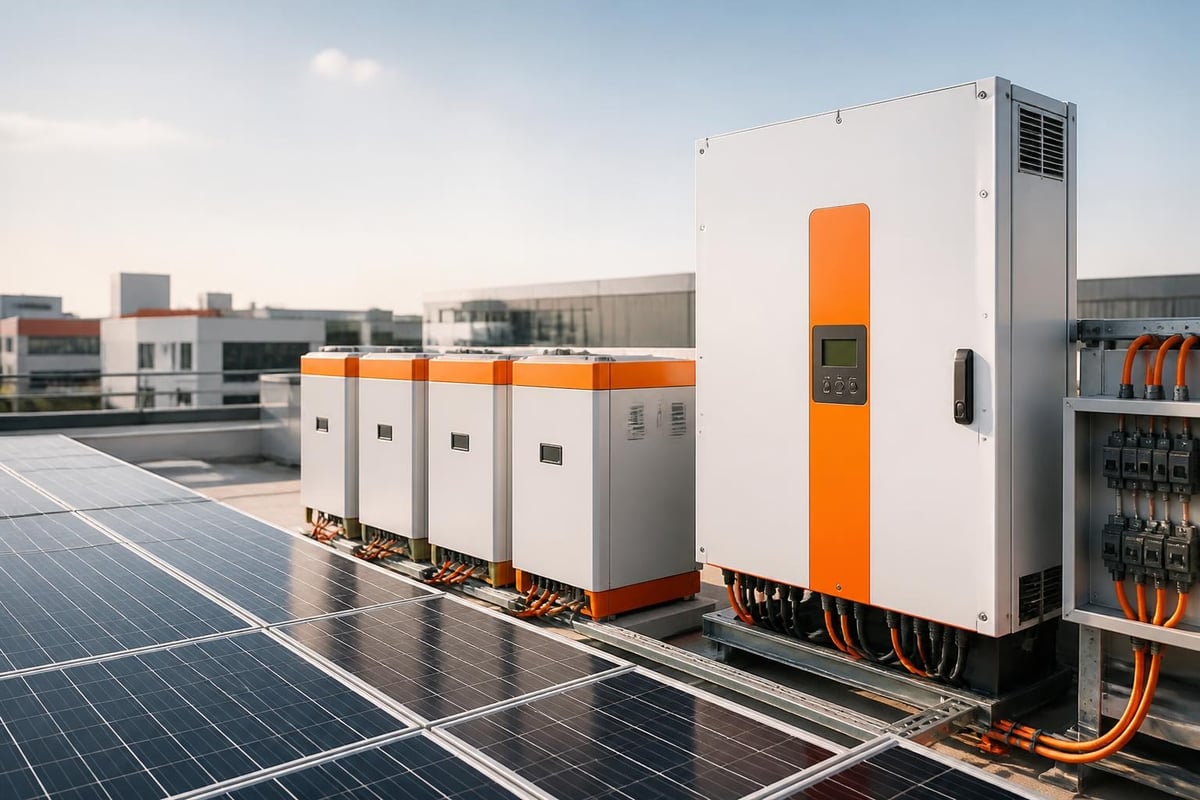
Solar PV technology remains the cornerstone of most green energy strategies in South Africa. These systems convert sunlight directly into electricity through semiconductor materials, providing clean power during daylight hours and, when paired with storage, around the clock.
Commercial rooftop installations typically range from 50kW to several megawatts, depending on available roof space and energy requirements. A medium-sized warehouse in Johannesburg might install a 250kW system, generating approximately 400,000 kWh annually and saving between R600,000 and R800,000 per year at current municipal tariffs.
System Configuration Options
| Configuration | Grid Connection | Battery Storage | Best For |
|---|---|---|---|
| Grid-tied | Yes | No | Cost reduction, net metering |
| Hybrid | Yes | Yes | Load shedding protection, demand management |
| Off-grid | No | Yes | Remote sites, full independence |
The hybrid configuration has become particularly popular across Southern Africa since 2020, as businesses seek both cost savings and protection against grid instability. These systems intelligently manage power flow between solar panels, batteries, grid supply, and building loads to optimize both financial returns and energy security.
For organizations exploring commercial solar panel installations, professional feasibility studies evaluate roof integrity, shading analysis, electrical infrastructure capacity, and grid connection requirements. This comprehensive assessment ensures system designs match both energy needs and site constraints.
Battery Energy Storage: Enabling 24/7 Renewable Power
Battery energy storage systems (BESS) have transformed from expensive backup solutions into sophisticated energy management tools. Modern lithium-ion batteries offer high energy density, long cycle life (typically 6,000-10,000 cycles), and rapid response times that enable advanced applications beyond simple backup power.
Commercial battery systems typically range from 100kWh to several MWh, with pricing now below R3,000 per kWh for large installations. A 500kWh system might cost approximately R1.2 million to R1.5 million installed, delivering substantial savings through peak shaving and demand charge reduction.
Strategic Battery Applications
Industrial facilities use battery storage for multiple value streams simultaneously. During off-peak periods (typically 22:00 to 06:00), batteries charge from either solar generation or low-cost grid power. This stored energy then discharges during expensive peak periods (07:00 to 10:00 and 18:00 to 20:00), reducing demand charges that often represent 30-50% of commercial electricity bills.
Peak shaving alone can deliver payback periods of 4-6 years for facilities with significant demand charges. When combined with load shedding protection, backup power, and solar integration, the business case strengthens considerably. Many organizations now view battery systems as essential infrastructure rather than optional equipment.
Key performance indicators for battery systems include:
- Round-trip efficiency (typically 92-96% for lithium-ion)
- Depth of discharge capability (80-90% usable capacity)
- Cycle life warranty (usually 10 years or specified cycles)
- Response time (milliseconds for grid support applications)
- Temperature management (critical for Southern African climates)
The UL certification framework ensures battery products meet rigorous safety standards, particularly important given the energy density of modern lithium-ion chemistries.
Electric Vehicle Charging Infrastructure
Transportation electrification represents one of the fastest-growing segments within green energy products. As fleet operators and progressive employers transition to electric vehicles, charging infrastructure becomes essential business infrastructure.
Workplace charging installations typically include AC Level 2 chargers (7.4kW to 22kW) for employee vehicles and DC fast chargers (50kW to 350kW) for fleet vehicles requiring rapid turnaround. A 22kW AC charger costs approximately R45,000 to R65,000 installed, whilst 60kW DC fast chargers range from R450,000 to R650,000.
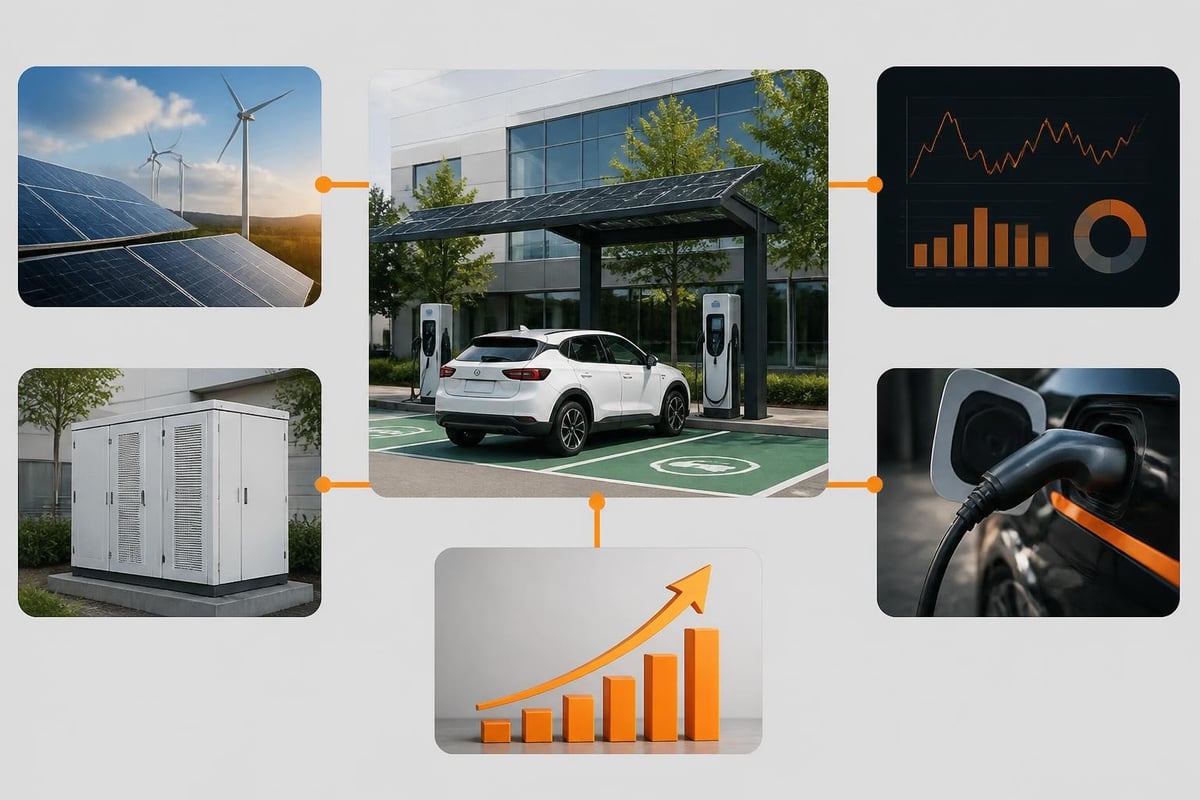
Smart charging systems integrate with solar generation and battery storage to minimize grid demand whilst maximizing renewable energy utilization. During high solar production periods, excess generation charges vehicles at minimal cost. Sophisticated load management prevents charging from overwhelming electrical infrastructure or triggering expensive demand peaks.
For commercial property owners, Electric Vehicle Charging Infrastructure represents both a tenant amenity and potential revenue stream. Charging-as-a-Service models enable businesses to offer EV charging without capital investment, with service providers managing installation, maintenance, and billing.
Fleet Charging Considerations
Organizations operating vehicle fleets face unique charging requirements. Delivery companies, service providers, and corporate fleets require reliable overnight charging that ensures vehicles begin each day with full batteries. A 20-vehicle electric fleet might require 10-15 dedicated charging points with load management to prevent grid connection upgrades.
The total cost of ownership for electric fleets typically reaches parity with diesel equivalents within 5-7 years, accounting for lower fuel costs (approximately R0.60 per km for electric versus R2.50 per km for diesel), reduced maintenance, and available incentives.
Smart Metering and Energy Management Systems
Advanced metering infrastructure transforms how organizations understand and manage energy consumption. Smart meters provide granular, real-time data on electricity usage patterns, enabling sophisticated analysis and optimization that traditional monthly billing cannot support.
Modern energy management platforms combine smart metering data with artificial intelligence to identify waste, predict demand, and automate optimization decisions. These systems can reduce overall energy consumption by 10-20% through behavioral changes and automated controls alone, before adding any generation or storage capacity.
Essential features of professional energy management systems:
- Sub-metering for departments, tenants, or equipment
- Real-time monitoring with customizable alerts
- Tariff optimization across time-of-use periods
- Integration with building management systems
- Automated reporting for ESG compliance
- Demand forecasting and load planning
- Power quality monitoring
A manufacturing facility might install 15-20 sub-meters throughout the site, tracking consumption by production line, HVAC systems, compressed air, and auxiliary equipment. This granular visibility enables targeted efficiency improvements and accurate cost allocation.
Multi-tenant commercial properties particularly benefit from smart metering for accurate tenant billing. Rather than allocating costs based on floor area, landlords can bill actual consumption, encouraging conservation whilst ensuring fair cost recovery. Understanding energy management systems helps organizations select platforms that match their operational complexity.
Integration and System Design Principles
The most effective green energy implementations integrate multiple technologies into cohesive systems optimized for specific operational requirements. A typical commercial installation might combine rooftop solar, battery storage, smart metering, and EV charging into a managed ecosystem that maximizes renewable energy utilization whilst minimizing grid dependence.
Professional system design begins with comprehensive energy audits and load studies. Engineers analyze historical consumption data, identify usage patterns, evaluate site constraints, and model various technology combinations. This analysis determines optimal system sizing and configuration for maximum financial and operational benefit.
Layered Approach to Energy Independence
| Phase | Technologies | Primary Benefit | Typical Payback |
|---|---|---|---|
| Phase 1 | Smart metering, energy management | Visibility and efficiency | 2-3 years |
| Phase 2 | Solar PV (grid-tied) | Generation cost reduction | 4-6 years |
| Phase 3 | Battery storage | Demand management, backup | 5-7 years |
| Phase 4 | EV charging | Fleet transition, amenity | 6-8 years |
This phased implementation spreads capital investment whilst delivering incremental benefits. Organizations often begin with monitoring and efficiency, then add generation, followed by storage and charging infrastructure as budgets and requirements evolve.
The homeowners guide to solar provides valuable insights into residential implementation strategies that often apply equally to small commercial installations.
Financing Models for Green Energy Products
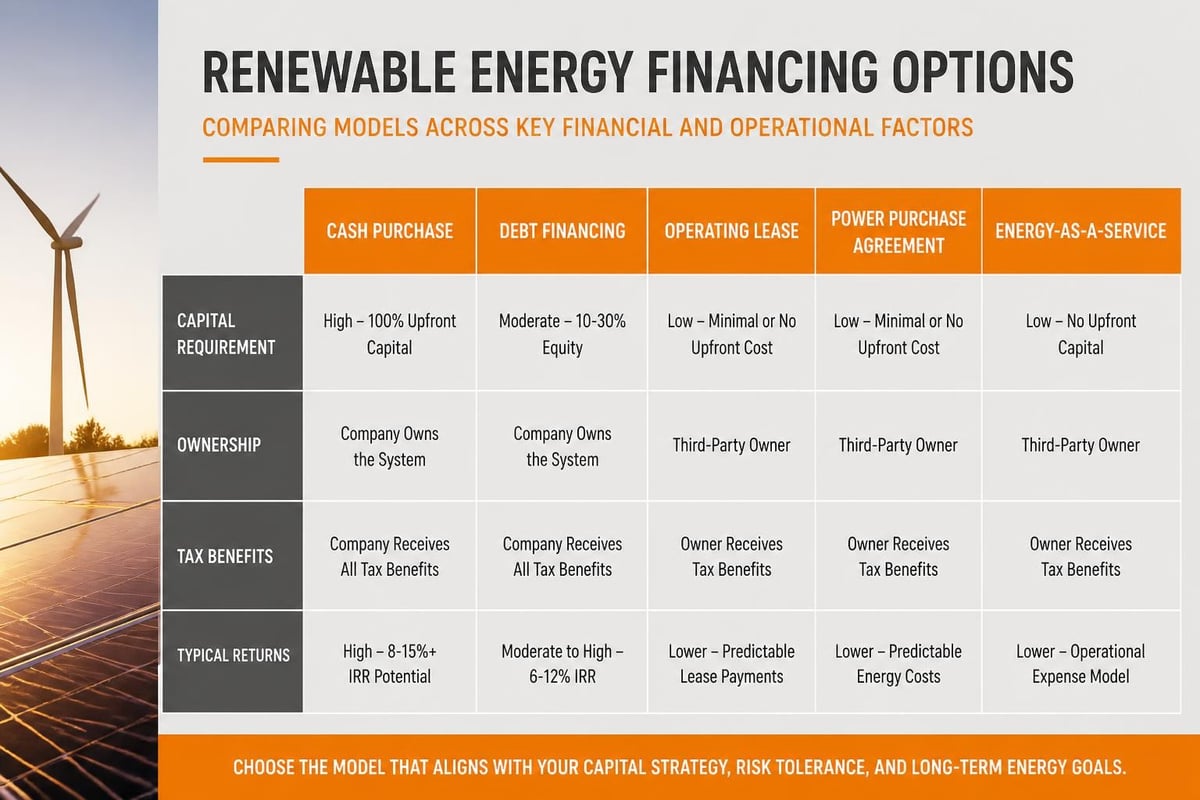
Capital requirements for comprehensive renewable energy systems can be substantial, with a typical 500kW solar installation plus 400kWh battery storage costing R6 million to R8 million. Various financing structures enable organizations to access these technologies without large upfront investments.
Common financing approaches include:
- Cash purchase (highest return, largest upfront cost)
- Debt financing (preserve capital, interest expense)
- Operating lease (off-balance-sheet, tax benefits)
- Power Purchase Agreement (no capital, contracted rate)
- Energy-as-a-Service (comprehensive solution, performance guarantee)
Power Purchase Agreements (PPAs) have gained significant traction across Southern Africa. Under this model, a third-party developer finances, installs, owns, and maintains the system. The host organization purchases generated electricity at a contracted rate (typically 20-30% below municipal tariffs) over 15-25 years. This approach eliminates capital expenditure whilst delivering immediate savings.
Energy-as-a-Service takes the PPA concept further by including energy efficiency measures, monitoring systems, and performance guarantees. The service provider assumes all technology risk, ensuring systems deliver specified savings regardless of equipment performance or maintenance requirements.
Financial modeling for green energy projects must account for multiple variables: current electricity costs, tariff escalation (historically 8-12% annually), solar radiation levels, system degradation, maintenance costs, and applicable incentives. The Database of State Incentives for Renewables & Efficiency provides comprehensive information on available programs, though South African organizations should consult local resources for Section 12B tax allowances and other regional incentives.
Certification, Standards, and Quality Assurance
Quality and safety standards ensure green energy products deliver promised performance whilst protecting people and property. Multiple organizations establish specifications that manufacturers and installers must meet for professional deployments.
IEC 61215 and IEC 61730 govern solar module design qualification and safety requirements. These international standards verify modules can withstand environmental stresses (temperature cycling, humidity, mechanical loading) expected during 25-year operational lifespans. Reputable manufacturers provide test certificates demonstrating compliance.
Battery systems must meet UL 9540 (Energy Storage Systems) and UL 1973 (Batteries for Use in Stationary Applications). These standards address fire safety, thermal runaway prevention, electrical safety, and environmental testing. Given recent concerns about battery safety in some installations, verifying certification compliance represents essential due diligence.
Installer Qualifications and Warranties
Beyond product certifications, installer qualifications significantly impact system performance and longevity. Professional electrical contractors should hold relevant trade certifications, demonstrate renewable energy experience, and maintain comprehensive insurance coverage.
Quality installations include:
- Structural engineering certification for roof mounting systems
- Electrical compliance certificates from registered electricians
- Grid connection approval from local utilities
- Commissioning reports documenting system performance
- Comprehensive warranty documentation (equipment and workmanship)
Standard warranties for green energy products include:
| Component | Performance Warranty | Product Warranty |
|---|---|---|
| Solar panels | 25 years (80% output) | 10-15 years |
| Inverters | N/A | 5-10 years |
| Batteries | 10 years (70% capacity) | 10 years |
| Mounting systems | N/A | 10-20 years |
Organizations should verify warranty terms carefully, particularly regarding performance guarantees, failure definitions, replacement procedures, and labor coverage. Some manufacturers warrant only product replacement, leaving installation labor as the owner's responsibility during warranty claims.
Maintenance and Asset Management
Green energy products require ongoing maintenance to sustain optimal performance throughout their operational lifespans. Well-maintained solar systems typically degrade at 0.5% annually, whilst neglected installations may experience 1-2% annual degradation, significantly impacting long-term returns.
Professional maintenance programs include preventative and corrective services. Preventative maintenance (typically quarterly or semi-annual) involves visual inspections, thermal imaging, electrical testing, cleaning, and firmware updates. Corrective maintenance addresses identified issues before they cause system failures or safety hazards.
Remote monitoring systems provide continuous performance visibility, alerting operators to generation anomalies, equipment faults, or grid disruptions. Modern platforms analyze production data against expected values (considering weather, time of year, and historical patterns) to identify underperforming modules, inverter issues, or shading problems.
Comprehensive maintenance programs deliver:
- Sustained energy production (minimizing degradation)
- Extended equipment lifespan (preventing premature failures)
- Safety assurance (identifying electrical or fire hazards)
- Warranty compliance (meeting manufacturer requirements)
- Performance documentation (supporting financial models)
Thermal imaging represents particularly valuable diagnostic technology for solar installations. Infrared cameras identify hot cells within modules (indicating failures), connection issues, and inverter problems invisible to visual inspection. Annual thermal surveys prevent small issues from propagating into expensive failures.
Understanding renewable energy services helps organizations evaluate maintenance providers based on technical capabilities, response times, and service level commitments.
Environmental Impact and Sustainability Considerations
Whilst green energy products deliver obvious operational benefits, their broader environmental impact extends beyond carbon emission reductions during operation. Lifecycle analysis considers manufacturing impacts, transportation, installation, operation, and end-of-life disposal or recycling.
Solar panel manufacturing requires significant energy and generates some hazardous waste, though modern production increasingly uses recycled materials and renewable energy. A typical solar panel's embodied energy pays back within 1-2 years of operation, after which it delivers net positive environmental benefit for the remaining 23-24 years of its operational life.
The systematic analysis of solar industry sustainability examines end-of-life considerations for photovoltaic modules. With millions of panels installed globally over the past two decades, recycling infrastructure becomes increasingly important. Modern recycling processes recover 95% of panel materials (glass, aluminum, silicon, copper, silver) for reuse.
Battery recycling presents more complex challenges given diverse chemistries and construction methods. Lithium-ion batteries contain valuable materials (lithium, cobalt, nickel) that justify recovery, though recycling infrastructure remains underdeveloped in many regions. Progressive manufacturers design products for easier disassembly and material recovery.
Circular Economy Approaches
Forward-thinking organizations consider product lifecycles when selecting green energy products. Manufacturers offering take-back programs, certified recycling pathways, and extended producer responsibility demonstrate commitment to circular economy principles. Learning about solar panel recycling options helps organizations plan for eventual system decommissioning.
Beyond hardware recycling, proper maintenance extends equipment lifespan, maximizing environmental benefit per unit manufactured. A solar system operating 30 years delivers 20% more lifetime energy than an identical system replaced after 25 years, reducing the per-kWh environmental impact proportionally.
Regulatory Landscape and Grid Connection
South African regulations governing green energy installations continue evolving as renewable capacity grows. Understanding compliance requirements ensures projects proceed smoothly whilst avoiding costly delays or modifications.
Municipal grid connection requirements vary significantly by jurisdiction. Some municipalities actively encourage renewable energy through streamlined approvals, whilst others maintain complex processes that delay projects. Grid-tied systems require formal applications, electrical designs stamped by professional engineers, and utility approval before connection.
The National Energy Regulator of South Africa (NERSA) governs licensing requirements for electricity generation. Systems below 1MW typically qualify for exemptions, though registration requirements still apply. Larger installations require full generation licenses, adding regulatory complexity and ongoing compliance obligations.
Key regulatory considerations include:
- Building plan approvals (structural modifications, electrical upgrades)
- Grid connection applications (utility timelines vary 2-6 months)
- Generation licenses or exemptions (capacity-dependent)
- Electrical compliance certificates (mandatory for new installations)
- Environmental impact assessments (large projects only)
Professional engineering services navigate these requirements, ensuring applications include required documentation and meet technical specifications. Experienced providers maintain relationships with utilities and municipalities, streamlining approval processes through established procedures.
Performance Monitoring and Optimization
Installing green energy products represents only the beginning of value realization. Ongoing monitoring and optimization ensure systems deliver maximum financial and environmental returns throughout their operational lifespans.
Advanced monitoring platforms track dozens of performance parameters in real-time: generation rates, consumption patterns, grid imports/exports, battery state of charge, inverter efficiency, and equipment temperatures. This data enables sophisticated analysis identifying opportunities for improvement.
Machine learning algorithms analyze historical performance data to establish baseline expectations accounting for seasonal variations, weather patterns, and operational changes. Deviations from expected performance trigger alerts prompting investigation before minor issues become major problems.
Continuous Improvement Strategies
Organizations extracting maximum value from green energy investments implement continuous improvement processes:
- Monthly performance reviews comparing actual versus expected generation
- Quarterly consumption analysis identifying efficiency opportunities
- Annual system audits evaluating equipment condition and upgrade options
- Regular tariff reviews ensuring optimal time-of-use scheduling
- Capacity planning for facility expansions or increased loads
Data analytics reveal consumption patterns invisible in monthly utility bills. A distribution center might discover overnight consumption (security lighting, refrigeration) represents 40% of total usage despite the facility being unoccupied. This insight drives targeted improvements like LED lighting retrofits or improved insulation.
Similarly, generation data might reveal unexpected shading during certain seasons or times of day. Trimming nearby vegetation or adjusting tilt angles can restore output. Small optimizations compound over 20-25 year system lifespans, delivering substantial incremental value.
Future Trends in Renewable Energy Technology
Green energy products continue evolving rapidly, with emerging technologies promising improved performance, reduced costs, and new capabilities. Organizations planning long-term energy strategies should understand developing trends likely to influence future decisions.
Bifacial solar panels (generating power from both front and rear surfaces) now achieve 15-25% higher output than conventional modules in optimal installations. Whilst costs remain slightly elevated, improving economics increasingly favor bifacial technology, particularly for ground-mounted systems where rear-side generation potential is highest.
Battery chemistry development pursues higher energy density, improved safety, and reduced costs. Sodium-ion batteries may challenge lithium-ion dominance in stationary applications, offering similar performance using abundant materials. Flow batteries provide extremely long cycle life (20,000+ cycles) for applications prioritizing longevity over energy density.
Emerging technology areas include:
- Perovskite solar cells (potentially higher efficiency, lower cost)
- Vehicle-to-grid integration (using EV batteries for grid support)
- Green hydrogen production (long-duration energy storage)
- Advanced power electronics (improving conversion efficiency)
- AI-driven optimization (autonomous system management)
Smart grid integration enables sophisticated coordination between distributed generation, storage, consumption, and utility networks. Buildings become active grid participants, providing stability services whilst optimizing internal operations. This evolution transforms energy from a simple commodity into a managed resource.
Regional Considerations for Southern Africa
Green energy product selection and system design must account for Southern Africa's unique environmental and operational conditions. Solar radiation levels, temperature extremes, humidity, and grid stability all influence technology choices and performance expectations.
South Africa's solar resource ranks among the world's best, with many regions exceeding 2,000 kWh/m²/year. This abundance enables smaller installations to meet given energy requirements compared to less sunny regions. A 100kW system in Upington generates approximately 30% more annually than an identical installation in Cape Town due to superior radiation levels.
High ambient temperatures affect equipment performance and longevity. Solar panels lose efficiency as temperature rises (typically 0.4% per degree above 25°C). Mid-summer roof temperatures may reach 70-80°C, significantly impacting output during peak production hours. Quality installations incorporate adequate ventilation and select modules with superior temperature coefficients.
Load shedding considerations distinguish South African installations from most international markets. Systems must provide reliable backup power during scheduled and unscheduled grid outages, requiring sufficient battery capacity and intelligent switching. This requirement often tips the balance toward hybrid configurations even when pure financial analysis might favor grid-tied systems.
Dust accumulation reduces solar output, particularly in drier inland regions. Regular cleaning (monthly to quarterly depending on location) maintains optimal performance. Some operators implement automated cleaning systems or anti-soiling coatings to reduce maintenance requirements whilst sustaining output.
Green energy products have matured from experimental technologies into proven business solutions delivering financial returns, operational resilience, and environmental benefits for organizations across Southern Africa. Whether implementing solar generation, battery storage, EV charging infrastructure, or integrated systems combining multiple technologies, professional guidance ensures optimal outcomes. INFOLED designs, finances, installs, and maintains intelligent renewable energy solutions tailored to commercial, industrial, and residential requirements throughout the region, helping clients reduce costs whilst advancing sustainability objectives.
Next Step
Need help with your energy strategy?
Speak to INFOLED about solar, storage, EV charging, service agreements or system performance.