
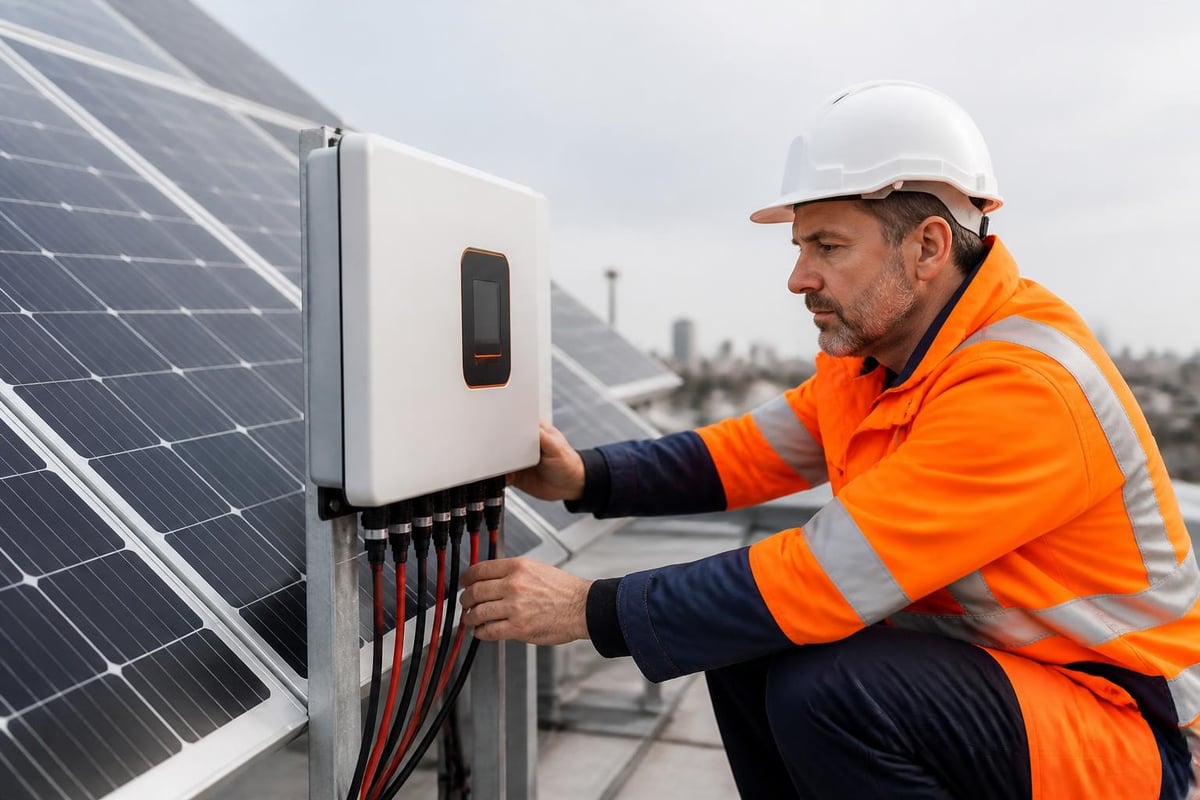
The photovoltaic inverter sits at the heart of every solar energy system, converting the direct current (DC) electricity generated by solar panels into alternating current (AC) that powers commercial buildings, industrial facilities, and homes across Southern Africa. Without this critical component, the energy captured from sunlight remains incompatible with both the appliances we use daily and the utility grid infrastructure that connects us. Understanding how a pv inverter operates, which type best suits specific applications, and how to optimise its performance directly impacts the financial return, reliability, and longevity of solar installations from Cape Town to Johannesburg and beyond.
Understanding PV Inverter Fundamentals
A pv inverter performs the essential task of power conversion, but modern units do far more than simple DC-to-AC transformation. Today's inverters incorporate maximum power point tracking (MPPT) algorithms that continuously adjust operating parameters to extract the highest possible energy yield from solar arrays under varying conditions of irradiance, temperature, and shading.
The conversion efficiency of a pv inverter directly determines how much of the DC energy harvested by solar panels actually becomes usable AC power. Premium inverters achieve weighted efficiencies exceeding 98%, meaning less than 2% of captured solar energy is lost as heat during conversion. This seemingly small difference compounds over the 20-25 year lifespan of a solar installation, representing thousands of kilowatt-hours and substantial financial value.
Core Functions and Grid Integration
Beyond power conversion, modern pv inverter units provide critical grid-support functions that enable high penetrations of renewable energy. Voltage regulation, frequency response, and reactive power control allow solar systems to actively stabilize the utility network rather than merely drawing from it. The IEEE 1547 standard establishes technical requirements for distributed energy resource interconnection, including sophisticated inverter capabilities that support grid resilience.
Key inverter functions include:
- Maximum power point tracking across multiple strings or panels
- Real-time monitoring and performance reporting
- Ground fault detection and arc fault protection
- Anti-islanding protection for grid-tied systems
- Reactive power injection for voltage support
- Ramp-rate control for smooth power delivery
The transition from grid-following to grid-forming inverter technology represents a fundamental shift in how solar systems interact with utility networks. Grid-forming inverters can establish voltage and frequency references independently, enabling microgrids and improving stability in weak grid areas throughout Southern Africa where utility infrastructure may be less robust.
PV Inverter Types and Topologies
Selecting the appropriate inverter topology depends on system size, site characteristics, budget constraints, and performance requirements. Each architecture offers distinct advantages and trade-offs that influence both upfront capital expenditure and long-term operational performance.
String Inverters
String inverters connect multiple solar panels wired in series, converting the combined DC output of 8-24 panels (or more) through a single conversion unit. This centralized approach dominates commercial solar panel installations due to lower cost per watt and simplified system design.
| Advantage | Description |
|---|---|
| Cost efficiency | Lowest installed cost per kilowatt for medium to large systems |
| Proven reliability | Decades of field deployment and performance data |
| Ease of maintenance | Single access point for servicing |
| High efficiency | Premium units exceed 98.5% weighted efficiency |
String inverters work optimally when all panels in a string experience similar conditions. However, shading, soiling, or panel mismatch can reduce the output of the entire string to the level of the weakest panel, a limitation addressed through multiple MPPT channels that track different string sections independently.
Microinverters
Microinverters attach directly to individual solar panels, converting DC to AC at the module level. This distributed architecture eliminates string-level losses and allows each panel to operate at its maximum power point regardless of what neighbouring panels experience.
Microinverter benefits:
- Panel-level optimization maximizes energy harvest
- Individual panel monitoring identifies performance issues quickly
- Inherent redundancy-single inverter failure affects only one panel
- Simplified system expansion and panel-by-panel installation
- Enhanced safety through elimination of high-voltage DC wiring
The higher component count and per-watt cost make microinverters less economical for large commercial arrays, but they excel in residential applications and sites with complex roof orientations, partial shading, or future expansion plans.
Hybrid Inverters
Hybrid pv inverter units integrate battery charging and discharging capabilities alongside grid-tied solar conversion. These versatile systems manage energy flow between solar panels, battery storage, utility grid, and building loads through a single intelligent platform. As load-shedding continues to affect businesses across South Africa, hybrid inverters paired with battery energy storage systems provide essential backup power whilst optimizing self-consumption and demand charge reduction.
The IEA PVPS Trends report highlights the rapid growth of hybrid systems globally, driven by falling battery costs and increasing grid instability in many markets. Southern African businesses are following this trend, recognizing that combining solar generation with storage delivers greater energy independence than solar alone.
Technical Specifications and Performance Metrics
Evaluating pv inverter performance requires understanding multiple technical parameters that collectively determine system output, reliability, and return on investment. These specifications vary significantly between manufacturers and models, making informed comparison essential.
Efficiency Ratings
Manufacturers typically report three efficiency figures: peak efficiency, European efficiency (or CEC efficiency in some markets), and weighted efficiency. Peak efficiency represents the maximum conversion rate under ideal conditions, whilst weighted efficiency accounts for real-world operation across varying load levels.
| Efficiency Type | Typical Range | Significance |
|---|---|---|
| Peak efficiency | 96-98.8% | Maximum capability under optimal load |
| Weighted efficiency | 95-98% | Better predictor of annual energy yield |
| Low-load efficiency | 90-96% | Performance during morning, evening, cloudy periods |
The US Department of Energy's assessment of PV system performance emphasizes that inverter efficiency at partial load conditions often matters more than peak ratings, as solar systems operate below maximum capacity for significant portions of each day.
Power Ratings and Sizing
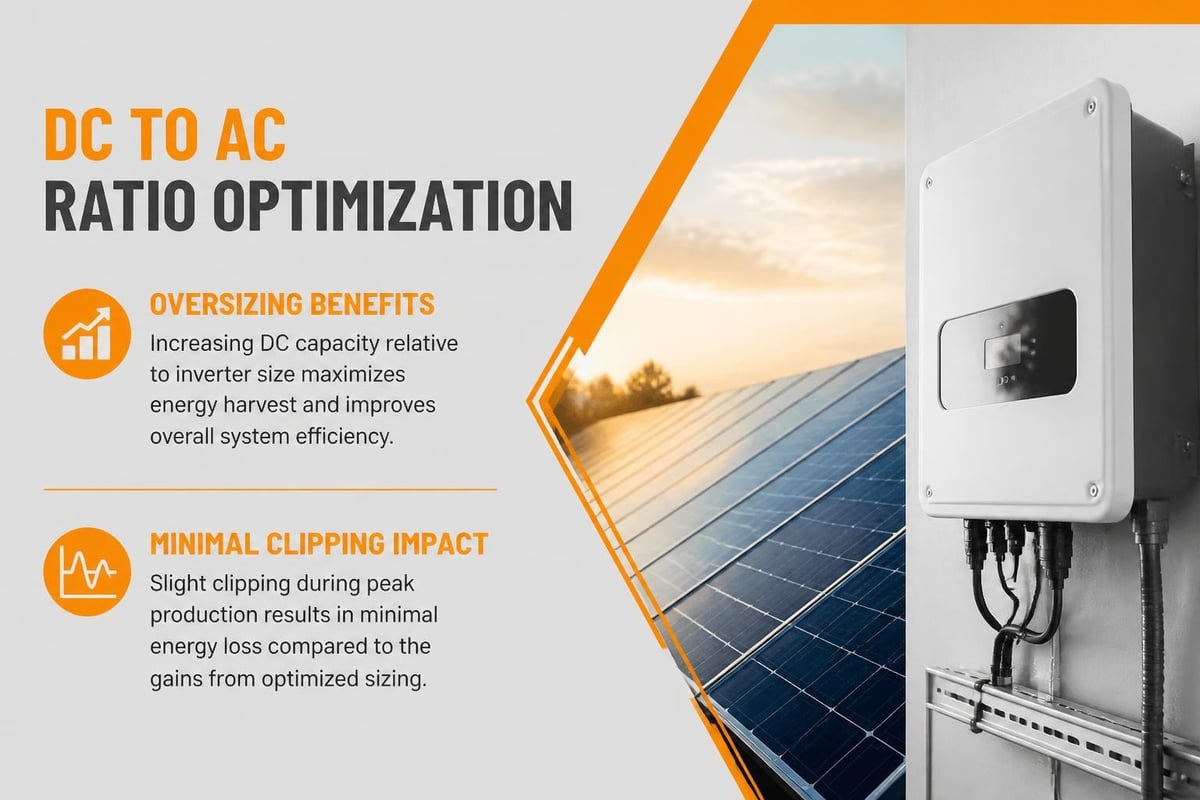
Correctly sizing a pv inverter relative to the solar array capacity involves balancing cost, performance, and operational considerations. The inverter-to-array ratio (or DC:AC ratio) typically ranges from 1.1:1 to 1.3:1, meaning the DC array capacity exceeds the inverter's AC output rating.
This intentional oversizing, called "DC oversizing," allows the inverter to operate closer to peak efficiency more often whilst clipping only occurs during ideal conditions-high irradiance, cool temperatures-when energy is most abundant. The annual energy gain from improved efficiency across most hours outweighs the small amount of energy clipped during peak periods.
Operating Voltage and MPPT Range
Each pv inverter specifies a DC voltage operating window and MPPT voltage range within which the unit can effectively track maximum power. String configurations must stay within these limits across the full temperature range experienced at the installation site. Southern African locations typically see wide temperature swings, with rooftop temperatures in Gauteng or the Northern Cape potentially exceeding 70°C whilst ambient winter mornings drop to freezing.
Advanced Inverter Capabilities
Modern pv inverter technology extends far beyond basic power conversion, incorporating sophisticated control algorithms and grid-support functions that transform solar installations into active grid participants. These capabilities prove increasingly valuable as renewable penetration rises and utility networks require more dynamic management.
Grid-Forming Versus Grid-Following
Traditional grid-following (grid-feeding) inverters synchronize to existing grid voltage and frequency, injecting power whilst relying on conventional generators or the broader network to maintain stability. Grid-forming inverters, by contrast, can independently establish voltage and frequency references, enabling standalone operation and providing "virtual inertia" that stabilizes networks during disturbances.
Research from Sandia National Laboratories demonstrates how grid-forming inverter technology enables high renewable penetration whilst maintaining grid stability. As Eskom's generation fleet evolves and mini-grid applications expand across Southern Africa, grid-forming capability becomes increasingly relevant.
Grid-forming inverter advantages:
- Seamless transition between grid-tied and islanded operation
- Improved power quality and voltage stability
- Black-start capability for microgrid applications
- Enhanced resilience during grid disturbances
- Support for weak grid connections in rural areas
Smart Inverter Functions
Smart inverter features mandated by modern grid codes include volt-VAR control, frequency-watt response, and dynamic reactive current injection. These autonomous functions allow solar systems to respond to grid conditions in real-time without communication delays.
Fraunhofer ISE's research on converter-based power grids explores how inverter controls affect system stability as grids transition from synchronous generator dominance to high inverter penetration. The findings inform grid code development and inverter capability requirements worldwide.
Volt-VAR control adjusts reactive power output based on measured voltage, helping maintain voltage within acceptable limits. Frequency-watt response curtails active power output when grid frequency rises above setpoints, providing a synthetic version of the frequency droop characteristics that conventional generators naturally exhibit.
Selection Criteria for Commercial Applications
Choosing the right pv inverter for commercial, industrial, or agricultural solar installations requires evaluating multiple factors beyond simple technical specifications. The optimal solution balances performance, cost, reliability, and long-term support within the specific context of each project.
Environmental and Operational Considerations
Site-specific factors influencing inverter selection:
- Ambient temperature range: Southern African installations may experience 60°C+ temperature swings from cold winter nights to peak summer rooftop conditions
- Altitude: Higher elevations reduce air density and cooling effectiveness, requiring derating above specified limits
- Dust and pollution: Coastal salt air, agricultural dust, or industrial pollutants affect cooling and component longevity
- Grid quality: Voltage stability, harmonics, and outage frequency determine required ride-through capabilities
- Physical location: Indoor versus outdoor installation, accessibility for maintenance, security considerations
The IEC 62109-2 safety standard establishes requirements for environmental testing and protection ratings, ensuring inverters can withstand specified operating conditions. IP65-rated outdoor inverters resist dust ingress and water spray, essential for South African rooftop installations exposed to seasonal rains and dust storms.
Monitoring and Warranty Coverage
Comprehensive monitoring capabilities distinguish premium pv inverter platforms from basic models. String-level monitoring, individual panel optimization data, automated alerts, and performance analytics enable proactive maintenance and rapid fault identification.
| Monitoring Feature | Benefit |
|---|---|
| String current monitoring | Identifies underperforming or failed strings |
| Environmental sensors | Correlates output with irradiance and temperature |
| Real-time dashboards | Immediate visibility into system performance |
| Historical analytics | Trend analysis and degradation tracking |
| Automated alerting | Rapid response to faults or anomalies |
Warranty terms vary from 5 to 25 years depending on manufacturer and model, with premium commercial inverters typically offering 10-year standard coverage and extended options. Warranty enforcement across Southern Africa requires consideration of local support infrastructure, replacement part availability, and service response times.
Certification and Grid Compliance
All grid-tied pv inverter installations must comply with utility interconnection requirements and local electrical standards. In South Africa, NERSA regulations and municipal grid codes govern distributed generation connections, whilst NRS 097-2-3 specifies technical requirements for grid connection of renewable installations.
California's inverter eligibility requirements, whilst jurisdiction-specific, illustrate the thorough testing and certification process that modern inverters undergo. Similar certification frameworks exist across different markets, ensuring safe operation and grid compatibility.
Operational Performance and Maintenance
Maximizing pv inverter lifespan and performance requires understanding operational patterns, implementing preventative maintenance, and responding promptly to performance deviations. Inverters typically represent 5-10% of total solar system cost but account for the majority of maintenance events over system lifetime.
Performance Monitoring and Diagnostics
Continuous monitoring enables early detection of issues before they significantly impact energy production. Common inverter faults include capacitor degradation, fan failures, DC switch problems, and control board malfunctions. String-level monitoring on commercial systems quickly identifies whether performance issues originate from the inverter, panels, or interconnecting components.
Key performance indicators to track:
- Daily, monthly, and annual energy production versus modeled expectations
- Inverter efficiency across different load levels
- String current balance and anomalies
- Component operating temperatures
- Grid voltage and frequency quality
- Alarm and fault event history
Modern inverters communicate via Ethernet, WiFi, or cellular connections, uploading performance data to cloud platforms for remote analysis. This capability proves invaluable for portfolio managers overseeing multiple distributed solar sites across Southern Africa's vast geography.
Preventative Maintenance Requirements
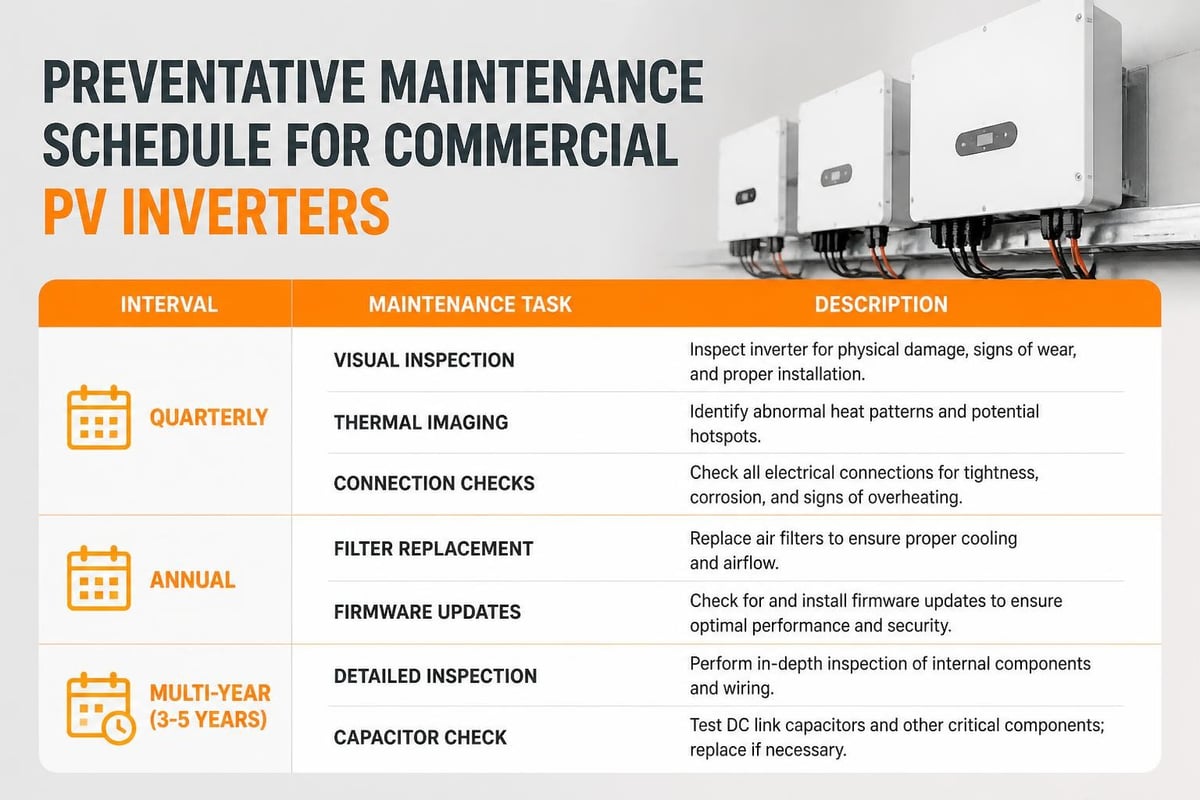
Unlike solar panels with no moving parts, pv inverter units contain fans, capacitors, contactors, and electronic components subject to wear and environmental stress. Scheduled maintenance intervals typically occur every 6-12 months for commercial systems, addressing:
- Visual inspection for signs of overheating, corrosion, or physical damage
- Thermal imaging to identify hot spots indicating component stress
- Connection torque verification ensuring terminals remain tight
- Filter cleaning or replacement maintaining adequate airflow
- Software and firmware updates accessing latest performance optimizations
Capacitor replacement represents the most common inverter maintenance activity, as electrolytic capacitors degrade over time, particularly in high-temperature environments. Premium inverter designs minimize electrolytic capacitor use or employ film capacitors with longer service life.
Future Trends and Technology Evolution
The pv inverter industry continues rapid innovation, driven by cost pressures, grid integration challenges, and expanding application requirements. Several trends will reshape inverter technology and capabilities through the remainder of this decade.
Silicon Carbide Power Electronics
Wide-bandgap semiconductors, particularly silicon carbide (SiC), enable higher switching frequencies, greater power density, and improved efficiency compared to traditional silicon-based power electronics. SiC inverters operate at higher temperatures with reduced cooling requirements, potentially extending service life in harsh Southern African conditions.
The efficiency gains may appear modest-improving from 98% to 98.5%-but compound significantly over system lifetime whilst simultaneously reducing inverter physical size and weight. As SiC component costs decline through manufacturing scale, adoption across commercial pv inverter platforms accelerates.
Artificial Intelligence and Predictive Analytics
Machine learning algorithms applied to inverter performance data enable predictive maintenance, forecasting component failures before they occur. By analyzing patterns in operating temperature, efficiency drift, string current variations, and environmental conditions, AI systems identify degradation trajectories and recommend proactive interventions.
Enhanced forecasting capabilities also improve grid integration, allowing solar installations to commit to more accurate generation schedules and participate in ancillary services markets that reward reliability. As Southern Africa's power market evolves toward greater competition and distributed participation, these capabilities create new revenue opportunities.
Integrated Energy Management
Future pv inverter platforms will increasingly incorporate comprehensive energy management functionality, coordinating solar generation, battery storage, demand response, and grid interaction through unified control strategies. This convergence eliminates separate inverters, battery management systems, and energy controllers, reducing cost whilst improving optimization.
The Fraunhofer ISE ImaStabil project on inverter impedance analysis and grid stability contributes to understanding how tightly integrated solar-plus-storage systems interact with utility networks, informing next-generation inverter control algorithms.
System Design Integration Considerations
Optimizing overall solar system performance requires considering how the pv inverter interacts with all other components: solar panels, mounting structures, DC cabling, AC distribution, monitoring systems, and utility interconnection. Design decisions in one subsystem ripple through the entire installation.
String Configuration and Array Layout
String sizing calculations must account for panel voltage-temperature coefficients, maximum system voltage limits (typically 1000V or 1500V for commercial systems), and inverter MPPT voltage windows. Longer strings reduce cable costs and installation labour but increase voltage drop and may exceed inverter input limits at low temperatures.
String design factors:
- Minimum string voltage at maximum panel temperature (summer noon)
- Maximum string voltage at minimum panel temperature (winter morning)
- MPPT voltage range for efficient power tracking
- Voltage drop across DC cabling from array to inverter
- Safety margin for component tolerances and aging
Commercial installations often employ multiple MPPT channels tracking different roof sections, orientations, or tilt angles independently. This flexibility allows mixing different panel types or optimizing complex roof layouts whilst maintaining high system performance.
DC-to-AC Ratio Optimization
The optimal DC:AC ratio balances competing objectives: maximizing annual energy harvest, minimizing inverter cost, and avoiding excessive clipping. Analysis using typical meteorological year (TMY) data for the specific installation location determines how often the array will reach or exceed the inverter's AC rating.
For locations with consistent high irradiance like South Africa's Northern Cape, conservative ratios around 1.1:1 minimize clipping. Sites with more variable weather, significant morning fog, or frequent cloud cover benefit from higher ratios-1.25:1 or greater-since peak production occurs less frequently whilst improved efficiency at partial load conditions delivers greater annual benefit.
Grounding and Protection Coordination
Proper grounding and overcurrent protection ensure both personnel safety and equipment protection. Transformerless (non-isolated) pv inverter designs, now dominant in commercial applications, require careful grounding configurations to prevent ground fault hazards whilst maintaining system efficiency.
Surge protection devices (SPDs) on both DC and AC sides protect against lightning-induced transients and grid disturbances. Southern Africa's summer thunderstorm season brings significant lightning risk, particularly for large rooftop and ground-mount arrays presenting elevated strike targets. Proper SPD selection and installation substantially reduces inverter damage and downtime.
Financial Considerations and Return Impact
The pv inverter choice significantly affects project economics through multiple pathways: upfront capital cost, ongoing operational expenses, energy yield performance, and replacement timing. Evaluating lifecycle costs rather than simply initial purchase price reveals the true financial impact.
Capital Cost Versus Performance Trade-offs
Budget inverters may cost 30-40% less than premium models but typically sacrifice efficiency, monitoring capability, warranty coverage, and reliability. For a 100 kW commercial system, a 1% difference in weighted efficiency represents approximately 1,100 kWh annually at typical Southern African irradiance levels.
Over 20 years, that single percentage point totals 22,000 kWh. At a commercial electricity rate of ZAR 2.50/kWh (including demand charges and time-of-use variations), the efficiency difference alone equals ZAR 55,000 in additional value-often exceeding the inverter price premium. This calculation excludes the additional value of reduced downtime, better monitoring, and longer warranty coverage that premium units provide.
Replacement and Lifecycle Planning
Inverters typically require replacement at least once during the 25-30 year operational life of a solar installation. Planning for this eventual replacement-budgeting reserves, selecting inverters with clear upgrade paths, ensuring physical space for larger future units-avoids costly surprises and system downtime.
Some commercial projects structure financing to include inverter replacement reserves, setting aside funds annually to accumulate the capital required for eventual replacement. This approach smooths cash flows and ensures funds are available when needed, particularly important for off-balance-sheet financing arrangements or third-party-owned systems.
Performance Guarantees and Production Insurance
Performance guarantees link inverter specification to contractual energy delivery commitments. Projects with power purchase agreements (PPAs) or performance-based incentives require high confidence in inverter reliability and output. Selecting proven platforms with extensive field performance data reduces financial risk and may improve financing terms.
Production insurance products, increasingly available in South African renewable energy markets, cover revenue losses from equipment failures and unplanned downtime. Inverter failures represent the most common insurance claim for solar installations, making inverter selection a key underwriting consideration that affects premium rates and coverage availability.
Selecting and optimizing a pv inverter requires balancing technical performance, financial constraints, and operational requirements within the specific context of each solar installation. The inverter fundamentally determines how effectively captured solar energy becomes usable power, making informed selection and ongoing management critical to project success. INFOLED brings deep engineering expertise to commercial solar PV design, system integration, and lifecycle management across Southern Africa, ensuring clients maximize both energy production and return on investment. Contact INFOLED to discuss how intelligent inverter selection and system design can optimize your renewable energy investment.
Next Step
Need help with your energy strategy?
Speak to INFOLED about solar, storage, EV charging, service agreements or system performance.