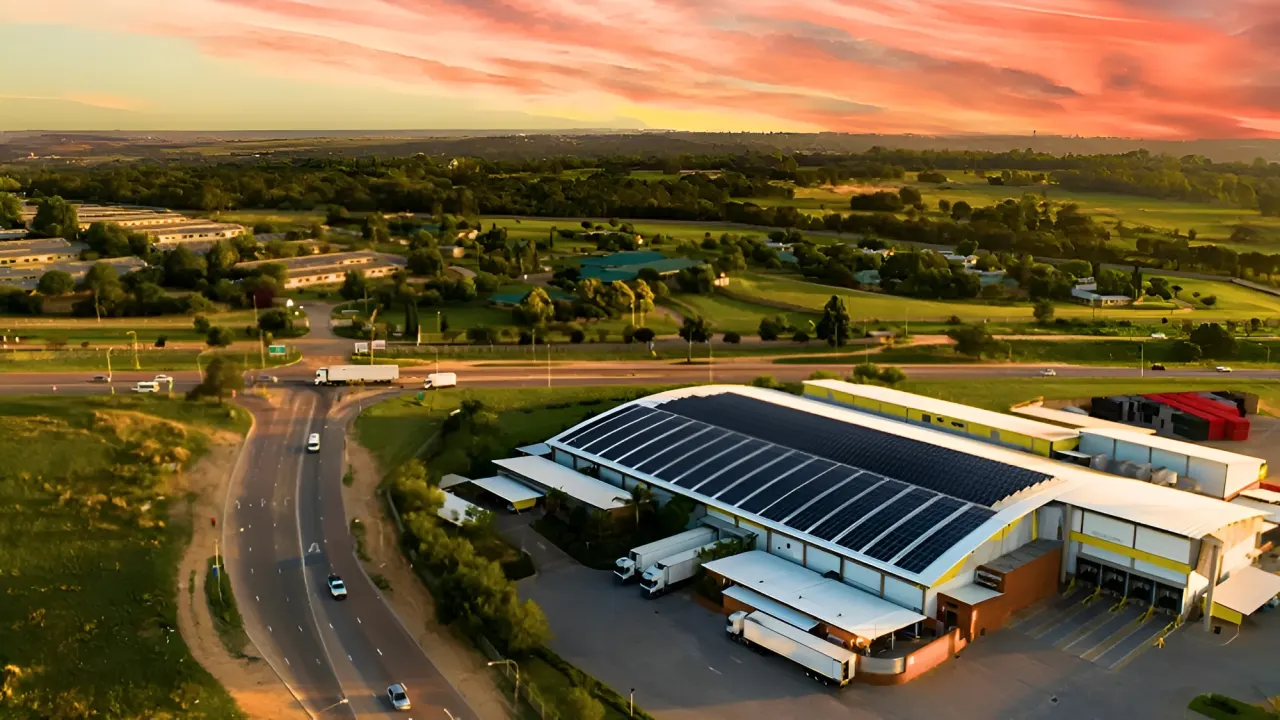
The demand for utility-scale renewable energy infrastructure has transformed the African energy landscape. A solar power station represents a significant investment in clean energy generation, requiring careful planning, sophisticated engineering, and long-term operational commitment. These facilities range from small-scale ground-mounted arrays serving industrial complexes to multi-megawatt installations feeding directly into the national grid. Understanding the complexities of solar power station development is essential for organisations seeking to reduce electricity costs, enhance energy security, and meet environmental targets.
Understanding Solar Power Station Infrastructure
A solar power station differs fundamentally from rooftop installations in scale, complexity, and integration requirements. These facilities typically exceed 1 MW in capacity and occupy substantial land areas, converting solar irradiation into alternating current electricity through thousands of photovoltaic modules.
Core Components and Architecture
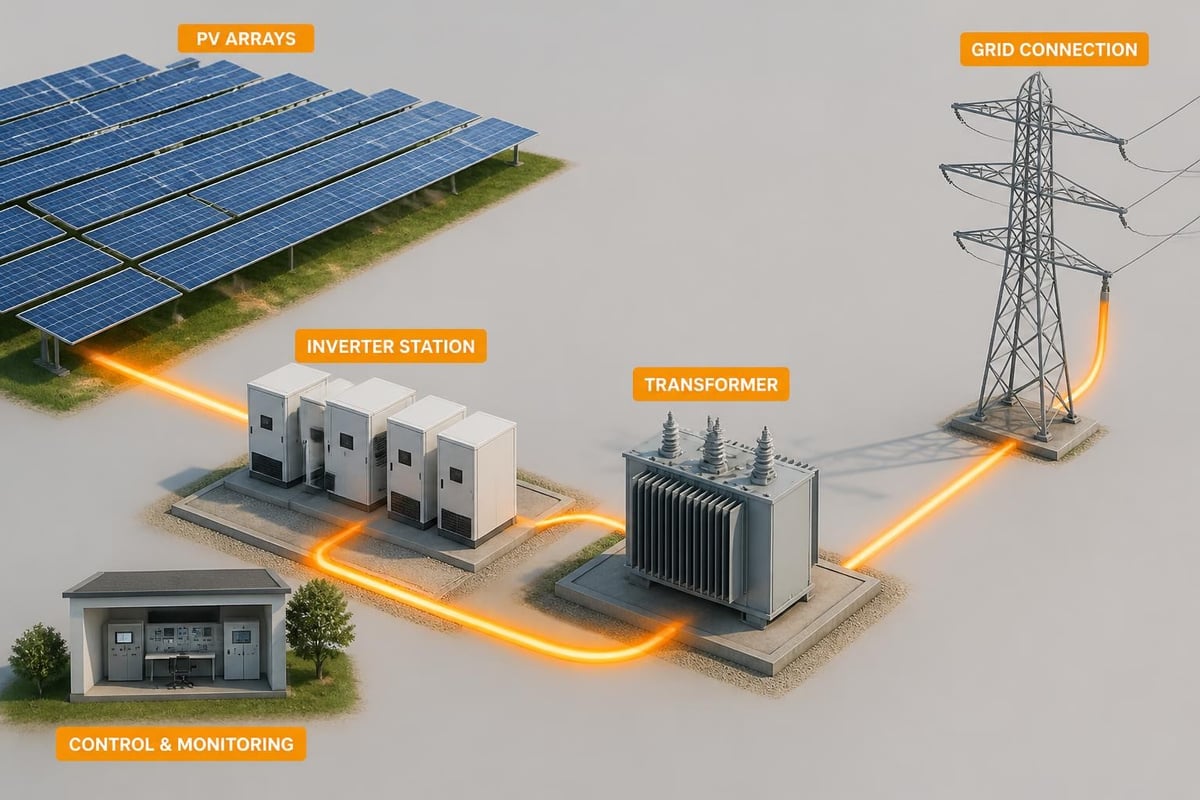
The foundation of any solar power station rests upon five critical subsystems working in concert. Photovoltaic arrays convert sunlight into direct current electricity, whilst inverter stations transform this DC power into AC suitable for grid connection or industrial consumption.
Essential infrastructure elements include:
- Mounting structures (fixed-tilt or single/dual-axis tracking systems)
- String inverters or central inverter stations
- Medium-voltage transformer substations
- Grid interconnection equipment and switchgear
- Supervisory control and data acquisition (SCADA) systems
- Perimeter security and access control infrastructure
The electrical architecture determines both performance and reliability. String configurations must balance voltage requirements against cable losses, whilst inverter placement affects maintenance accessibility and heat dissipation. Medium-voltage networks connect inverter outputs to the point of common coupling, where the station interfaces with the utility grid or private distribution network.
Technology Selection and Performance Considerations
Module technology significantly influences both capital expenditure and long-term energy yield. Monocrystalline silicon panels dominate utility-scale deployments in 2026, offering efficiency ratings between 20% and 22% under standard test conditions. Bifacial modules capture reflected irradiation from ground surfaces, increasing yield by 5% to 15% depending on albedo characteristics.
| Technology Type | Efficiency Range | Degradation Rate | Typical Warranty |
|---|---|---|---|
| Monocrystalline | 20-22% | 0.4-0.5%/year | 25-30 years |
| Bifacial Mono | 21-23% | 0.35-0.45%/year | 25-30 years |
| Thin-film CdTe | 17-19% | 0.5-0.7%/year | 25 years |
Tracking systems introduce mechanical complexity but substantially improve energy capture. Single-axis trackers following the sun's east-west progression increase annual generation by 15% to 25% compared to fixed-tilt arrays, whilst dual-axis systems add marginal gains at significantly higher costs and maintenance burdens.
Site Selection and Environmental Considerations
Selecting an appropriate location for a solar power station requires balancing technical requirements, environmental constraints, and regulatory compliance. Poor site selection undermines project economics regardless of technology quality.
Technical Site Assessment Parameters
Solar resource availability forms the primary selection criterion. South Africa's Northern Cape province receives amongst the highest irradiation levels globally, exceeding 2,200 kWh/m²/year, whilst coastal regions experience greater cloud cover reducing annual totals. Ground-mounted systems require relatively flat terrain with slopes below 5% to minimise earthworks and foundation costs.
Grid proximity directly affects interconnection expenses. Projects located within 5 kilometres of existing medium or high-voltage infrastructure benefit from reduced transmission costs, though grid capacity constraints may necessitate expensive upgrades. The IRENA Coalition brief on key enablers for scaling solar and storage emphasises grid integration planning as critical for utility-scale deployment success.
Site assessment checklist:
- Solar irradiation data (minimum 12 months on-site measurement)
- Topographical survey and geotechnical investigation
- Grid connection feasibility and capacity analysis
- Environmental impact assessment requirements
- Land tenure security and mineral rights verification
- Water availability for panel cleaning operations
Ecological Impact and Mitigation Strategies
Large-scale solar installations inevitably alter local ecosystems. Research published in Frontiers in Ecology and Evolution demonstrates that photovoltaic power station construction affects vegetation cover, soil composition, and wildlife movement patterns. However, these impacts vary considerably based on pre-existing land use and mitigation measures.
A global assessment in Solar Energy using remote sensing data found that solar farms alter surface albedo and local temperature profiles, with implications for microclimate conditions. Panel shading reduces ground-level vegetation in arid regions but may benefit certain plant species by reducing water stress during peak temperature periods.
South African environmental regulations require ecological assessments for developments exceeding specific thresholds. The National Environmental Management Act (NEMA) governs the environmental authorisation process, whilst provincial authorities impose additional requirements. A systematic review in Environmental Evidence provides comprehensive evidence on photovoltaic installations' biodiversity effects, informing mitigation strategies.
Effective mitigation approaches include:
- Maintaining vegetation corridors for wildlife movement
- Selecting native plant species for ground cover
- Implementing seasonal construction restrictions during breeding periods
- Designing drainage systems to prevent erosion and sedimentation
- Establishing biodiversity offset programmes for sensitive habitats
Financial Structuring and Project Economics
Capital intensity distinguishes solar power stations from distributed generation projects. Utility-scale installations in Southern Africa typically require between ZAR 12 million and ZAR 18 million per installed megawatt, depending on site conditions, technology specifications, and financing arrangements.
Capital Expenditure Breakdown
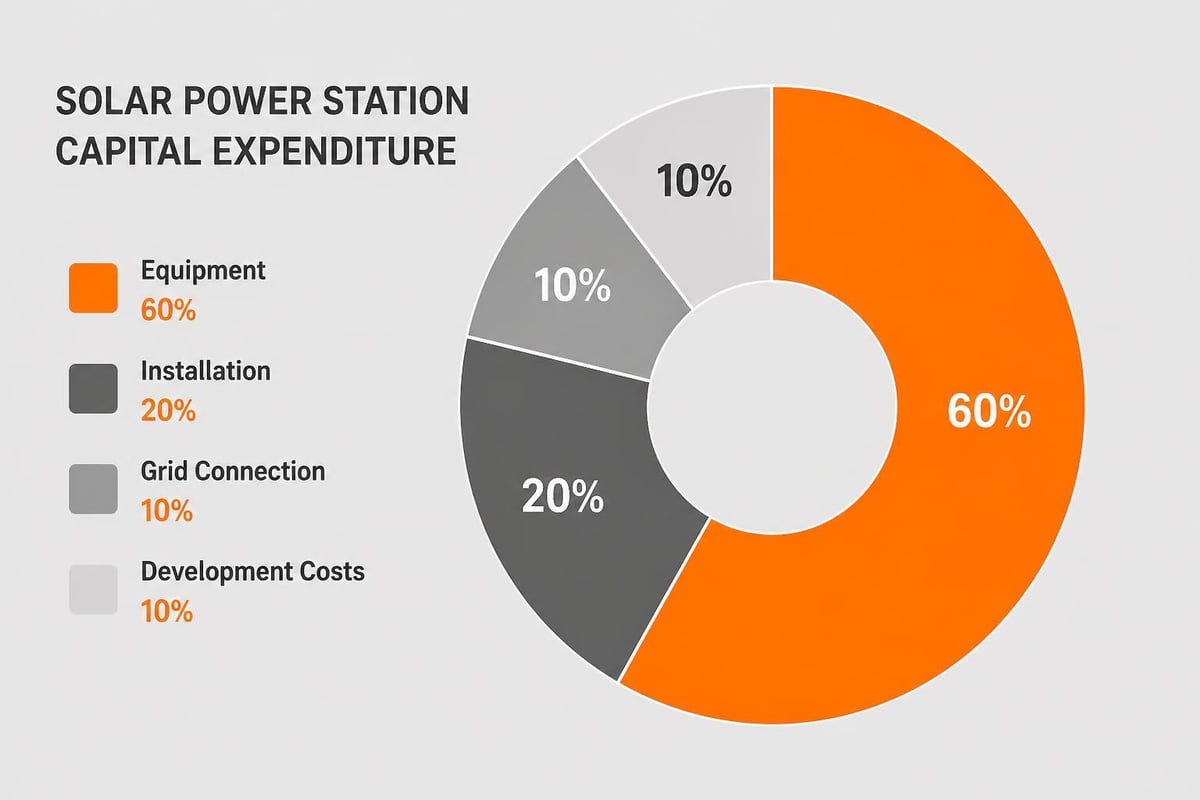
Understanding cost components enables accurate financial modelling and value engineering. Equipment purchases constitute 60% to 70% of total project costs, with balance-of-system expenses and soft costs comprising the remainder.
| Cost Category | Percentage of Total | Key Variables |
|---|---|---|
| PV modules | 35-40% | Technology type, procurement volume |
| Inverters & electrical | 15-20% | Inverter topology, voltage class |
| Mounting structures | 8-12% | Tracking vs fixed-tilt, foundation type |
| Civil works | 5-8% | Site conditions, earthworks requirements |
| Grid connection | 8-15% | Distance to network, capacity upgrades |
| Development & EPC | 12-18% | Project complexity, financing terms |
Revenue Models and Power Purchase Agreements
Commercial solar power stations generate revenue through three primary mechanisms. Corporate power purchase agreements (PPAs) provide long-term price certainty, with industrial and mining operations contracting directly for electricity at rates below Eskom's commercial tariffs. Wheeling arrangements enable generators to supply remote facilities through the utility network, paying transmission fees whilst avoiding generation charges.
Embedded generation licences permit facilities to sell excess capacity to the grid under the Renewable Energy Independent Power Producer Procurement Programme (REIPPPP) or similar provincial initiatives. Feed-in tariffs have largely been superseded by competitive bidding processes that have driven remarkable price reductions. Recent REIPPPP awards achieved tariffs below ZAR 0.60 per kWh, demonstrating solar power station competitiveness against fossil generation.
Financial modelling must account for revenue degradation over the project lifecycle. Panel efficiency decreases approximately 0.5% annually, whilst inverter replacements (typically required after 12-15 years) represent significant capital events. Comprehensive renewable energy engineering services include financial modelling that incorporates these factors alongside variable operational costs.
Regulatory Compliance and Grid Integration
South African energy regulations have evolved rapidly to accommodate distributed and utility-scale renewable generation. The National Energy Regulator of South Africa (NERSA) governs generation licensing, grid connection standards, and wheeling frameworks that enable third-party access to transmission infrastructure.
Licensing and Registration Requirements
Generation facilities exceeding 1 MW require registration with NERSA under the Electricity Regulation Act. Projects above 100 MW must obtain full generation licences following a public consultation process. Registration involves submitting technical specifications, grid impact studies, and compliance documentation demonstrating adherence to the Grid Code.
The grid connection process follows prescribed technical standards. Network impact assessments evaluate whether proposed generation affects voltage stability, fault levels, or power quality within the host network. Utility-scale installations typically connect at medium (11 kV or 22 kV) or high voltage (132 kV or above), requiring sophisticated protection systems and synchronisation controls.
Critical compliance milestones:
- Grid capacity reservation and application submission
- Network impact study completion and approval
- NERSA registration or licence application
- Grid Code compliance certification
- Connection agreement execution with network operator
- Commissioning and performance testing
- Commercial operation authorisation
Technical Grid Requirements
The South African Grid Code imposes stringent technical requirements on generating facilities to maintain network stability. Fault ride-through capability ensures installations remain connected during brief voltage dips, preventing cascading disconnections that could destabilise the grid. Power factor control enables reactive power injection or absorption, supporting voltage regulation.
Frequency control provisions require rapid response to grid frequency deviations. Modern solar power stations incorporate frequency-watt droop curves that automatically reduce output when frequency exceeds nominal values, whilst ramping capability limits prevent sudden generation changes that might trigger protection systems.
The U.S. Department of Energy evaluation of utility-scale solar planning provides international context for regulatory frameworks, though South African requirements reflect local grid characteristics and stability concerns.
Operations, Maintenance and Performance Optimisation
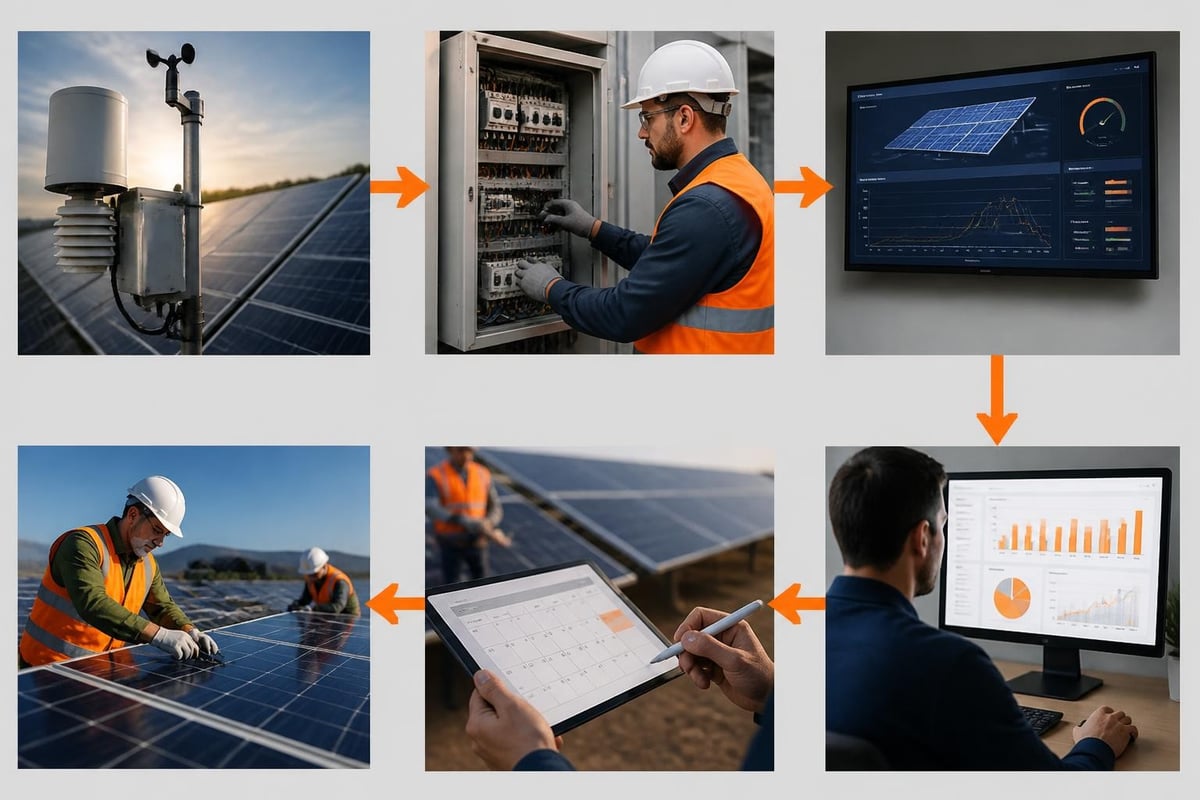
Sustained energy production depends upon rigorous operational practices and preventative maintenance protocols. Solar power stations must maintain availability above 98% to achieve projected financial returns, requiring systematic monitoring and rapid fault response.
Monitoring and Performance Analytics
Advanced SCADA systems provide real-time visibility into generation performance, equipment status, and environmental conditions. String-level monitoring identifies underperforming circuits caused by soiling, shading, or component failures. Inverter analytics track efficiency, temperature profiles, and fault histories enabling predictive maintenance scheduling.
Performance ratio serves as the primary operational metric, comparing actual energy production against theoretical output under measured irradiation conditions. Well-maintained facilities in optimal locations achieve performance ratios exceeding 85%, whilst poorly operated installations may fall below 75%. Weather-corrected performance analysis isolates operational factors from meteorological variations.
Preventative and Corrective Maintenance Protocols
Scheduled maintenance activities preserve equipment longevity and generation capacity. Panel cleaning removes dust, pollen, and bird droppings that reduce transmission efficiency by 2% to 8% depending on location and weather patterns. South Africa's arid regions require more frequent cleaning than coastal areas receiving regular rainfall.
Monthly maintenance activities include:
- Visual inspection of modules, connections, and mounting structures
- Infrared thermography scanning for hotspot identification
- Inverter filter cleaning and ventilation system inspection
- Vegetation management around perimeter and beneath arrays
- Tracker system lubrication and alignment verification
Annual comprehensive inspections involve electrical testing, torque verification of structural connections, and transformer oil analysis. Inverter replacement planning should commence at year ten, with procurement and logistics arranged to minimise downtime during critical summer generation periods.
Many organisations partner with specialist providers for ongoing facility management. Comprehensive operations and maintenance services ensure optimal performance through remote monitoring, preventative maintenance, and rapid corrective interventions backed by service level agreements.
Hybrid Systems and Energy Storage Integration
Standalone solar power stations face inherent limitations due to generation intermittency. Cloud transients cause rapid power fluctuations, whilst diurnal cycles create generation profiles mismatched with consumption patterns. Energy storage integration addresses these challenges, enhancing dispatchability and grid stability contributions.
Battery Energy Storage System Design
Lithium-ion battery systems dominate utility-scale storage applications, offering energy density, efficiency, and declining costs. Storage capacity sizing balances several objectives: peak shaving reduces demand charges, whilst time-shifting moves generation from midday surplus to evening peak periods. Grid services including frequency regulation and voltage support provide additional revenue streams.
Battery system architecture varies between AC-coupled and DC-coupled topologies. AC coupling connects batteries through dedicated inverters after the solar inverter, providing operational flexibility but incurring conversion losses. DC coupling integrates storage between panels and hybrid inverters, improving efficiency but limiting independent dispatch capability.
Storage duration determines application suitability. Two-hour systems support peak demand management, whilst four to six-hour installations enable substantial time-shifting. South Africa's concentrated evening peak (17:00-21:00) favours four-hour configurations that capture midday solar excess for evening discharge.
| Storage Duration | Primary Applications | Typical Cost (ZAR/kWh) |
|---|---|---|
| 1-2 hours | Frequency regulation, peak shaving | 2,500-3,500 |
| 2-4 hours | Demand management, firming | 2,200-3,000 |
| 4-6 hours | Time-shifting, energy arbitrage | 2,000-2,800 |
Operational Optimisation with Storage
Intelligent dispatch algorithms maximise the combined value of generation and storage assets. Machine learning models forecast solar production and consumption patterns, optimising charge and discharge schedules to minimise electricity costs whilst preserving battery health. Depth-of-discharge limitations protect cycle life, whilst temperature management systems prevent thermal degradation.
Commercial operations may prioritise self-consumption during expensive peak periods, whilst industrial facilities with process flexibility can shift loads to align with generation availability. Agricultural operations benefit particularly from agricultural solar installations incorporating storage for irrigation pumping during off-peak tariff periods.
Hybrid configurations with diesel generators provide ultimate resilience for critical operations. Solar generation reduces fuel consumption during daylight hours, batteries cover evening peaks, and generators activate only during extended low-irradiation periods or battery depletion events.
Future Developments and Emerging Technologies
Solar power station technology continues advancing rapidly, with multiple innovation trajectories promising improved performance and reduced costs. Perovskite-silicon tandem cells demonstrate laboratory efficiencies exceeding 30%, though commercial availability awaits long-term stability verification.
Floating solar installations on reservoirs and mine tailings dams represent untapped potential within South Africa's water-stressed regions. Evaporation reduction benefits complement electricity generation, whilst cooler operating temperatures improve panel efficiency. Several pilot projects in Gauteng and the Western Cape are demonstrating technical and economic feasibility.
Agrivoltaic systems integrate agriculture beneath elevated solar arrays, preserving agricultural productivity whilst generating clean electricity. Shade-tolerant crops benefit from reduced water stress, potentially improving yields in semi-arid regions. Livestock grazing beneath solar installations provides vegetation management whilst generating additional farm revenue.
Green hydrogen production represents an emerging demand anchor for utility-scale solar. Electrolyser installations consume excess midday generation that would otherwise be curtailed, producing hydrogen for industrial processes, transport fuel, or long-duration energy storage. Several Southern African nations are developing hydrogen strategies that position solar power stations as crucial enablers.
Solar power stations represent sophisticated infrastructure investments requiring comprehensive planning, rigorous engineering, and sustained operational excellence. From initial site selection through decades of operation, success depends upon integrating technical, financial, environmental, and regulatory considerations into cohesive project strategies. Whether pursuing utility-scale developments or commercial solar PV installations, organisations benefit from partnering with experienced renewable energy specialists. INFOLED delivers integrated engineering, financing, installation, and monitoring services that transform solar ambitions into reliable, high-performance energy assets supporting your cost reduction and sustainability objectives across Southern Africa.
Next Step
Need help with your energy strategy?
Speak to INFOLED about solar, storage, EV charging, service agreements or system performance.