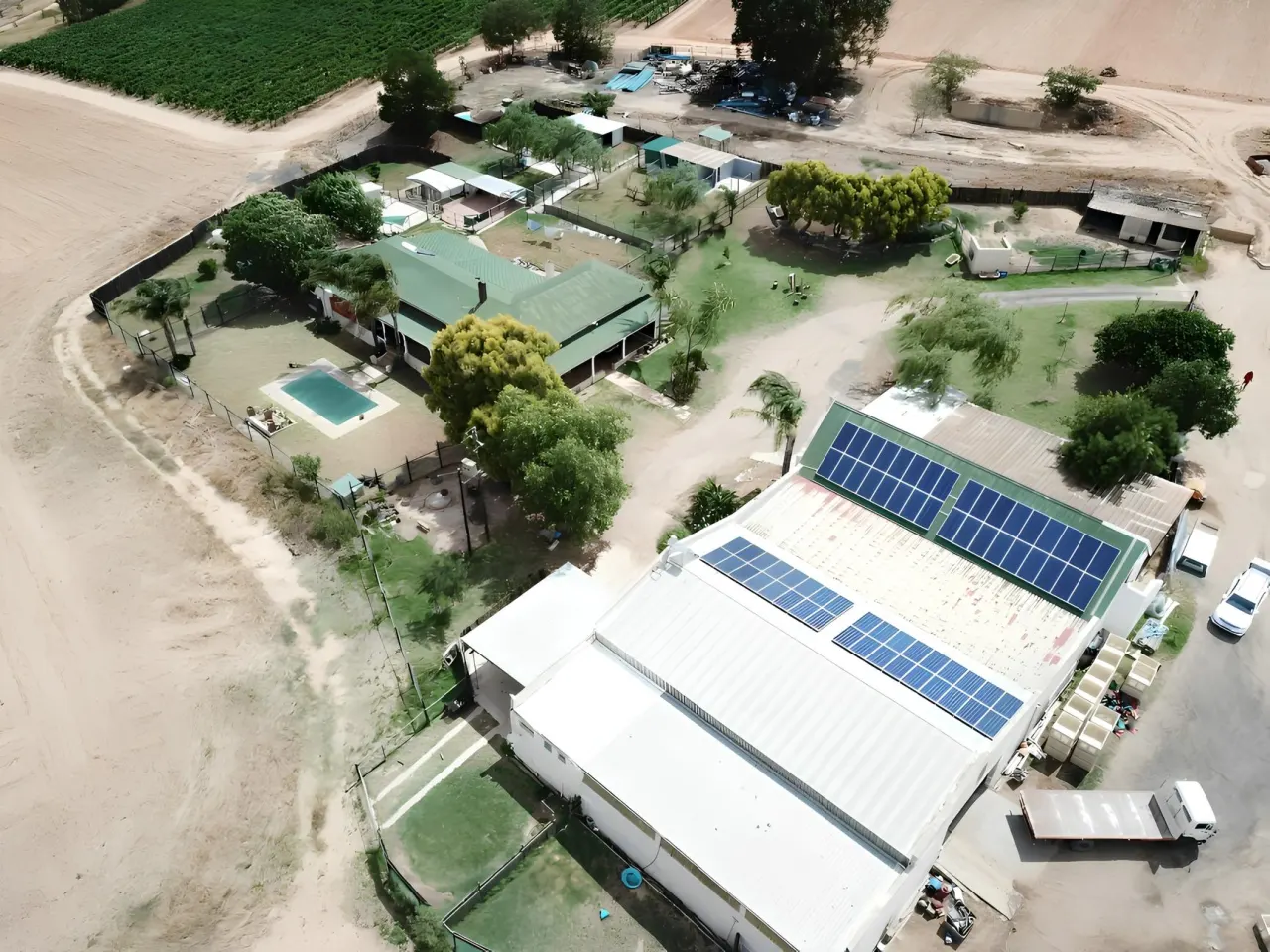
Businesses across South Africa face mounting pressure to reduce operational costs whilst simultaneously addressing environmental responsibilities. Partnering with a commercial solar company has become an essential strategy for organisations seeking to navigate the dual challenges of rising electricity tariffs and sustainability commitments. From Cape Town to Johannesburg, companies are discovering that solar energy offers more than just cost savings-it provides energy security, regulatory compliance, and competitive advantage in an increasingly eco-conscious marketplace.
Understanding the Role of a Commercial Solar Company
A commercial solar company delivers comprehensive renewable energy solutions tailored specifically to business requirements. Unlike residential installations, commercial projects demand sophisticated engineering, larger-scale systems, and integration with existing infrastructure.
These specialised firms handle everything from initial energy audits through to ongoing monitoring and maintenance. The scope extends far beyond simply mounting panels on rooftops. Modern commercial solar companies provide financial modelling, regulatory compliance support, grid connection applications, and performance guarantees that protect your investment.
Key Services Provided
When evaluating potential partners, businesses should expect a full suite of capabilities:
- Energy auditing and feasibility studies that assess your current consumption patterns and solar potential
- Custom system design optimised for your specific building configuration, orientation, and energy profile
- Financial modelling including ROI calculations, tax incentive navigation, and various funding options
- Project management from permitting through to final commissioning
- Ongoing monitoring and preventative maintenance to ensure optimal performance
The best commercial solar company will also provide integration services that connect solar installations with battery storage, electric vehicle charging infrastructure, and smart metering solutions. This holistic approach maximises energy efficiency and resilience.

Financial Considerations and Return on Investment
Investment in commercial solar represents a significant capital decision that requires thorough financial analysis. The typical payback period for commercial installations in South Africa ranges between three to seven years, depending on system size, energy consumption patterns, and available incentives.
Cost Structure Breakdown
| Cost Component | Percentage of Total | Notes |
|---|---|---|
| Equipment (panels, inverters) | 40-50% | Quality varies significantly |
| Installation labour | 15-25% | Depends on system complexity |
| Structural work | 10-15% | Roof reinforcement, mounting |
| Electrical integration | 10-15% | Grid connection, switchgear |
| Design and engineering | 5-10% | Critical for performance |
| Permitting and compliance | 3-5% | Municipal requirements |
Businesses should request detailed quotations that itemise these components. A reputable commercial solar company provides transparent pricing with clearly defined specifications for all equipment and services.
Available Financing Options
- Cash purchase offers the fastest ROI and full ownership benefits
- Equipment financing spreads costs whilst maintaining asset ownership
- Power purchase agreements (PPAs) eliminate upfront capital requirements
- Operating leases provide tax advantages with flexible terms
- Green bonds and sustainability-linked loans increasingly available through major South African banks
The optimal financing structure depends on your organisation's cash flow position, tax situation, and strategic energy goals. Working with a commercial solar company that understands various funding mechanisms ensures you access the most beneficial arrangement.
Technical Specifications and System Design
Commercial installations require sophisticated technical planning that accounts for numerous variables. System sizing must balance current energy needs against future growth projections, whilst respecting structural limitations and electrical capacity.
System Sizing Methodology
A professional commercial solar company conducts comprehensive load analysis examining hourly, daily, and seasonal consumption patterns. This data-driven approach prevents undersizing that fails to deliver promised savings or oversizing that extends payback periods unnecessarily.
Key factors influencing system design include:
- Available roof or ground space with optimal orientation and minimal shading
- Structural load capacity ensuring buildings safely support additional weight
- Electrical infrastructure compatibility with existing distribution boards and transformers
- Grid connection limits as determined by municipal regulations and network capacity
- Future expansion plans allowing for scalable system growth
Modern commercial systems typically range from 50kW for small offices to several megawatts for manufacturing facilities and large retail centres. The modular nature of solar technology allows phased implementation aligned with budget availability and business growth.
Regulatory Compliance and Grid Connection
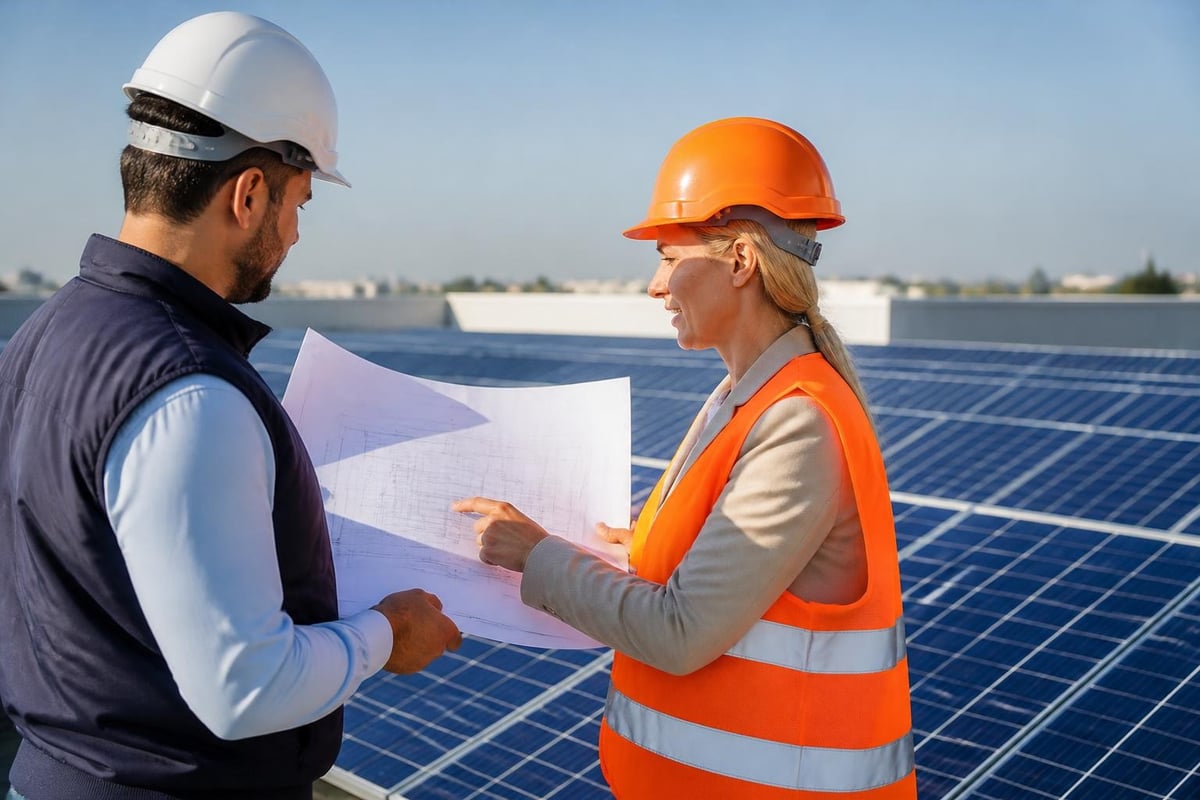
Navigating South Africa's regulatory landscape requires specialist knowledge that varies significantly across municipalities. A knowledgeable commercial solar company manages this complexity, ensuring compliance with national building regulations, electrical standards, and local authority requirements.
Municipal Requirements and Approvals
Different municipalities maintain distinct processes and timelines for solar installations. Johannesburg, Cape Town, and Durban each have specific documentation requirements, application fees, and technical standards that must be satisfied before installation commences.
The approval process typically involves:
- Submission of electrical drawings and engineering certificates
- Network impact studies for larger installations
- Building plan approvals if structural modifications required
- Final inspections and certificates of compliance
- Bi-directional meter installation for grid-tied systems
Experienced providers maintain relationships with municipal departments and understand local nuances that accelerate approval timelines. The EPA's Renewable Energy Project Development Toolbox offers valuable guidance on permitting processes, whilst local expertise remains essential for South African applications.
Integration with Energy Storage and Smart Technologies
Forward-thinking businesses recognise that solar installations deliver maximum value when integrated with complementary technologies. The synergy between solar generation, battery storage, and intelligent monitoring creates comprehensive energy solutions that address multiple business objectives simultaneously.
Battery Energy Storage Systems
Commercial battery storage transforms solar from a daytime-only solution into 24-hour energy security. Batteries enable peak shaving, demand charge reduction, and backup power during outages-critical capabilities given South Africa's ongoing electricity challenges.
A commercial solar company with battery expertise can design hybrid systems that:
- Store excess solar generation for evening consumption
- Provide immediate backup during grid failures
- Reduce demand charges by limiting peak draw from the grid
- Enable participation in demand response programmes
- Future-proof installations against changing energy landscapes
The economics of battery storage continue improving as technology costs decline and grid electricity prices rise. Businesses should evaluate storage potential during initial solar planning rather than as an afterthought.
Smart Monitoring and Analytics
Real-time monitoring transforms passive solar installations into actively managed energy assets. Energy consumption monitoring identifies performance issues immediately, prevents revenue loss from underperforming systems, and provides data for ongoing optimisation.
Modern monitoring platforms deliver:
- Production tracking against weather-adjusted expectations
- Fault detection with automated alerts for maintenance teams
- Financial reporting showing actual savings versus projections
- Carbon reduction metrics supporting sustainability communications
- Comparative analysis benchmarking performance across multiple sites
This visibility empowers businesses to maximise their solar investment whilst providing documentation for environmental reporting and stakeholder communications.
Industry-Specific Applications and Case Studies
Different sectors face unique energy challenges that influence solar system design and implementation. A versatile commercial solar company tailors solutions to industry-specific requirements, from 24-hour manufacturing operations to retail centres with peak afternoon consumption.
Manufacturing and Industrial Facilities
Industrial operations typically offer ideal solar conditions: large roof areas, high daytime consumption, and substantial demand charges. Solar installations of 500kW to 5MW commonly serve factories, warehouses, and processing facilities across Gauteng and KwaZulu-Natal.
| Industry Sector | Typical System Size | Primary Benefit | Average Payback |
|---|---|---|---|
| Food processing | 300-800kW | Daytime load matching | 4-5 years |
| Light manufacturing | 200-600kW | Demand charge reduction | 4-6 years |
| Logistics/warehousing | 500-2000kW | Large roof utilisation | 3-5 years |
| Automotive assembly | 1-3MW | Energy security | 5-7 years |
Agricultural solar applications represent another growing segment, powering irrigation systems, cold storage, and processing facilities across farming operations.
Retail and Hospitality
Shopping centres, hotels, and restaurant chains benefit from solar installations that reduce operating costs whilst demonstrating environmental commitment to customers. Weekend and holiday trading patterns often align well with solar generation profiles.
These sectors particularly value:
- Brand enhancement through visible sustainability initiatives
- Operating cost reduction improving profit margins on competitive products
- Customer appeal as environmental consciousness influences purchasing decisions
- Asset value improvement as green buildings command premium valuations
A specialised commercial solar company understands these sector-specific priorities and designs solutions that deliver both financial returns and strategic benefits.
Operations, Maintenance and Performance Management
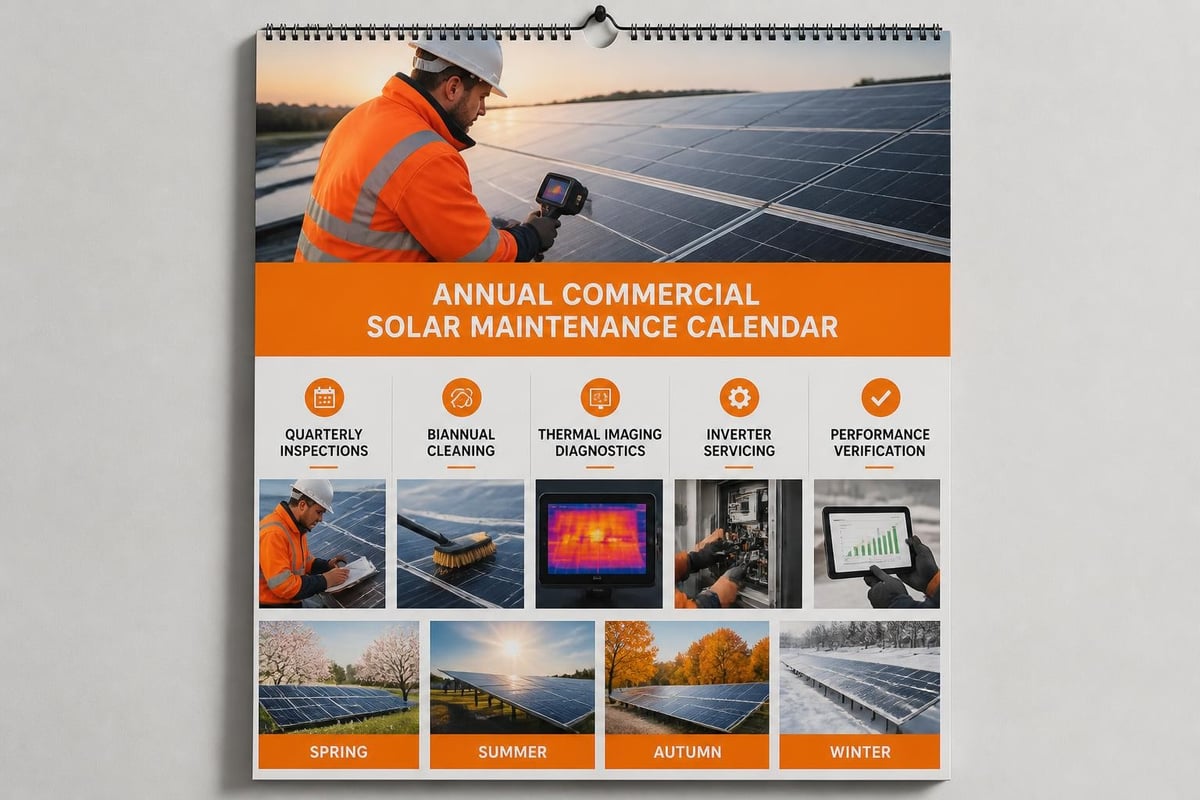
Solar installations require ongoing attention to maintain optimal performance over 25-year operational lifespans. Professional maintenance programmes prevent degradation, identify issues early, and protect manufacturer warranties that often require documented service schedules.
Preventative Maintenance Requirements
Regular maintenance extends system life and preserves output efficiency:
- Panel cleaning to remove dust, pollen, and bird droppings that reduce generation
- Thermal imaging identifying hotspots indicating potential failures
- Connection inspection ensuring all electrical contacts remain secure
- Inverter servicing following manufacturer specifications
- Performance testing validating output against design expectations
Annual maintenance costs typically range from 0.5% to 1.5% of initial system investment. This modest expense protects against performance degradation that could reduce output by 10-20% over time.
Service Level Agreements
Comprehensive service level agreements (SLAs) define maintenance responsibilities, response times, and performance guarantees. These contracts should specify:
- Response times for fault callouts and emergency repairs
- Uptime guarantees with compensation for underperformance
- Maintenance frequency and scope of work included
- Reporting requirements documenting system performance
- Warranty management handling claims with equipment manufacturers
Businesses should review service level agreement terms carefully, understanding exactly what maintenance activities are included and what constitutes additional charges.
Environmental Impact and Sustainability Reporting
Beyond financial returns, commercial solar delivers measurable environmental benefits that support corporate sustainability strategies. Accurate quantification of these impacts enables businesses to communicate achievements to stakeholders, meet regulatory requirements, and pursue green certifications.
Carbon Emission Reductions
Solar generation displaces grid electricity that in South Africa relies heavily on coal-fired power stations. Each megawatt-hour of solar production prevents approximately 0.9 tonnes of CO₂ emissions, based on Eskom's current generation mix.
A 200kW commercial installation generating 350,000 kWh annually prevents roughly 315 tonnes of CO₂ emissions-equivalent to removing approximately 68 passenger vehicles from roads for one year. These metrics prove valuable for:
- ESG reporting to investors and stakeholders
- Carbon accounting under emerging regulatory frameworks
- Marketing communications demonstrating environmental leadership
- Supply chain requirements as major corporates demand supplier sustainability
Renewable Energy Sustainability services help businesses quantify environmental benefits accurately and integrate renewable energy data into broader sustainability programmes supporting Net Zero commitments.
Making Accurate Solar Claims
Organisations must ensure environmental claims about solar installations remain accurate and defensible. The EPA guidance on solar power use and REC claims provides best practices for communications about on-site generation, helping businesses avoid greenwashing accusations whilst maximising the reputational value of genuine environmental action.
Selecting the Right Commercial Solar Company
Choosing a solar partner represents a decision that impacts your business for decades. Evaluation criteria should extend beyond initial pricing to encompass technical capability, financial stability, and long-term service commitment.
Essential Evaluation Criteria
Technical competence and experience:
- Demonstrated track record with commercial installations of similar scale
- Qualified electrical engineers and certified installation teams
- In-house design capabilities rather than outsourced engineering
- References from existing commercial clients in your sector
Financial credentials:
- Stable company with longevity to honour warranties and maintenance commitments
- Transparent pricing with detailed component specifications
- Competitive rates without suspiciously low quotes suggesting corner-cutting
- Flexible financing options or established relationships with funders
Service capabilities:
- Comprehensive offering from initial audit through ongoing maintenance
- Local presence ensuring responsive service and support
- Monitoring systems providing real-time performance visibility
- Clear SLA terms with defined response times and performance guarantees
Regulatory expertise:
- Experience navigating municipal approval processes in your jurisdiction
- Compliance knowledge spanning electrical, building, and environmental regulations
- Grid connection experience with your local utility provider
- Insurance coverage protecting both installation work and ongoing operations
A thorough due diligence process prevents costly mistakes and ensures your chosen commercial solar company delivers on promises made during the sales process.
Future-Proofing Your Solar Investment
The renewable energy landscape continues evolving rapidly, with new technologies, changing regulations, and shifting market dynamics. Strategic solar investments account for future developments, ensuring installations remain relevant and valuable throughout their operational lives.
Emerging Technology Considerations
Modern commercial solar installations should incorporate provisions for future enhancements:
- Inverter oversizing allowing additional panel capacity without complete replacement
- Battery-ready designs with space and electrical infrastructure for future storage
- EV charging integration as commercial fleets increasingly electrify
- Smart grid capability positioning businesses to participate in virtual power plants
- Module recycling pathways addressing end-of-life environmental responsibilities
A forward-thinking commercial solar company designs systems with expansion capacity, ensuring today's investment adapts to tomorrow's opportunities rather than becoming prematurely obsolete.
Regulatory Horizon Scanning
South Africa's renewable energy policy environment continues developing, with potential future changes including:
- Enhanced feed-in tariffs for excess generation
- Mandatory renewable energy targets for large consumers
- Carbon taxes creating additional incentives for clean energy
- Grid modernisation enabling more sophisticated energy trading
- Building code requirements incorporating minimum renewable percentages
Staying informed about regulatory developments ensures businesses maximise available incentives and maintain compliance as requirements evolve. Partnering with a well-connected commercial solar company provides access to policy insights and strategic guidance navigating this changing landscape.
Risk Management and Insurance Considerations
Commercial solar installations represent significant assets requiring appropriate risk management. Comprehensive insurance coverage protects against equipment failure, natural disasters, liability claims, and business interruption from system downtime.
Insurance Coverage Requirements
| Coverage Type | What It Protects | Typical Premium |
|---|---|---|
| Property insurance | Physical damage to panels and equipment | 0.25-0.5% of system value |
| Business interruption | Lost savings during repairs | 0.1-0.3% of system value |
| Public liability | Third-party injury or property damage | Varies by location |
| Professional indemnity | Design or installation errors | Provider responsibility |
| Performance guarantee | Underperformance vs. projections | Often included in SLA |
Most commercial property policies can be extended to cover solar installations, though specific renewable energy insurance products offer more comprehensive protection. Your commercial solar company should provide guidance on appropriate coverage levels and assist with technical specifications required by insurers.
Warranty Considerations
Solar equipment carries multiple warranties that must be properly documented and maintained:
- Panel performance warranties typically guarantee 80-85% output after 25 years
- Equipment warranties covering defects for 5-12 years depending on components
- Inverter warranties usually spanning 5-10 years with extension options
- Installation workmanship warranties protecting against faulty installation practices
Understanding warranty terms, exclusion clauses, and maintenance requirements prevents voiding coverage through inadvertent breaches. Professional maintenance programmes ensure compliance with warranty conditions whilst documenting service history that supports claims if required.
Commercial solar represents a strategic investment delivering financial returns, environmental benefits, and energy security for South African businesses. From initial feasibility through decades of operation, success depends on partnering with experienced professionals who understand the technical, financial, and regulatory complexities unique to commercial installations. INFOLED designs, finances, installs, monitors, and maintains intelligent solar solutions for commercial, industrial, and agricultural clients across Southern Africa, helping businesses reduce electricity costs whilst advancing sustainability objectives. Contact our engineering team to discover how tailored renewable energy solutions can transform your organisation's energy future.
Next Step
Need help with your energy strategy?
Speak to INFOLED about solar, storage, EV charging, service agreements or system performance.