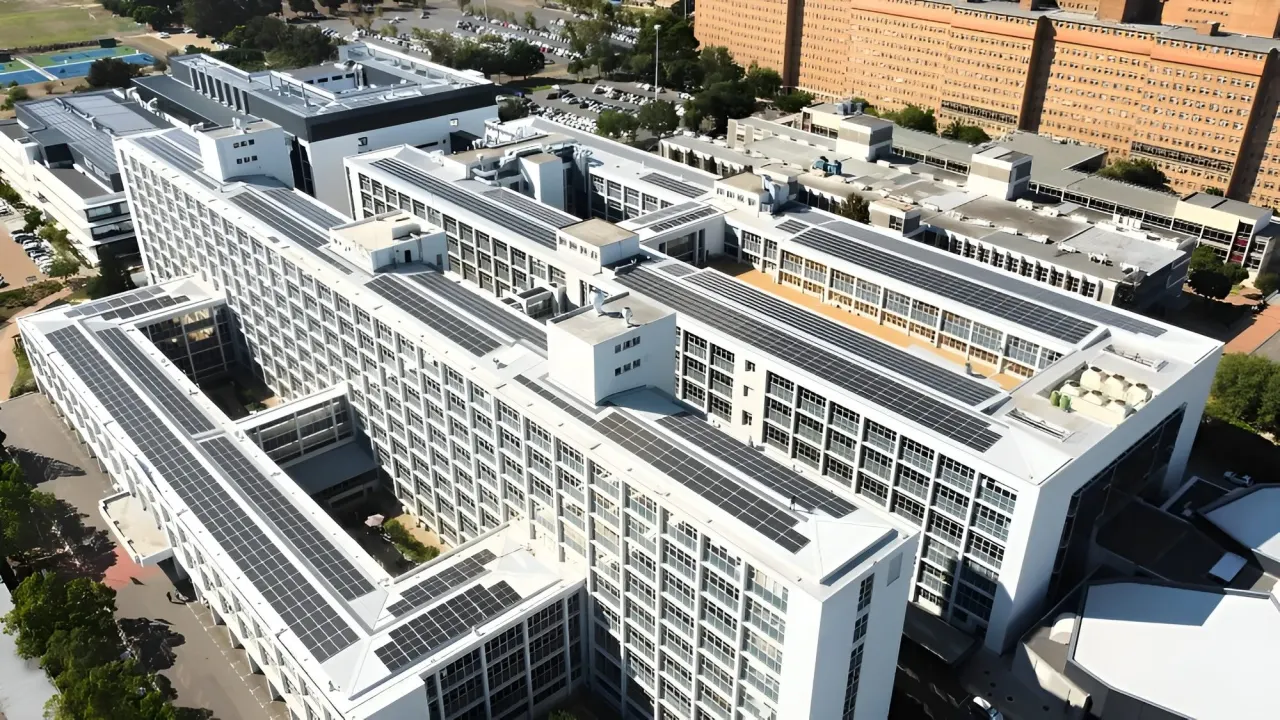
The renewable energy sector across Southern Africa has witnessed remarkable technological advancement, particularly in solar photovoltaic systems. As businesses and homeowners seek reliable alternatives to grid dependency, innovations in solar technology have emerged as game-changing solutions that deliver higher efficiency, lower costs, and enhanced energy resilience. These developments are reshaping how commercial, industrial, and residential clients approach energy procurement whilst supporting ambitious ESG and Net Zero commitments across the region.
Breakthrough Technologies Transforming Solar Performance
Bifacial Solar Panels
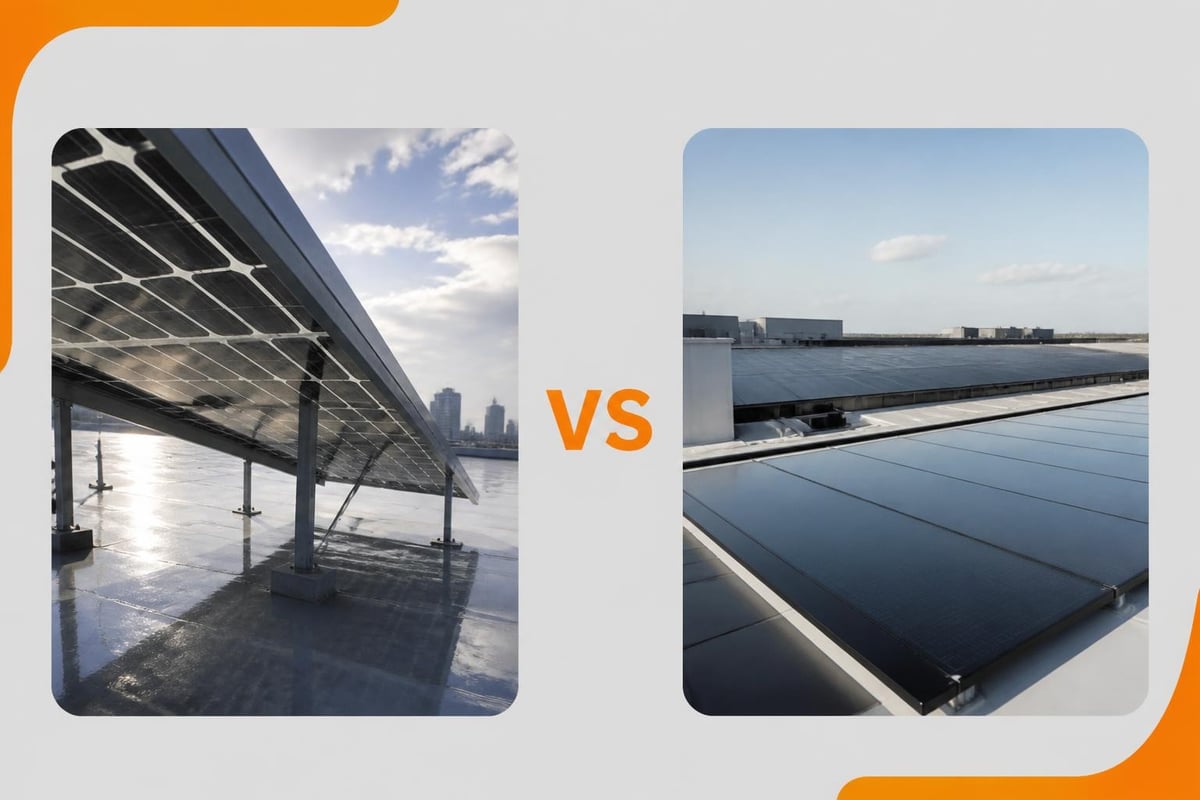
Bifacial modules represent a significant leap forward in solar technology, capturing sunlight from both front and rear surfaces. This dual-sided approach increases energy generation by 10-30% compared to traditional monofacial panels, making them particularly attractive for commercial installations.
The technology works by reflecting light from ground surfaces, rooftops, or specially designed reflective materials onto the panel's rear side. In Southern Africa's high-irradiance environment, bifacial systems deliver exceptional performance, especially when installed on white membrane roofs or light-coloured gravel surfaces.
Key advantages of bifacial technology include:
- Enhanced energy yield per square metre
- Improved performance in diffuse light conditions
- Reduced levelized cost of electricity (LCOE)
- Better durability through glass-glass construction
- Optimal performance in ground-mount configurations
Perovskite Solar Cells
Research into perovskite materials has accelerated dramatically, with several innovations in solar cell efficiency emerging from laboratories worldwide. These thin-film cells achieve conversion efficiencies exceeding 25% whilst requiring significantly less material than traditional silicon panels.
Manufacturing costs remain substantially lower than conventional photovoltaic production. The technology permits flexible applications, opening possibilities for building-integrated photovoltaics (BIPV) that transform architectural surfaces into energy generators.
| Technology Type | Efficiency Range | Manufacturing Cost | Application Suitability |
|---|---|---|---|
| Perovskite | 20-28% | Low | BIPV, portable systems |
| Monocrystalline | 19-22% | Medium | Commercial, residential |
| Bifacial | 21-24% (effective) | Medium-High | Ground-mount, commercial |
| Thin-Film | 12-18% | Low | Large-scale installations |
Smart Monitoring and Predictive Maintenance Systems
Artificial Intelligence in Solar Operations
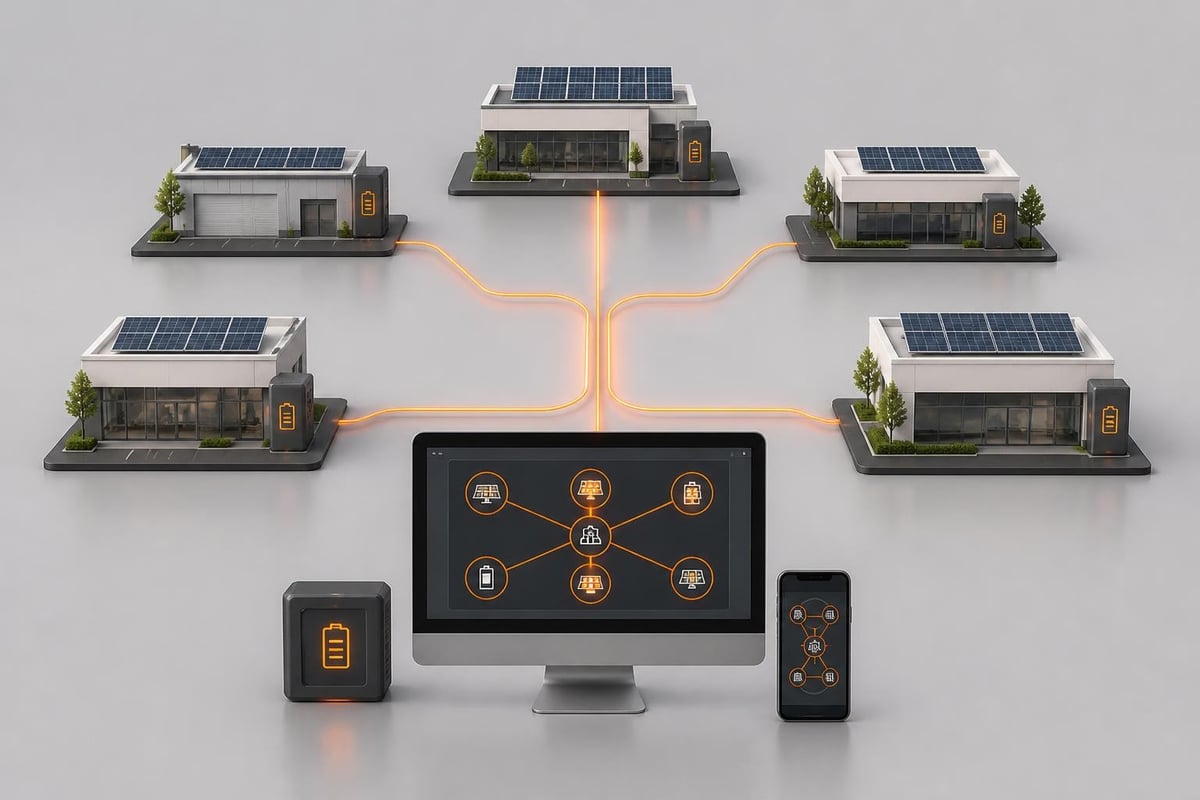
Advanced monitoring platforms now integrate artificial intelligence algorithms that predict system performance, identify potential failures before they occur, and optimize energy production in real-time. These systems analyse vast datasets from inverters, weather stations, and consumption meters to maximize returns on solar investments.
Machine learning models detect anomalies invisible to traditional monitoring systems. String-level performance degradation, soiling patterns, and component wear become apparent weeks before conventional alerts trigger, enabling proactive renewable energy maintenance that minimizes downtime and protects revenue streams.
The financial impact proves substantial. Businesses implementing AI-powered monitoring report 3-7% improvements in annual energy yield through optimized cleaning schedules, rapid fault detection, and intelligent inverter management.
Critical AI monitoring capabilities:
- Real-time performance benchmarking against expected output
- Predictive component failure analysis
- Automated fault classification and diagnosis
- Weather-adjusted performance forecasting
- Soiling impact quantification
- String-level degradation tracking
Drone-Based Thermal Inspections
Unmanned aerial vehicles equipped with thermal imaging cameras revolutionize how operators inspect solar installations. Traditional manual inspections prove time-consuming and often miss subtle defects that reduce system performance.
Thermal drone surveys identify hotspots, cracked cells, bypass diode failures, and connection issues across entire arrays in hours rather than days. The technology delivers particular value for large commercial and industrial installations where manual inspection becomes impractical.
Energy Storage Integration Advances
Lithium Iron Phosphate Battery Systems
Recent innovations in solar energy storage have centered on lithium iron phosphate (LFP) chemistry, which offers superior safety profiles and longer cycle lives compared to traditional lithium-ion variants. Southern African businesses increasingly adopt these systems for load-shedding resilience and demand charge management.
LFP batteries withstand higher temperatures without thermal runaway risks, making them ideal for the region's climate. Cycle life expectations now exceed 6,000 full discharge cycles, translating to 15-20 years of reliable operation in typical commercial applications.
The integration between solar generation and battery storage solutions enables sophisticated energy management strategies. Businesses shift consumption away from expensive peak tariff periods, reduce maximum demand charges, and maintain operations during grid failures.
| Battery Chemistry | Cycle Life | Safety Rating | Temperature Tolerance | Cost per kWh |
|---|---|---|---|---|
| LFP | 6,000+ | Excellent | -20°C to 60°C | ZAR 3,200 - 4,500 |
| NMC | 3,000-5,000 | Good | -10°C to 45°C | ZAR 2,800 - 3,800 |
| Lead-Acid | 1,500-2,000 | Excellent | -5°C to 40°C | ZAR 1,200 - 1,800 |
Virtual Power Plant Participation
Aggregated battery systems now participate in virtual power plant (VPP) networks, where distributed energy resources operate as unified generation assets. Property owners receive revenue by providing grid stability services whilst maintaining backup power capability for their operations.
This innovation transforms battery investments from pure insurance against outages into revenue-generating assets. VPP platforms coordinate charging and discharging cycles across hundreds of installations, responding to grid frequency events and wholesale market price signals.
Module-Level Power Electronics
Traditional string inverter architectures face limitations when panel shading, orientation variations, or component failures affect system performance. Module-level power electronics (MLPE) address these challenges through optimizers or microinverters attached to individual panels.
Power Optimizers
DC optimizers enable maximum power point tracking at the module level whilst maintaining centralized inversion. Each panel operates independently, preventing underperforming modules from dragging down string output.
The technology proves particularly valuable for commercial solar installations on complex rooftops with multiple orientations, skylights, or partial shading from neighbouring structures. Energy harvest improvements of 15-25% become achievable compared to traditional string configurations in suboptimal conditions.
Optimizer benefits for commercial applications:
- Module-level performance monitoring
- Enhanced safety through rapid shutdown capability
- Flexible system design accommodating mixed orientations
- Reduced impact of soiling or shading
- Extended system lifetime through balanced panel operation
Microinverter Systems
Microinverters convert DC to AC at each panel, eliminating string-level voltage and enabling truly modular system expansion. Installation simplicity improves through standardized AC wiring that trades electricians find more familiar than high-voltage DC systems.
Reliability concerns that plagued early microinverter generations have largely resolved through improved thermal management and component quality. Current-generation units carry 25-year warranties matching panel lifetimes, reducing long-term replacement risks.
Advanced Grid Integration Technologies
Hybrid Inverter Capabilities
Modern hybrid inverters blur the line between grid-tied and off-grid systems, offering seamless transition between operating modes. These devices manage solar generation, battery charging/discharging, grid import/export, and backup power provision through sophisticated control algorithms.
Zero-export functionality prevents energy backflow to the grid where regulations or infrastructure limit reverse power flow. This capability proves essential for many South African installations where municipal regulations restrict solar exports or where weak grid connections cannot absorb excess generation.
Dynamic load management functions prioritize critical loads during outages whilst non-essential equipment receives power only when battery reserves permit. The intelligence embedded in these systems maximizes self-consumption, minimizes grid dependence, and optimizes battery longevity through appropriate charge/discharge cycling.
Grid-Forming Inverter Technology
Traditional grid-following inverters require stable grid voltage and frequency to operate. Grid-forming technology enables inverters to create stable AC waveforms independently, supporting microgrid operation and improving grid stability during weak network conditions.
This innovation particularly benefits rural or industrial areas where grid quality proves marginal. Systems continue operating through voltage sags, frequency deviations, and brief outages that would trip conventional inverters.
Photovoltaic Recycling and Circular Economy
End-of-Life Panel Management
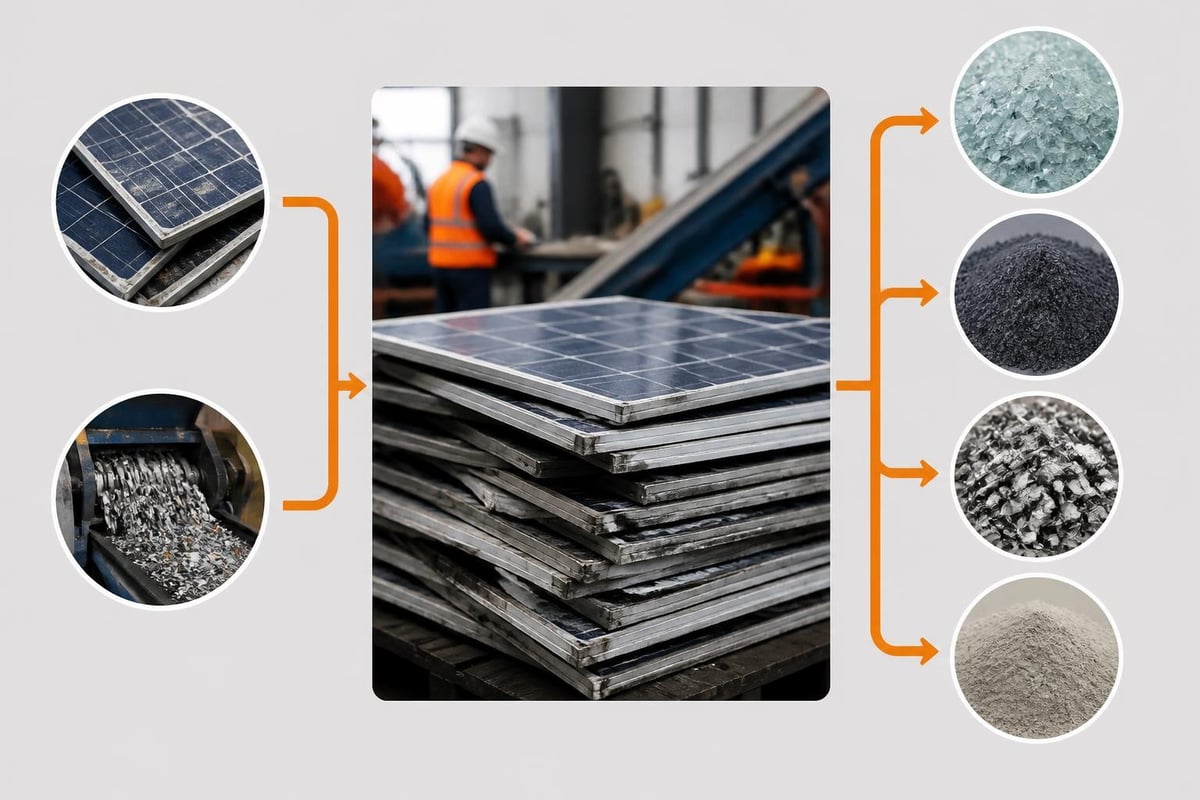
As first-generation installations reach retirement age, innovations in solar panel recycling address environmental concerns and recover valuable materials. Modern processes extract 95% of glass, 85% of silicon, and nearly all aluminium and copper from decommissioned modules.
The recovered silicon returns to semiconductor manufacturing, whilst glass finds applications in construction materials. Metal recovery reduces mining demands and energy consumption associated with primary material production.
Southern African solar recycling initiatives align with Extended Producer Responsibility regulations, ensuring proper end-of-life handling rather than landfill disposal. This circular approach supports corporate sustainability commitments whilst mitigating environmental impacts.
Building-Integrated Photovoltaics
Solar Roof Tiles and Facades
BIPV technologies integrate photovoltaic cells directly into building materials, transforming architectural elements into power generators. Solar roof tiles replicate traditional clay or slate aesthetics whilst generating electricity, appealing to heritage buildings or design-conscious developments.
Facade systems incorporate semi-transparent photovoltaic glass into curtain walls, providing shading, insulation, and power generation simultaneously. The dual functionality offsets higher material costs through reduced conventional building expenses.
BIPV implementation considerations:
- Aesthetic integration with architectural design
- Thermal performance and insulation properties
- Structural load calculations
- Electrical integration complexity
- Cost-benefit analysis versus traditional systems
- Maintenance access requirements
Transparent Solar Windows
Research into transparent photovoltaic materials enables windows that generate electricity whilst maintaining visual clarity. Current technologies achieve 5-10% efficiency with 60-70% transparency, creating opportunities for high-rise buildings with extensive glazing.
The technology suits applications where roof space proves limited but vertical surfaces offer substantial solar exposure. Energy generation supplements conventional rooftop systems, improving overall building energy performance.
Floating Solar Arrays
Water surface installations present unique advantages for commercial and agricultural applications. Floating photovoltaic systems reduce land-use conflicts, minimize water evaporation, and achieve higher efficiencies through natural cooling effects.
Agricultural operations benefit from dual-use configurations where livestock water reservoirs or irrigation dams host solar arrays. The shading reduces algae growth whilst generating revenue from otherwise unproductive water surfaces.
| System Configuration | Efficiency Gain | Water Saving | Installation Cost Premium |
|---|---|---|---|
| Standard Floating | 8-12% | 30-50% reduction | +15-20% |
| Tracking Floating | 18-25% | 30-50% reduction | +35-45% |
| Reservoir Cover | 8-12% | 60-80% reduction | +25-30% |
Smart Inverter Grid Support Functions
Utility-scale and commercial installations now provide grid support services through smart inverter functions mandated by South African grid codes. Voltage regulation, frequency response, and reactive power control transform solar assets from passive generators into active grid stability resources.
These capabilities become increasingly critical as renewable penetration rises. Inverters adjust output in milliseconds to support grid frequency, preventing instability during generation/demand imbalances. The functionality proves essential for maintaining grid reliability as coal-fired generation retires.
Agrivoltaics and Dual-Use Systems
Agricultural solar installations combine crop production with electricity generation through elevated panel mounting that permits farming operations beneath. Shade-tolerant crops benefit from reduced heat stress and water requirements whilst landowners generate additional revenue streams.
Livestock operations employ solar canopies over feeding areas, paddocks, or water points. Animals receive shade and weather protection whilst installations generate power and potentially support EV charging infrastructure for farm vehicles.
The approach maximizes land productivity without competing for agricultural space. Food security and energy independence advance simultaneously through integrated system design.
Financial Innovation and Solar Access
Power Purchase Agreements
Third-party ownership models eliminate upfront capital requirements, enabling businesses to adopt solar through long-term power purchase agreements. Specialized financiers install and maintain systems whilst customers purchase electricity at predetermined rates below utility tariffs.
This financial innovation removes budget constraints and technical expertise requirements that previously limited solar adoption. Operational expenditure models align with corporate preference for predictable energy costs without balance sheet impacts.
PPA advantages for commercial clients:
- Zero capital expenditure requirement
- Immediate electricity cost reduction
- Predictable energy pricing for 15-25 years
- Professional maintenance included
- Performance guarantees protect returns
- Off-balance-sheet financing
Blockchain Energy Trading
Peer-to-peer energy trading platforms enable solar generators to sell excess production directly to neighbouring consumers, bypassing traditional utility intermediaries. Blockchain technology provides transparent transaction records and automated settlement through smart contracts.
Small-scale generators monetize exports whilst consumers access renewable electricity at competitive rates. The innovation democratizes energy markets and improves returns on distributed generation investments.
Performance Monitoring Advancements
Real-time analytics platforms aggregate data from inverters, meters, weather stations, and grid connection points into unified dashboards. Energy management systems correlate generation patterns with consumption profiles, identifying optimization opportunities invisible through conventional monitoring.
Machine learning algorithms establish baseline performance expectations adjusted for weather conditions, time of year, and system age. Deviations trigger investigations before significant revenue losses accumulate.
The granular visibility supports informed decision-making around system expansions, battery additions, or operational modifications. Energy managers quantify the financial impact of proposed changes through historical performance modeling.
Temperature Coefficient Improvements
Panel manufacturers continuously refine silicon cell structures to reduce temperature-related efficiency losses. Premium modules now exhibit temperature coefficients of -0.26%/°C compared to -0.45%/°C for standard products, delivering 3-5% higher output during Southern Africa's hot summer months.
This seemingly modest improvement translates to substantial lifetime energy production differences. A 100kW commercial installation generates approximately ZAR 80,000-120,000 additional revenue over 25 years through superior temperature performance alone.
Emerging Technologies on the Horizon
Quantum Dot Solar Cells
Research into quantum dot materials promises ultra-thin, flexible photovoltaic cells with theoretical efficiencies exceeding 40%. These nanoscale semiconductors tune absorption spectra across broader wavelength ranges than traditional silicon cells.
Manufacturing scalability remains a challenge, but successful commercialization would revolutionize industrial solar applications through weight reduction and installation flexibility.
Concentrated Photovoltaic Systems
CPV technology focuses sunlight onto high-efficiency multi-junction cells through mirrors or lenses. Efficiency ratings exceed 40% under concentrated light, though systems require direct sunlight and precision tracking mechanisms.
The approach suits regions with high direct normal irradiance and limited cloud cover. Southern Africa's climate provides ideal conditions for CPV deployment at utility scale.
The rapid pace of innovation in solar technology continues to deliver superior performance, lower costs, and enhanced capabilities that strengthen the business case for renewable energy adoption across Southern Africa. From bifacial panels and AI monitoring to advanced battery integration and grid support functions, these developments transform solar from a simple electricity source into a sophisticated energy management platform. INFOLED combines cutting-edge solar technology with expert engineering, comprehensive financing solutions, and ongoing maintenance services to help commercial, industrial, and residential clients reduce electricity costs, improve energy resilience, and achieve sustainability objectives across the region.
Next Step
Need help with your energy strategy?
Speak to INFOLED about solar, storage, EV charging, service agreements or system performance.