Green energy is electricity, heat or fuel produced from natural sources that replenish themselves and release little or no greenhouse gas, such as sunlight, wind, water and heat from the earth. For South African businesses, it is also a practical way to reduce Eskom-linked electricity costs, protect operations from load shedding and, for parking and fleet owners, create a new income stream from EV charging.
This guide moves from the basics to confident decisions. It covers what counts as green energy, which sources suit Southern Africa, what the benefits and costs look like in rand terms, and how commercial and industrial owners can adopt it without tying up capital.
What counts as green energy?
Green energy covers power from sources that have minimal environmental impact, produce little or no carbon emissions in operation and are naturally replenished. The term is closely related to renewable energy and clean energy, and the three are often used interchangeably, though there are small distinctions.
- Renewable energy describes any source that regenerates on a human timescale, including some that carry environmental trade-offs, such as large dams.
- Clean energy focuses on low emissions at the point of generation.
- Green energy is the narrower, stricter label: renewable, low-emission and low-impact across its life.
In practice, a business buying or generating green energy is sourcing power that does not rely on burning coal, diesel or gas. Because South Africa's grid still relies heavily on coal, every kilowatt-hour you generate on site from the sun displaces a more carbon-intensive one.
Which green energy sources work best in Southern Africa?
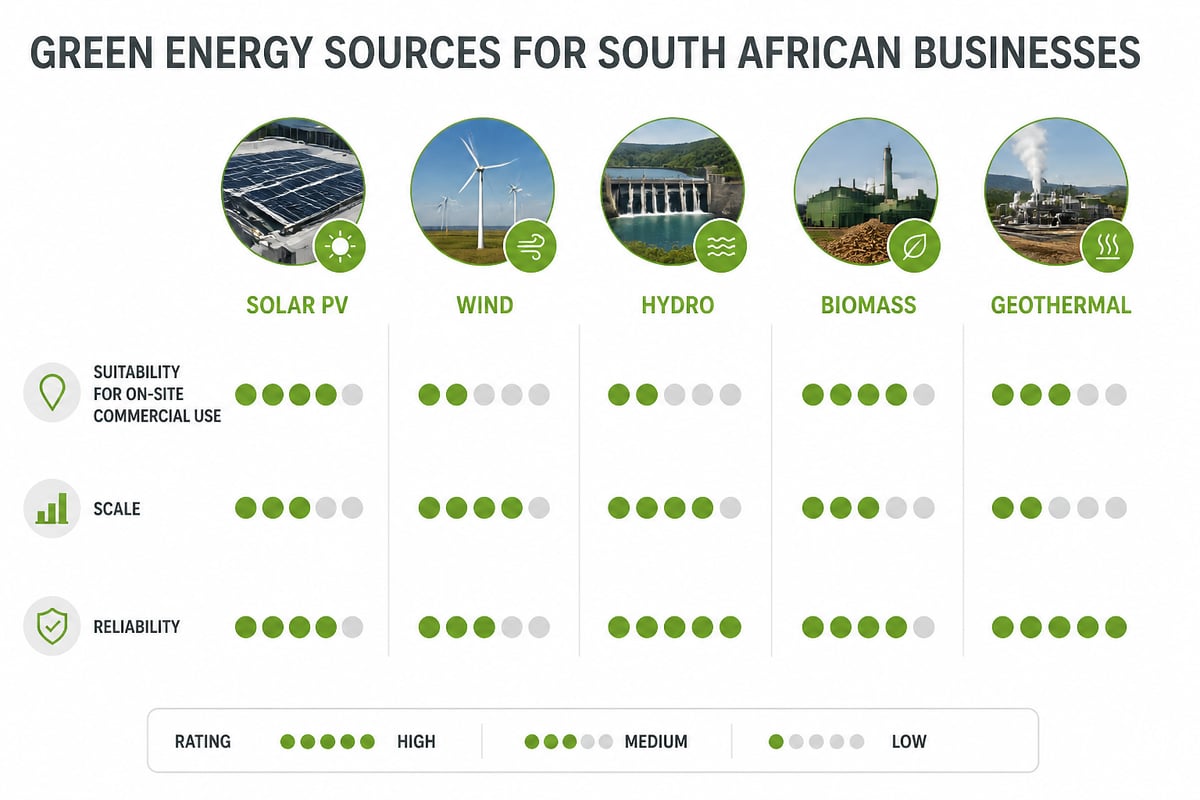
Solar PV is the strongest fit for most South African commercial sites, with wind, hydro, biomass and geothermal playing more specialised or utility-scale roles. The region has a strong solar resource, with high irradiation across much of the interior and the Northern Cape.
Solar photovoltaic (PV)
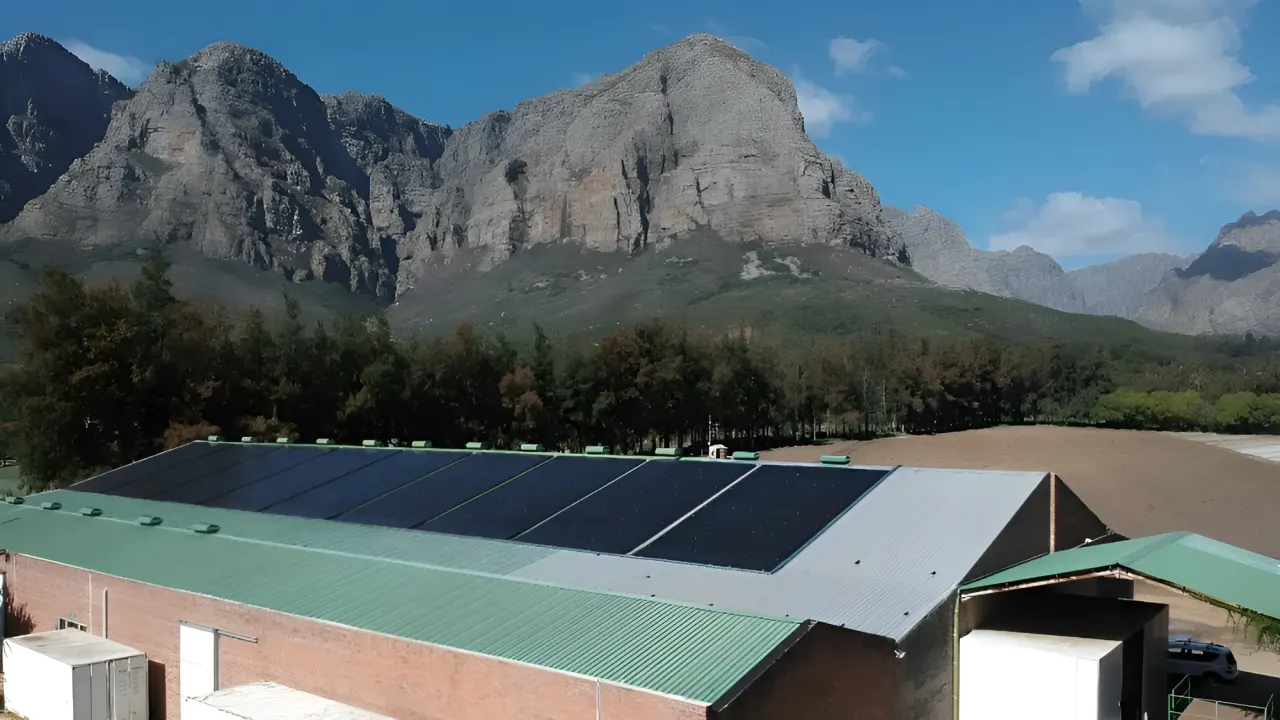
Solar panels convert sunlight directly into electricity. Rooftops, carports and ground-mounted arrays can all host them, which makes solar the most flexible option for factories, warehouses, shopping centres and farms. Systems can be grid-tied, hybrid with batteries or fully off-grid. For a closer look at how solar suits commercial premises, see this overview of solar energy for business.
Wind power
Wind is productive along parts of the South African coastline and is already a contributor at utility scale. On-site wind for a single business is rarely economical, because turbine output depends heavily on consistent wind speeds and local planning conditions. Most commercial users benefit from wind indirectly, through green electricity wheeled across the grid. You can read more on solar and wind energy together.
Hydro, biomass and geothermal
Hydropower relies on water flow and is limited in a water-scarce region. Biomass suits agricultural and forestry operations with consistent organic waste. Geothermal is minimal in Southern Africa. These sources matter to the national mix but are seldom the first choice for a property owner seeking quick savings.
Battery energy storage
Storage is not a generation source, but it makes green energy dependable. Batteries store surplus solar for evening peaks or outages, which is why solar and battery storage is now treated as a single package by many commercial buyers.
What are the benefits of green energy for a business?
The main business benefits are lower electricity costs, greater resilience against outages, predictable budgeting and measurable progress on ESG and Net Zero commitments. Environmental gains are real, but for most property owners the financial case leads the decision.
- Lower electricity bills. On-site generation replaces grid purchases at tariffs that have risen steeply for years, particularly for time-of-use and demand charges.
- Energy resilience. Solar combined with batteries keeps critical loads running during grid failures, protecting refrigeration, production lines, security and point-of-sale systems.
- Cost certainty. Solar energy has no fuel cost, which fixes a large share of your electricity price for the system's life.
- ESG and Net Zero reporting. Verified on-site generation gives clear data for sustainability reports, investor questions and tenant or customer expectations.
- Property value and tenant appeal. Lower operating costs make a building more attractive to tenants, and many corporate occupiers now ask about renewable supply before signing a lease.
- New revenue. Parking areas, retail sites and fleet depots can host EV chargers and earn from every charging session.
South Africa's policy direction supports this shift. The country's 2025 Integrated Resource Plan was approved on 15 October 2025 and projects R2.23 trillion in investment and 105,000 MW of new generation capacity through 2039, according to the U.S. International Trade Administration. That signals a long-term move toward new, largely cleaner generation, and a grid that businesses will increasingly be expected to complement with their own supply.
How much does green energy cost in South Africa?
The cost of green energy depends on system size, roof or ground conditions, battery capacity and how the project is financed, so quotes are site-specific rather than fixed. What can be said is that the cost structure is very different from buying grid power: most expenses are upfront, and ongoing costs are low.
The main cost components are:
- Panels and mounting structures, which vary with roof type, carport design or ground-mount requirements.
- Inverters, which convert DC output to usable AC power. Read more on the solar energy inverter and its role.
- Batteries, which add resilience and allow load shifting but raise the project price.
- Installation, electrical work and compliance, including grid connection approvals where required.
- Monitoring and maintenance, which protect output over the system's life.
Many first-time buyers focus on the purchase price alone. A more useful measure is the cost per kilowatt-hour generated over the system's life compared with your current tariff. A solar cost calculator can give an initial view, though a site assessment will always be more reliable.
Value-added tax and tax incentives
South African VAT applies to commercial solar equipment and installation, and VAT-registered businesses can generally claim input tax on qualifying purchases. South African tax rules on renewable energy allowances have changed over recent years, so confirm the current position with your tax adviser before committing, as the available deductions depend on your entity type and the system's size.
Do you need capital to switch to green energy?
No. Commercial and industrial owners can adopt green energy with zero capital investment through structured financing, where the provider funds, builds and maintains the system and the client pays an agreed amount over a fixed term. This removes the biggest barrier for businesses that would rather keep cash for operations or growth.
INFOLED structures financing around the client's cash flow, with zero capital investment and five-year agreements. Because solar, batteries, EV charging and energy solutions are fully managed by one provider, there is a single point of accountability for design, installation, monitoring and maintenance rather than several contractors to coordinate.
For a business weighing the options, three questions help:
- What is my current monthly electricity spend, and how much of it falls in daytime hours?
- Can I fund an upfront purchase without limiting other investments?
- Who will maintain and monitor the system after installation?
A funded model answers the second and third questions by design.
What does a real commercial solar project look like?
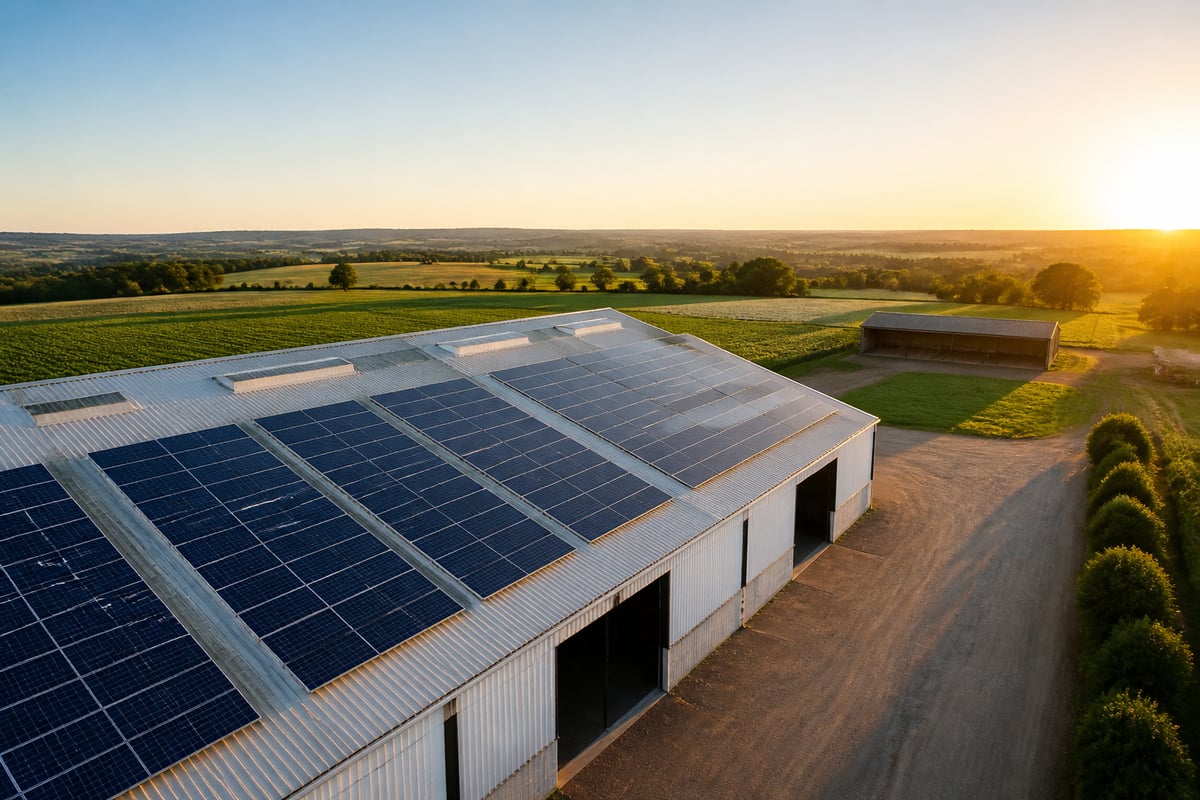
Real projects show that commercial green energy ranges from mid-sized rooftop systems with storage to larger rooftop installations. INFOLED's completed work illustrates the spread:
| Project | Location | System |
|---|---|---|
| UPD Rooftop | Lea Glen | 1.3 MWp rooftop solar PV |
| CTP Parow | Cape Town | 1.947 MWp solar PV |
| Nutec Ink | Ottery | 266 kWp solar PV with 512 kWh battery storage |
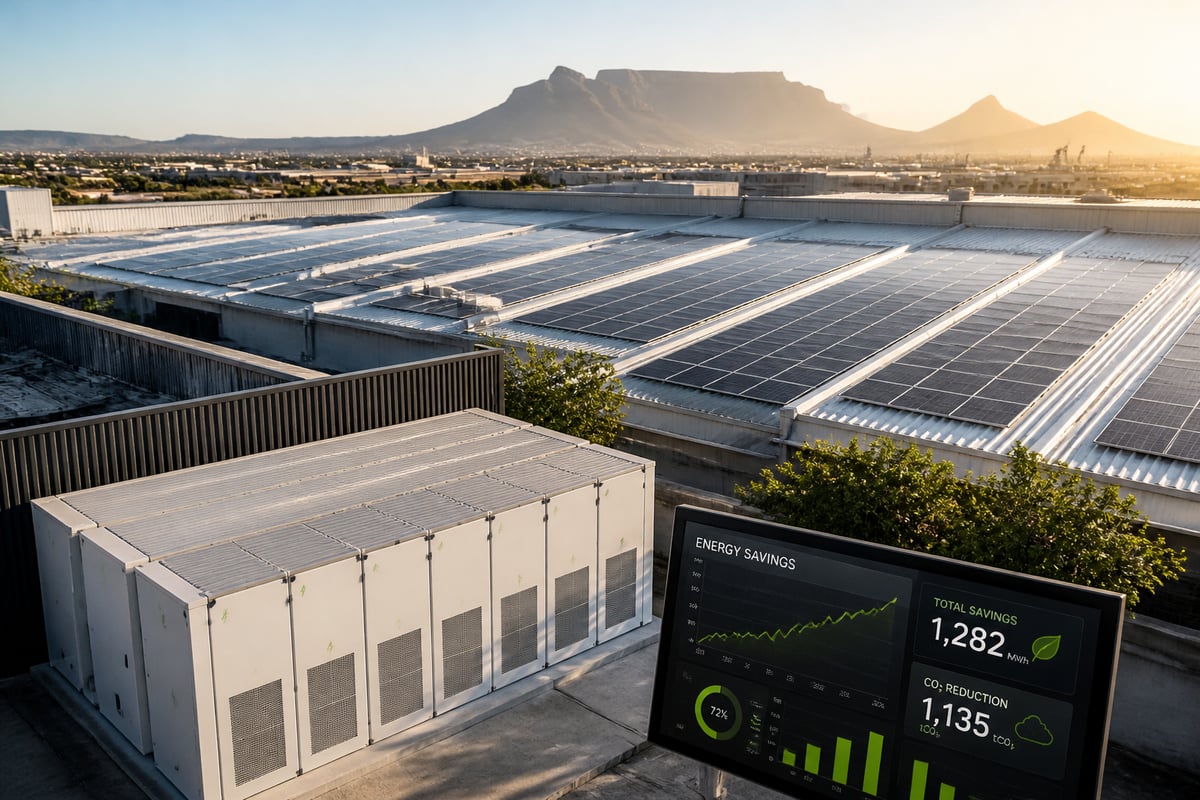
The Nutec Ink installation shows how a smaller site can pair generation with storage to manage evening use and outages, while the larger rooftop projects target high daytime consumption across big roof areas. For owners considering similar work, the commercial, industrial, agricultural and residential solar PV offering covers design, rooftop, ground-mount and carport solar, financing, monitoring and maintenance under one roof.
How does EV charging fit into a green energy strategy?
EV charging turns parking areas, retail sites and fleet depots into a revenue source while using the same solar supply that powers the building. Pairing chargers with solar means vehicles can charge from daytime generation, which lowers the cost of each session and improves the sustainability story for both operators and customers.
For site owners, the opportunity runs in two directions:
- Income from charging fees, collected from shoppers, tenants, employees or the public.
- Lower fleet running costs, where company vehicles charge from on-site generation instead of fuel or grid power at peak tariffs.
Planning matters. The number of chargers, their power rating and the site's electrical capacity all affect cost and return, so a load assessment should come first. More detail is available on commercial EV charging, and smart metering allows charging revenue and consumption to be tracked accurately.
How do you measure whether your green energy system is working?
You measure performance through live monitoring that compares actual generation and consumption with the expected output, then acts on any gap. A system that is not monitored can lose output for weeks through shading, soiling, inverter faults or failed strings without anyone noticing.
INFOLED's approach pairs live monitoring with proactive maintenance to keep systems at maximum uptime, and turns performance data into reports that show where energy is being lost and how to recover it. Every installation is tested and inspected by an in-house quality control team before it goes live.
Good monitoring should tell you:
- How much energy the system generated against its target.
- How much of that energy was used on site versus exported or stored.
- Where consumption is wasteful, such as out-of-hours loads.
- When a component needs attention before it fails.
This is where energy consumption monitoring moves from a technical extra to a financial tool. Savings that are measured are savings that can be defended in a budget review.
What are the limits and challenges of green energy?
The main challenges are intermittency, grid connection approvals, upfront cost where self-funded and the need for ongoing maintenance. None is a reason to avoid green energy, but each should be planned for.
- Intermittency. Solar produces only in daylight, so businesses with heavy night-time loads need batteries or a grid backstop.
- Grid connection and compliance. Municipalities and Eskom have registration and approval processes for embedded generation, which can affect timelines.
- Roof and site suitability. Roof age, structure and orientation influence design, and some roofs need repair before panels go on.
- Maintenance. Panels need cleaning and electrical components need inspection to hold their rated output.
South Africa's grid is also changing. The government's overview of the just energy transition outlines growth in renewable generation, grid wheeling and rooftop solar adoption, which points to a market where businesses have more options each year, not fewer. For international context on how quickly countries are building capacity, the IEA renewable electricity progress tracker compares historical capacity and forecasts against 2030 ambitions.
How do you get started with green energy?
Start with your electricity data, then move through assessment, design, financing and installation in that order. A clear sequence prevents oversizing, undersizing and avoidable delays.
- Gather 12 months of bills and, if available, interval data. This shows when and how much power you use.
- Define your goal. It may be cost reduction, resilience, ESG reporting, EV charging income, or a combination.
- Commission a site assessment. Roof or land condition, electrical capacity and shading all shape the design.
- Compare financing routes. Weigh a funded agreement against buying outright, based on your cash flow.
- Install, commission and monitor. Insist on quality inspection and live performance tracking from day one.
If you manage several sites, consider a phased rollout that starts with the highest-consumption building, proves the savings and then extends across the portfolio. For a wider view of how these pieces combine, the guide to renewable energy integration is a useful companion.
Choosing green energy is ultimately a business decision about cost, risk and positioning. With solar, storage and EV charging now available on funded terms, the question for most South African commercial owners is less whether to adopt it and more how soon.
Your next step is to pull together your last 12 months of electricity bills so a proper assessment can size a system around your actual consumption. INFOLED designs, finances, installs, monitors and maintains solar, battery storage and EV charging for commercial, industrial and residential sites across Southern Africa, and its Commercial, Industrial, Agricultural and Residential Solar PV offering is the place to see completed projects. With zero-capital financing on five-year agreements, you can see how a funded system would sit alongside your cash flow, so Check Funding Eligibility with INFOLED and find out what your site qualifies for.
Next Step
Need help with your energy strategy?
Speak to INFOLED about solar, storage, EV charging, service agreements or system performance.