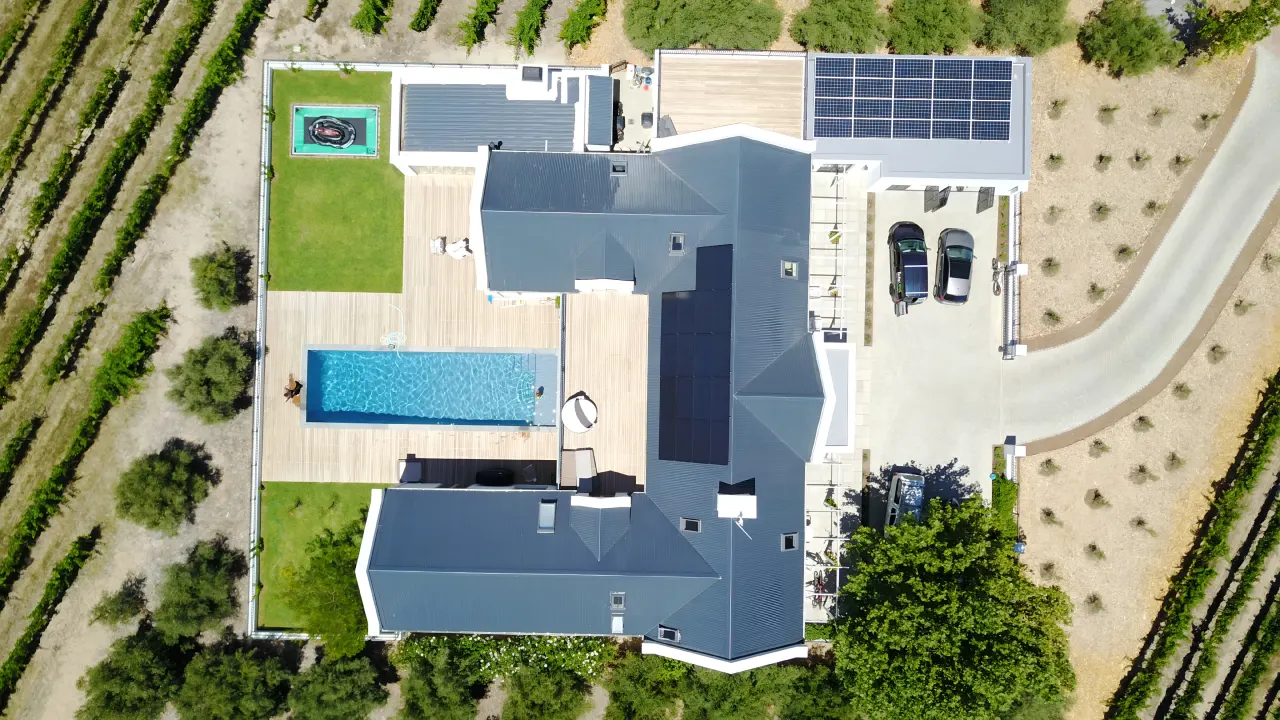
Micro hydro power represents one of the most reliable and cost-effective renewable energy technologies available to South African businesses, farms, and communities with access to flowing water resources. Unlike intermittent solar or wind power, small-scale hydroelectric systems provide consistent baseload electricity 24 hours a day, making them particularly valuable for operations requiring uninterrupted power supply. As energy costs continue to rise and load shedding remains a challenge across Southern Africa, understanding the potential of micro hydro installations can unlock significant opportunities for energy independence and operational resilience.
Understanding Micro Hydro Power Technology
Micro hydro power systems generate electricity by harnessing the kinetic energy of flowing water, typically producing between 5 kW and 100 kW of power. These installations differ significantly from large-scale hydroelectric dams, requiring minimal civil works and causing substantially lower environmental impact.
The fundamental principle involves directing water through a controlled pathway, creating head pressure that drives a turbine connected to a generator. The amount of power generated depends on two critical factors: the vertical drop (head) and the volume of water flow (discharge rate).
Key components of a micro hydro system include:
- Intake structure to divert water from the stream or river
- Penstock pipeline to convey water under pressure
- Turbine matched to specific flow and head conditions
- Generator to convert mechanical rotation into electricity
- Electronic load controller or grid-tie inverter
- Powerhouse shelter to protect equipment
According to recent research on decentralized micro-hydropower projects, technological advances have significantly improved efficiency and reduced installation costs over the past decade, making these systems increasingly viable for commercial and agricultural applications.
Site Assessment and Feasibility
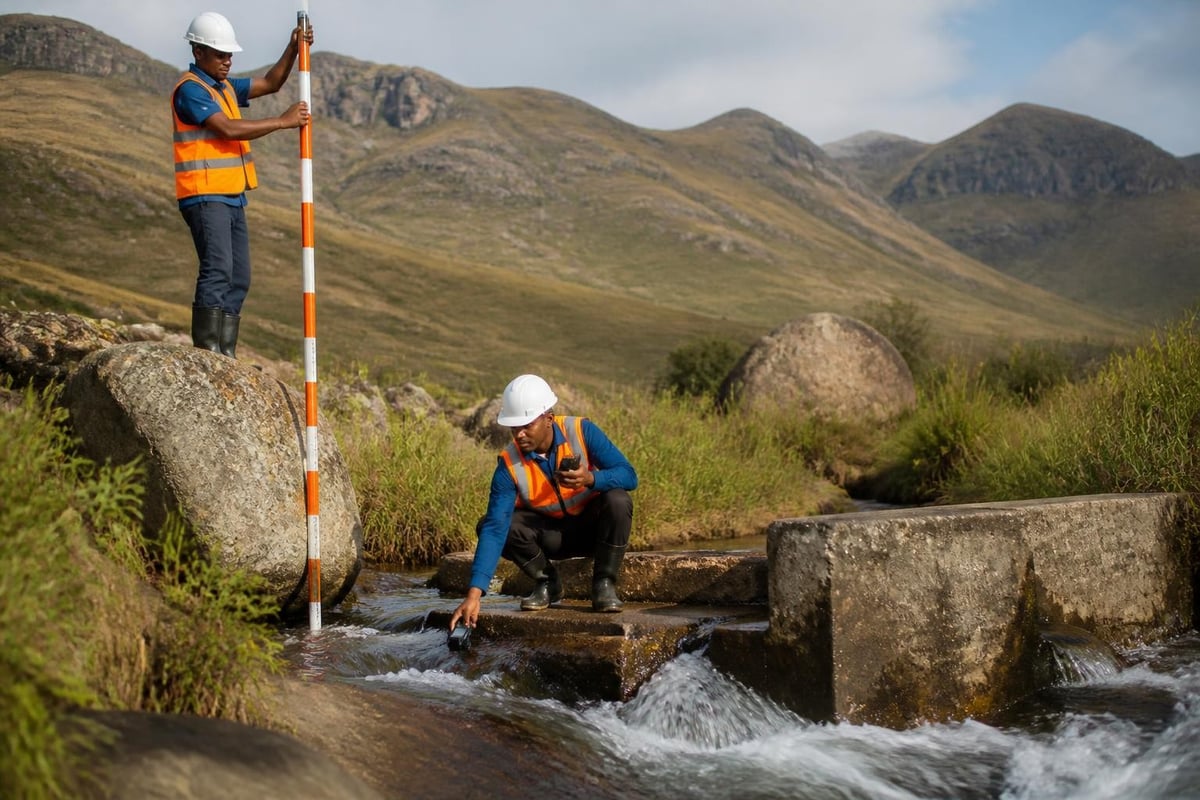
Determining whether a property is suitable for micro hydro power requires comprehensive hydrological and topographical assessment. South Africa's diverse geography offers numerous potential sites, particularly in regions like the Eastern Cape, KwaZulu-Natal, and Western Cape where mountain streams and rivers provide reliable year-round flow.
The feasibility assessment begins with measuring available head and flow rates across different seasons. Head is measured as the vertical distance between water intake and turbine, whilst flow is quantified in litres per second. The gross power potential can be estimated using the formula: Power (kW) = 9.81 × Head (m) × Flow (l/s) ÷ 1000.
| Assessment Factor | Minimum Requirement | Optimal Range | Measurement Method |
|---|---|---|---|
| Head (vertical drop) | 2 metres | 10-50 metres | Survey equipment, GPS |
| Flow rate | 10 litres/second | 50-500 litres/second | Bucket test, flow meter |
| Distance to load | N/A | Under 500 metres | Site survey |
| Water rights | Legal access | Registered allocation | Department of Water |
| Grid connection | Optional | Within 100 metres | Utility assessment |
Professional renewable energy engineering services should conduct detailed feasibility studies that include environmental flow requirements, seasonal variability modelling, and financial projections before proceeding with installation.
Types of Turbines for Different Applications
Selecting the appropriate turbine type determines system efficiency and longevity. Different turbine designs are optimised for specific combinations of head and flow, making proper selection crucial for maximising energy generation.
Pelton Turbines
Pelton wheels excel in high-head, low-flow scenarios, typically requiring heads above 20 metres. These impulse turbines use one or more free jets of water striking bucket-shaped vanes arranged around a wheel's periphery. They're commonly employed on South African mountain properties where streams descend steep gradients.
Advantages include:
- Efficiency rates exceeding 90% at optimal conditions
- Simple maintenance requirements
- Tolerance for varying flow rates
- Minimal water quality concerns
Pelton turbines are particularly suitable for agricultural installations in regions like the Drakensberg foothills, where topography provides substantial elevation changes.
Crossflow and Turgo Turbines
Crossflow turbines operate effectively across medium head ranges (5-30 metres) with moderate to high flow rates. Their distinctive drum-shaped design allows water to flow through the turbine blades twice, maximising energy extraction. Turgo turbines share similar operating ranges but handle higher flow volumes.
These turbines offer excellent efficiency across varying flow conditions, making them ideal for South African river systems subject to seasonal fluctuations. The robust construction tolerates suspended sediment better than more delicate turbine types.
Propeller and Kaplan Turbines
Low-head sites (under 10 metres) with high flow volumes require propeller-type turbines. Kaplan turbines feature adjustable blades that maintain efficiency across varying flow conditions, though their mechanical complexity increases maintenance requirements and capital costs.
Many commercial properties near coastal rivers or inland waterways possess suitable conditions for propeller turbines, particularly where water rights permit significant abstraction volumes.
Economic Considerations and Cost Analysis
The financial viability of micro hydro power installations depends on multiple factors including site characteristics, equipment specifications, installation complexity, and local electricity tariffs. South African businesses face electricity costs ranging from R1.50 to R3.50 per kWh depending on consumption patterns and utility provider, creating strong economic incentives for self-generation.
Capital costs for turnkey micro hydro systems typically range from R40,000 to R150,000 per installed kilowatt, with economies of scale favouring larger installations. The Oak Ridge National Laboratory's updated baseline cost model provides detailed cost-estimation methodologies applicable to Southern African contexts when adjusted for local conditions.
Breakdown of typical project costs:
- Civil works and intake structures (25-35%)
- Penstock and pipeline installation (20-30%)
- Electromechanical equipment (30-40%)
- Grid connection and controls (10-15%)
- Engineering and commissioning (5-10%)
Unlike solar installations that may benefit from tax incentives under Section 12B of the Income Tax Act, micro hydro power currently receives limited direct financial support in South Africa. However, systems integrated with commercial battery storage can access additional revenue streams through demand management and peak shaving.
Return on Investment Calculations
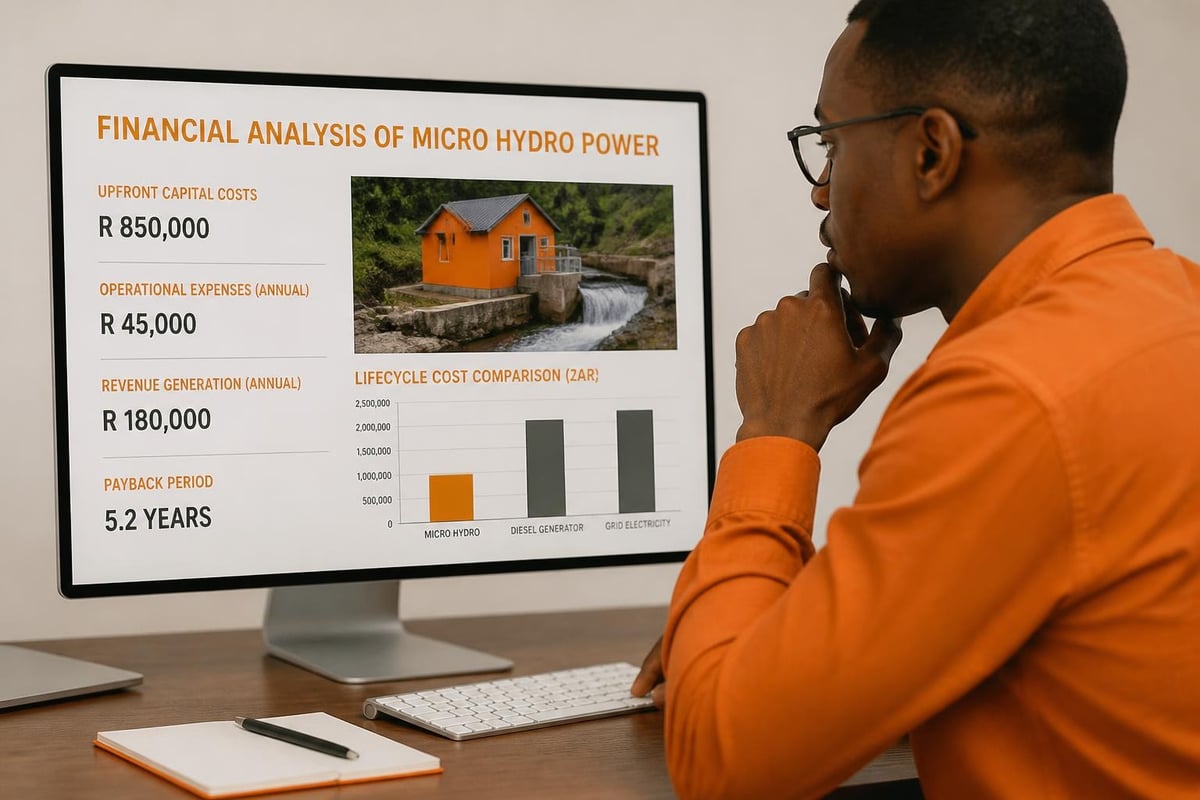
Payback periods for micro hydro installations typically range from 5 to 12 years depending on site characteristics and electricity displacement value. Unlike solar systems with 20-25 year design lives, well-maintained micro hydro installations can operate for 40-50 years, providing exceptional long-term value.
| System Size | Estimated Capital Cost | Annual Generation | Annual Savings (at R2.50/kWh) | Simple Payback |
|---|---|---|---|---|
| 10 kW | R600,000 | 70,000 kWh | R175,000 | 3.4 years |
| 25 kW | R1,250,000 | 175,000 kWh | R437,500 | 2.9 years |
| 50 kW | R2,200,000 | 350,000 kWh | R875,000 | 2.5 years |
| 100 kW | R4,000,000 | 700,000 kWh | R1,750,000 | 2.3 years |
These calculations assume 80% capacity factors, which are achievable on perennial streams with proper design. Seasonal rivers may experience reduced generation during dry months, extending payback periods accordingly.
Regulatory Framework and Water Rights
Implementing micro hydro power in South Africa requires navigating complex water allocation and environmental legislation. The National Water Act (Act 36 of 1998) governs all water use, establishing the Department of Water and Sanitation as the custodian of South Africa's water resources.
Any micro hydro installation requires water use authorisation, classified as either general authorisation for small-scale use or a specific licence for larger abstractions. The application process involves demonstrating that the proposed use will not compromise the ecological reserve or existing lawful water users downstream.
Environmental Flow Requirements
Modern micro hydro design incorporates environmental flow provisions that maintain ecosystem health whilst generating electricity. Research on small hydropower viability demonstrates methodologies for assessing projects under environmental flow constraints and climate variability.
Typically, systems must allow 20-30% of natural flow to bypass the intake structure, ensuring downstream aquatic habitats receive adequate water. During drought conditions, this percentage may increase, temporarily reducing power generation.
The environmental impact assessment process considers:
- Aquatic biodiversity and fish passage
- Riparian vegetation and wetland systems
- Downstream water quality
- Cultural and heritage significance
- Community water access rights
Working with experienced renewable energy engineering professionals ensures compliance with all regulatory requirements whilst optimising system performance within permitted parameters.
Integration with Hybrid Energy Systems
Micro hydro power delivers maximum value when integrated within comprehensive energy strategies that combine multiple generation sources and storage technologies. The consistent baseload characteristics of hydroelectric generation complement the intermittent nature of solar PV installations, creating resilient hybrid systems.
For commercial and industrial facilities, hybrid configurations can include:
- Micro hydro for continuous baseload power
- Solar PV systems for daytime peak demand
- Battery Energy Storage Systems for load shifting and backup
- Advanced control systems to optimise dispatch
During daylight hours, excess solar generation can charge batteries whilst micro hydro continues operating. At night, the hydroelectric system provides primary power with batteries covering peak loads or equipment starting currents. This configuration minimises reliance on grid electricity and diesel backup generators.
Grid-Tie Versus Off-Grid Configurations
South African regulations permit small-scale embedded generation up to 100 kW without NERSA licensing requirements, though utility registration and bi-directional metering remain necessary. Grid-tied micro hydro systems can export excess generation during low-demand periods, receiving credits against consumption.
Off-grid installations suit remote agricultural operations, eco-lodges, and communities beyond grid infrastructure. These systems require careful load management and typically incorporate battery storage to handle short-term demand fluctuations exceeding instantaneous generation capacity.
Energy management systems provide real-time monitoring and automated control, ensuring optimal resource allocation across generation sources and loads.
Installation and Commissioning Process
Successful micro hydro implementation follows a structured project delivery approach, beginning with detailed design and concluding with performance verification and operator training.
Project phases typically include:
- Detailed design and permitting - Engineering drawings, water use licence applications, environmental authorisations, and financial modelling
- Civil works construction - Intake weir, settling basin, penstock route preparation, and powerhouse foundation
- Mechanical installation - Pipeline laying, turbine mounting, generator coupling, and control system wiring
- Electrical integration - Switchgear installation, protection devices, metering equipment, and grid connection
- Commissioning and testing - System performance verification, safety testing, and efficiency optimisation
- Training and handover - Operator instruction, maintenance procedures, and documentation
The construction timeline varies from 3 to 12 months depending on project scale and site accessibility. Remote locations requiring helicopter delivery of equipment or extensive civil works naturally extend schedules.
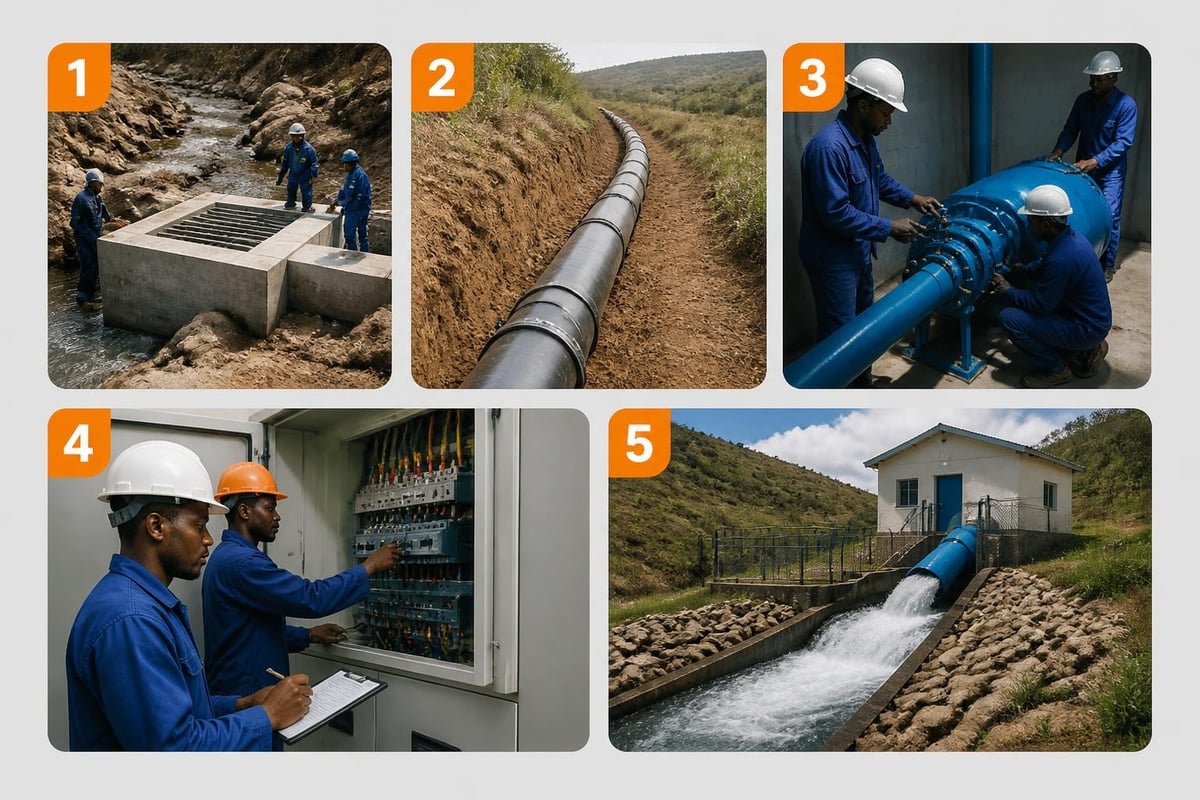
Quality assurance during installation proves critical for long-term reliability. Engaging contractors with proven experience in hydroelectric systems reduces commissioning challenges and ensures optimal performance from day one.
Maintenance Requirements and Operational Considerations
Micro hydro power systems demand significantly less maintenance than diesel generators or even solar installations, though routine inspections and preventive care remain essential for sustained performance.
Routine Maintenance Tasks
Daily operations require minimal attention beyond visual inspection of intake screens and monitoring generation output. Weekly tasks include cleaning trash racks and verifying control system operation, whilst monthly maintenance involves lubricating bearings and checking mechanical components.
Annual maintenance encompasses:
- Complete turbine inspection and runner cleaning
- Generator winding insulation testing
- Bearing replacement as required
- Penstock internal inspection (every 3-5 years)
- Control system calibration and upgrade
- Water quality testing and sediment assessment
Seasonal considerations in South African contexts include managing increased sediment loads during summer rainfall periods and potential low-flow conditions during winter dry seasons in certain regions.
Common Operational Challenges
Sediment accumulation in intake structures represents the most frequent operational issue, particularly following heavy rainfall events. Properly designed settling basins and regular cleaning minimise turbine wear from suspended particles.
Electrical load management requires attention in off-grid configurations. Dump loads divert excess generation when batteries reach full charge or consumption drops below generation capacity, preventing over-speed conditions that could damage equipment.
Wildlife interactions, particularly with fish and aquatic birds, may necessitate protective screening and periodic biological monitoring to ensure environmental compliance.
Environmental and Social Benefits
Beyond electricity generation, micro hydro power delivers substantial environmental and community benefits that enhance project value propositions. Research on carbon emissions and lifecycle impacts demonstrates the minimal greenhouse gas footprint of small hydroelectric installations compared to fossil fuel alternatives.
Environmental advantages include:
- Zero direct emissions during operation
- Minimal land footprint compared to solar farms
- No water consumption (only temporary diversion)
- Enhanced stream management and monitoring
- Potential ecosystem restoration opportunities
Community-scale projects create local employment during construction and operation whilst providing affordable electricity access. The International Rivers guidance on sustainable micro-hydro emphasises stakeholder engagement and benefit-sharing mechanisms that ensure equitable project outcomes.
For commercial operators, micro hydro installations support ESG reporting objectives and Net Zero commitments. The renewable generation contributes toward Scope 2 emissions reductions whilst demonstrating environmental stewardship to customers and investors.
Agricultural businesses benefit from reliable irrigation pumping, cold storage operation, and processing equipment power without dependence on increasingly expensive and unreliable grid electricity. Tourism facilities leverage the sustainability narrative, attracting environmentally conscious visitors whilst reducing operating costs.
Future Outlook for Micro Hydro in South Africa
South Africa's renewable energy landscape continues evolving rapidly, with distributed generation gaining momentum across commercial, industrial, and agricultural sectors. Micro hydro power occupies a specialist niche within this transformation, offering unique advantages for properties with suitable water resources.
Technological developments continue improving efficiency and reducing costs. Modern electronic load controllers provide sophisticated grid management capabilities, whilst advanced materials extend component lifespan and reduce maintenance requirements.
Climate change introduces both challenges and opportunities for hydroelectric generation. While some regions may experience reduced rainfall and stream flows, others could see increased precipitation that enhances generation potential. Adaptive design approaches that account for climate variability ensure long-term project resilience.
Policy developments may expand financial support for small-scale hydroelectric installations as government pursues renewable energy targets and energy security objectives. Streamlined permitting processes and standardised environmental assessment procedures could accelerate project deployment whilst maintaining environmental safeguards.
Integration with emerging technologies including smart metering and energy analytics will optimise generation dispatch and consumption patterns, maximising the economic value of hydroelectric installations within sophisticated energy management ecosystems.
Micro hydro power provides South African businesses and communities with reliable, cost-effective renewable electricity generation where suitable water resources exist. The technology's proven track record, minimal operational costs, and multi-decade lifespan create compelling investment opportunities for commercial operations seeking energy independence and environmental sustainability. INFOLED brings extensive renewable energy engineering expertise to help clients assess feasibility, design optimised systems, and integrate micro hydro installations within comprehensive energy solutions that reduce costs, enhance resilience, and support Net Zero objectives across Southern Africa.
Next Step
Need help with your energy strategy?
Speak to INFOLED about solar, storage, EV charging, service agreements or system performance.