
Electricity costs in South Africa have risen dramatically over the past decade, with Eskom tariff increases consistently outpacing inflation. Businesses across Johannesburg, Cape Town, Durban, and smaller centres face mounting pressure to control operational expenses whilst maintaining productivity during load shedding. Residential consumers likewise struggle with escalating municipal charges and the need for reliable backup power. Solar photovoltaic technology offers a proven pathway to reduce these burdens, delivering measurable financial returns alongside environmental benefits. Understanding how to save with solar requires examining the economics, technology options, financing structures, and long-term value proposition of renewable energy investments in the Southern African context.
The Economics of Solar Energy in 2026
Solar panel costs have declined by approximately 90% since 2010, according to the International Energy Agency's renewables analysis, making photovoltaic systems one of the most cost-effective electricity generation technologies available today. In South Africa, commercial and industrial installations typically achieve levelised cost of electricity (LCOE) between R0.60 and R1.20 per kilowatt-hour, substantially lower than the current Eskom Megaflex tariff averaging R1.80-R2.50/kWh during peak periods.
The value proposition extends beyond simple rand-per-kilowatt comparisons. Grid electricity tariffs incorporate demand charges, network access fees, and time-of-use rates that penalise consumption during high-demand periods. Solar generation naturally aligns with daytime demand patterns in most commercial and industrial operations, directly offsetting the most expensive grid electricity.
Calculating Your Solar Savings Potential
Accurate financial modelling requires understanding your specific consumption profile, tariff structure, and site characteristics. Most businesses in South Africa operate on Megaflex or Nightsave tariffs, where demand charges can represent 30-50% of total electricity costs.
Key variables affecting solar savings include:
- Consumption profile: When you use electricity throughout the day and year
- Tariff structure: Time-of-use rates, demand charges, and seasonal variations
- Available roof or ground space: Determines maximum system size
- Orientation and shading: Affects energy yield and generation patterns
- Grid connection type: Influences export options and backup requirements
- Financing method: Capital purchase, loan, lease, or power purchase agreement
System sizing should balance maximum offset of expensive grid consumption against available capital and physical space. Oversizing beyond daytime consumption may reduce returns unless battery energy storage enables time-shifting or participation in demand response programmes.
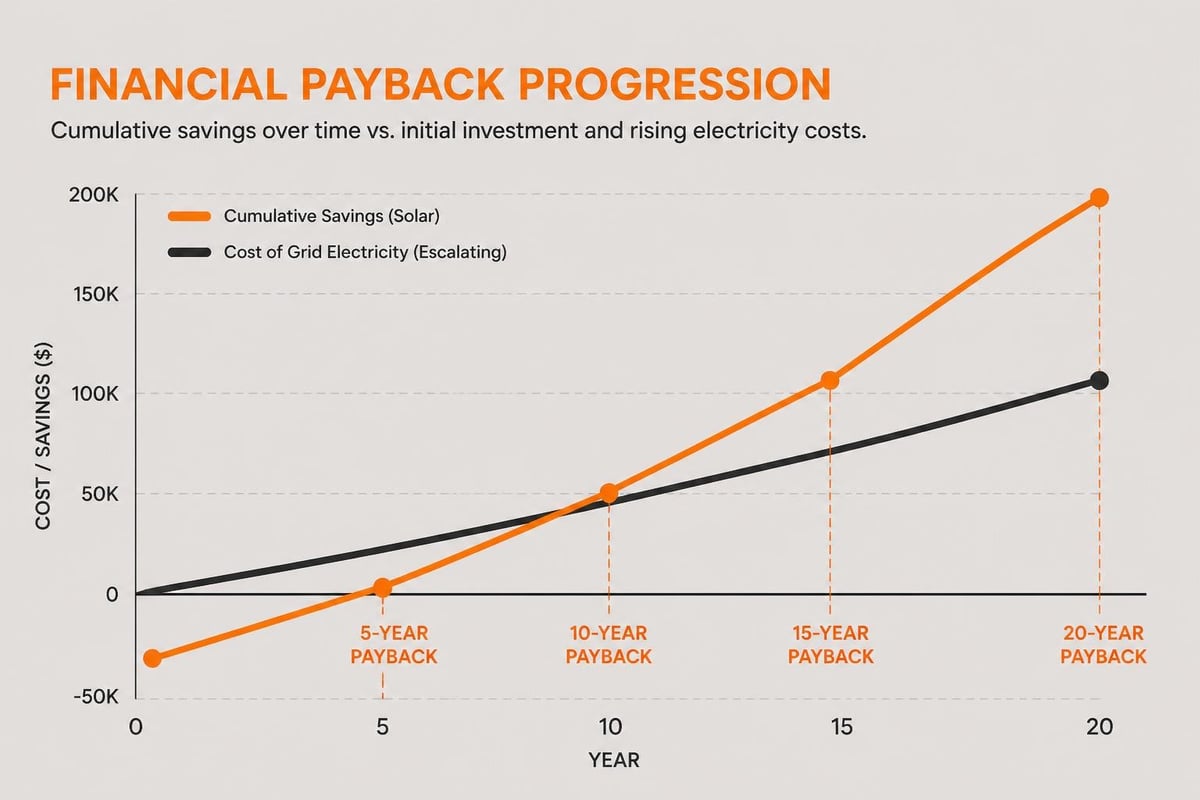
Financial analysis must incorporate Eskom's historical tariff escalation averaging 9-13% annually over the past decade. Even conservative projections of 7-9% annual increases dramatically improve solar investment returns compared to static electricity pricing assumptions.
Technology Options for Maximum Savings
Different solar configurations suit different saving objectives and risk tolerance levels. Understanding these options helps businesses and homeowners optimise their investment.
Grid-Tied Systems
Grid-tied installations remain the most economical choice for properties with reliable municipal connections. These systems generate solar electricity during daylight hours, with any shortfall automatically supplied by the grid. Surplus generation can potentially feed back to the grid where net metering or wheeling agreements exist.
| Configuration | Capital Cost | Savings Rate | Resilience | Best For |
|---|---|---|---|---|
| Grid-tied | Lowest | 60-80% offset | None during outages | Stable grid areas |
| Hybrid with storage | Medium-High | 80-95% offset | Full backup capability | Load shedding zones |
| Off-grid | Highest | 100% independence | Complete autonomy | Remote locations |
Grid-tied systems typically deliver the shortest payback periods-often 3-6 years for commercial installations-because they avoid battery costs whilst maximising solar utilisation. However, they provide no protection during grid failures, a significant limitation given South Africa's load shedding challenges.
Hybrid Solar and Battery Solutions
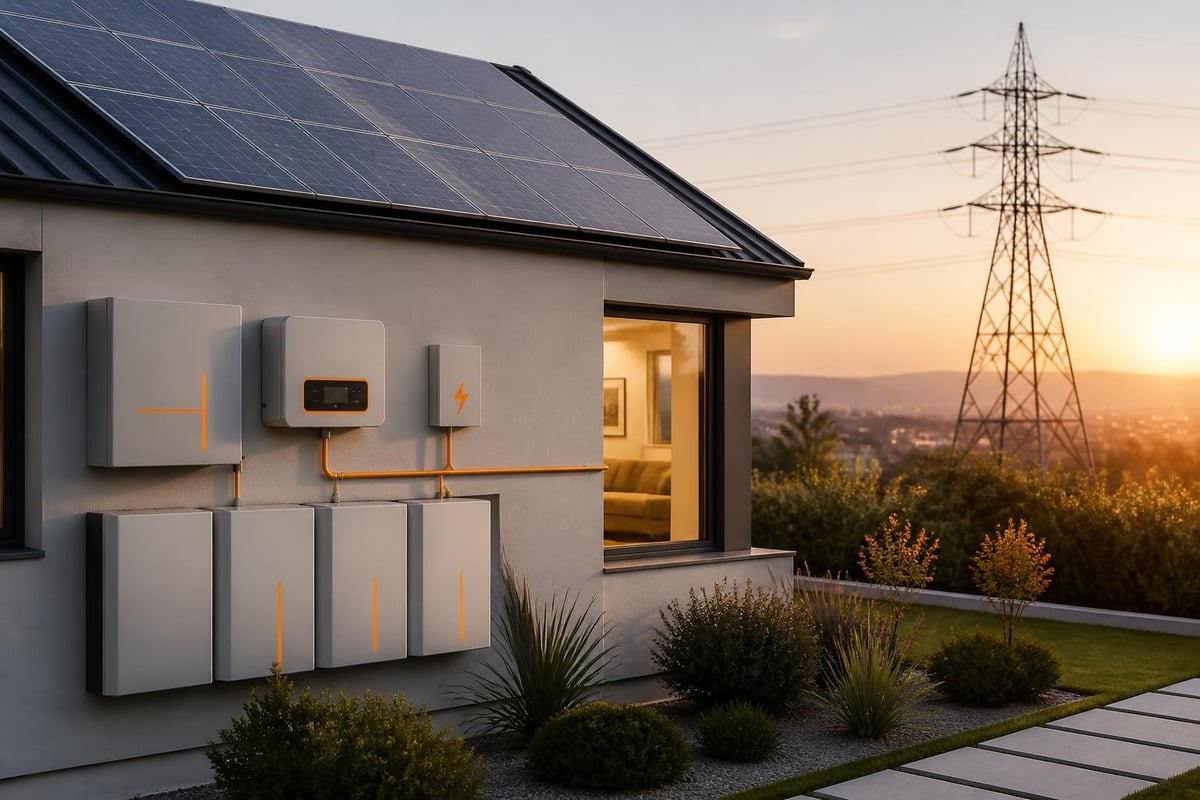
Hybrid configurations combine solar panels with battery storage, enabling continued operation during grid outages whilst maximising self-consumption of solar generation. These systems intelligently manage energy flows between solar panels, batteries, grid connection, and loads.
Advanced hybrid systems can perform demand charge reduction by discharging batteries during peak tariff periods, substantially improving savings beyond simple solar generation. Research from the Rocky Mountain Institute demonstrates how strategic battery deployment can reduce demand charges by 50-70% in commercial applications.
The batteries charge from solar generation during the day, then discharge during expensive evening peak periods or grid outages. This time-shifting capability transforms solar economics, particularly for businesses with significant after-hours consumption.
Off-Grid Independence
Complete grid independence suits remote agricultural operations, telecommunications sites, and properties where grid connection costs exceed off-grid system expenses. These installations require larger battery banks and generator backup to ensure reliability across seasonal variations in solar resource.
Off-grid systems eliminate all ongoing electricity expenditure but demand higher initial investment and careful load management. Proper system sizing must account for consecutive overcast days, seasonal generation variations, and future load growth.
Financing Strategies to Accelerate Returns
The method chosen to finance solar installations significantly affects cash flow, tax implications, and overall returns. South African businesses and homeowners have several structured approaches to save with solar without large upfront capital outlays.
Capital Purchase
Direct purchase using available cash delivers the highest long-term returns because all savings accrue to the system owner without interest costs or third-party profit margins. Businesses can claim capital allowances under Section 12B of the Income Tax Act, accelerating tax benefits.
Manufacturing and industrial operations benefit from accelerated depreciation allowances, recovering 50% of costs in year one and 30% in years two and three. This tax treatment substantially improves effective payback periods for profitable enterprises.
Solar Loans and Asset Finance
Structured finance products enable immediate installation whilst spreading costs over 3-7 year terms. Monthly loan repayments should be lower than electricity savings from day one, creating positive cash flow from installation. The Consumer Financial Protection Bureau's research on solar financing highlights important considerations for loan structures and consumer protections.
Interest rates typically range from prime to prime plus 2-4%, depending on credit quality and security offered. Fixed-rate products provide certainty against interest rate fluctuations, whilst variable rates may offer lower initial costs.
Power Purchase Agreements
Third-party ownership models allow businesses to save with solar through reduced electricity rates without capital expenditure. A solar developer installs, owns, and maintains the system, selling electricity to the site owner at negotiated rates below grid tariffs.
Power Purchase Agreement advantages:
- No upfront capital required
- Immediate savings from day one
- Maintenance responsibility rests with developer
- Fixed escalation rates provide budget certainty
- Improved balance sheet metrics (off-balance-sheet financing)
PPAs typically run 10-20 years with buyout options. Businesses should carefully evaluate contract terms, escalation rates, and maintenance responsibilities to ensure sustainable long-term value.
Optimising System Performance for Maximum Value
Installation represents only the beginning of a solar investment's value creation journey. Ongoing monitoring, maintenance, and optimisation ensure systems deliver projected savings throughout their 25+ year operational life.
Monitoring and Analytics
Real-time performance monitoring identifies generation issues, equipment failures, and underperformance before they significantly affect savings. Modern systems provide granular data on panel-level production, inverter efficiency, and consumption patterns.
Advanced analytics compare actual versus expected generation based on irradiance data, flagging potential issues like soiling, shading, or equipment degradation. Early detection and correction maintain optimal system performance and maximise electricity cost savings.
Businesses can learn more about energy management systems that integrate solar monitoring with broader facility energy optimisation.
Preventative Maintenance
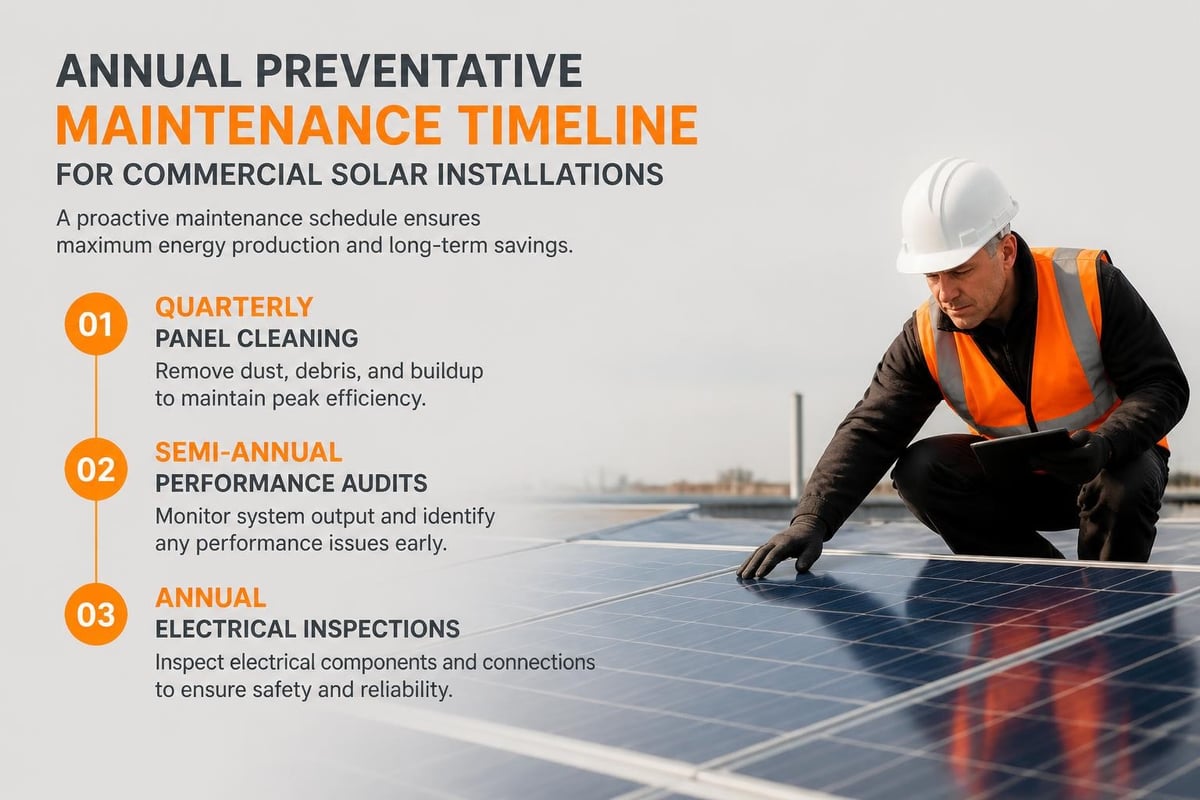
Regular maintenance protects long-term investment value and ensures continued savings. Essential activities include panel cleaning, electrical connection inspection, inverter servicing, and performance testing.
South Africa's varied climate conditions affect maintenance requirements. Coastal installations face salt corrosion concerns, whilst inland sites contend with dust accumulation. Agricultural areas may experience soiling from crop residue or animal activity.
| Maintenance Activity | Frequency | Impact on Performance |
|---|---|---|
| Panel cleaning | Quarterly or bi-annually | 5-15% yield improvement |
| Electrical inspections | Annually | Prevents failures, maintains safety |
| Inverter servicing | Annually | Ensures warranty compliance |
| Performance audits | Bi-annually | Identifies degradation early |
| Thermal imaging | Annually | Detects hot spots and failures |
Professional maintenance agreements guarantee system uptime and protect warranty validity. Many installers offer comprehensive service packages covering all preventative and corrective maintenance activities.
Commercial and Industrial Solar Economics
Businesses achieve the most compelling returns from solar investments due to larger installations, higher electricity consumption, and favourable tax treatment. Understanding sector-specific opportunities helps optimise savings strategies.
Manufacturing and Processing
Energy-intensive manufacturing operations with consistent daytime demand profiles represent ideal solar candidates. These facilities can offset 70-90% of their daytime grid consumption, directly reducing the most expensive time-of-use tariff periods.
Demand charge reduction through strategic battery deployment adds another layer of savings. Manufacturing peaks often correlate with grid demand peaks, resulting in substantial demand charges. Solar-plus-storage systems can shave these peaks, delivering savings that exceed the value of energy alone.
Retail and Commercial Property
Shopping centres, office parks, and retail chains benefit from predictable consumption patterns that align with solar generation. Weekend and holiday operation distinguishes retail from industrial users, requiring careful system sizing to maximise self-consumption.
Multi-tenant properties can implement embedded generation schemes, recovering investment through tenant billing whilst offering competitive rates. This approach improves property competitiveness and tenant retention whilst accelerating payback through diversified revenue streams.
Agricultural Operations
Farming operations increasingly adopt agricultural solar solutions to reduce irrigation, cooling, and processing costs. Pivot irrigation systems, cold storage facilities, and processing equipment consume substantial electricity during daylight hours, perfectly matching solar generation.
Remote farm locations often face high grid connection costs or unreliable supply, making off-grid or hybrid solar installations economically superior to grid dependence. The ability to save with solar whilst improving operational resilience creates compelling value propositions for agricultural enterprises.
Residential Solar Savings
Homeowners throughout South Africa install solar systems to reduce municipal electricity bills, achieve energy independence, and protect against load shedding disruptions. Residential economics differ from commercial installations but remain attractive.
Understanding Residential Tariffs
Municipal tariff structures typically employ inclining block rates, where unit costs increase with consumption. High-consumption households pay substantially more per kilowatt-hour than low users, improving solar economics for larger homes.
Time-of-use residential tariffs charge premium rates during morning and evening peaks (06:00-09:00 and 18:00-22:00). Solar generation naturally covers midday consumption, but battery storage becomes essential for peak period offset and true grid independence.
Standard residential tariffs in major metros range from R1.50-R3.50/kWh depending on consumption level and time of use. Solar LCOE of R0.80-R1.50/kWh delivers immediate savings, with returns improving as tariffs escalate.
System Sizing for Homes
Residential installations typically range from 3kW to 10kW depending on consumption, available roof space, and budget. Smaller systems (3-5kW) suit modest consumption profiles, whilst larger homes with pools, geysers, and air conditioning benefit from 8-10kW installations.
Battery sizing should accommodate essential loads during outages plus evening consumption. A 10kWh battery typically suffices for lighting, refrigeration, security systems, and moderate evening use. Larger batteries support complete home backup but substantially increase investment costs.
Careful load management maximises savings. Running washing machines, dishwashers, and pool pumps during solar generation hours rather than evening peaks increases self-consumption and reduces grid dependence.
Policy, Incentives, and Regulatory Considerations
South African renewable energy policy continues evolving, affecting the economics and administrative requirements of solar installations. Understanding current regulations ensures compliant installations and maximum financial benefit.
Embedded Generation Regulations
The Electricity Regulation Act permits small-scale embedded generation up to 100MW without licensing requirements, though registration with the National Energy Regulator (NERSA) remains mandatory for systems above 1MW. Municipal regulations vary significantly across jurisdictions.
Some municipalities actively encourage solar adoption through streamlined approval processes and fair feed-in tariffs. Others impose restrictive technical requirements or prohibit grid export entirely. Consulting municipal regulations early in project planning prevents costly surprises.
Net Metering and Wheeling
Net metering allows solar generators to offset consumption against generation, effectively using the grid as virtual storage. Implementation varies by municipality, with some offering credit for surplus generation whilst others prohibit export.
Virtual wheeling regulations permit businesses to generate electricity at one location and consume it at another through the public grid. These arrangements create opportunities for businesses with multiple facilities or favourable generation sites separate from consumption locations.
Tax Incentives and Depreciation
Section 12B of the Income Tax Act provides accelerated depreciation for renewable energy assets, allowing businesses to recover 50% of costs in year one. This tax benefit substantially improves effective returns for profitable companies.
Individual taxpayers cannot claim residential solar installations as tax deductions under current legislation. However, homeowners benefit from increased property values and reduced operating costs rather than direct tax incentives.
Monitoring international developments provides perspective on potential future incentives. The United States expanded tax credits and introduced programmes like Solar for All targeting broader adoption. Similar schemes could emerge in South Africa as renewable energy policy matures.
Environmental and Social Value
Financial returns represent only one dimension of solar value creation. Environmental benefits, corporate social responsibility objectives, and energy security considerations drive many solar adoption decisions.
Carbon Reduction and ESG Reporting
Solar generation displaces coal-fired grid electricity, directly reducing carbon emissions. South Africa's coal-heavy generation mix produces approximately 0.95kg CO₂ per kWh, meaning a 100kW commercial installation prevents roughly 150-170 tonnes of CO₂ emissions annually.
Environmental, Social, and Governance (ESG) reporting increasingly influences corporate reputation, customer loyalty, and access to capital. Solar installations provide quantifiable carbon reduction metrics that strengthen ESG credentials and support Net Zero commitments.
Major corporations face pressure from investors, customers, and regulators to decarbonise operations. Solar represents an accessible, economically viable pathway to demonstrate climate leadership whilst simultaneously reducing operating costs.
Energy Security and Resilience
Load shedding costs South African businesses billions annually through lost productivity, spoiled inventory, and damaged equipment. Solar-plus-storage systems maintain operations during grid failures, protecting revenue and preserving customer service.
This resilience value often justifies hybrid system investments even where pure financial returns favour grid-tied configurations. The avoided cost of business interruption, generator fuel, and customer dissatisfaction can exceed measurable electricity savings.
Critical infrastructure-hospitals, telecommunications, water treatment-requires absolute reliability. Solar hybrid systems with adequate storage and generator backup ensure uninterrupted service regardless of grid conditions.
Long-Term Value and System Longevity
Solar panels carry 25-30 year performance warranties, with quality modules retaining 85-90% of rated output after 25 years. Inverters typically last 10-15 years, requiring replacement during system life. Batteries vary from 5-7 years (lead-acid) to 10-15 years (lithium) depending on chemistry and usage patterns.
Total Cost of Ownership
Comprehensive financial analysis must account for all lifecycle costs including maintenance, inverter replacement, battery replacement (for hybrid systems), insurance, and monitoring. These typically total 1-2% of system cost annually.
Lifecycle cost breakdown (25-year period):
- Initial installation: 70-75% of total
- Inverter replacement (year 12-15): 10-12%
- Battery replacement (hybrid systems): 8-15%
- Maintenance and cleaning: 5-8%
- Insurance and monitoring: 2-3%
Even accounting for all lifecycle costs, solar remains substantially cheaper than grid electricity over 25 years when incorporating tariff escalation. The Lawrence Berkeley National Laboratory's analysis confirms this economic advantage across diverse markets and applications.
Performance Degradation Management
Modern solar panels degrade at approximately 0.3-0.5% annually, meaning a system producing 100MWh in year one generates approximately 95MWh in year 10 and 88MWh in year 25. Financial models should account for this gradual performance decline.
Regular maintenance slows degradation by preventing soiling losses, identifying failing components early, and maintaining optimal electrical connections. Well-maintained systems can exceed warranty performance specifications, delivering returns beyond conservative projections.
Thermal imaging identifies underperforming panels, failing bypass diodes, and connection issues before they significantly impact generation. Annual thermal surveys cost a fraction of lost generation value, representing sound risk management for any solar investment.
Maximising Savings Through Integration
Solar systems deliver greatest value when integrated with complementary technologies and operational optimisations. Smart businesses view solar as one component of comprehensive energy strategies.
Demand-Side Management
Shifting flexible loads to solar generation hours maximises self-consumption and minimises expensive grid purchases. Manufacturing processes, water heating, cold storage pre-cooling, and other controllable loads can align with solar availability.
Automated load management systems optimise these decisions continuously, responding to solar generation, battery state of charge, and tariff structures. This intelligence layer substantially improves savings beyond passive solar generation.
For comprehensive coverage of commercial solar PV implementations, businesses can explore detailed installation approaches and case studies.
Electric Vehicle Charging Integration
Businesses installing EV charging infrastructure can power chargers from solar generation, avoiding expensive grid electricity whilst supporting sustainability objectives. Solar carports deliver dual value-covered parking and solar generation-from the same infrastructure investment.
Fleet charging during business hours naturally aligns with solar generation, creating synergies that improve economics for both systems. Employees charging personal vehicles at work likewise benefit from solar-powered charging.
Smart Metering and Energy Analytics
Granular consumption data enables precise solar system sizing and validates savings performance. Submetering individual departments, tenants, or processes identifies optimisation opportunities and supports tenant billing in multi-occupancy properties.
Real-time analytics compare actual savings against projections, highlighting performance issues and quantifying return on investment. This data transparency builds confidence in solar investments and informs future expansion decisions.
Solar photovoltaic technology delivers measurable financial returns whilst improving energy security and supporting environmental objectives across commercial, industrial, and residential applications throughout South Africa. From grid-tied installations maximising economic returns to hybrid systems ensuring business continuity during load shedding, the ability to save with solar has never been more accessible or compelling. INFOLED designs, finances, installs, and maintains intelligent solar solutions tailored to your specific consumption profile, tariff structure, and operational requirements. Contact our renewable energy engineering team to discover your solar savings potential and take control of your electricity costs.
Next Step
Need help with your energy strategy?
Speak to INFOLED about solar, storage, EV charging, service agreements or system performance.