
The global energy transition has compelled traditional oil and gas companies to rethink their business models, and Shell stands as one of the most prominent examples. Shell renewable energy initiatives represent a complex intersection of corporate strategy, climate commitments, and market realities. As businesses across Southern Africa evaluate their own energy futures, understanding how major energy companies navigate this transition provides valuable context for decision-making around renewables adoption, technology choices, and long-term sustainability planning.
Shell's Renewable Energy Portfolio in 2026
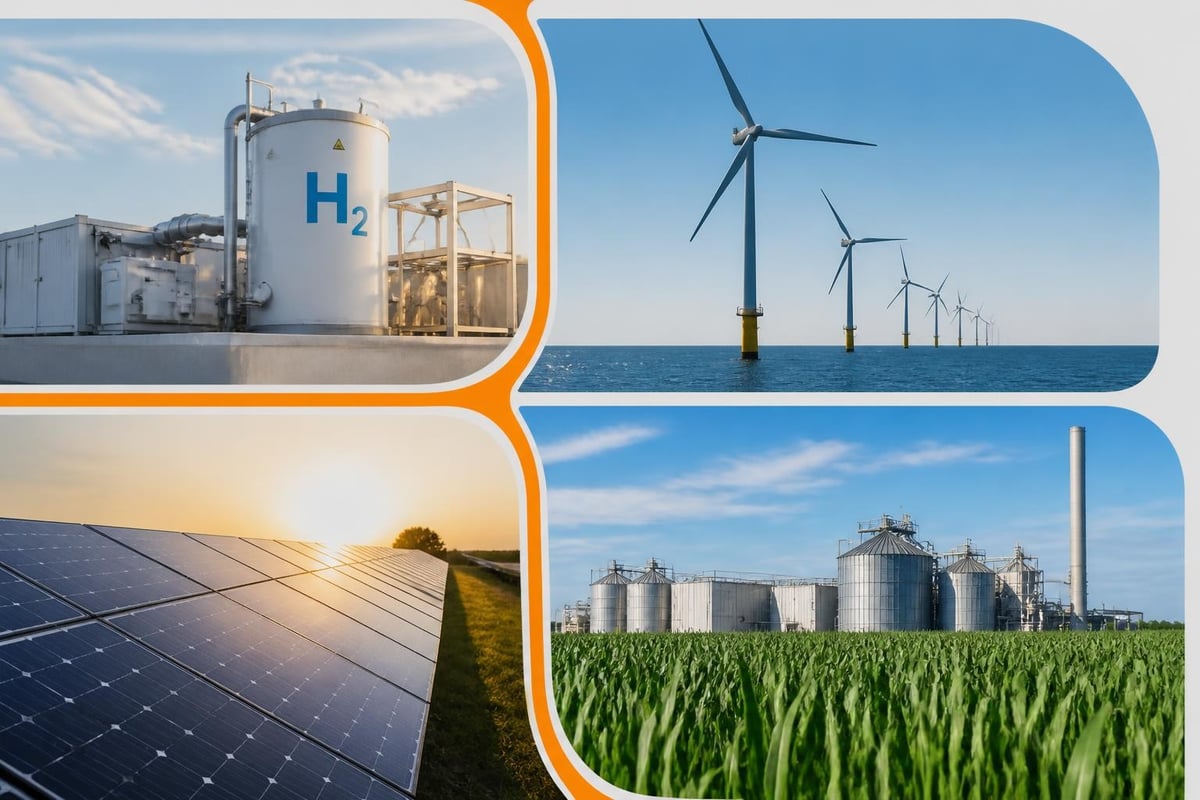
Shell renewable energy operations now span multiple technologies and geographies, though the scale remains modest compared to the company's traditional hydrocarbon business. The portfolio encompasses offshore wind, hydrogen production, solar development, and biofuels, with varying degrees of maturity and commercial viability.
Offshore Wind Investments
Shell has committed substantial capital to offshore wind projects, particularly in European waters where regulatory frameworks and seabed leasing mechanisms are well-established. The company holds stakes in several operational and development-stage wind farms, including projects in the Netherlands, the United Kingdom, and emerging markets.
Key characteristics of shell renewable energy wind investments include:
- Partnership-based development: Most projects involve joint ventures with established wind developers
- Floating offshore technology: Investment in next-generation platforms for deeper waters
- Integration with power markets: Direct participation in electricity trading and corporate power purchase agreements
- Scale ambitions: Targets of 25GW renewable generation capacity by 2035
The offshore wind sector presents both opportunities and challenges. While capacity factors and technology reliability have improved dramatically, capital costs remain substantial and project development timelines extend beyond five years for many installations.
Hydrogen Production and Infrastructure
Hydrogen represents perhaps the most strategically significant element of shell renewable energy planning. The company operates several electrolyser facilities and has announced major projects across Europe and Asia. Shell's hydrogen initiatives include both blue hydrogen (produced from natural gas with carbon capture) and green hydrogen (produced via electrolysis powered by renewables).
Notable projects include:
| Project Name | Location | Capacity | Technology | Status |
|---|---|---|---|---|
| Holland Hydrogen 1 | Netherlands | 200 MW | Green H₂ electrolyser | Operational 2025 |
| REFHYNE 2 | Germany | 100 MW | Green H₂ electrolyser | Under construction |
| Polaris | Denmark | 4,000 tonnes/year | Green H₂ | Development |
The hydrogen strategy faces significant headwinds. Academic research has identified substantial gaps between hydrogen project announcements and actual deployment, with cost competitiveness, infrastructure requirements, and off-take agreements presenting persistent barriers.
For Southern African businesses evaluating clean energy pathways, hydrogen remains a technology to monitor rather than implement immediately. The infrastructure requirements and current cost structures make solar, battery storage, and conventional grid connections more commercially viable for the vast majority of applications.
Investment Scale and Financial Commitment
Understanding the true scale of shell renewable energy investments requires careful analysis of financial disclosures and strategic announcements. While Shell regularly highlights its renewable energy commitments, the proportion of total capital expenditure directed toward low-carbon activities remains subject to scrutiny.
Capital Allocation Patterns
According to independent analysis from the International Energy Agency, major oil companies including Shell allocated approximately 5-10% of their total capital expenditure to renewable and low-carbon technologies in 2024-2025. This represents growth from previous years but remains substantially lower than spending on oil and gas exploration and production.
Shell's stated ambition involves increasing low-carbon investment to 25% of total capex by 2030. However, critical assessments from organisations like Carbon Tracker highlight persistent misalignment between corporate plans and Paris Agreement trajectories.
Financial commitments breakdown:
- Total capital expenditure (2026): approximately USD 23-27 billion annually
- Low-carbon energy investment: USD 3-4 billion annually
- Renewable power generation: USD 1.5-2 billion annually
- Hydrogen and biofuels: USD 1-1.5 billion annually
- Carbon capture and nature-based solutions: USD 0.5-1 billion annually
These figures demonstrate that while shell renewable energy operations receive significant absolute investment, they remain secondary to traditional hydrocarbon activities. For commercial and industrial energy buyers in South Africa, this context underscores the importance of working with dedicated renewable energy specialists who prioritise clean energy technology and operational excellence.

Technology Focus Areas and Strategic Priorities
Shell renewable energy strategy centres on specific technology domains where the company perceives competitive advantage or strategic necessity. These choices reflect both technical capabilities and market positioning considerations.
Solar Energy Participation
Unlike some competitors, Shell maintains relatively limited direct participation in utility-scale solar development. The company previously operated solar manufacturing and development businesses but divested these assets in favour of offshore wind and hydrogen. Current solar activities primarily involve:
- Corporate power purchase agreements for renewable electricity
- Solar installations at company facilities and retail sites
- Minor equity stakes in solar project developers
- Distributed solar integration with mobility assets (charging infrastructure)
This selective approach contrasts with the aggressive solar deployment strategies employed by dedicated renewable energy companies. Businesses seeking commercial solar panel installations in Southern Africa typically achieve better outcomes by partnering with specialists who focus exclusively on photovoltaic technology, system design optimisation, and local market conditions.
Mobility and Charging Infrastructure
Shell renewable energy efforts extend significantly into electric vehicle charging infrastructure, leveraging the company's existing retail network. Shell Recharge represents one of Europe's largest public charging networks, with over 100,000 charge points across multiple countries.
The mobility strategy includes:
- DC fast charging at fuel retail sites
- Workplace and fleet charging solutions
- Charging-as-a-service business models
- Integration with renewable electricity procurement
- Battery swapping pilots in Asian markets
For Southern African organisations planning EV fleet transitions, the rapid expansion of charging infrastructure demonstrates both the opportunity and the competitive dynamics in this emerging sector. Local providers with expertise in commercial EV charging infrastructure can often deliver more responsive service and better integration with existing electrical infrastructure.
Performance Against Climate Commitments
Evaluating shell renewable energy initiatives requires examining both absolute progress and alignment with stated climate goals. Shell announced several high-profile commitments, including net-zero emissions by 2050 and interim targets for 2030.
Emissions Reduction Pathways
Shell's climate strategy distinguishes between Scope 1 and 2 emissions (direct operations) and Scope 3 emissions (end-use of products). The company targets:
- 50% reduction in Scope 1 and 2 emissions intensity by 2030 (versus 2016 baseline)
- Net-zero Scope 1, 2, and 3 emissions by 2050
- Absolute emissions reduction through portfolio transformation
Progress tracking reveals complex dynamics. While renewable energy capacity additions contribute to the headline strategy, actual emissions trajectories depend heavily on production volumes, asset disposals, and demand patterns for fossil fuel products.
Peer-reviewed research in Nature Energy examines how oil majors' transition strategies compare against climate science requirements, noting that portfolio diversification into renewables does not automatically translate to sufficient decarbonisation rates.
Transparency and Reporting Standards
Shell publishes annual Energy Transition Progress Reports detailing renewable energy investments, emissions performance, and strategic developments. These reports provide:
| Metric Category | Disclosure Level | Verification |
|---|---|---|
| Capital expenditure allocation | Detailed | Third-party assured |
| Renewable generation capacity | Specific project data | Independently verifiable |
| Scope 1 & 2 emissions | Comprehensive | Third-party verified |
| Scope 3 emissions | Intensity-based | Methodology disclosed |
| Technology development | Selective disclosure | Unverified |
For businesses developing their own ESG and Net Zero strategies, the sophistication of Shell's reporting framework offers useful benchmarks. However, the complexity also highlights why many organisations achieve better outcomes by focusing resources on direct renewable energy deployment rather than portfolio-wide carbon accounting exercises.
Regional Variations and Market Selection
Shell renewable energy operations demonstrate clear geographic preferences, with investment concentrated in regions offering favourable policy frameworks, established supply chains, and robust off-take markets.
European Market Dominance
Europe accounts for the majority of shell renewable energy capacity, driven by:
- Mature offshore wind leasing regimes
- Supportive renewable energy targets and subsidies
- Established power markets with transparent pricing
- Hydrogen strategy alignment with EU policy
- Existing infrastructure and operational presence
Emerging Market Participation
Shell's renewable activities in emerging markets, including African nations, remain limited. Projects typically focus on:
- Solar installations at operational sites (refineries, terminals)
- Pilot hydrogen projects linked to industrial off-takers
- Electric vehicle charging at select retail locations
- Nature-based carbon offset programmes
Southern African markets present distinct challenges and opportunities that differ substantially from Shell's core renewable energy focus regions. Grid instability, foreign exchange risk, and limited large-scale hydrogen demand create different investment incentives. Local organisations pursuing renewable energy integration benefit from partners who understand these regional dynamics and maintain permanent operational presence.
Business Model Evolution and Strategic Tensions
Shell renewable energy strategy exists within broader corporate tensions between traditional business profitability and energy transition imperatives. These tensions shape investment decisions, technology choices, and organisational priorities.
Returns and Investment Hurdles
Shell applies internal return thresholds to capital allocation decisions. Historically, renewable energy projects deliver lower returns than successful oil and gas developments, creating structural preference for hydrocarbon investment when commercial opportunities exist.
Comparative return profiles (illustrative):
- Offshore oil development: 12-20% IRR
- Offshore wind: 6-10% IRR
- Green hydrogen: Currently negative to marginal positive
- LNG projects: 10-18% IRR
These dynamics influence pace and scale of renewable deployment. Companies maximising shareholder returns within current market structures face inherent conflicts between transition rhetoric and capital allocation reality.
Organisational Structure Challenges
Integrating renewable energy operations within organisations built around hydrocarbon extraction creates cultural and operational challenges. Shell has established dedicated renewable and energy solutions divisions, but these units compete for resources with larger, more established business segments.
For commercial and industrial energy buyers, these organisational realities matter. Working with companies whose entire business model centres on renewable energy success-rather than those managing renewable operations as portfolio diversification-often yields better technical outcomes, more responsive service, and stronger alignment of incentives.
Lessons for Commercial and Industrial Energy Buyers
Shell renewable energy experience, with both achievements and limitations, offers instructive lessons for organisations developing their own renewable energy strategies in Southern Africa.
Scale Versus Specialisation
Shell's diversified approach across multiple renewable technologies reflects capital availability but dilutes technical excellence in any single domain. Most commercial and industrial energy users achieve superior outcomes by:
- Selecting specialist technology providers with deep domain expertise
- Prioritising proven technologies with established supply chains
- Ensuring partners maintain dedicated operations and maintenance capabilities
- Verifying local market knowledge and regulatory familiarity
Companies offering comprehensive renewable energy services with demonstrable Southern African project portfolios typically deliver better value than international conglomerates applying standardised approaches.
Technology Timing and Commercial Maturity
Shell's hydrogen investments, while strategically logical for a company with existing industrial gas operations, highlight the risks of premature technology deployment. For most organisations, current priorities should emphasise:
- Solar PV: Mature technology, declining costs, strong economic returns
- Battery energy storage: Increasingly viable for demand management and resilience
- Energy management systems: Maximise value from existing infrastructure
- EV charging: Where fleet electrification presents clear total cost of ownership benefits
Technologies like hydrogen, biofuels, and carbon capture remain important for specific industrial applications but lack commercial viability for general commercial and industrial use in 2026.
Long-Term Maintenance and Performance
Shell's renewable assets benefit from sophisticated monitoring and maintenance programmes, reflecting lessons from decades managing complex technical infrastructure. Businesses installing renewable energy systems must prioritise:
- Comprehensive operations and maintenance agreements
- Remote monitoring and performance analytics
- Preventative maintenance schedules
- Warranty management and component lifecycle planning
Organisations providing renewable energy operations and maintenance services with defined service level agreements, thermal imaging capabilities, and performance guarantees deliver the long-term value that makes renewable investments commercially successful.
Integration with Grid Infrastructure and Power Markets
Shell renewable energy operations increasingly involve direct participation in power markets, virtual power plants, and grid services. These activities reflect the company's evolution from pure commodity producer to integrated energy services provider.
Power Trading and Optimisation
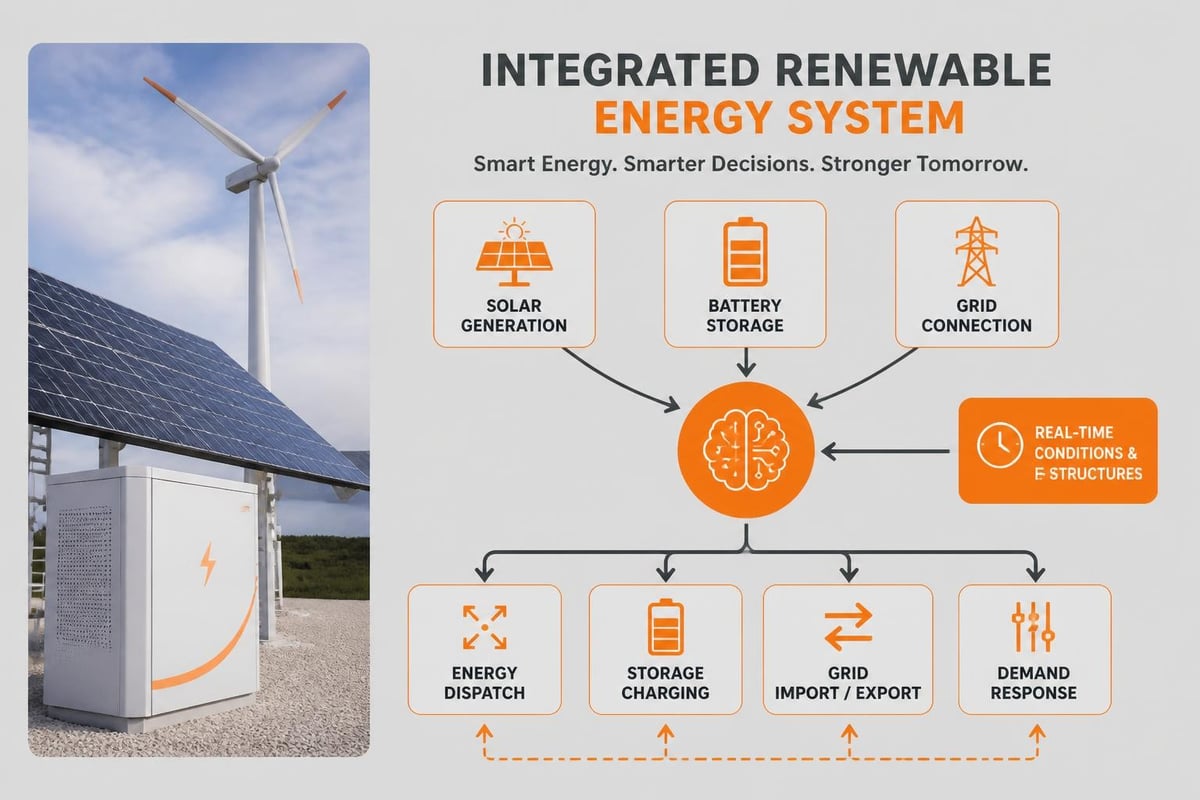
Shell trades electricity across European markets, optimising renewable asset dispatch, battery storage arbitrage, and demand response programmes. This capability requires:
- Real-time market data and analytics platforms
- Sophisticated forecasting of renewable generation and demand
- Regulatory knowledge across multiple jurisdictions
- Risk management frameworks for price volatility
For Southern African businesses, similar principles apply on a smaller scale. Organisations deploying solar-plus-storage systems can optimise time-of-use arbitrage, demand charge reduction, and backup power provision through intelligent energy management systems. However, the complexity and resource requirements of active market participation generally exceed the capabilities of individual commercial or industrial users.
Flexibility Services and Grid Support
Renewable energy assets increasingly provide grid stability services, frequency regulation, and voltage support. Shell participates in these ancillary markets where permitted, generating additional revenue streams beyond energy sales.
The technical requirements include:
- Fast-responding battery storage systems
- Grid-forming inverter technology
- Real-time communications with system operators
- Compliance with evolving grid codes
Southern African grid conditions, with load shedding and infrastructure constraints, create different optimisation priorities. Systems designed for local conditions prioritise resilience, islanding capability, and self-consumption rather than grid services revenue.
Future Trajectory and Strategic Uncertainty
Shell renewable energy strategy faces significant uncertainty as energy markets, climate policy, and technology costs continue evolving. The company's 2026 position reflects interim steps in a multi-decade transition.
Scenario Planning and Portfolio Flexibility
Shell employs scenario planning to navigate uncertainty, developing multiple pathways depending on:
- Carbon pricing levels and climate policy stringency
- Technology cost curves for renewables, storage, and hydrogen
- Fossil fuel demand trajectories across sectors
- Competition from specialised renewable energy companies
- Shareholder expectations and activist pressure
This approach maintains strategic flexibility but can delay decisive commitment to specific technology pathways. For businesses making renewable energy investments today, the lesson is clear: focus on technologies with proven performance, established economics, and minimal policy dependency.
Potential Portfolio Adjustments
Shell's renewable energy portfolio could evolve significantly through:
- Divestment of underperforming renewable assets to specialist operators
- Acquisition of additional offshore wind development rights
- Joint ventures in emerging markets, including African nations
- Increased integration of renewable electricity with petrochemical operations
- Technology partnerships for next-generation solutions (advanced geothermal, enhanced solar)
The Global Hydrogen Review 2024 highlights deployment challenges across the sector, suggesting Shell may recalibrate hydrogen ambitions based on market development and cost realities.
Competitive Dynamics and Market Positioning
Shell renewable energy operations compete across multiple dimensions: against traditional utilities expanding renewable portfolios, specialised renewable developers, technology companies entering energy markets, and other oil majors pursuing similar diversification strategies.
Competitive Advantages
Shell leverages several strengths in renewable markets:
- Substantial capital availability for large-scale projects
- Established relationships with governments and industrial customers
- Technical capabilities in project management and complex engineering
- Trading and optimisation expertise from commodity markets
- Global operational footprint and brand recognition
Competitive Disadvantages
Conversely, shell renewable energy initiatives face structural challenges:
- Higher internal return requirements than pure-play renewable companies
- Organisational complexity and competing priorities
- Reputational challenges in climate-conscious markets
- Shareholder pressure for traditional business returns
- Cultural barriers between hydrocarbon and renewable operations
For commercial and industrial energy buyers in Southern Africa, these competitive dynamics underscore the value of working with dedicated renewable energy specialists. Companies whose success depends entirely on renewable project performance, customer satisfaction, and long-term operational excellence typically deliver superior outcomes compared to diversified energy conglomerates managing renewable operations as portfolio components.
Shell renewable energy strategy illustrates both the potential and the limitations of major oil companies navigating the energy transition. While substantial investments in offshore wind, hydrogen, and related technologies demonstrate commitment, the scale remains modest relative to traditional operations and the pace may prove insufficient for Paris-aligned pathways. For Southern African businesses developing their own renewable energy strategies, these insights emphasise the importance of working with specialists who prioritise clean energy technology, understand local market dynamics, and maintain alignment between business success and customer outcomes. INFOLED designs, finances, installs, monitors and maintains intelligent solar, battery storage, EV charging and smart metering solutions across Southern Africa, helping commercial, industrial and residential clients reduce electricity costs, improve energy resilience, and achieve their ESG and Net Zero objectives through proven, commercially viable renewable energy technologies.
Next Step
Need help with your energy strategy?
Speak to INFOLED about solar, storage, EV charging, service agreements or system performance.