The renewable energy sector has experienced exponential growth over the past decade, with worldwide investment reaching record levels in 2025 and continuing its upward trajectory in 2026. As businesses and governments accelerate their transition away from fossil fuels, certain companies have emerged as industry leaders, driving innovation, scaling deployment, and reshaping energy markets across continents. Understanding which organisations are leading this transformation provides valuable insight for commercial and industrial clients evaluating partners for their own energy transition, particularly in markets like Southern Africa where the shift towards distributed generation and energy independence continues to gain momentum.
Global Leaders in Solar Technology
The photovoltaic sector remains dominated by several key manufacturers who control significant market share whilst continuing to push technological boundaries. Chinese manufacturers including Longi Green Energy Technology, Trina Solar, and JinkoSolar have maintained their positions at the forefront of module production, collectively accounting for over 60% of global PV manufacturing capacity as of 2026.
Longi Green Energy has distinguished itself through relentless focus on monocrystalline silicon wafer technology and vertical integration across the solar supply chain. The company's commitment to research and development has yielded successive efficiency improvements, with commercial modules now regularly exceeding 23% efficiency in field applications.
Manufacturing Scale and Innovation
Several factors separate the top renewable energy companies from their competitors in the solar manufacturing space:
- Vertical integration from polysilicon to finished modules
- Automation reducing production costs by 15-20% over three years
- Bifacial technology capturing reflected light on module rear surfaces
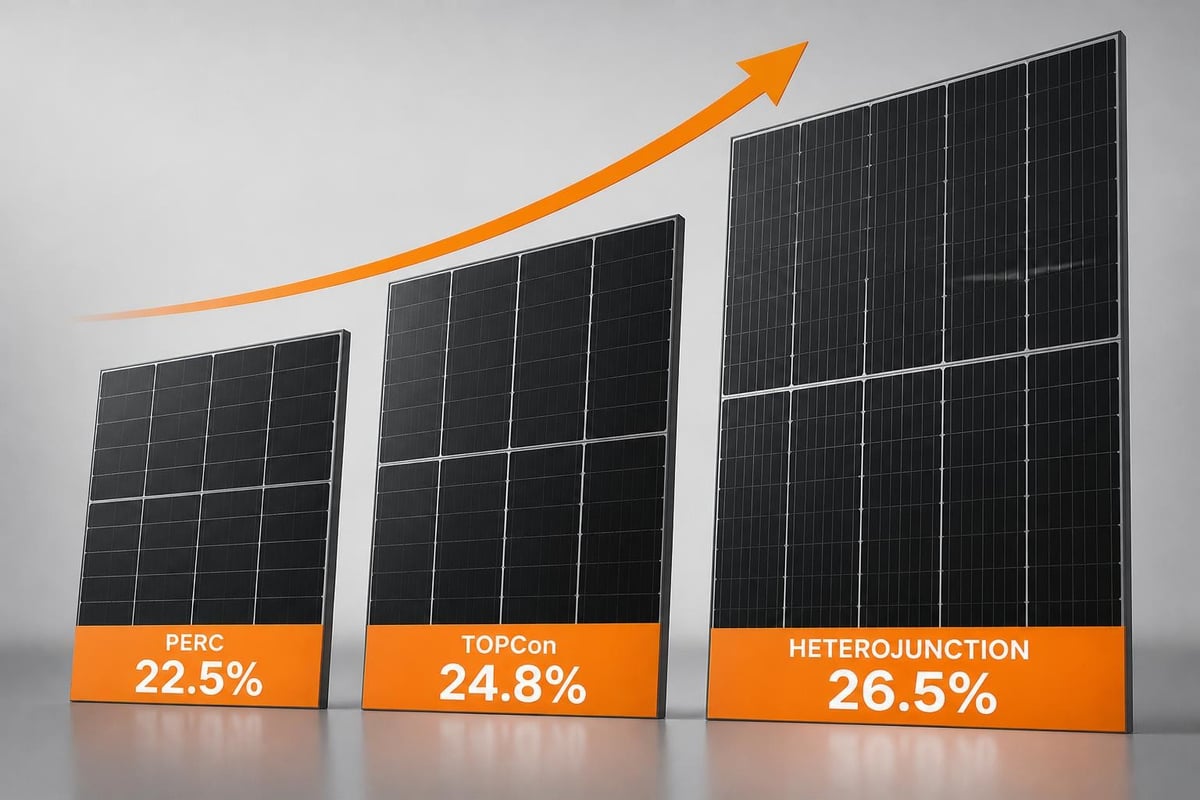
- Heterojunction cells pushing laboratory efficiencies beyond 26%
- Global distribution networks ensuring supply chain resilience
Trina Solar has invested heavily in n-type technology, particularly TOPCon cells, which offer superior temperature coefficients and reduced degradation compared to conventional PERC architecture. These advances translate directly to higher energy yields over a system's 25-30 year operational lifetime, making them particularly attractive for commercial solar installations in high-temperature environments.
| Manufacturer | Technology Focus | 2026 Module Efficiency | Key Markets |
|---|---|---|---|
| Longi Green Energy | Monocrystalline, HPBC | 23.5% | Global, especially Asia-Pacific |
| Trina Solar | TOPCon, bifacial | 23.1% | Europe, Americas, Africa |
| JinkoSolar | Tiger Neo series | 22.8% | Distributed generation worldwide |
| Canadian Solar | Bifacial PERC | 22.3% | Utility-scale, commercial |
The cost trajectory documented by the International Renewable Energy Agency's 2025 cost analysis demonstrates that module prices have declined by over 89% since 2010, with further reductions anticipated through 2030. This dramatic cost reduction has fundamentally altered project economics, particularly for self-consumption applications where businesses can achieve payback periods of 3-5 years in markets with favourable solar resources.
Wind Energy Sector Leaders
Wind power continues its rapid expansion globally, with installations reaching all-time highs in 2025 according to BloombergNEF's market analysis. The top renewable energy companies in this sector have demonstrated remarkable engineering capabilities in scaling turbine sizes whilst reducing levelised costs.
Vestas Wind Systems, the Danish manufacturer, maintains its position as the world's largest wind turbine supplier by cumulative installed capacity. The company's comprehensive service portfolio extends beyond equipment supply to encompass long-term service agreements, performance optimisation, and repowering solutions for ageing wind farms.
Offshore Wind Pioneers
Offshore wind represents one of the fastest-growing segments within renewable energy, with European leaders expanding into Asian and North American markets:
- Siemens Gamesa dominates offshore installations with turbines exceeding 14 MW capacity
- GE Renewable Energy has developed the Haliade-X platform reaching 14 MW per unit
- Goldwind brings Chinese manufacturing scale to international offshore projects
- MingYang Smart Energy pushes boundaries with 16 MW offshore prototypes
The engineering challenges inherent in offshore deployment demand sophisticated installation vessels, subsea cable expertise, and advanced corrosion protection systems. These technical barriers to entry have concentrated market share amongst companies with deep engineering capabilities and access to patient capital.
Onshore applications continue to evolve, particularly in markets like South Africa where wind resources in the Eastern and Western Cape provinces offer exceptional capacity factors. Modern turbines with hub heights exceeding 100 metres and rotor diameters approaching 150 metres capture consistent energy even in moderate wind regimes, transforming the economic viability of projects across diverse geographies.
Integrated Renewable Energy Developers
Beyond component manufacturers, certain companies have distinguished themselves through integrated development, financing, construction, and operational capabilities. These organisations manage the entire value chain from site identification through decades of operational performance.
NextEra Energy exemplifies this integrated model, operating as North America's largest generator of renewable energy from wind and solar. The company's scale enables sophisticated energy trading, grid services, and increasingly, integration of battery storage to firm renewable output and capture additional revenue streams.
Project Development Excellence
The top renewable energy companies in the development space share several characteristics:
- Land acquisition expertise securing optimal sites years before construction
- Grid interconnection management navigating complex utility approval processes
- Structured finance capabilities arranging non-recourse project debt
- Construction management delivering projects on time and within budget
- Asset management optimising performance over multi-decade timeframes
Iberdrola, the Spanish utility, has transformed itself into a renewable energy powerhouse with over 40 GW of installed clean energy capacity globally. The company's geographic diversification across Europe, the Americas, and increasingly Africa, provides portfolio resilience whilst capturing growth in emerging markets.
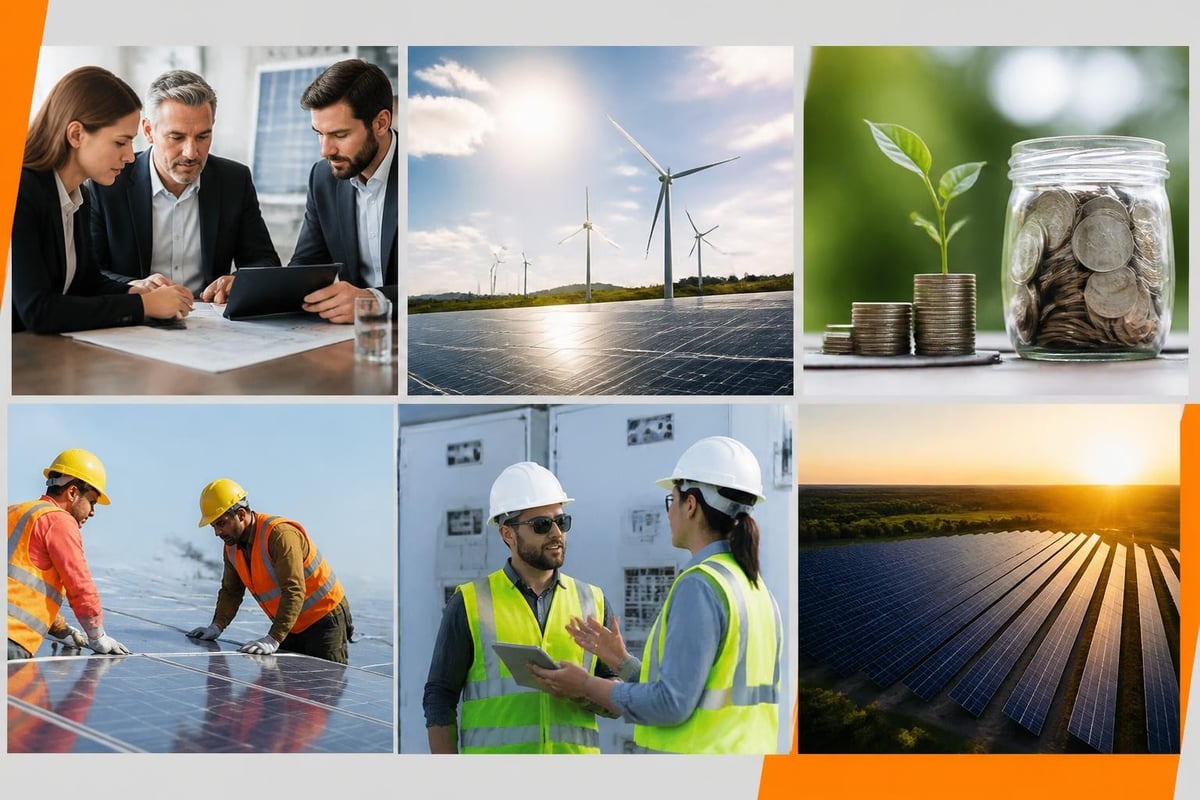
The record renewable energy investment flows documented by BloombergNEF in 2025 reflect growing confidence in the sector's economic fundamentals. However, successful project execution requires more than access to capital - it demands deep technical expertise across engineering disciplines, regulatory environments, and operational optimisation.
Energy Storage and Grid Solutions
As renewable penetration increases across electricity grids, energy storage has emerged as a critical enabler of further deployment. The top renewable energy companies increasingly incorporate battery energy storage systems into their portfolios, either as standalone assets or co-located with solar and wind generation.
Tesla Energy has leveraged automotive battery manufacturing scale to become a dominant force in grid-scale storage, with projects ranging from utility-scale installations exceeding 300 MWh to commercial and industrial applications. The company's Megapack product line addresses the 2-4 hour duration storage segment most valuable for solar firming and demand charge management.
Storage Technology Landscape
| Company | Technology | Primary Application | Key Advantage |
|---|---|---|---|
| Tesla Energy | Lithium-ion NMC | Grid-scale, C&I | Manufacturing scale |
| BYD | LFP batteries | Commercial, utility | Cost, safety profile |
| Fluence | Platform agnostic | Grid services | Software intelligence |
| Sungrow | Integrated PV+storage | Distributed generation | System optimisation |
BYD, originally an automotive manufacturer, has become one of the world's largest battery producers, with lithium iron phosphate (LFP) chemistry offering enhanced safety characteristics and longer cycle life compared to nickel manganese cobalt alternatives. This technology proves particularly suitable for commercial and industrial battery installations where daily cycling and multi-decade asset life drive project economics.
The software layer controlling these storage assets has emerged as equally important as the hardware itself. Sophisticated energy management platforms optimise charging and discharging decisions based on electricity tariffs, solar generation forecasts, load predictions, and ancillary service opportunities. Companies like Fluence have built businesses entirely around this optimisation layer, partnering with multiple hardware manufacturers whilst capturing value through intelligent control algorithms.
For commercial clients in South Africa, where time-of-use tariffs create substantial arbitrage opportunities and load shedding remains an operational reality, properly sized and configured battery systems deliver compelling financial returns whilst enhancing energy security. The operations and maintenance capabilities provided by experienced service providers ensure these complex electrochemical systems maintain performance specifications over their warranted lifespan, typically 10-15 years or 5,000-7,000 equivalent full cycles.
Corporate Renewable Energy Buyers
An often-overlooked category of top renewable energy companies comprises the major corporate off-takers driving demand through power purchase agreements and on-site installations. Technology companies have emerged as particularly aggressive renewable energy buyers, with commitments extending into gigawatts of capacity.
Google has maintained 100% renewable energy matching for its global operations since 2017 and continues expanding both off-site PPAs and on-site solar deployments at data centres. The company's procurement strategy emphasises additionality - ensuring purchased renewable energy represents new generation capacity rather than simply claiming existing production.
Corporate Procurement Leaders (2026)
- Amazon - 25 GW contracted renewable capacity
- Google - 18 GW renewable energy agreements
- Microsoft - 16 GW clean energy portfolio
- Meta - 12 GW renewable commitments
- Apple - 10 GW supplier clean energy programme
Microsoft has pioneered innovative procurement structures including 24/7 carbon-free energy matching, where renewable generation and consumption align on an hourly rather than annual basis. This approach drives deployment of dispatchable clean energy technologies including storage, geothermal, and small modular nuclear reactors to complement variable solar and wind output.
The corporate procurement trend has fundamentally altered renewable project financing, with creditworthy off-takers enabling developers to secure favourable debt terms and reduce equity return requirements. For industrial clients in Southern Africa evaluating solar energy for business applications, understanding these corporate procurement models provides insight into emerging financing structures beyond traditional ownership or leasing arrangements.
Regional Leaders and Emerging Markets
Whilst global giants dominate headlines, regional specialists often deliver superior value in specific markets through local expertise, established relationships, and supply chain optimisation. In Southern Africa, several companies have established strong track records across commercial, industrial, and utility-scale deployments.
Scatec (formerly Scatec Solar), the Norwegian developer with extensive African operations, has demonstrated consistent project delivery across challenging regulatory environments. The company's integrated model encompasses development, EPC execution, ownership, and operation, aligning incentives across the project lifecycle.
African Market Specialists
The unique characteristics of African renewable energy markets - including grid constraints, currency volatility, and evolving regulatory frameworks - require specialised capabilities:
- Off-grid and mini-grid expertise serving unelectrified communities
- Currency hedging strategies managing devaluation risk
- Local content compliance meeting employment and procurement requirements
- Development finance relationships accessing concessional capital
- Grid code navigation ensuring technical compliance with utilities
Globeleq, backed by CDC Group and Norfund, operates a portfolio exceeding 1.5 GW across Africa, with particular strength in South Africa, Kenya, and Côte d'Ivoire. The company's experience with IPP procurement programmes provides valuable insight for commercial clients considering wheeling arrangements or private wire connections to off-site generation.
The World Bank's 2026 briefing on integrated renewable energy systems emphasises the importance of transmission infrastructure, regulatory frameworks, and de-risking mechanisms in emerging markets. Top renewable energy companies operating in these environments have developed sophisticated approaches to political risk mitigation, local partnership structures, and stakeholder engagement that go well beyond technical engineering capabilities.
Innovation and Technology Leaders
Beyond established players, several companies are pioneering next-generation technologies that may reshape the renewable energy landscape over the coming decade. These innovation leaders occupy important niches within the broader ecosystem, even if their current market share remains modest.
First Solar has persisted with cadmium telluride thin-film technology whilst competitors focused on crystalline silicon, carving out a defensible position in utility-scale applications where the technology's superior temperature coefficient and spectral response deliver higher energy yields in hot, sunny climates. The company's vertically integrated American manufacturing provides supply chain security increasingly valued by developers and off-takers.
Emerging Technology Companies
Several technology pathways show promise for specific applications or future cost reductions:
- Perovskite tandem cells potentially reaching 30%+ efficiency in laboratory settings
- Floating solar combining PV deployment with water body cooling effects
- Concentrating solar thermal with integrated storage for dispatchable generation
- Advanced geothermal accessing heat resources through enhanced drilling techniques
- Green hydrogen produced from renewable electricity for industrial applications
Ørsted, the Danish energy company, has transformed from fossil fuel dependence to become the world's largest offshore wind developer, demonstrating that incumbent utilities can successfully pivot their business models. The company's experience provides a roadmap for other utilities globally, particularly in markets like South Africa where Eskom and municipalities face pressure to decarbonise generation portfolios.
The Deloitte 2026 Renewable Energy Industry Outlook identifies several trends shaping competitive dynamics, including increased focus on supply chain resilience, growing importance of digital twins for asset optimisation, and convergence between renewable generation and grid infrastructure investment.
Environmental, Social, and Governance Considerations
As the renewable energy sector matures, stakeholder scrutiny of ESG performance has intensified. The top renewable energy companies increasingly differentiate themselves not merely through technical capabilities or cost competitiveness, but through demonstrated commitment to responsible business practices across their value chains.
The Business & Human Rights Resource Centre's 2025 benchmark assessed major renewable energy companies against human rights and environmental criteria, revealing significant variation in corporate performance. Leading companies have implemented robust due diligence processes addressing forced labour risks in polysilicon supply chains, community engagement protocols for large-scale land use, and end-of-life material management plans.
Ørsted achieved the highest overall score in the assessment, reflecting comprehensive policies on human rights, environmental management, and stakeholder engagement. The company's commitment extends to supply chain auditing, grievance mechanisms, and public disclosure of performance metrics beyond minimum regulatory requirements.
For commercial and industrial clients in South Africa developing sustainability and ESG reporting programmes, partner selection carries reputational implications. Working with renewable energy providers who demonstrate environmental responsibility through programmes like solar panel recycling, transparent labour practices, and community benefit sharing aligns with increasingly sophisticated stakeholder expectations around Scope 2 and Scope 3 emissions reduction claims.
Technology Integration and Smart Energy Systems
The evolution of top renewable energy companies increasingly reflects integration across previously distinct technology domains. Solar developers now routinely incorporate battery storage; wind operators deploy advanced forecasting and grid balancing services; and utilities bundle renewable generation with demand response, electric vehicle charging infrastructure, and building energy management systems.
Enel Green Power, the renewable arm of Italian utility Enel, exemplifies this integrated approach through its Innovation Hub programme developing hybrid renewable plants, vehicle-to-grid integration, and blockchain-based energy trading platforms. The company's global footprint enables technology piloting in one market before scaling successful innovations internationally.
This convergence of technologies creates opportunities for commercial clients to deploy comprehensive energy management solutions rather than point solutions. A properly designed system combines on-site solar generation, battery storage for demand charge reduction and backup power, smart metering for consumption visibility, and potentially electric vehicle charging infrastructure - all coordinated through intelligent energy management platforms that optimise across multiple objectives including cost minimisation, emissions reduction, and grid service provision.
The technical complexity of these integrated systems demands partners with multidisciplinary engineering capabilities, experience across renewable technologies, and sophisticated project management to coordinate civil, electrical, and software components into cohesive, high-performing installations. Single-technology specialists increasingly partner with system integrators or expand their own capabilities to capture the growing market for turnkey intelligent energy solutions.
The renewable energy sector in 2026 is characterised by proven technologies, compelling economics, and an expanding ecosystem of capable companies operating across the value chain from component manufacturing through project development to long-term asset management. For commercial and industrial clients in Southern Africa seeking to reduce electricity costs, enhance energy security, and meet sustainability commitments, selecting experienced partners with demonstrated technical capabilities and aligned business models is essential. INFOLED brings deep renewable energy engineering expertise across solar, battery storage, EV charging, and smart metering technologies, working with clients throughout Southern Africa to design, finance, install, and maintain intelligent energy solutions tailored to specific operational requirements and financial objectives.
Next Step
Need help with your energy strategy?
Speak to INFOLED about solar, storage, EV charging, service agreements or system performance.