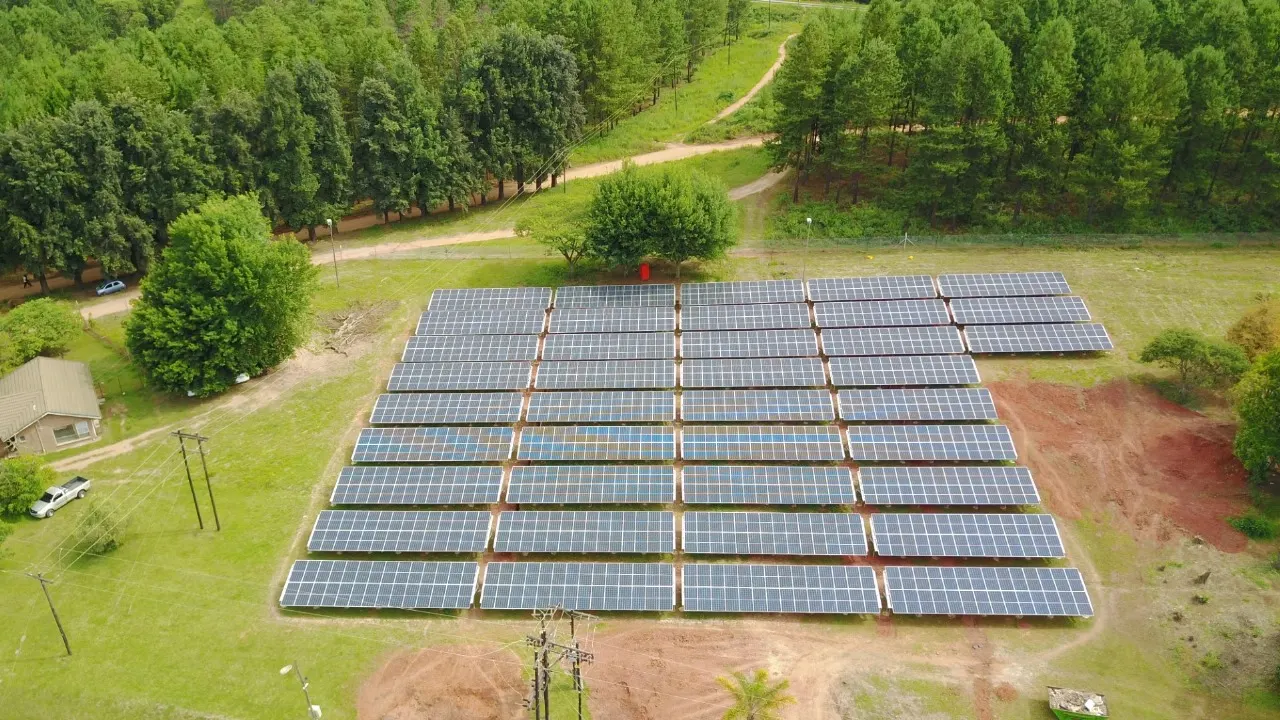
South African industry faces unprecedented energy challenges. Load shedding, escalating electricity tariffs, and mounting pressure to decarbonise operations have forced manufacturing, mining, and processing facilities to seek sustainable alternatives. Solar industrial solutions have emerged as a strategic response, offering manufacturers the ability to generate clean power on-site whilst reducing operational costs and enhancing energy security. For businesses across Gauteng, KwaZulu-Natal, Western Cape, and beyond, the transition to solar represents not merely an environmental gesture but a fundamental operational necessity that delivers measurable financial returns and competitive advantages.
Understanding Solar Industrial Applications in Manufacturing
Solar industrial implementations differ substantially from residential or small commercial installations in scale, complexity, and integration requirements. Industrial facilities typically demand multi-megawatt systems designed to serve energy-intensive operations throughout production shifts.
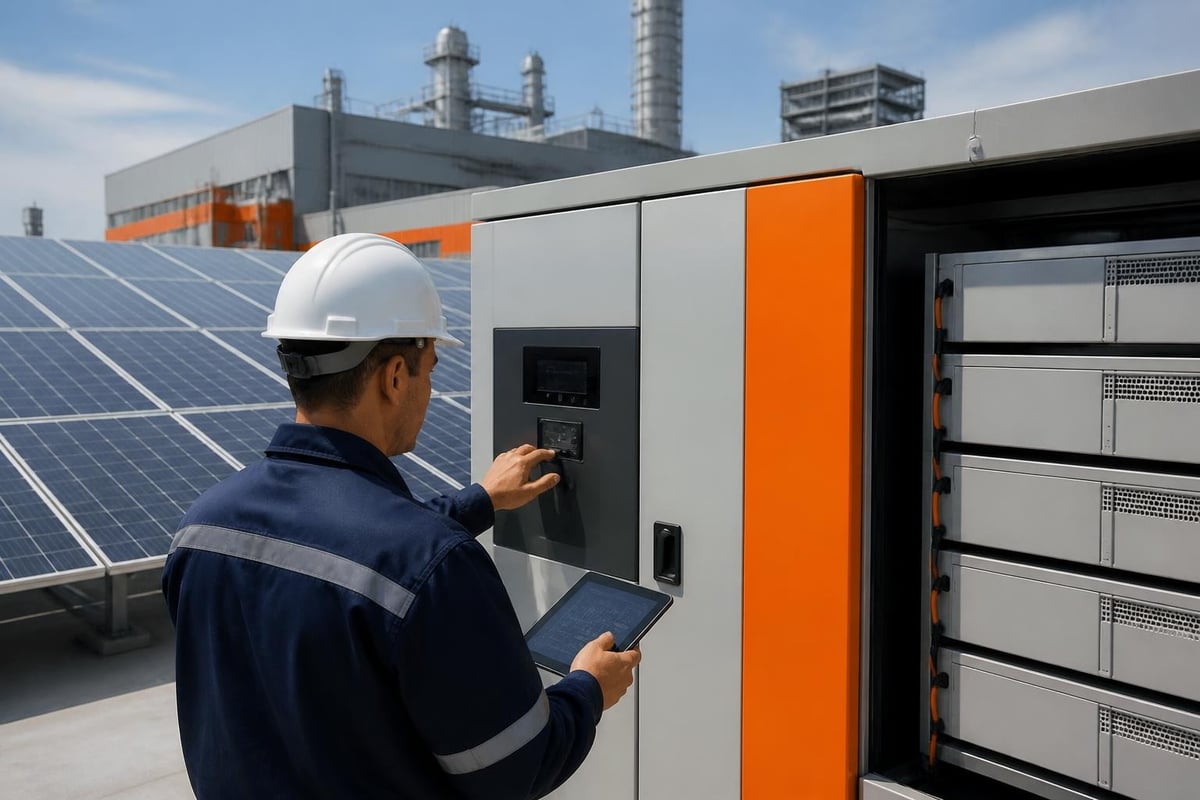
Manufacturing plants, processing facilities, and warehouses require robust solar installations capable of delivering consistent power during peak demand periods. These systems integrate with existing electrical infrastructure, often incorporating battery energy storage systems (BESS) to maintain continuity during grid outages or after sunset.
Key Technology Components for Industrial Solar
| Component | Function | Typical Specification |
|---|---|---|
| PV Modules | Energy generation | 450-650W monocrystalline panels |
| Central Inverters | DC to AC conversion | 500kW-2MW+ capacity |
| Monitoring Systems | Performance tracking | Real-time SCADA integration |
| Battery Storage | Load shifting & backup | 500kWh-10MWh+ configurations |
| Smart Metering | Consumption analytics | Multi-point monitoring |
Industrial solar systems require sophisticated engineering to match generation profiles with production schedules. Unlike residential installations, where consumption patterns remain relatively predictable, industrial loads fluctuate significantly based on manufacturing cycles, shift patterns, and process requirements.
The integration of energy management systems enables facilities to optimise solar utilisation by scheduling energy-intensive operations during peak generation hours. This operational alignment maximises self-consumption rates and reduces grid dependence.
Financial Drivers for Solar Industrial Investment
The economic case for solar industrial deployment in South Africa has strengthened considerably. Eskom tariff increases averaging 12-15% annually over the past decade have made renewable energy increasingly competitive, with solar levelised costs of energy (LCOE) now significantly below municipal electricity rates.
Return on Investment Metrics
Manufacturing facilities implementing solar industrial solutions typically achieve payback periods between 3-6 years, depending on system size, electricity tariff structures, and incentive participation. The financial viability improves further when factoring operational resilience benefits.
- Energy cost reduction: 30-70% reduction in grid electricity purchases
- Demand charge mitigation: Peak shaving through battery integration reduces municipal demand charges
- Tax incentives: Section 12B renewable energy allowances accelerate depreciation
- Carbon credits: Potential revenue through verified emissions reductions
- Asset value: Solar installations enhance property valuations and ESG ratings
Production facilities with high daytime energy consumption profiles achieve the strongest financial returns. Food processing, textile manufacturing, automotive assembly, and packaging operations particularly benefit from solar industrial deployment due to operational alignment with solar generation patterns.
According to IEA SHC Task 64, industrial heat processes below 400°C represent significant opportunities for solar integration, particularly relevant for South African food processing and chemical industries. The Solar Heat Worldwide 2023 report documents growing global momentum in large-scale industrial solar adoption, with Southern Africa positioned to capitalise on exceptional solar irradiation resources.
Technical Considerations for Industrial Solar Design
Proper solar industrial system design requires comprehensive technical assessment beyond simple capacity calculations. Engineers must evaluate structural capacity, electrical infrastructure, grid connection parameters, and operational integration requirements.
Site Assessment Criteria
Rooftop installations demand structural engineering analysis to confirm load-bearing capacity for panel arrays, racking systems, and maintenance access pathways. Industrial roofs often accommodate HVAC equipment, skylights, and service access routes that constrain available solar area.
Ground-mounted arrays offer greater flexibility but require land allocation analysis. Carport solar structures provide dual functionality, protecting vehicles whilst generating power and are particularly suitable for logistics facilities and distribution centres.
Electrical infrastructure assessment examines existing switchgear capacity, cable ratings, and protection coordination. Industrial solar integration typically requires main distribution board upgrades and dedicated protection equipment to ensure safe parallel operation with grid supply.
For manufacturing facilities seeking comprehensive renewable energy solutions, partnering with experienced engineering firms ensures optimal system design. Providers offering Commercial, Industrial, Agricultural and Residential Solar PV services deliver turnkey solutions encompassing feasibility studies, detailed engineering, installation, and ongoing performance monitoring.
Grid Connection and Compliance
South African industrial solar projects must navigate municipal and Eskom grid connection requirements. Embedded generation applications involve technical studies, protection equipment specifications, and compliance with NRS 097 standards.
The registration process with NERSA for facilities exceeding 1MW capacity adds regulatory compliance requirements. However, many industrial installations fall below this threshold, simplifying approval processes whilst still delivering substantial energy benefits.
Solar Process Heat for Industrial Applications
Beyond photovoltaic electricity generation, solar thermal technologies offer significant potential for industrial process heat applications. South African industries consuming heat between 80°C-250°C, including dairy processing, textile dyeing, and chemical manufacturing, can reduce fossil fuel consumption through solar thermal integration.
Concentrated solar power (CSP) systems and evacuated tube collectors generate elevated temperatures suitable for industrial processes. These technologies complement photovoltaic installations, addressing thermal loads that electric solar alone cannot efficiently serve.
Fraunhofer ISE's research demonstrates that solar process heat achieves competitive economics in suitable applications, particularly where natural gas or diesel currently provides heat. The IEA's Technology Position Paper on SHIP provides comprehensive technical guidance on integration approaches, system configurations, and economic evaluation methodologies.
Hybrid Systems and Energy Storage Integration
Pure solar industrial installations face the inherent limitation of generation variability. Battery energy storage systems transform solar from an intermittent resource into a dispatchable power source capable of supporting continuous manufacturing operations.
Hybrid configurations combining solar PV with BESS enable:
- Load shifting: Storing excess midday solar generation for evening peak consumption
- Demand response: Discharging batteries during high-tariff periods to reduce electricity costs
- Backup power: Maintaining critical operations during grid failures or load shedding
- Power quality: Smoothing voltage fluctuations and providing reactive power support
The optimal battery sizing depends on load profiles, tariff structures, and operational priorities. Time-of-use tariffs with significant peak/off-peak differentials justify larger battery capacities for energy arbitrage, whilst facilities prioritising resilience specify batteries to cover critical loads for extended periods.
Battery Technology Selection
| Technology | Advantages | Typical Applications |
|---|---|---|
| Lithium Iron Phosphate (LFP) | Long cycle life, safety | Daily cycling, frequency regulation |
| Lithium NMC | Higher energy density | Space-constrained installations |
| Flow Batteries | Scalable capacity, duration | Long-duration storage requirements |
Industrial solar with integrated storage delivers superior value propositions compared to standalone solar, particularly for facilities operating beyond daylight hours or requiring guaranteed power availability. For businesses exploring comprehensive solutions, industrial battery systems provide detailed guidance on storage integration approaches.
Operational Performance and Maintenance Requirements
Solar industrial systems require structured maintenance programmes to sustain optimal performance throughout 25+ year operational lifespans. Unlike small residential installations, industrial-scale arrays demand professional asset management approaches incorporating preventative maintenance, performance monitoring, and corrective interventions.
Maintenance Programme Elements
- Panel cleaning: Quarterly or bi-annual cleaning schedules depending on environmental conditions
- Inverter maintenance: Firmware updates, cooling system servicing, component inspections
- Electrical testing: Annual thermal imaging, insulation resistance testing, protection coordination verification
- Structural inspections: Racking integrity assessments, fastener torque checks, corrosion monitoring
- Performance audits: Monthly generation analysis against modelled expectations, degradation tracking
Remote monitoring systems enable proactive fault detection and performance optimisation. Modern industrial installations incorporate comprehensive SCADA integration, providing real-time visibility into generation, consumption, battery state-of-charge, and system health parameters.
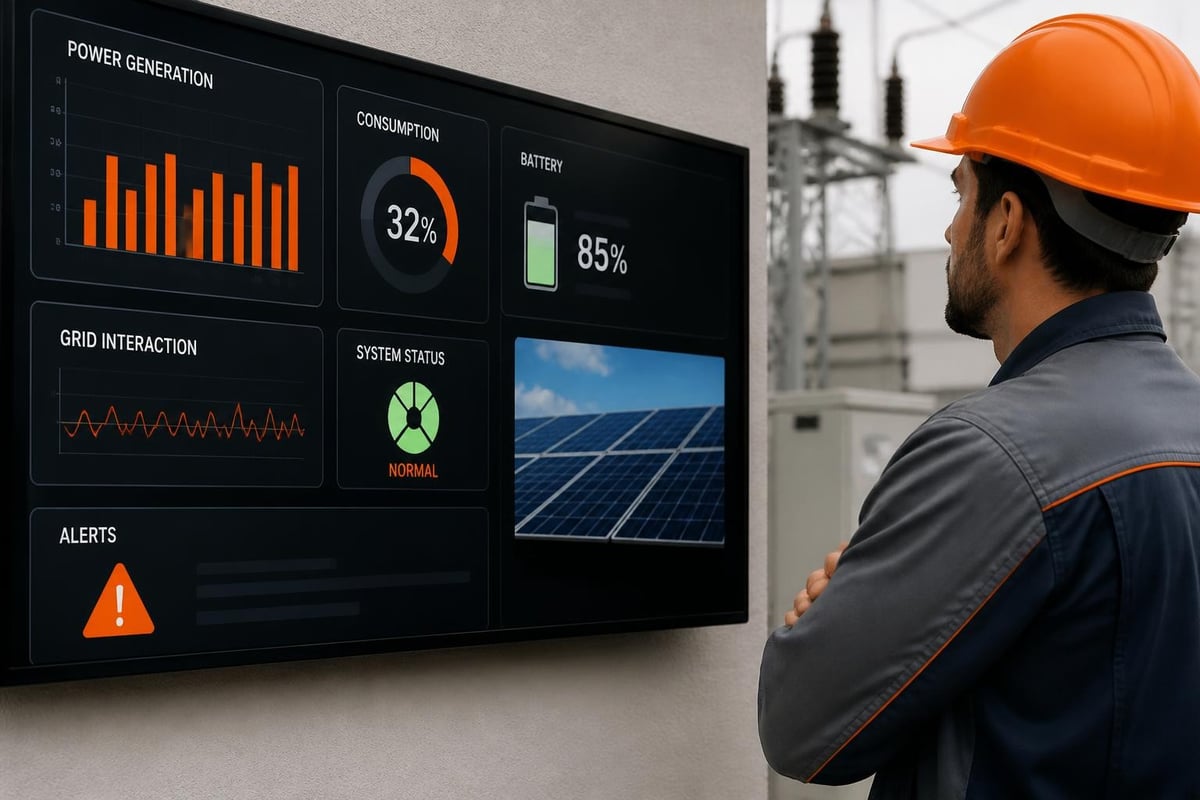
Establishing service level agreements with qualified maintenance providers ensures consistent system performance and maximises energy production throughout the asset lifecycle. Professional maintenance programmes typically guarantee minimum performance thresholds, providing financial certainty for industrial operators.
Financing Strategies for Industrial Solar Projects
Capital availability represents a significant consideration for industrial solar deployment. Multi-megawatt installations require substantial upfront investment, though diverse financing mechanisms have emerged to facilitate implementation.
Funding Approaches
Cash Purchase: Provides maximum financial returns and full asset ownership but requires significant capital allocation. Manufacturing businesses with available capital achieve fastest payback and highest internal rates of return through outright purchase.
Debt Financing: Commercial banks increasingly offer renewable energy lending facilities with favourable terms for creditworthy industrial borrowers. Debt financing preserves working capital whilst enabling solar deployment, with loan repayments typically offset by electricity savings.
Power Purchase Agreements (PPAs): Third-party developers install and own solar infrastructure, selling generated electricity to the industrial off-taker at contracted rates below municipal tariffs. PPAs eliminate upfront capital requirements whilst delivering immediate savings.
Leasing Arrangements: Operating or finance leases provide alternative structures balancing capital preservation with asset utilisation benefits. Lease payments receive operating expense treatment for accounting purposes.
The U.S. Department of Energy's industrial decarbonisation resources outline policy frameworks and funding mechanisms internationally, whilst World Bank resources on CSP financing provide insights into project bankability and investment structuring for solar industrial applications.
For South African facilities exploring solar funding options, engaging with specialised renewable energy financiers ensures access to competitive terms and structures aligned with specific operational and financial circumstances.
Environmental and ESG Benefits
Beyond financial returns, solar industrial adoption delivers substantial environmental and governance advantages increasingly valued by stakeholders, investors, and customers. Manufacturing facilities face growing pressure to demonstrate credible decarbonisation pathways and environmental stewardship.
Measurable ESG Outcomes
Industrial solar installations generate quantifiable environmental benefits readily incorporated into corporate sustainability reporting:
- Carbon emissions reduction: Typical 1MW industrial solar system offsets 1,200-1,500 tonnes CO₂ annually
- Water conservation: Solar PV avoids water consumption associated with coal-fired electricity generation
- Air quality improvement: Reduced fossil fuel combustion decreases particulate and NOₓ emissions
- Renewable energy procurement: Demonstrates progress toward RE100 and Science-Based Targets commitments
Scope 2 emissions constitute significant portions of manufacturing carbon footprints. On-site solar generation directly reduces these emissions whilst improving resilience against carbon pricing mechanisms and environmental regulations.
Third-party sustainability ratings, including CDP, GRESB, and MSCI ESG, increasingly weight renewable energy adoption in scoring methodologies. Enhanced ESG performance improves access to capital, reduces insurance premiums, and strengthens competitive positioning with sustainability-conscious customers.
Regulatory Landscape and Future Outlook
South Africa's regulatory environment for embedded generation continues evolving favourably for industrial solar deployment. Recent policy developments have reduced barriers and improved commercial viability for manufacturing facilities seeking energy independence.
The removal of licensing requirements for facilities below 100MW, municipal willingness to purchase excess generation through feed-in tariffs, and clarification of wheeling regulations have substantially improved the investment climate for solar industrial projects.
Emerging Opportunities
Green hydrogen production represents a potentially transformative application for industrial solar in South Africa. Manufacturing facilities with substantial solar capacity can electrolyse water during peak generation periods, producing hydrogen for process heat applications or transportation fuel whilst monetising otherwise curtailed generation.
Industrial clusters and special economic zones increasingly incorporate shared renewable energy infrastructure, enabling smaller manufacturers to access solar benefits through aggregated procurement models. These collaborative approaches distribute development costs whilst achieving economies of scale.
The continued decline in solar module costs, coupled with improving battery economics, ensures that solar industrial solutions will become increasingly compelling across broader industrial segments. Early adopters gain competitive advantages through reduced operating costs and enhanced sustainability credentials.
Implementation Best Practices
Successful solar industrial deployment requires methodical planning, stakeholder engagement, and realistic expectation-setting. Manufacturing facilities should approach implementation systematically to maximise technical performance and financial outcomes.
Recommended Implementation Framework
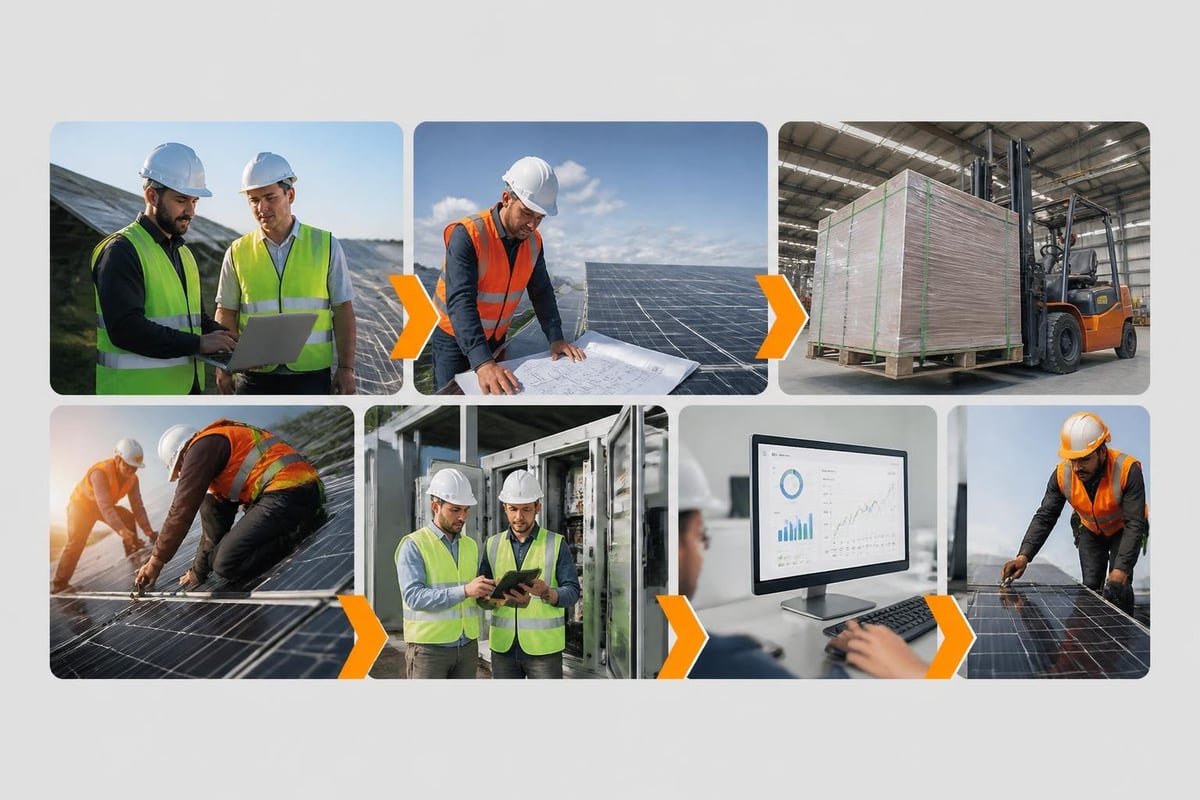
- Energy audit: Comprehensive consumption analysis identifying usage patterns, peak demands, and optimisation opportunities
- Feasibility assessment: Technical site evaluation, financial modelling, and regulatory compliance review
- Procurement strategy: Competitive tender process evaluating technology options, contractor capabilities, and pricing
- Project execution: Structured implementation with defined milestones, quality checkpoints, and commissioning protocols
- Performance optimisation: Ongoing monitoring, maintenance scheduling, and operational refinement
Engaging qualified renewable energy engineering services providers from project inception ensures technical rigour and commercial discipline throughout development and implementation phases. Experienced engineers identify constraints, optimise configurations, and navigate regulatory processes efficiently.
For facilities exploring initial feasibility, online solar calculators provide preliminary sizing and financial estimates, though detailed engineering analysis remains essential for investment decisions.
Solar industrial solutions represent a strategic imperative for South African manufacturers navigating energy uncertainty, cost pressures, and sustainability expectations. The technology delivers measurable financial returns whilst enhancing operational resilience and environmental performance across diverse industrial applications. INFOLED provides comprehensive renewable energy engineering and technology solutions specifically designed for commercial and industrial clients throughout Southern Africa, delivering integrated solar, battery storage, and energy management systems that reduce electricity costs, improve resilience, and support Net Zero strategies.
Next Step
Need help with your energy strategy?
Speak to INFOLED about solar, storage, EV charging, service agreements or system performance.